



Crotedumab

Based on 1 Customer Validation
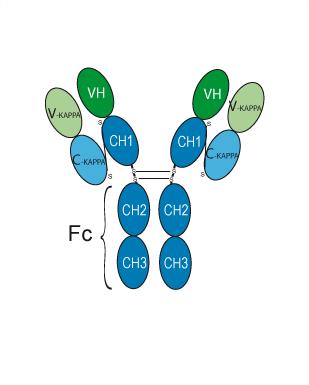
Crotedumab (REGN1193) is a fully human IgG4 monoclonal antibody that binds and inhibits glucagon receptor (GCGR), with a KD of 0.1 nM. Crotedumab can be used for the research of diabetes.
For research use only. We do not sell to patients.
- Purity : 99.22%
- CAS No.: 1452387-69-7
- Molecular Weight:146.82 kDa
-
Storage:
Please store the product under the recommended conditions in the Certificate of Analysis.


To place orders, for customer services and technical support, please contact: MedChemExpress USA
Tel: 609-228-6898 E-mail: [email protected] [email protected]


-
 Biological Activity
-
Chemical Information
- Protocols
- Purity & Documentation
- References
-
 Help & FAQs




Biological Activity
Description
Isotype
Human IgG4 kappa
Recommend Isotype Controls
Species Reactivity
Human
IC50 & Target
GCGR
In Vitro
Crotedumab binds to GCGR from multiple species (mouse, rat, monkey, and humans) with high affinity (KD=0.03 nM-0.39 nM)[2].
Crotedumab inhibits Glucagon-induced signaling through GCGR with IC50s of 0.65, 3.2, 0.94 and 1.0 nM in HEK293 cells transfected with GCGR from human, monkey, mouse, and rat, respectively[2].
MedChemExpress (MCE) has not independently confirmed the accuracy of these methods. They are for reference only. Further protocols information, click here.
In Vivo
Crotedumab (10 mg/kg; a single s.c.) markedly decreases blood glucose for 18 days in diabetic ob/ob mice[2].
REGN1193 (20 mg/kg; a single i.v.) produces a robust reduction in overnight-fasted blood glucose in both the conscious and anesthetized state of diabetic cynomolgus monkeys as well as in blood glucose measured 1 hour after feeding[2].
MedChemExpress (MCE) has not independently confirmed the accuracy of these methods. They are for reference only.
-
Animal Model:Diet-induced obese (DIO) male C57BL/6NTac mice were maintained on high-fat diet[2]
-
Dosage:3, 10, 30 mg/kg
-
Administration:S.c. injection once weekly for 4 weeks
-
Result:Markedly reduced blood glucose throughout the dosing period.
Reversibly decreased body weight during the dosing period.
Dose- and time-dependently increased glucagon and GLP-1.
Reversibly increased α-cell area.
Clinical Trial
| NCT Number | Sponsor | Condition | Start Date |
Phase

|
|---|---|---|---|---|
| NCT01329991 | Plexxikon| | 2011-05 | PHASE1 |
Gene ID
Accession
Conjugated
Unconjugated
Reconsititution
The product can be reconstituted/diluted with sterile PBS or saline.
Format
-
Human IgG4 kappa
Application
ELISA, FACS, Functional assay
Verified Bioactivity
-
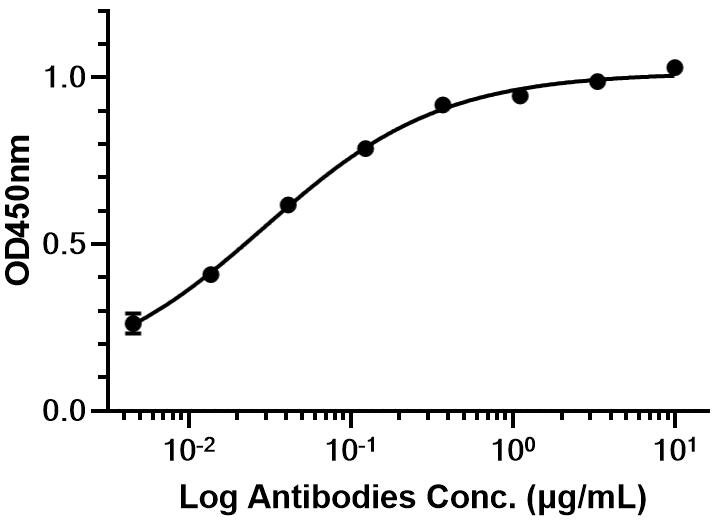 Immobilized GCGR Protein, Human can bind Crotedumab. The EC50 for this effect is 32.62 ng/mL.


Chemical Information
-
CAS No. 1452387-69-7
-
Appearance Liquid
-
Molecular Weight 146.82 kDa
-
Color Colorless to light yellow
-
SMILES
[Crotedumab]
-
Synonyms
REGN1193; Anti-GCGR Reference Antibody (crotedumab)
-
Shipping
Shipping with dry ice.
-
Formulation
Please refer to the lot-specific COA for specific buffer information.
-
Storage
Please store the product under the recommended conditions in the Certificate of Analysis.

Protocols
-
Research Protocol for Metabolic Diseases
AMP-activated protein kinase, AMPK, is a conserved cellular energy sensor that responds to reduced cellular energy status and coordinates metabolism by increasing ATP-generating catabolic pathways while suppressing ATP-consuming anabolic processes. In metabolic disease research, the AMPK pathway is experimentally relevant because it regulates hepatic lipid synthesis, fatty acid oxidation, glucose production, skeletal-muscle glucose disposal, mTORC1-linked biosynthesis, autophagy, mitochondrial homeostasis, and whole-body energy balance. The central pathway logic is that energy stress, metformin, exercise-like stimulation, or direct AMPK activators increase AMPKα Thr172 phosphorylation and downstream substrate phosphorylation, including ACC and RAPTOR. Phosphorylation of ACC suppresses lipogenesis and supports fatty acid oxidation, whereas phosphorylation of RAPTOR suppresses mTORC1 signaling and links cellular energy status to growth and protein synthesis control. The pathway is linked


Purity & Documentation
-
Data Sheet (260 KB)
-
SDS (252 KB)
- English - EN (252 KB)
- Français - FR (252 KB)
- Deutsch - DE (252 KB)
- Norwegian - NO (252 KB)
- Español - ES (252 KB)
- Swedish - SV (252 KB)
- Italian - IT (252 KB)
- Korean - KR (252 KB)
- Portuguese - PT (252 KB)
-
Inhibitory Antibodies User Guide (603 KB)
References
[1]. Kostic A, et, al. A first-in-human pharmacodynamic and pharmacokinetic study of a fully human anti-glucagon receptor monoclonal antibody in normal healthy volunteers. Diabetes Obes Metab. 2018 Feb;20(2):283-291. [Content Brief]
[2]. Okamot H, et, al. Glucagon Receptor Blockade With a Human Antibody Normalizes Blood Glucose in Diabetic Mice and Monkeys. Endocrinology. 2015 Aug;156(8):2781-94. [Content Brief]

Calculators
Concentration (start) × Volume (start) = Concentration (final) × Volume (final)


Crotedumab Related Classifications
HY-P99357 Related Classifications
 Powered by Bioz