



EACC
Based on 6 publication(s) in Google Scholar
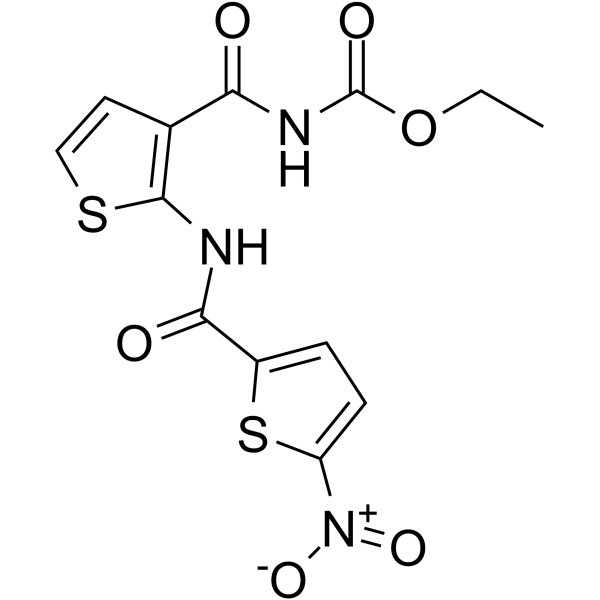
EACC is a reversible autophagy inhibitor, which can block autophagic flux. EACC selectively inhibits the translocation of autophagosome-specific SNARE Stx17 thereby blocking autophagosome-lysosome fusion.
For research use only. We do not sell to patients.
- Purity : 99.64%
- CAS No.: 864941-31-1
- Formula: C13H11N3O6S2
- Molecular Weight:369.37
-
Storage:Powder -20°C, 3 years , 4°C, 2 years ; In solvent -80°C, 2 years , -20°C, 1 year

To place orders, for customer services and technical support, please contact: MedChemExpress USA
Tel: 609-228-6898 E-mail: [email protected] [email protected]


-
 Biological Activity
-
Chemical Information
-
Solvent & Solubility
- Protocols
- Purity & Documentation
- References
-
 Help & FAQs


-
HY-19312
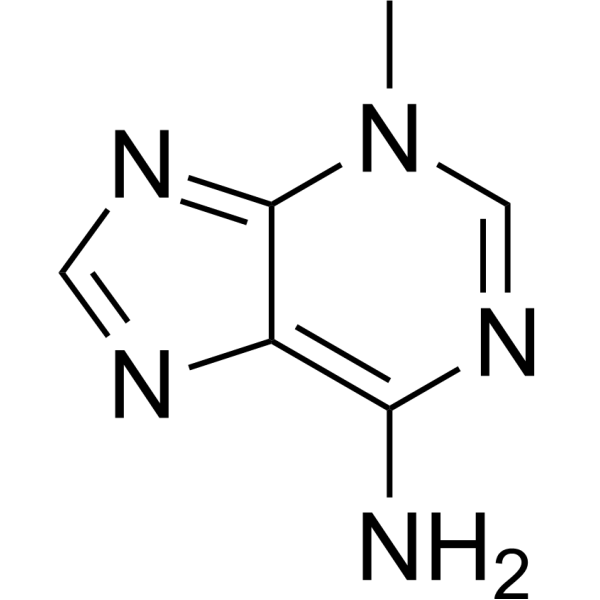
3-MethyladenineAutophagy/PI3K Inhibitor -
HY-112698
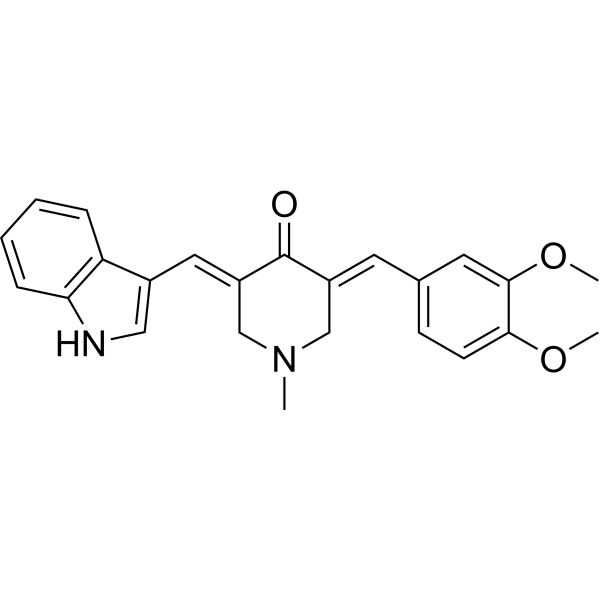
CA-5fLate-Stage Autophagy Inhibitor -
HY-12855A
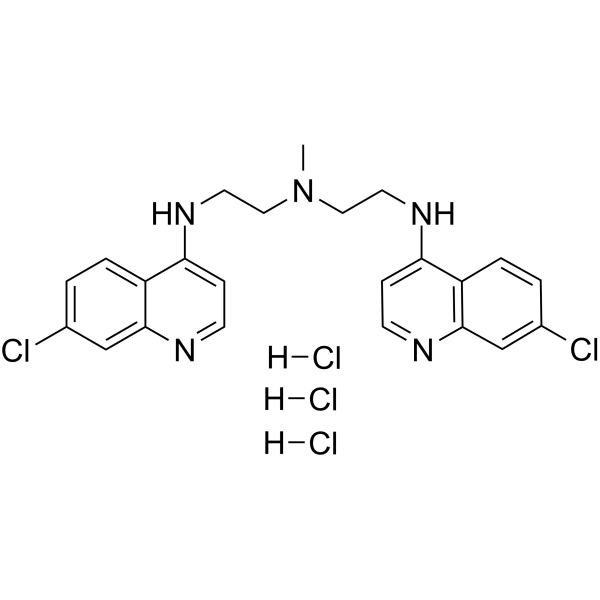
Lys05 -
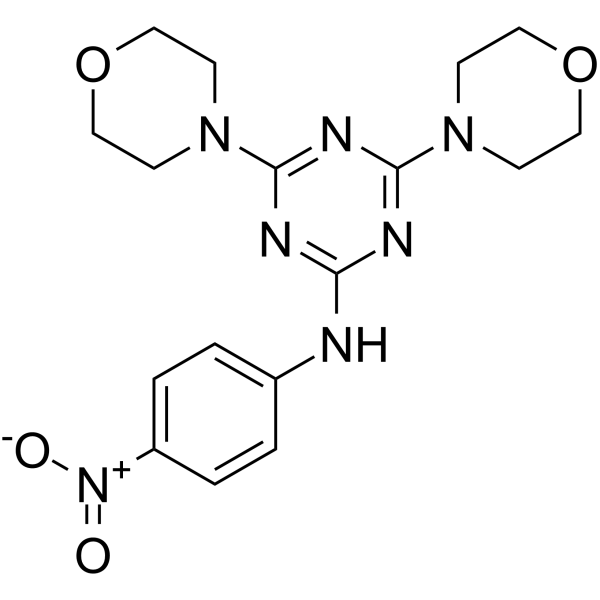
HY-B0795
MHY1485mTOR Activator -
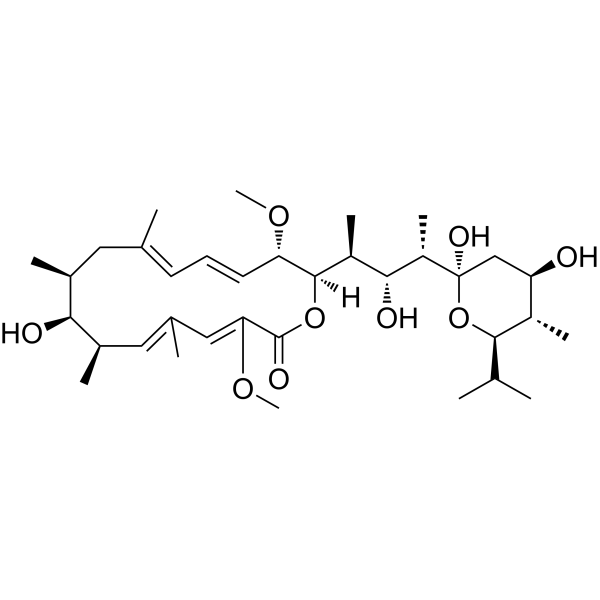
HY-100558
Bafilomycin A1V-ATPase Inhibitor -
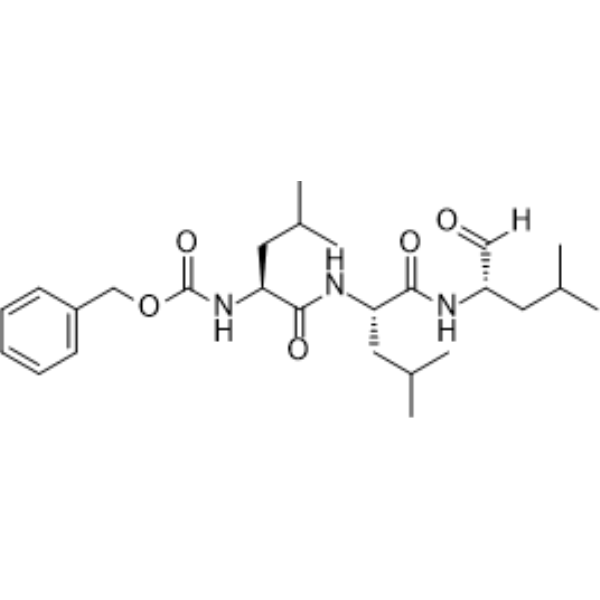
HY-13259
MG-132Proteasome Inhibitor -
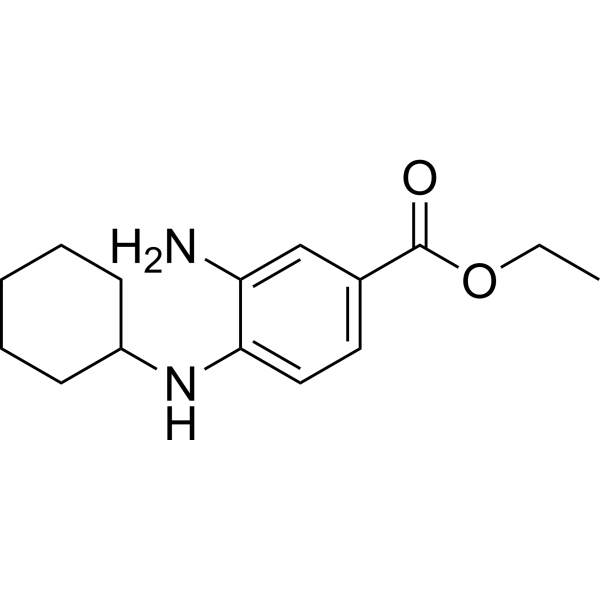
HY-100579
Ferrostatin-1Ferroptosis Inhibitor -
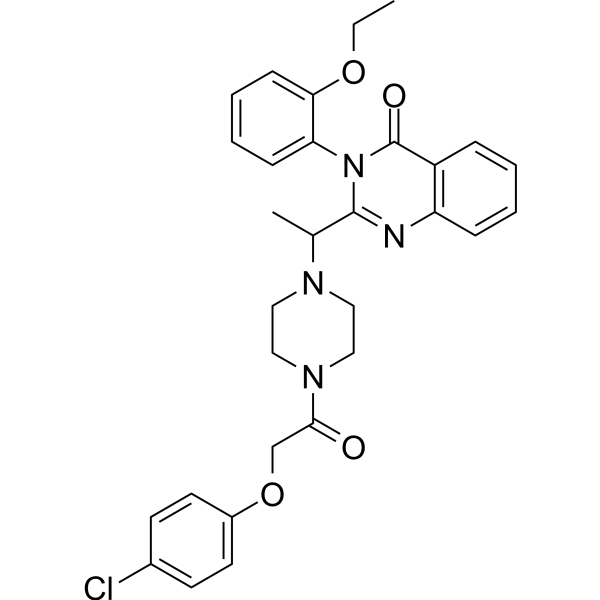
HY-15763
ErastinFerroptosis Inducer -
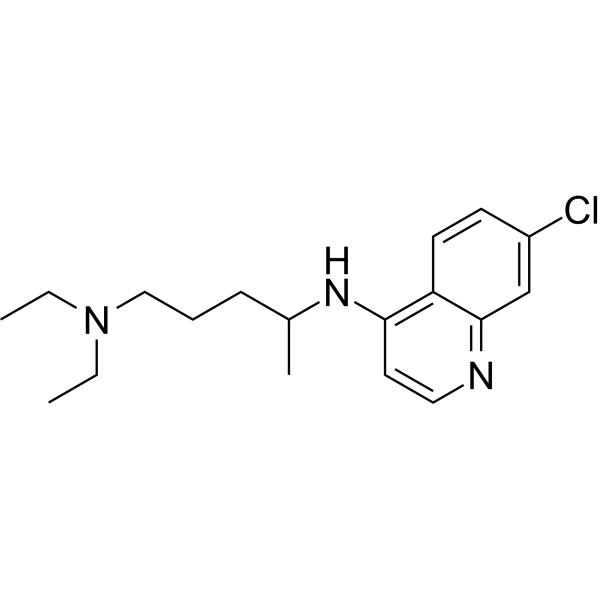
HY-17589A
ChloroquineAntimalarial Agent -
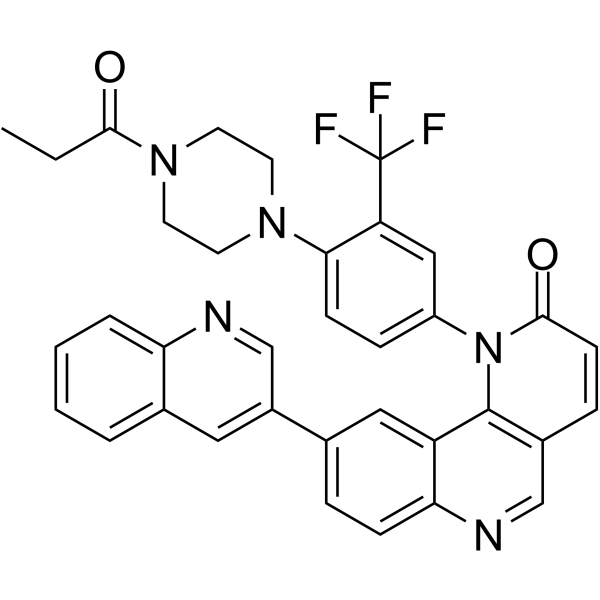
HY-13003
Torin 1mTOR Inhibitor -
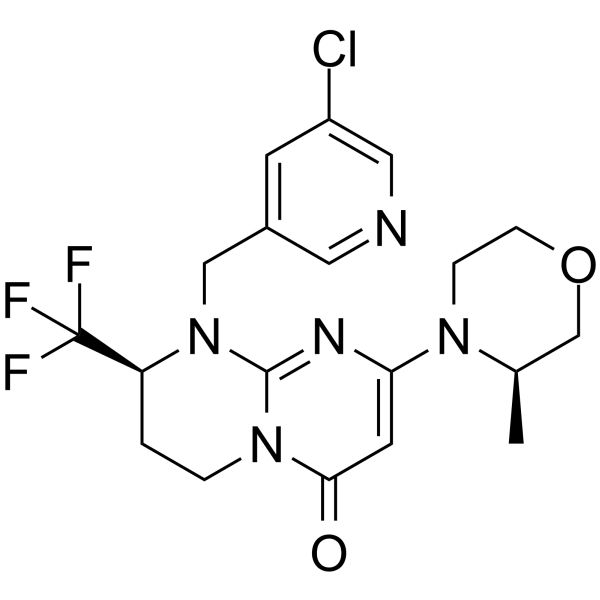
HY-12481
SAR405Vps34 Inhibitor -
HY-152100
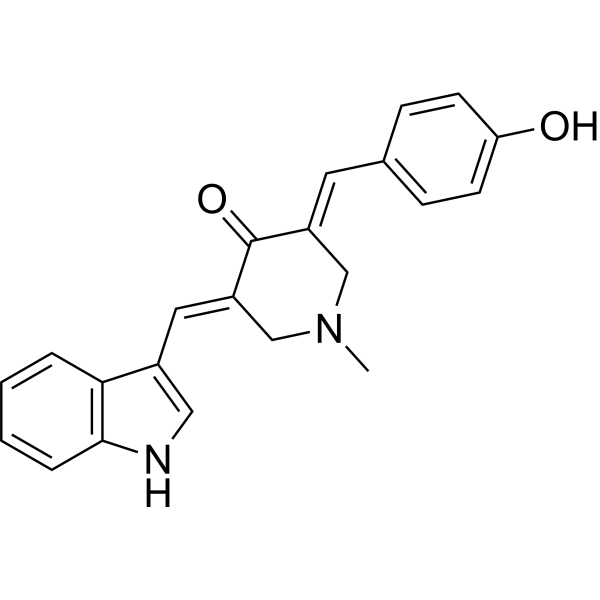
CUR5gAutophagy Inhibitor
Publications Citing Use of MedChemExpress (MCE) EACC
More

Biological Activity
Description
IC50 & Target
Autophagy[1]
In Vitro
EACC blocks autophagosome-lysosome fusion but does not affect endo-lysosomal function[1].
EACC inhibits autophagy by preventing SNARE Stx17 loading on autophagosomes[1].
EACC does not affect RABs, tethers, and lysosomal SNARE but prevents their interaction with LC3 and Stx17[1].
MedChemExpress (MCE) has not independently confirmed the accuracy of these methods. They are for reference only.


Chemical Information
-
CAS No. 864941-31-1
-
Appearance Solid
-
Molecular Weight 369.37
-
Formula C13H11N3O6S2
-
Color Light yellow to yellow
-
SMILES
O=C(OCC)NC(C1=C(NC(C2=CC=C([N+]([O-])=O)S2)=O)SC=C1)=O
-
Shipping
Room temperature in continental US; may vary elsewhere.
-
Storage
Powder -20°C 3 years 4°C 2 years In solvent -80°C 2 years -20°C 1 year


Publications (6)
-
Journal Impact Factor
-
Most Recent
-
Cell Commun Signal
Autophagy modulators influence the content of important signalling molecules in PS-positive extracellular vesicles. [Abstract]2023 May 24;21(1):120. PMID: 37226246 -
-
Cell Insight
2024 Feb 2;3(2):100147. PMID: 38344386 -
Eur J Pharmacol
Targeted inhibition of mTOR by BML-275 induces mitochondrial-mediated apoptosis and autophagy in prostate cancer. [Abstract]2023 Oct 15:957:176035. PMID: 37657741 -
-


Solvent & Solubility
In Vitro:
DMSO : 16.88 mg/mL (45.70 mM; Need ultrasonic; Hygroscopic DMSO has a significant impact on the solubility of product, please use newly opened DMSO)
Please refer to the solubility information to select the appropriate solvent. Once prepared, please aliquot and store the solution to prevent product inactivation from repeated freeze-thaw cycles.
Storage method and period of stock solution: -80°C, 2 years; -20°C, 1 year. When stored at -80°C, please use it within 2 years. When stored at -20°C, please use it within 1 year.
Please refer to the solubility information to select the appropriate solvent. Once prepared, please aliquot and store the solution to prevent product inactivation from repeated freeze-thaw cycles.
Storage method and period of stock solution: -80°C, 2 years; -20°C, 1 year. When stored at -80°C, please use it within 2 years. When stored at -20°C, please use it within 1 year.
Concentration (start) × Volume (start) = Concentration (final) × Volume (final)
In Vivo:
Select the appropriate dissolution method based on your experimental animal and administration route.
- For the following dissolution methods, please ensure to first prepare a clear stock solution using an In Vitro approach and then sequentially add co-solvents:
- To ensure reliable experimental results, the clarified stock solution can be appropriately stored based on storage conditions. As for the working solution for In Vivo experiments, it is recommended to prepare freshly and use it on the same day.
- The percentages shown for the solvents indicate their volumetric ratio in the final prepared solution. If precipitation or phase separation occurs during preparation, heat and/or sonication can be used to aid dissolution.
Add each solvent one by one: 10% DMSO 40% PEG300 5% Tween-80 45% Saline
Solubility: ≥ 1.69 mg/mL (4.58 mM); Clear solution
This protocol yields a clear solution of ≥ 1.69 mg/mL (saturation unknown).
Taking 1 mL working solution as an example, add 100 μL DMSO stock solution (16.9 mg/mL) to 400 μL PEG300, and mix evenly; then add 50 μL Tween-80 and mix evenly; then add 450 μL Saline to adjust the volume to 1 mL.
Preparation of Saline: Dissolve 0.9 g sodium chloride in ddH₂O and dilute to 100 mL to obtain a clear Saline solution.
In Vivo Dissolution Calculator
Please enter the basic information of animal experiments:
-
-
-
-
Recommended: Prepare an additional quantity of animals to account for potential losses during experiments.
Please enter your animal formula composition:
-
%DMSO +
Recommended: Keep the proportion of DMSO in working solution below 2% if your animal is weak.
-
%+
-
+%Tween-80 + +
-
%Saline +
The co-solvents required include: DMSO, . All of co-solvents are available by MedChemExpress (MCE). , Tween 80. All of co-solvents are available by MedChemExpress (MCE).
Working solution concentration: 0.22 mg/mL
Method for preparing stock solution: mg drug dissolved in μL DMSO. Stock solution concentration: mg/mL.
1. Take μL DMSO stock solution;
2. Add μL .
μL , mix evenly;
3. Then add μL Tween 80, mix evenly;
4. Then add μL
Please ensure that the stock solution in the first step is dissolved to a clear state, and add co-solvents in sequence. You can use ultrasonic heating (ultrasonic cleaner, recommended frequency 20-40 kHz), vortexing, etc. to assist dissolution.


Purity & Documentation
-
Data Sheet (278 KB)
-
SDS (396 KB)
- English - EN (396 KB)
- Français - FR (396 KB)
- Deutsch - DE (396 KB)
- Norwegian - NO (396 KB)
- Español - ES (396 KB)
- Swedish - SV (396 KB)
- Italian - IT (396 KB)
- Korean - KR (396 KB)
- Portuguese - PT (396 KB)
-
Handling Instructions (2659 KB)
References


Complete Stock Solution Preparation Table
Please refer to the solubility information to select the appropriate solvent. Once prepared, please aliquot and store the solution to prevent product inactivation from repeated freeze-thaw cycles.
Storage method and period of stock solution: -80°C, 2 years; -20°C, 1 year. When stored at -80°C, please use it within 2 years. When stored at -20°C, please use it within 1 year.
| Optional Solvent | Concentration Solvent Mass | 1 mg | 5 mg | 10 mg | 25 mg |
|---|---|---|---|---|---|
| DMSO | 1 mM | 2.7073 mL | 13.5366 mL | 27.0731 mL | 67.6828 mL |
| 5 mM | 0.5415 mL | 2.7073 mL | 5.4146 mL | 13.5366 mL | |
| 10 mM | 0.2707 mL | 1.3537 mL | 2.7073 mL | 6.7683 mL | |
| 15 mM | 0.1805 mL | 0.9024 mL | 1.8049 mL | 4.5122 mL | |
| 20 mM | 0.1354 mL | 0.6768 mL | 1.3537 mL | 3.3841 mL | |
| 25 mM | 0.1083 mL | 0.5415 mL | 1.0829 mL | 2.7073 mL | |
| 30 mM | 0.0902 mL | 0.4512 mL | 0.9024 mL | 2.2561 mL | |
| 40 mM | 0.0677 mL | 0.3384 mL | 0.6768 mL | 1.6921 mL |


EACC Related Classifications
HY-129111 Related Classifications
 Powered by Bioz