



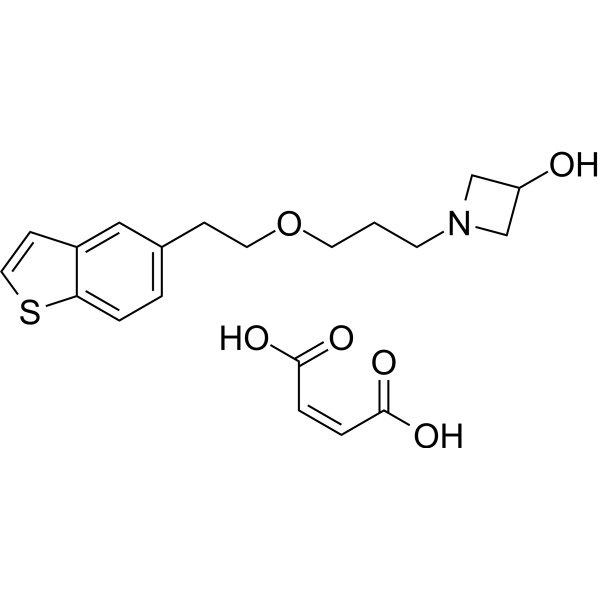
Edonerpic maleate

Based on 1 Customer Validation
Edonerpic maleate is a novel neurotrophic agent which can inhibit amyloid-β peptides (Aβ).
For research use only. We do not sell to patients.
- Purity : 99.02%
- CAS No.: 519187-97-4
- Formula: C20H25NO6S
- Molecular Weight:407.48
-
Storage:
4°C, sealed storage, away from moisture
* In solvent : -80°C, 6 months; -20°C, 1 month (sealed storage, away from moisture)

To place orders, for customer services and technical support, please contact: MedChemExpress USA
Tel: 609-228-6898 E-mail: [email protected] [email protected]


-
 Biological Activity
-
Chemical Information
-
Solvent & Solubility
- Protocols
- Purity & Documentation
- References
-
 Help & FAQs


-
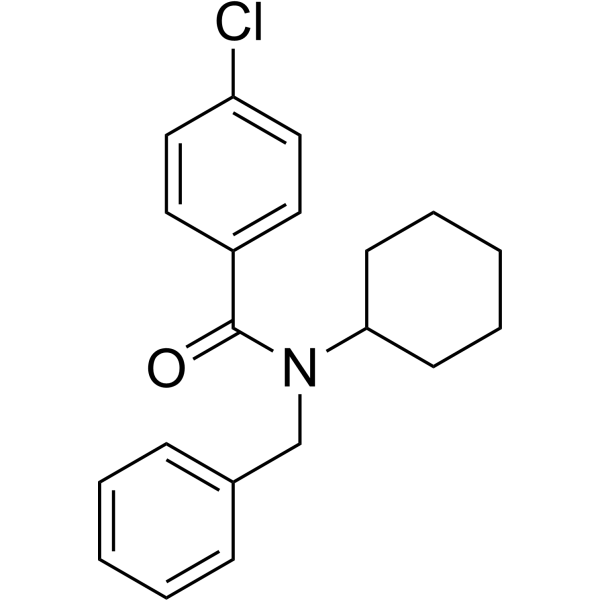
HY-19370
FPS-ZM1Amyloid-β Inhibitor -
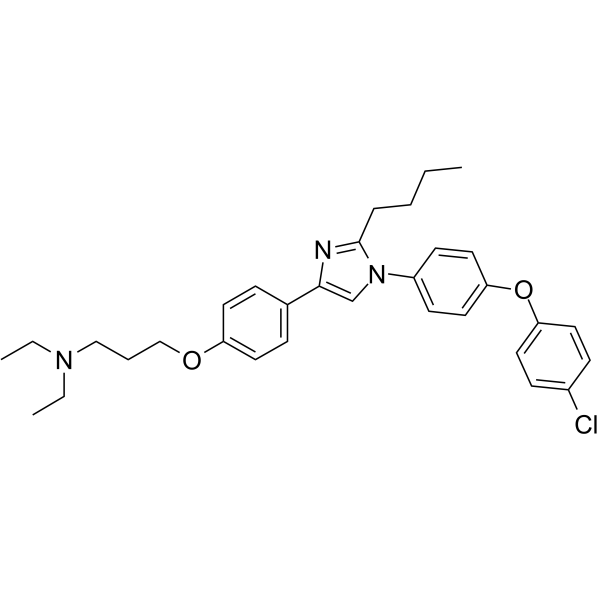
HY-50682
AzeliragonRAGE Inhibitor -

HY-P1363A
β-Amyloid (1-42), humanAmyloid β Peptide -

HY-P1363B
β-Amyloid (1-42), human, HFIP-treatedβ-Amyloid (1-42) Peptide -
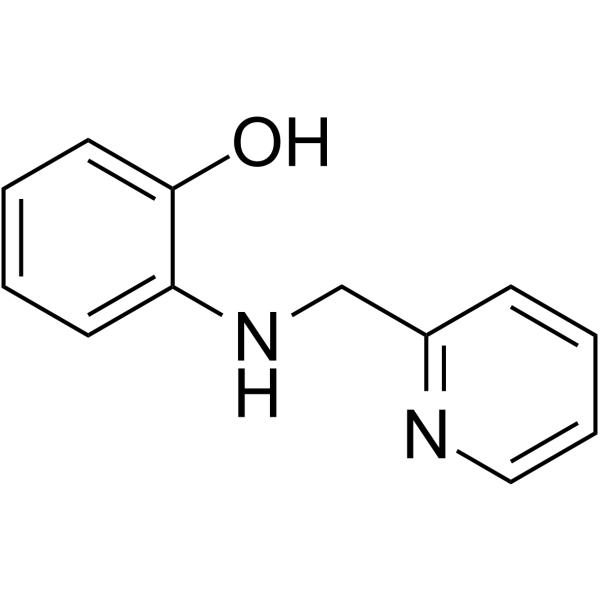
HY-18292
ARN2966APP Translation Modulator -
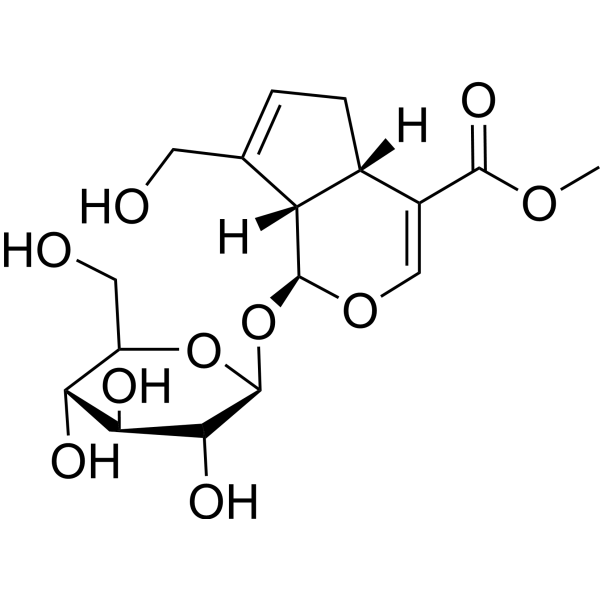
HY-N0009
GeniposideInfluenza Virus Inhibitor -
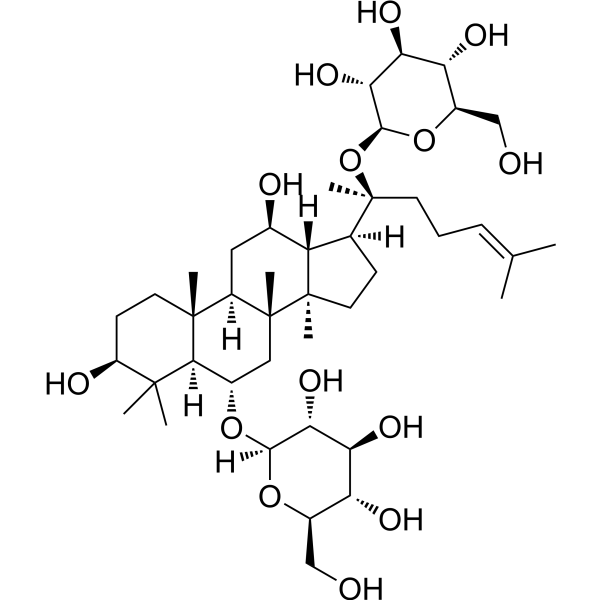
HY-N0045
Ginsenoside Rg1Apoptosis Inducer -
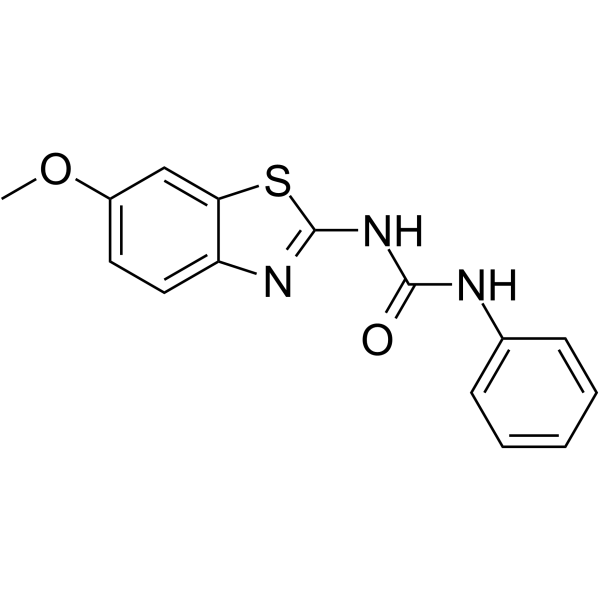
HY-15374
FrentizoleAβ-ABAD Inbihitor -
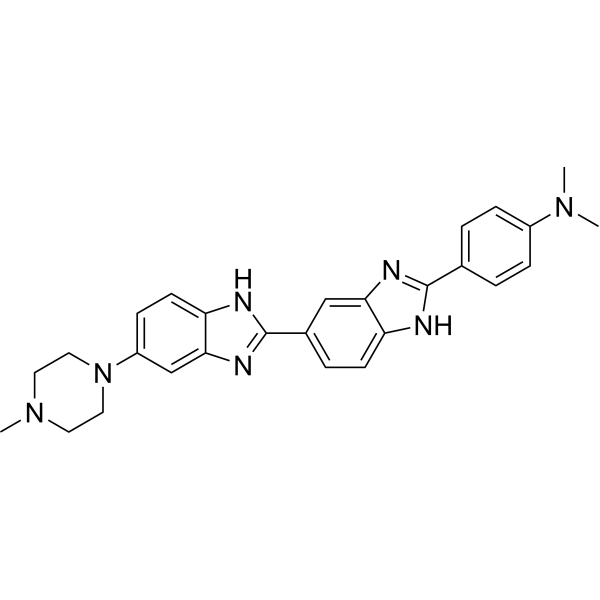
HY-15560
Hoechst 34580Amyloid-β Inhibitor -
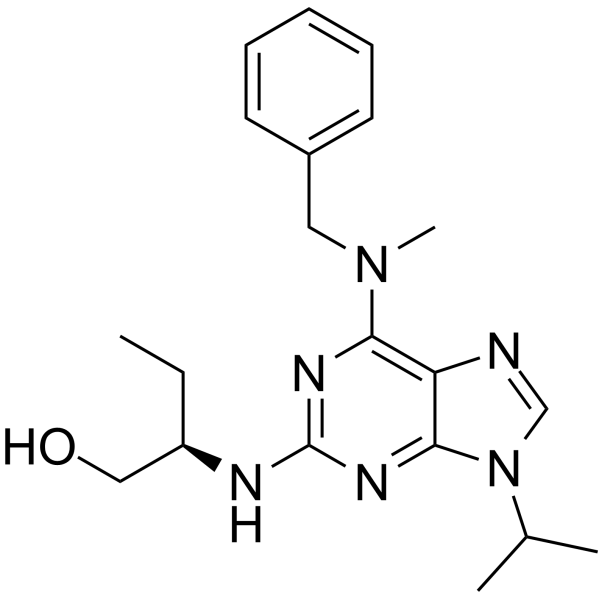
HY-111267
Aftin-4Amyloid-β Agonist -
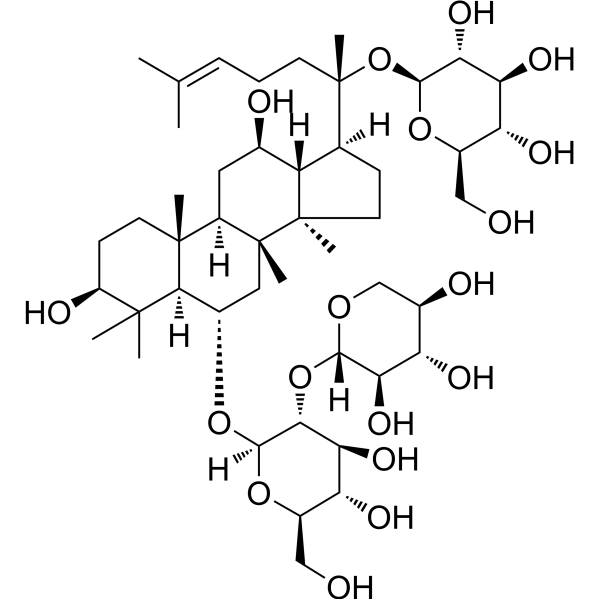
HY-N0615
Notoginsenoside R1Apoptosis Inhibitor -
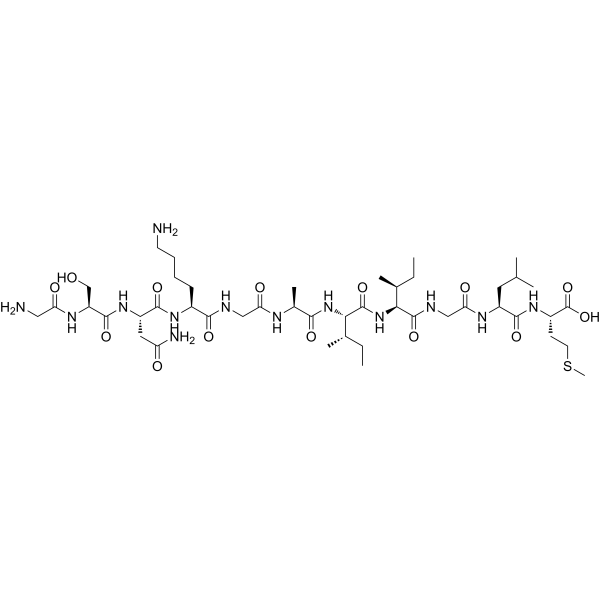
HY-P0128
β-Amyloid (25-35)Amyloid β Peptide


Biological Activity
Description
IC50 & Target
amyloid-β peptides[1]
In Vitro
Edonerpic maleate (T-817MA) treatment preserves the cortical neurons in the presence of Aβ(1-42). Twenty-four hours of pretreatment, followed by the continuous presence of Edonerpic maleate, prevents oxidative stress-induced neuronal death at 0.1 and 1 μM. Edonerpic maleate almost completely prevents GSH reduction at 0.1 and 1 μM. Hippocampal slices with 1 μM Edonerpic maleate treatment generate more and much longer neurites than control slices. Edonerpic maleate significantly increases the neurite length at 0.1 and 1 μM[1].
MedChemExpress (MCE) has not independently confirmed the accuracy of these methods. They are for reference only. Further protocols information, click here.
In Vivo
MedChemExpress (MCE) has not independently confirmed the accuracy of these methods. They are for reference only.
Clinical Trial
| NCT Number | Sponsor | Condition | Start Date |
Phase

|
|---|---|---|---|---|
| NCT01329991 | Plexxikon| | 2011-05 | PHASE1 |


Chemical Information
-
CAS No. 519187-97-4
-
Appearance Solid
-
Molecular Weight 407.48
-
Formula C20H25NO6S
-
Color White to off-white
-
SMILES
OC1CN(CCCOCCC2=CC=C3C(C=CS3)=C2)C1.O=C(O)/C=C\C(O)=O
-
Synonyms
T-817 maleate; T-817MA
-
Shipping
Room temperature in continental US; may vary elsewhere.
-
Storage
4°C, sealed storage, away from moisture
* In solvent : -80°C, 6 months; -20°C, 1 month (sealed storage, away from moisture)


Solvent & Solubility
In Vitro:
DMSO : 100 mg/mL (245.41 mM; Need ultrasonic; Hygroscopic DMSO has a significant impact on the solubility of product, please use newly opened DMSO)
H2O : 100 mg/mL (245.41 mM; Need ultrasonic)
Please refer to the solubility information to select the appropriate solvent. Once prepared, please aliquot and store the solution to prevent product inactivation from repeated freeze-thaw cycles.
Storage method and period of stock solution: -80°C, 6 months; -20°C, 1 month (sealed storage, away from moisture). When stored at -80°C, please use it within 6 months. When stored at -20°C, please use it within 1 month.
* Note: If you choose water as the stock solution, please dilute it to the working solution, then filter and sterilize it with a 0.22 μm filter before use.
Please refer to the solubility information to select the appropriate solvent. Once prepared, please aliquot and store the solution to prevent product inactivation from repeated freeze-thaw cycles.
Storage method and period of stock solution: -80°C, 6 months; -20°C, 1 month (sealed storage, away from moisture). When stored at -80°C, please use it within 6 months. When stored at -20°C, please use it within 1 month.
* Note: If you choose water as the stock solution, please dilute it to the working solution, then filter and sterilize it with a 0.22 μm filter before use.
Concentration (start) × Volume (start) = Concentration (final) × Volume (final)
In Vivo:
Select the appropriate dissolution method based on your experimental animal and administration route.
- For the following dissolution methods, please ensure to first prepare a clear stock solution using an In Vitro approach and then sequentially add co-solvents:
- To ensure reliable experimental results, the clarified stock solution can be appropriately stored based on storage conditions. As for the working solution for In Vivo experiments, it is recommended to prepare freshly and use it on the same day.
- The percentages shown for the solvents indicate their volumetric ratio in the final prepared solution. If precipitation or phase separation occurs during preparation, heat and/or sonication can be used to aid dissolution.
Add each solvent one by one: 10% DMSO 90% (20% SBE-β-CD in Saline)
Solubility: ≥ 2.5 mg/mL (6.14 mM); Clear solution
This protocol yields a clear solution of ≥ 2.5 mg/mL (saturation unknown).
Taking 1 mL working solution as an example, add 100 μL DMSO stock solution (25.0 mg/mL) to 900 μL 20% SBE-β-CD in Saline, and mix evenly.
Preparation of 20% SBE-β-CD in Saline (4°C, storage for one week): 2 g SBE-β-CD powder is dissolved in 10 mL Saline, completely dissolve until clear.
For the following dissolution methods, please prepare the working solution directly:
It is recommended to prepare fresh solutions and use them promptly within a short period of time.
The percentages shown for the solvents indicate their volumetric ratio in the final prepared solution. If precipitation or phase separation occurs during preparation, heat and/or sonication can be used to aid dissolution.
Add each solvent one by one: PBS
Solubility: 140 mg/mL (343.58 mM); Clear solution; Need ultrasonic
In Vivo Dissolution Calculator
Please enter the basic information of animal experiments:
-
-
-
-
Recommended: Prepare an additional quantity of animals to account for potential losses during experiments.
Working solution concentration: 0.22 mg/mL
This product has good water solubility, please refer to the measured solubility data in water/PBS/Saline for details.

Protocols
-
Amyloid: Congo Red Amyloid Staining
Congo red amyloid staining is a histochemical method used to detect extracellular amyloid deposits in tissue sections based on the affinity of Congo red dye for β-pleated sheet-rich protein aggregates. When bound to amyloid, Congo red produces characteristic apple-green birefringence under polarized light microscopy, which is widely regarded as a diagnostic feature of amyloid deposition in histopathology. The diagnostic principle relies on the combination of dye binding (congophilia) and optical anisotropy under polarized illumination, which distinguishes amyloid from most non-amyloid eosinophilic extracellular deposits in routine histological evaluation. Amyloid identification by Congo red staining remains a cornerstone in diagnostic pathology despite the availability of adjunct methods such as immunohistochemistry and mass spectrometry, particularly because of its ability to localize deposits directly within tissue architecture. The specificity of Congo red-positive deposits is incre
-
Alzheimer’s Disease Modeling
Alzheimer’s Disease (AD) is a neurodegenerative disorder characterized by a progressive decline in cognitive functions and loss of specific types of neurons and synapses. Alzheimer's symptoms can be simulated in mice by injecting drugs (such as Aβ) or genetically modified.


Purity & Documentation
-
Data Sheet (275 KB)
-
SDS (252 KB)
- English - EN (252 KB)
- Français - FR (252 KB)
- Deutsch - DE (252 KB)
- Norwegian - NO (252 KB)
- Español - ES (252 KB)
- Swedish - SV (252 KB)
- Italian - IT (252 KB)
- Korean - KR (252 KB)
- Portuguese - PT (252 KB)
-
Handling Instructions (2659 KB)
References
[1]. Hirata K, et al. A novel neurotrophic agent, T-817MA [1-{3-[2-(1-benzothiophen-5-yl) ethoxy] propyl}-3-azetidinol maleate], attenuates amyloid-beta-induced neurotoxicity and promotes neurite outgrowth in rat cultured central nervous system neurons. J Pharmacol Exp Ther. 2005 Jul;314(1):252-9. [Content Brief]
[2]. Kimura T, et al. T-817MA, a neurotrophic agent, ameliorates the deficits in adult neurogenesis and spatial memory in rats infused i.c.v. with amyloid-beta peptide. Br J Pharmacol. 2009 Jun;157(3):451-63. [Content Brief]


Complete Stock Solution Preparation Table
Please refer to the solubility information to select the appropriate solvent. Once prepared, please aliquot and store the solution to prevent product inactivation from repeated freeze-thaw cycles.
Storage method and period of stock solution: -80°C, 6 months; -20°C, 1 month (sealed storage, away from moisture). When stored at -80°C, please use it within 6 months. When stored at -20°C, please use it within 1 month.
| Optional Solvent | Concentration Solvent Mass | 1 mg | 5 mg | 10 mg | 25 mg |
|---|---|---|---|---|---|
| DMSO / H2O | 1 mM | 2.4541 mL | 12.2705 mL | 24.5411 mL | 61.3527 mL |
| 5 mM | 0.4908 mL | 2.4541 mL | 4.9082 mL | 12.2705 mL | |
| 10 mM | 0.2454 mL | 1.2271 mL | 2.4541 mL | 6.1353 mL | |
| 15 mM | 0.1636 mL | 0.8180 mL | 1.6361 mL | 4.0902 mL | |
| 20 mM | 0.1227 mL | 0.6135 mL | 1.2271 mL | 3.0676 mL | |
| 25 mM | 0.0982 mL | 0.4908 mL | 0.9816 mL | 2.4541 mL | |
| 30 mM | 0.0818 mL | 0.4090 mL | 0.8180 mL | 2.0451 mL | |
| 40 mM | 0.0614 mL | 0.3068 mL | 0.6135 mL | 1.5338 mL | |
| 50 mM | 0.0491 mL | 0.2454 mL | 0.4908 mL | 1.2271 mL | |
| 60 mM | 0.0409 mL | 0.2045 mL | 0.4090 mL | 1.0225 mL | |
| 80 mM | 0.0307 mL | 0.1534 mL | 0.3068 mL | 0.7669 mL | |
| 100 mM | 0.0245 mL | 0.1227 mL | 0.2454 mL | 0.6135 mL |
* Note: If you choose water as the stock solution, please dilute it to the working solution, then filter and sterilize it with a 0.22 μm filter before use.


Edonerpic maleate Related Classifications
HY-17631A Related Classifications
 Powered by Bioz