



eIF4E-IN-1
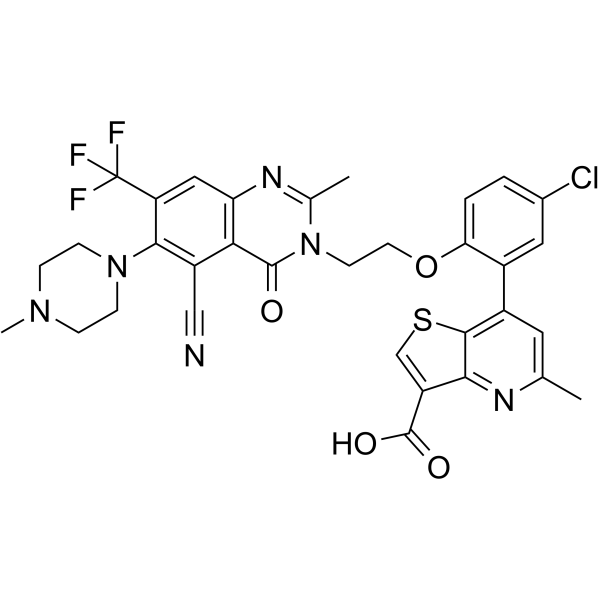
eIF4E-IN-1 is a potent inhibitor of eIF4E. eIF4E-IN-1 inhibits immunosuppression components such as immune checkpoint proteins PD-1, PD-L1, LAG3, TIM3, and/or IDO, in order to inhibit or release immune suppression in certain diseases, such as cancer and infectious disease (extracted from patent WO2021003194A1, compound Y).
For research use only. We do not sell to patients.
- CAS No.: 2573979-31-2
- Formula: C33H28ClF3N6O4S
- Molecular Weight:697.13
-
Storage:
Please store the product under the recommended conditions in the Certificate of Analysis.

To place orders, for customer services and technical support, please contact: MedChemExpress USA
Tel: 609-228-6898 E-mail: [email protected] [email protected]


-
 Biological Activity
-
Chemical Information
- Protocols
- Purity & Documentation
- References
-
 Help & FAQs


-
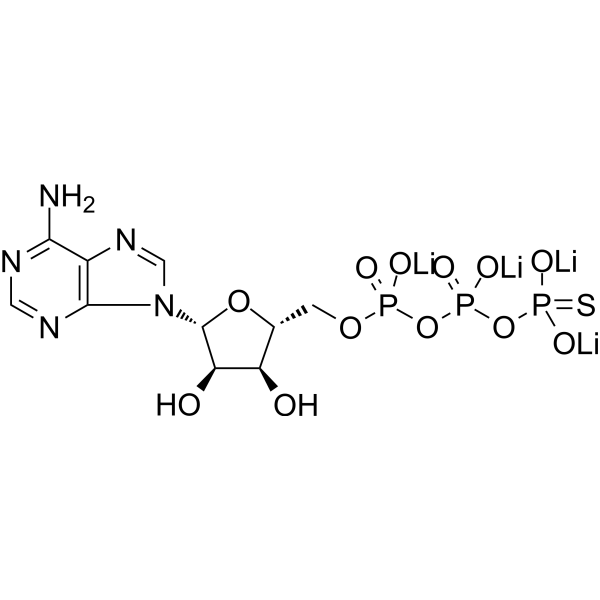
HY-108666
ATPγS tetralithium saltP2Y11 Receptor Agonist -
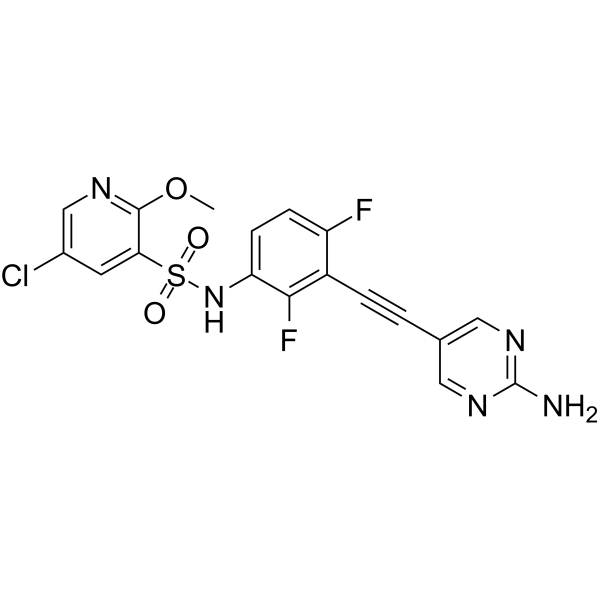
HY-112654
GCN2iBGCN2 Kinase Inhibitor -
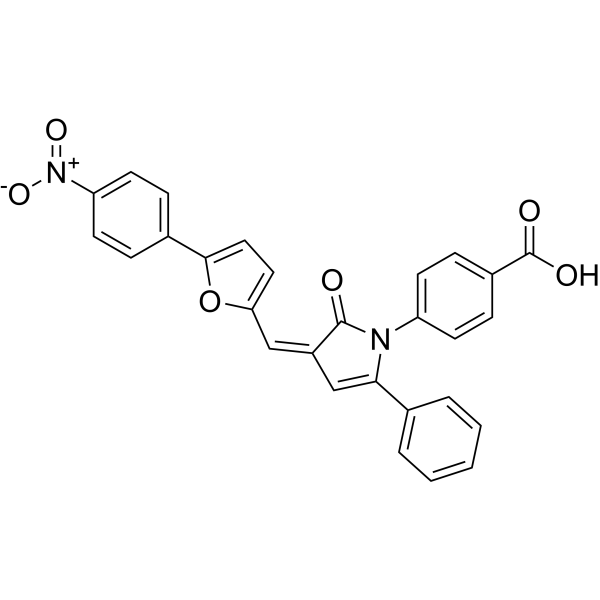
HY-14427
4E1RCateIF Inhibitor -
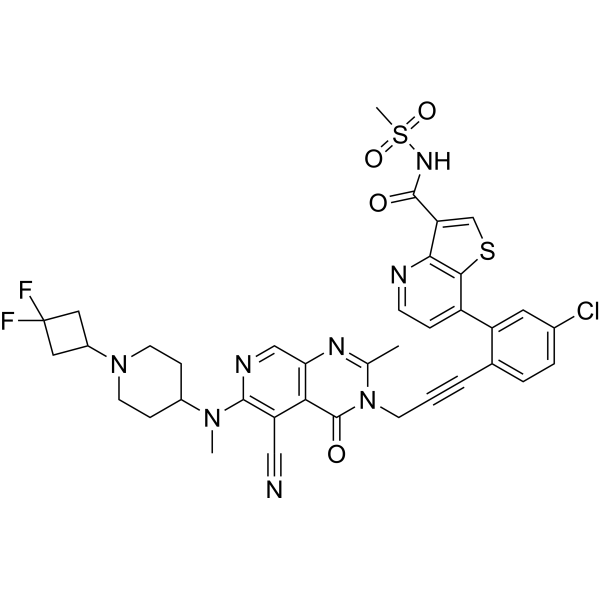
HY-145262
eIF4E-IN-2eIF4e Inhibitor -
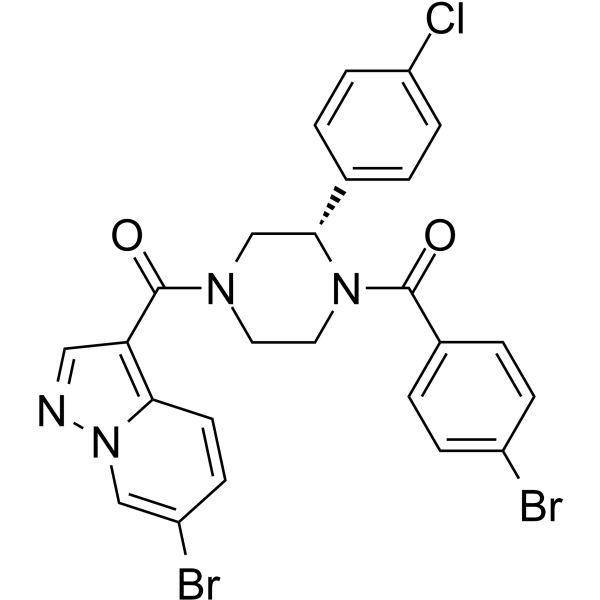
HY-101785
eIF4A3-IN-2eIF4A3 Inhibitor -
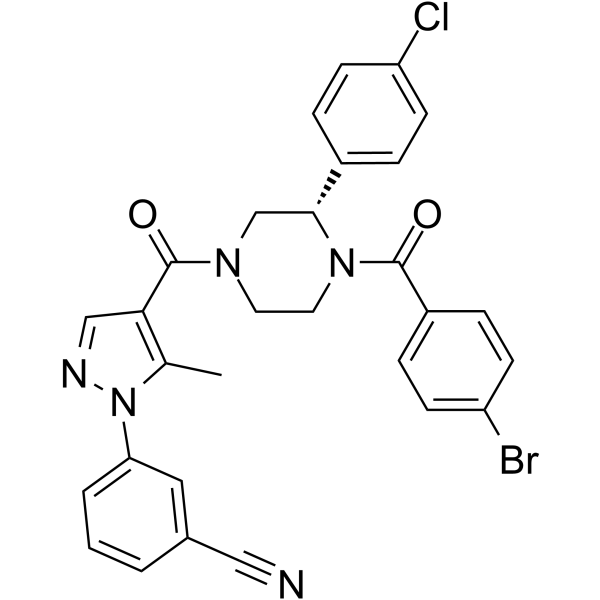
HY-101513
eIF4A3-IN-1eIF4A3 Inhibitor -
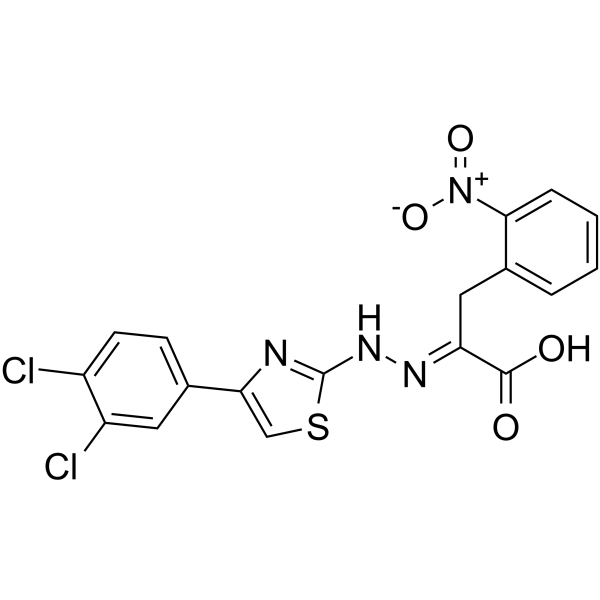
HY-19831A
(Z)-4EGI-1eIF4E/eIF4G Interaction Inhibitor -
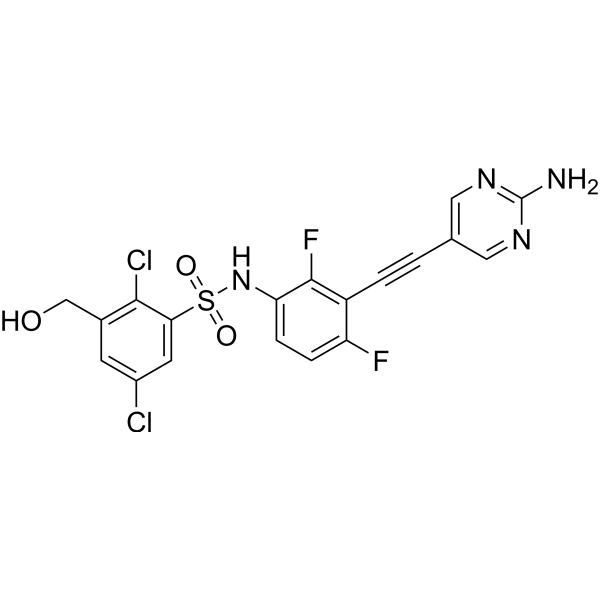
HY-130240
GCN2-IN-6eIF Inhibitor -
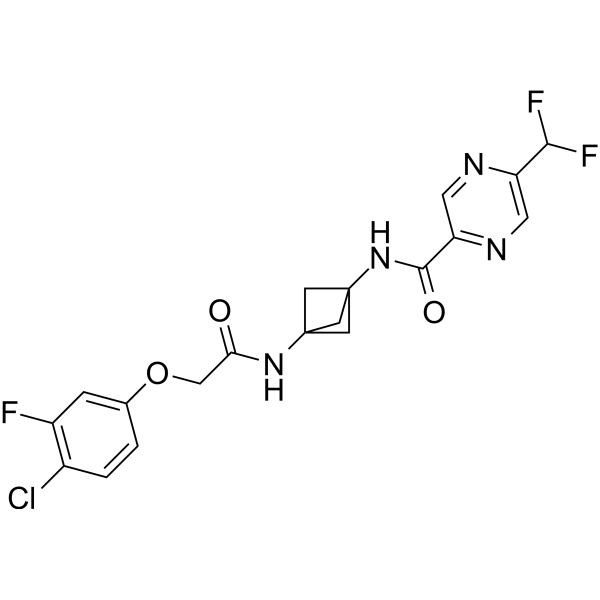
HY-125021
2BActeIF2B Activator -
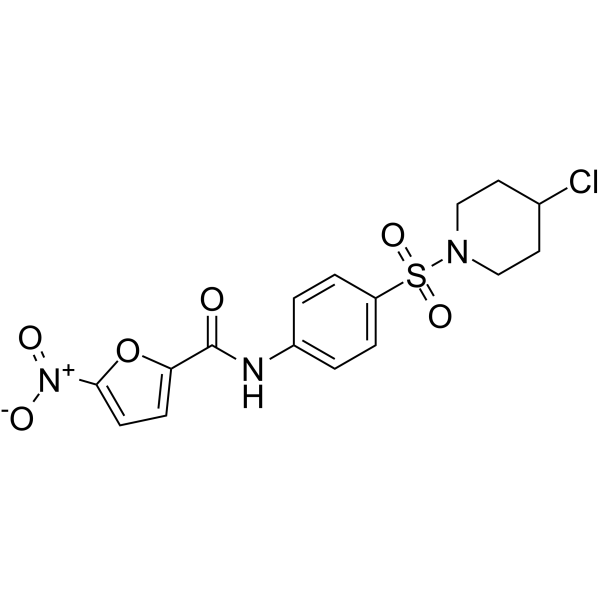
HY-101991
ML291UPR Signaling Activator -

HY-108666R
ATPγS tetralithium salt (Standard)Reference Standard -

HY-101785R
eIF4A3-IN-2 (Standard)Reference Standard


Biological Activity
Description
IC50 & Target
eIF4E[1]


Chemical Information
-
CAS No. 2573979-31-2
-
Molecular Weight 697.13
-
Formula C33H28ClF3N6O4S
-
SMILES
N#CC1=C(N2CCN(CC2)C)C(C(F)(F)F)=CC3=C1C(N(CCOC4=CC=C(C=C4C5=C(SC=C6C(O)=O)C6=NC(C)=C5)Cl)C(C)=N3)=O
-
Shipping
Room temperature in continental US; may vary elsewhere.
-
Storage
Please store the product under the recommended conditions in the Certificate of Analysis.

Protocols
-
Research Protocol for Infectious Diseases
Infectious-disease experiments test how pathogens interact with host barriers, innate immune receptors, inflammatory signaling, pathogen replication, and tissue injury; pattern-recognition receptors such as TLRs, RIG-I-like receptors, NOD-like receptors, and inflammasomes detect microbial molecules and activate NF-κB, interferon, and cytokine responses. The central hypothesis is that infection severity reflects the balance between pathogen burden and host response: protective inflammation restricts pathogen growth, whereas excessive or mislocalized inflammation contributes to tissue damage and disease phenotype. Unresolved questions include which host pathways are protective versus pathogenic, why some infection models fail to translate to human disease, and which combined readouts best predict clinically relevant infection outcomes.
-
Research Protocol for Cancer Immunology
Cancer immunology studies how the immune system recognizes, suppresses, edits, or fails to eliminate malignant cells through tumor antigen release, antigen presentation, T-cell priming, immune trafficking, tumor-cell killing, and feedback inhibition in the tumor microenvironment. The cancer-immunity cycle links tumor antigenicity, dendritic-cell priming, CD8+ T-cell infiltration, cytotoxic function, and immune-checkpoint regulation to tumor rejection or immune escape. Immune-checkpoint pathways such as PD-1/PD-L1 and CTLA-4 suppress antitumor T-cell activity and can be therapeutically blocked, but many tumors remain resistant because of poor antigen presentation, weak T-cell infiltration, suppressive myeloid cells, regulatory T cells, and tumor-intrinsic immune-exclusion programs. Unresolved questions include which immune-cell states predict response, how tumor-intrinsic pathways exclude immune cells, how myeloid suppression limits checkpoint blockade, and which combination strategies


Purity & Documentation
References

Calculators
Concentration (start) × Volume (start) = Concentration (final) × Volume (final)


eIF4E-IN-1 Related Classifications
HY-145240 Related Classifications
 Powered by Bioz