



Cholestyramine
Based on 10 publication(s) in Google Scholar
Cholestyramine (Cholestyramine resin) is an orally active bile acid sequestrant. Cholestyramine upregulates the expression of intestinal Apical sodium-dependent bile acid transporter and hepatic Cholesterol 7α-hydroxylase. Cholestyramine induces the expression of intestinal and hepatic cholesterol synthesis genes as well as hepatic lipogenesis genes, and promotes bile acid- and neutral sterol-mediated reverse cholesterol transport. Cholestyramine reduces intestinal cholesterol absorption and induces cholesterol efflux. Cholestyramine is applicable to research related to coronary artery disease, atherosclerotic cardiovascular disease and atherosclerosis.
For research use only. We do not sell to patients.
- CAS No.: 11041-12-6
-
Storage:Powder -20°C, 3 years , 4°C, 2 years ; In solvent -80°C, 6 months , -20°C, 1 month

To place orders, for customer services and technical support, please contact: MedChemExpress USA
Tel: 609-228-6898 E-mail: [email protected] [email protected]


-
 Biological Activity
-
Chemical Information
-
Solvent & Solubility
- Protocols
- Purity & Documentation
- References
-
 Help & FAQs


-
HY-17031
SBE-β-CDExcipient -
HY-50108
GW 4064FXR Agonist -
HY-B0172
Lithocholic acidAutophagy Inducer -
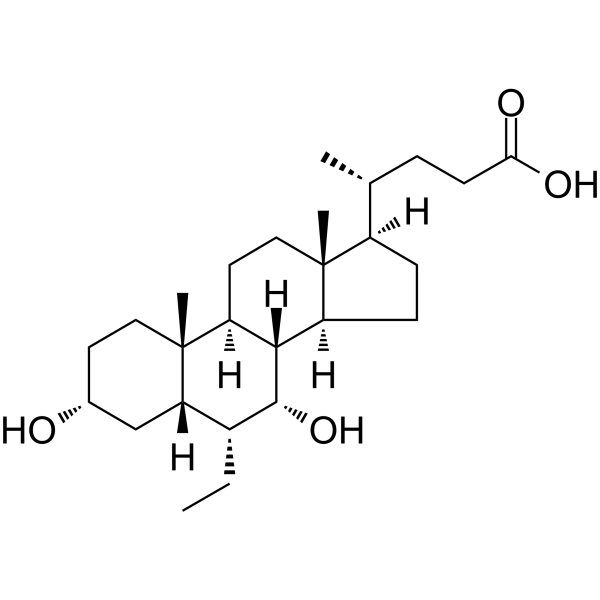
HY-12222
Obeticholic acidFXR Agonist -
HY-Y0320
Dimethyl sulfoxide, meets analytical specification of Ch.P.Aprotic Solvent -
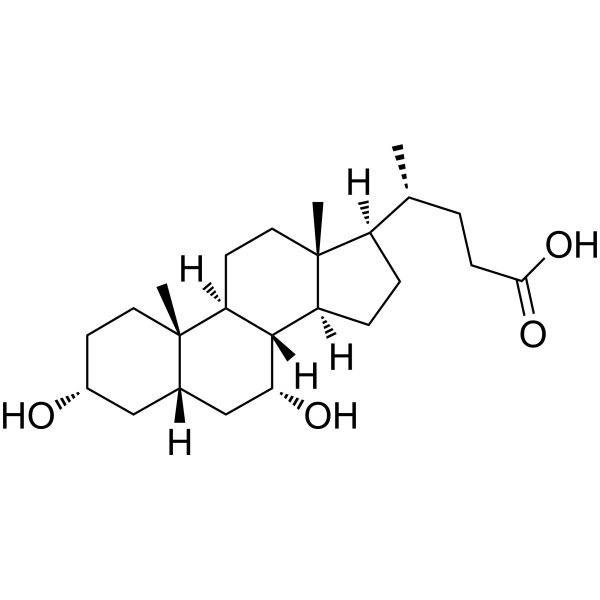
HY-76847
Chenodeoxycholic AcidEndogenous Metabolite -
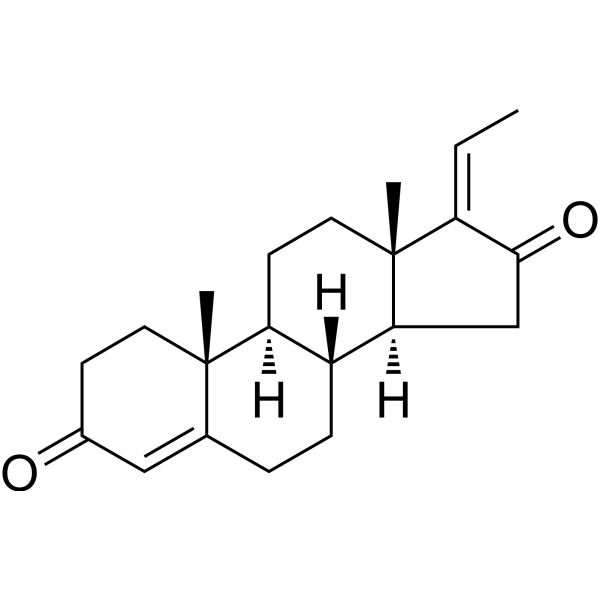
HY-107738
GuggulsteroneSterol -
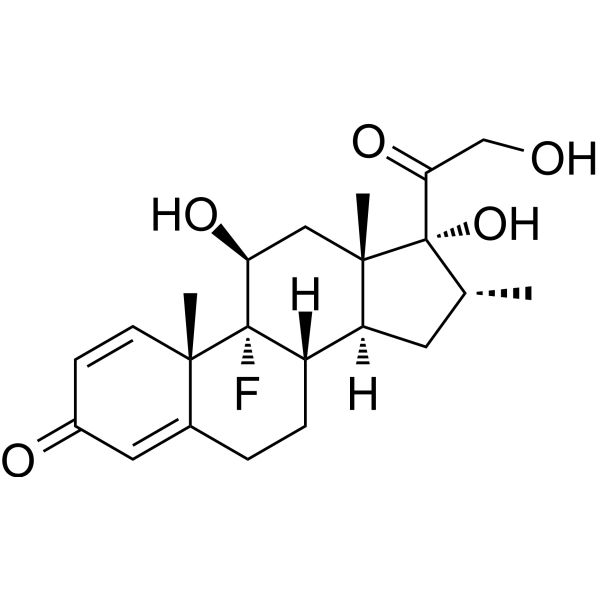
HY-14648
DexamethasoneGR Agonist -

HY-W077680
Girard's P reagentBiochemical Assay Reagents -
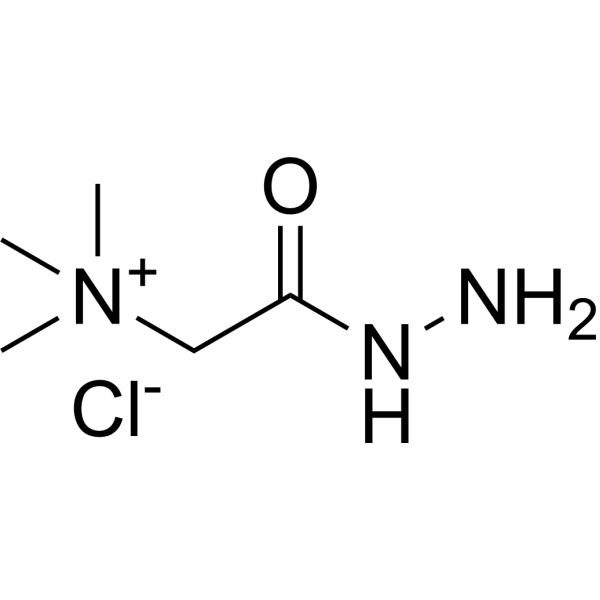
HY-W074541
Girard’s reagent TBiochemical Assay Reagent -
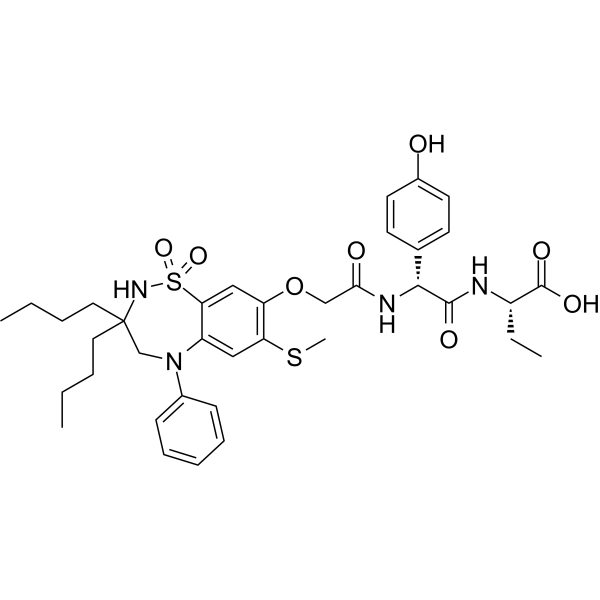
HY-109120
OdevixibatASBT Inhibitor -
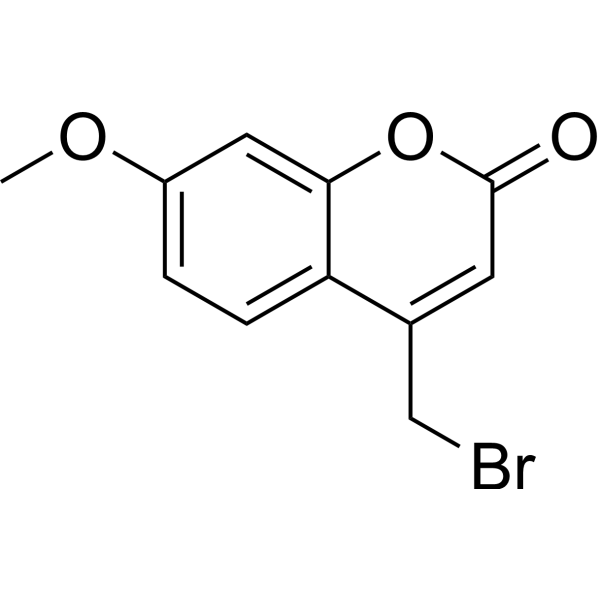
HY-D0036
Br-MmcFluorescent Label
Publications Citing Use of MedChemExpress (MCE) Cholestyramine
More- Microbiome. 2024 Jul 17;12(1):128. [Abstract]
- Microbiome. 2023 May 2;11(1):96. [Abstract]
- Phytomedicine. 2026 Oct:160:158660.
- Cell Prolif. 2024 Aug;57(8):e13638. [Abstract]
- Sci Signal. 2024 Dec 17;17(867):eadl1786. [Abstract]
- Foods. 2026 May 14;15(10):1732. [Abstract]
- Cellulose. 27, 4019-4028 (2020).
- J Appl Toxicol. 2023 Apr;43(4):599-614. [Abstract]
- SSRN. 2025 Aug 8.
- SSRN. 2023 Aug 28.
 Customer Validation & Images

-
RT-PCR

-
In Vivo Efficacy Study

-
In Vivo Efficacy Study

-
ELISA

-
IF


Biological Activity
Description
In Vitro
Cholestyramine (0.1-50 μg/mL; 48 h) dose-dependently enhances cholesterol efflux from HMEC-1 immortalized human microvascular endothelial cells, with a 66% reduction in cholesterol load at 50 μg/mL after 48-hour incubation[3].
MedChemExpress (MCE) has not independently confirmed the accuracy of these methods. They are for reference only.
In Vivo
Co-administration of cholestyramine (2%; oral via diet; ad libitum access; 4 weeks) and GSPE (250 mg/kg; oral; single dose) in normolipidemic male C57BL/6 mice synergistically enhances the expression of hepatic bile acid synthesis genes, attenuates the cholestyramine-induced upregulation of hepatic cholesterol and lipogenesis gene expression, and reduces serum triglyceride levels more significantly than cholestyramine alone[1].
Cholestyramine (2% (w/w); administered orally via diet; daily; for 14 days) increases the level of macrophage-to-feces reverse cholesterol transport in wild-type C57BL/6J mice by 3.6-fold within 24-48 h by enhancing fecal excretion of bile acids and neutral sterols; no additive effect is observed when it is used in combination with rHDL[2].
MedChemExpress (MCE) has not independently confirmed the accuracy of these methods. They are for reference only.
-
Animal Model:C57BL/6 (male, 8 weeks old)[1]
-
Dosage:2%
-
Administration:dietary supplementation; ad libitum; 4 weeks
-
Result:Showed no significant difference in body weight relative to control at any weekly time point over 4 weeks.
Robustly induced apical sodium-dependent bile acid transporter (Asbt) expression relative to control.
Significantly reduced ileal bile acid binding protein (Ibabp) and fibroblast growth factor 15 (Fgf15) expression relative to control.
Significantly increased expression of intestinal cholesterol synthesis genes 3-hydroxy-3-methylglutaryl-CoA synthase 1 (Hmgcs1) and 3-hydroxy-3-methylglutaryl-CoA reductase (Hmgcr), as well as scavenger receptor class b, member 1 (Scarb1) and low density lipoprotein receptor (Ldlr) relative to control.
Induced cholesterol 7α-hydroxylase (Cyp7a1) expression 8-fold relative to control.
Increased sterol 12α-hydroxylase (Cyp8b1) expression relative to control.
Decreased oxysterol 7α-hydroxylase (Cyp7b1) expression relative to control.
Significantly increased expression of hepatic cholesterol synthesis genes Hmgcs1 and Hmgcr, as well as sterol regulatory element binding protein 1c (Srebf1c) and its lipogenic target genes acetyl CoA carboxylase 1 (Acc1), fatty acid synthase (Fasn), and stearoyl CoA desaturase (Scd1) relative to control.
Reduced serum bile acid levels relative to control.
Reduced serum triglyceride levels by 56% relative to control.
Reduced serum non-esterified fatty acid levels relative to control.
Showed no change in serum cholesterol, alanine aminotransferase (ALT), or aspartate aminotransferase (AST) levels relative to control.
Increased fecal bile acid excretion relative to control.
Increased total fecal lipid excretion relative to control.
Increased fecal non-esterified fatty acid excretion relative to control.
Showed no change in fecal cholesterol excretion relative to control.
-
Animal Model:C57BL/6 (male, 8 weeks old)[1]
-
Dosage:2% (cholestyramine); 250 mg/kg (GSPE)
-
Administration:dietary supplementation; ad libitum; 4 weeks (cholestyramine); p.o.; single dose (GSPE)
-
Result:Robustly induced Asbt expression relative to control.
Significantly reduced Ibabp and Fgf15 expression relative to control.
Significantly increased expression of intestinal cholesterol synthesis genes Hmgcs1 and Hmgcr, as well as Acat2, Mttp, Scarb1, and Ldlr relative to control.
Induced Cyp7a1 expression nearly 13-fold relative to control.
Increased Cyp8b1 and sterol 27-hydroxylase (Cyp27a1) expression relative to control.
Showed no change in Cyp7b1 expression relative to control.
Attenuated the cholestyramine-induced increases in hepatic Hmgcs1, Hmgcr, Srebf1c, Acc1, Fasn, and Scd1 expression relative to cholestyramine alone.
Reduced serum bile acid levels to a greater extent than cholestyramine alone relative to control.
Reduced serum triglyceride levels by 66.7% relative to control (a 25% additional decrease compared to cholestyramine alone).
Reduced serum non-esterified fatty acid levels relative to control.
Showed no change in serum cholesterol, ALT, or AST levels relative to control.
Increased fecal bile acid excretion relative to control.
Increased total fecal lipid excretion relative to control.
Increased fecal non-esterified fatty acid excretion relative to control.
Showed no change in fecal cholesterol excretion relative to control.
-
Animal Model:C57BL/6J mice[2]
-
Dosage:2% (w/w)
-
Administration:p.o.; daily; 14 days
-
Result:Decreased intestinal cholesterol absorption by 24%.
Increased fecal bile acid excretion several fold.
Increased fecal neutral sterol excretion at 0-4 h, 4-24 h, and 24-48 h.
Increased overall macrophage-to-feces RCT by 2.2-fold (4-24 h) and 3.6-fold (24-48 h).
Increased fecal tracer excretion within bile acids by 3.9-fold (4-24 h) and 3.2-fold (24-48 h).
Increased fecal tracer excretion within neutral sterols at 4-24 h and 24-48 h.
Did not change baseline plasma free or total cholesterol or triglyceride levels.
Caused a decrease in plasma free cholesterol levels at 4 h and an increase at 24 h and 48 h when combined with a single dose of rHDL (100 mg/kg apoA-I-POPC).
Showed no additive effect on RCT when combined with rHDL.
Clinical Trial
| NCT Number | Sponsor | Condition | Start Date |
Phase

|
|---|---|---|---|---|
| NCT01329991 | 2011-05 | PHASE1 |


Chemical Information
-
CAS No. 11041-12-6
-
Appearance Solid
-
Color White to off-white
-
SMILES
C[N+](C)(C)CC1=CC=C(C(CC(C)C2=CC=CC=C2)CC)C=C1.CC(CC)C.[Cl-].[n]
-
Synonyms
Cholestyramine resin; Colestyramine
-
Shipping
Room temperature in continental US; may vary elsewhere.
-
Storage
Powder -20°C 3 years 4°C 2 years In solvent -80°C 6 months -20°C 1 month


Publications (10)
-
Journal Impact Factor
-
Most Recent
-
Microbiome
Parabacteroides distasonis regulates the infectivity and pathogenicity of SVCV at different water temperatures. [Abstract]2024 Jul 17;12(1):128. PMID: 39020382
Cholestyramine purchased from MedChemExpress. Usage Cited in: Microbiome. 2024 Jul 17;12(1):128. [Abstract]
The relative expression of cyp7a1a in the liver of zebrafish after CHO (Cholestyramine; 5 mg in 50 μl of DMSO and then mixed with a 5-ml liquid solution of artemia; p.o.; twice daily for 7 d) treatment. A significant upregulation of the expression of cyp7a1a, the bile acid synthesis gene, indicating that bile acid level was successfully reduced by Cholestyramine treatment.
Cholestyramine purchased from MedChemExpress. Usage Cited in: Microbiome. 2024 Jul 17;12(1):128. [Abstract]
Fourteen-day survival of SVCV-infected zebrafish after feeding with CHO (Cholestyramine; 5 mg in 50 μl of DMSO and then mixed with a 5-ml liquid solution of artemia; p.o.; twice daily) for 7 days. Following infection of zebrafish with SVCV, we observed a significant decrease (23.3%) in their survival rates after administering Cholestyramine.
-
Microbiome
Maternal Western diet mediates susceptibility of offspring to Crohn's-like colitis by deoxycholate generation. [Abstract]2023 May 2;11(1):96. PMID: 37131223
Cholestyramine purchased from MedChemExpress. Usage Cited in: Microbiome. 2023 May 2;11(1):96. [Abstract]
Cholestyramine resin (Cholestyramine, resin; 2.5 g/kg; p.o.) was given to mice in the W-N and N-N groups for 5 days to eliminate intestinal bile acids. Body weight changes in mice were evaluated daily after TNBS treatment.

Cholestyramine purchased from MedChemExpress. Usage Cited in: Microbiome. 2023 May 2;11(1):96. [Abstract]
Representative H&E-stained colon sections from TNBS-colitis mice after treatment with Cholestyramine resin (Cholestyramine, resin; 2.5 g/kg; p.o.; once daily for 5 d).
-
-
Cell Prolif
Cholestyramine alleviates bone and muscle loss in irritable bowel syndrome via regulating bile acid metabolism. [Abstract]2024 Aug;57(8):e13638. PMID: 38523511
Cholestyramine purchased from MedChemExpress. Usage Cited in: Cell Prolif. 2024 Aug;57(8):e13638. [Abstract]
Quantification of total, primary, and secondary fecal bile acids in IBS mice after intragastric administration of Cholestyramine (800 mg/kg/day; once daily for 49 d) during model induction. Subsequent faecal BA analyses revealed a substantial decrease in both total and primary BAs following Cholestyramine treatment.
Cholestyramine purchased from MedChemExpress. Usage Cited in: Cell Prolif. 2024 Aug;57(8):e13638. [Abstract]
Serum diamine oxidase concentration in IBS mice after intragastric administration of Cholestyramine (800 mg/kg/day; once daily for 49 d) during model induction. Cholestyramine reduced serum diamine oxidase concentration.
Cholestyramine purchased from MedChemExpress. Usage Cited in: Cell Prolif. 2024 Aug;57(8):e13638. [Abstract]
Immunofluorescence staining of OSX and OPN in distal femurs from IBS mice after intragastric administration of Cholestyramine (800 mg/kg/day; once daily for 49 d) during model induction. Cholestyramine significantly increased the numbers of OSX- and OPN-expressing osteoblasts.

Cholestyramine purchased from MedChemExpress. Usage Cited in: Cell Prolif. 2024 Aug;57(8):e13638. [Abstract]
qPCR analysis of Atrogin-1 and Murf-1 expression in gastrocnemius muscle from IBS mice after intragastric administration of Cholestyramine (800 mg/kg/day; once daily for 49 d) during model induction. Muscle assessment of gastrocnemius identified subdued Atrogin-1 and Murf-1 expressions in cholestyramine-exposed mice, implying muscle atrophy mitigation.
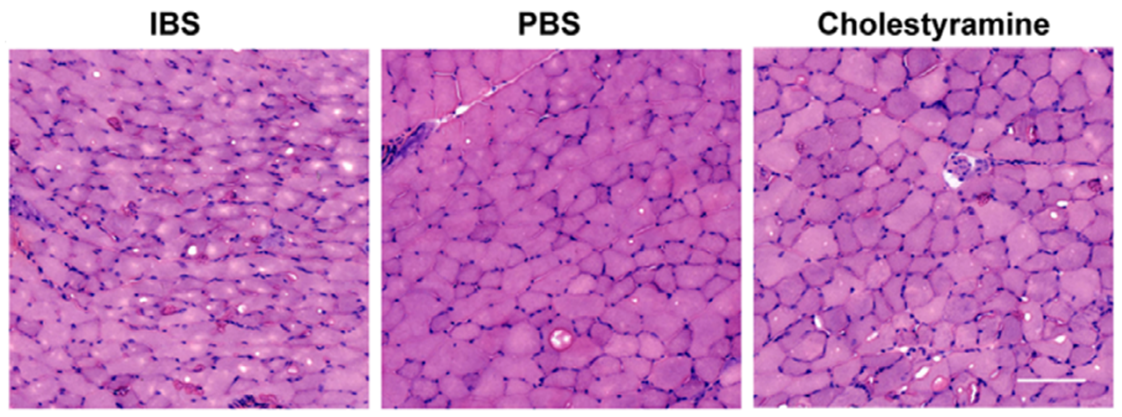
Cholestyramine purchased from MedChemExpress. Usage Cited in: Cell Prolif. 2024 Aug;57(8):e13638. [Abstract]
H&E staining of gastrocnemius cross-sections in IBS mice after intragastric administration of cholestyramine (800 mg/kg/day; once daily for 49 d) during model induction. Cholestyramine improved sarcolemmal preservation.
-
Sci Signal
Bile acid-induced metabolic changes in the colon promote Enterobacteriaceae expansion and associate with dysbiosis in Crohn's disease. [Abstract]2024 Dec 17;17(867):eadl1786. PMID: 39689182 -
Foods
In Vitro Fermentation of Green Tea by Human Gut Microbiota Enhances Bioactivity and Bidirectionally Modulates Polyphenol Metabolites and Gut Microbiota. [Abstract]2026 May 14;15(10):1732. PMID: 42195936 -
-
J Appl Toxicol
Obeticholic acid improved triptolide/lipopolysaccharide-induced hepatotoxicity by inhibiting caspase-11-GSDMD pyroptosis pathway. [Abstract]2023 Apr;43(4):599-614. PMID: 36328986 -
-


Solvent & Solubility
In Vitro:
1 M HCl : < 1 mg/mL (insoluble)
DMSO : < 1 mg/mL (insoluble or slightly soluble)
H2O : < 0.1 mg/mL (insoluble)
In Vivo:
For the following dissolution methods, please prepare the working solution directly:
It is recommended to prepare fresh solutions and use them promptly within a short period of time.
The percentages shown for the solvents indicate their volumetric ratio in the final prepared solution. If precipitation or phase separation occurs during preparation, heat and/or sonication can be used to aid dissolution.
Add each solvent one by one: 0.5% CMC-Na/saline water
Solubility: 60 mg/mL; Suspended solution; Need ultrasonic


Purity & Documentation
-
Data Sheet (281 KB)
-
SDS (394 KB)
- English - EN (394 KB)
- Français - FR (394 KB)
- Deutsch - DE (394 KB)
- Norwegian - NO (394 KB)
- Español - ES (394 KB)
- Swedish - SV (394 KB)
- Italian - IT (394 KB)
- Korean - KR (394 KB)
- Portuguese - PT (394 KB)
-
Handling Instructions (2659 KB)
References
[1]. Heidker RM, et al. Grape Seed Procyanidins and Cholestyramine Differentially Alter Bile Acid and Cholesterol Homeostatic Gene Expression in Mouse Intestine and Liver. PLoS One. 2016 Apr 25;11(4):e0154305. [Content Brief]
[2]. Maugeais C, et al. rHDL administration increases reverse cholesterol transport in mice, but is not additive on top of ezetimibe or cholestyramine treatment. Atherosclerosis. 2013 Jul;229(1):94-101. [Content Brief]
[3]. Pruckler JM, et al. Use of a human microvascular endothelial cell line as a model system to evaluate cholesterol uptake. Pathobiology. 1993;61(5-6):283-7. [Content Brief]

Calculators
Concentration (start) × Volume (start) = Concentration (final) × Volume (final)


Cholestyramine Related Classifications
HY-104081 Related Classifications
 Powered by Bioz
Keywords
- Cholestyramine
- 11041-12-6
- Cholestyramine resin
- Colestyramine
- Apical Sodium-Dependent Bile Acid Transporter
- Cytochrome P450
- atherosclerosis
- C57BL/6 mice
- endothelial cells
- atherosclerotic cardiovascular disease
- HMEC-1 immortalized human microvascular endothelial cells
- coronary artery disease
- macrophage-to-feces reverse cholesterol transport
- cholesterol 7α-hydroxylase
- apical sodium-dependent bile acid transporter
- C57BL/6J mice
- Inhibitor
- inhibitor
- inhibit