



Estradiol 17-(β-D-Glucuronide) sodium

Based on 1 Customer Validation
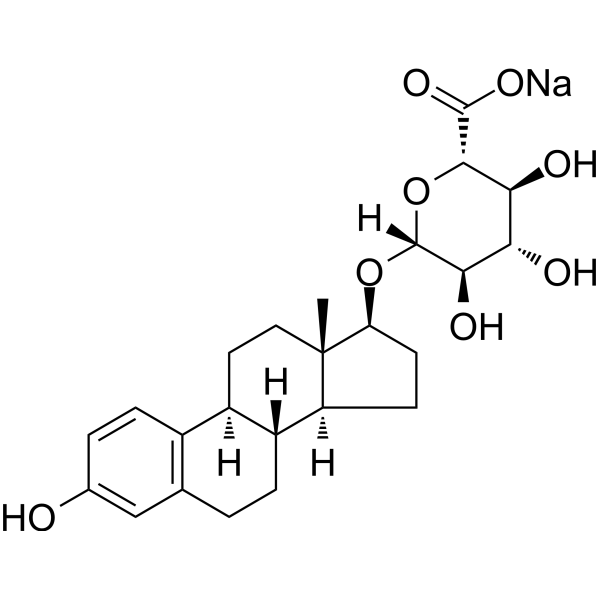
Estradiol 17-(β-D-Glucuronide) sodium is a D-ring glucuronide metabolite of natural estrogen formed in the liver. Estradiol 17-(β-D-Glucuronide) sodium is a substrate of the organic anion-transporting polypeptide family (Oatp) and multidrug resistance-associated protein 2 (Mrp2). Estradiol 17-(β-D-Glucuronide) sodium regulates MRP8-mediated transport processes and inhibits MRP8-mediated transport of dehydroepiandrosterone 3-sulfate and taurocholic acid. Estradiol 17-(β-D-Glucuronide) sodium induces immediate, reversible reduction of bile flow and acute intrahepatic cholestasis in female rats without altering the bile acid composition in bile. Estradiol 17-(β-D-Glucuronide) sodium can be used in studies related to intrahepatic cholestasis.
For research use only. We do not sell to patients.
- Purity : 98.91%
- CAS No.: 15087-02-2
- Formula: C24H31NaO8
- Molecular Weight:470.49
-
Storage:
-20°C, sealed storage, away from moisture
* In solvent : -80°C, 6 months; -20°C, 1 month (sealed storage, away from moisture)

To place orders, for customer services and technical support, please contact: MedChemExpress USA
Tel: 609-228-6898 E-mail: [email protected] [email protected]


-
 Biological Activity
-
Chemical Information
-
Solvent & Solubility
- Purity & Documentation
- References
-
 Help & FAQs


-
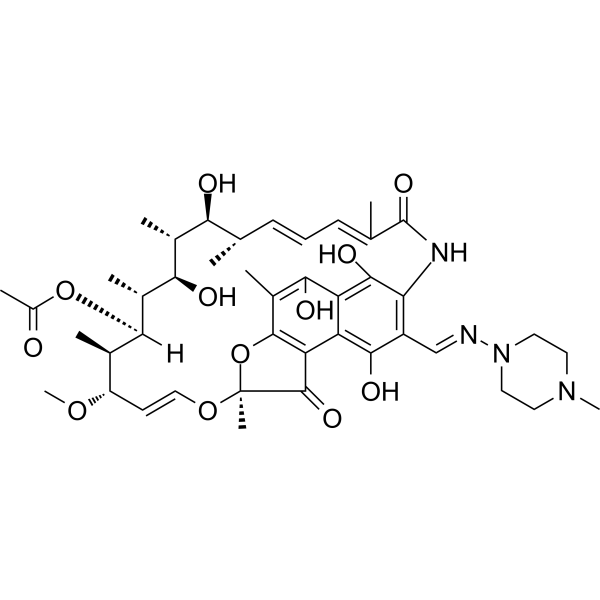
HY-B0272
Rifampicin -
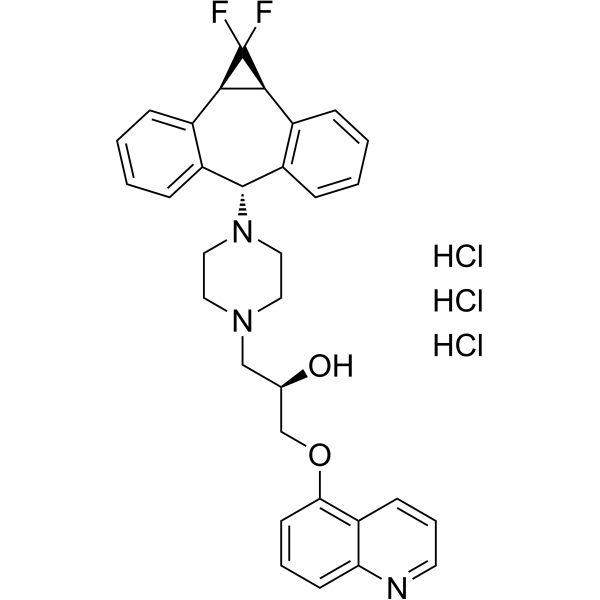
HY-50671
Zosuquidar trihydrochloride -
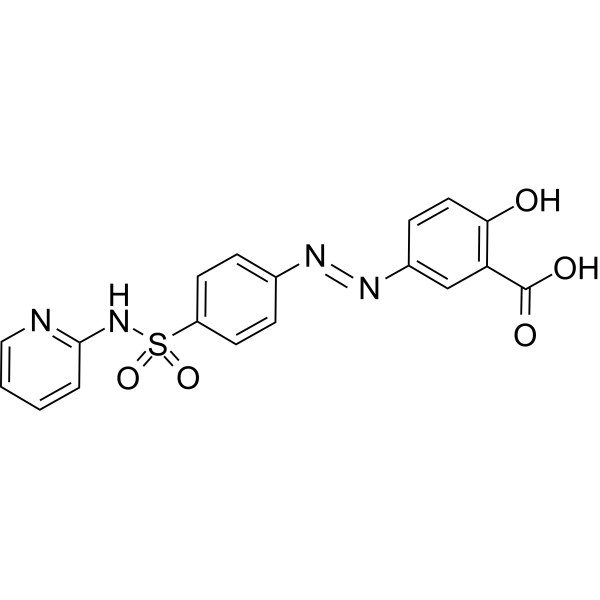
HY-14655
Sulfasalazine -
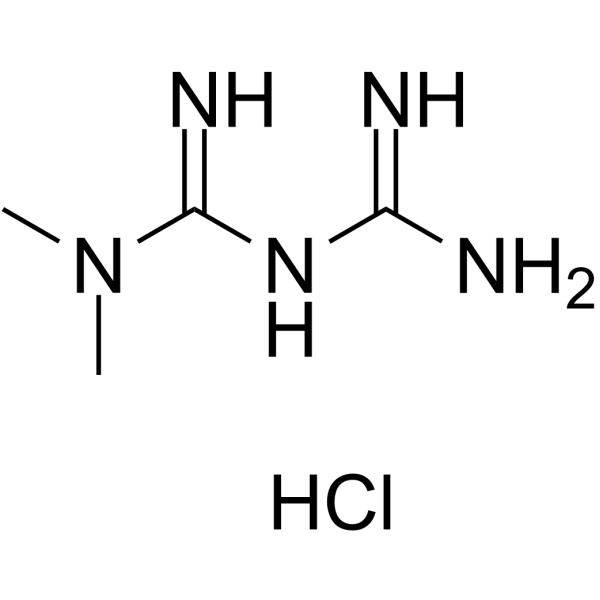
HY-17471A
Metformin hydrochloride -
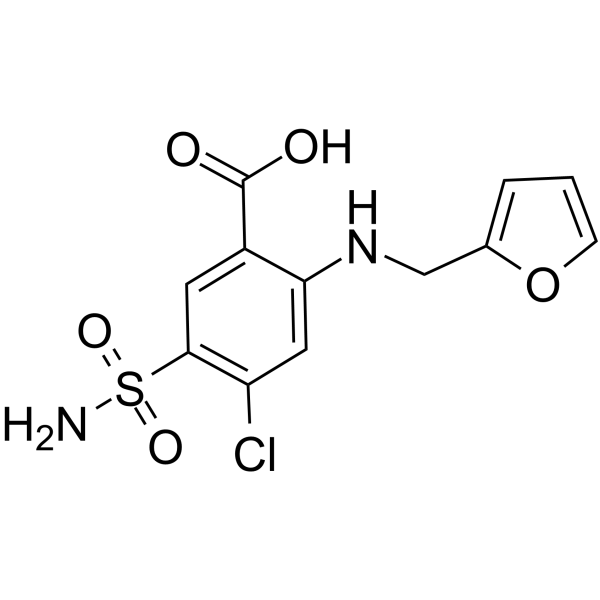
HY-B0135
Furosemide -

HY-D0842
BSA Protein -
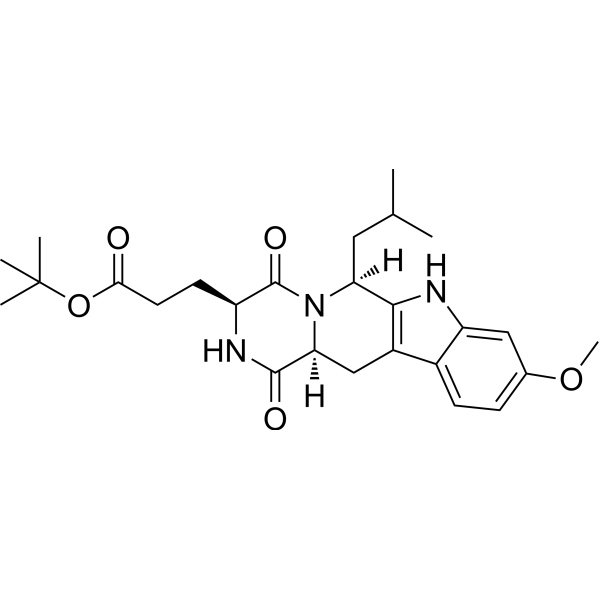
HY-10010
Ko 143 -
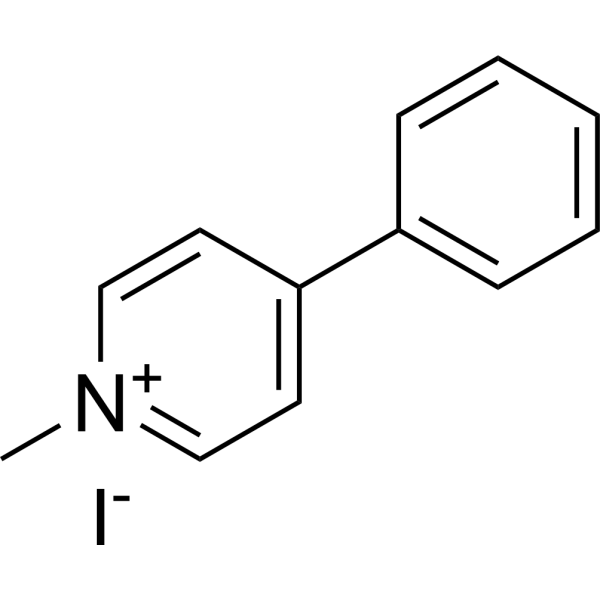
HY-W008719
MPP+ iodide -
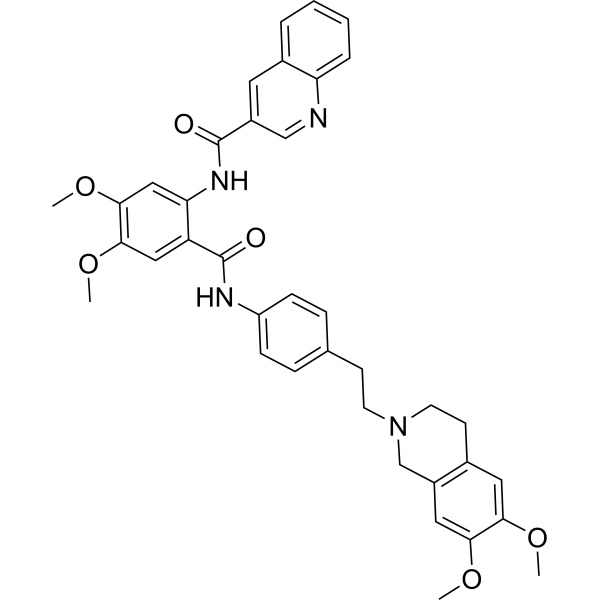
HY-10550
Tariquidar -
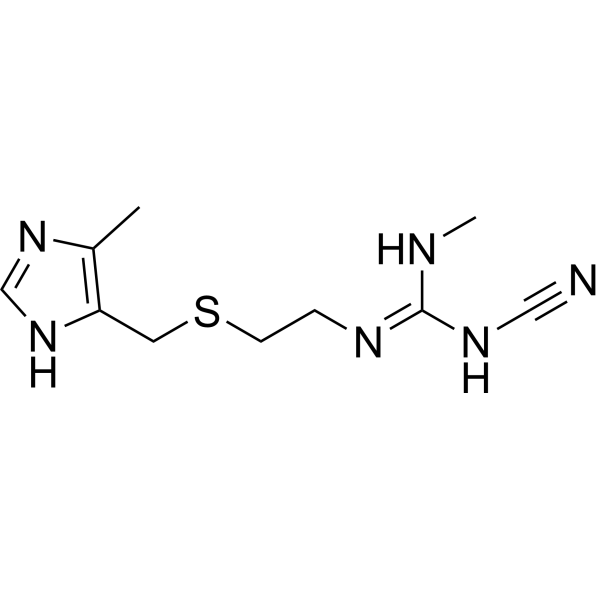
HY-14289
Cimetidine -
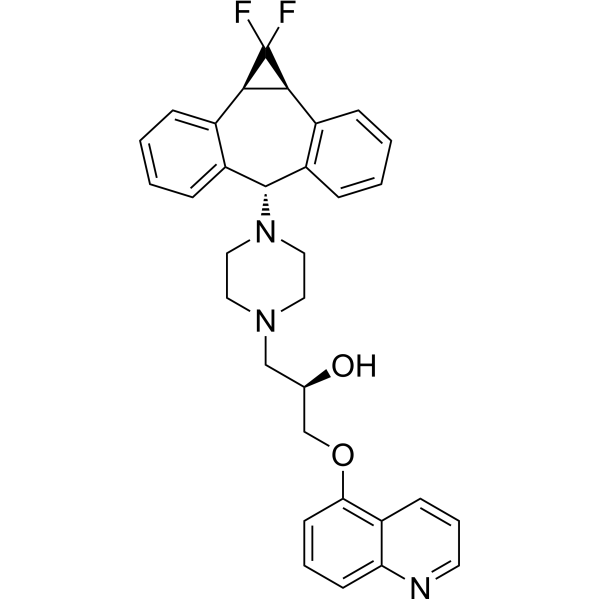
HY-15255
Zosuquidar -
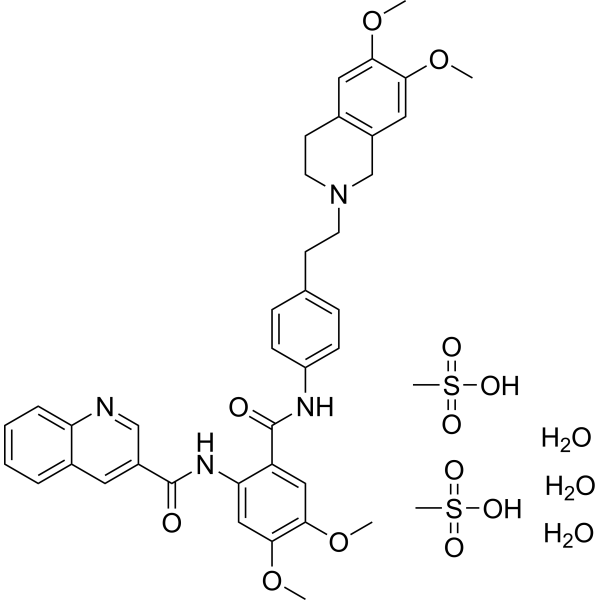
HY-10550A
Tariquidar methanesulfonate, hydrate
All Endogenous Metabolite Isoforms
More

Biological Activity
Description
In Vitro
Estradiol 17-(β-D-Glucuronide) (1-1000 μM; 5-10 min) sodium is a substrate of MRP8 in MRP8-transfected LLC-PK1 cell membrane vesicles, with a Km of 62.9 μM and Vmax of 62.0 pmol/mg/min, and it also acts as a concentration-dependent inhibitor of MRP8-mediated DHEAS and taurocholate transport[2].
MedChemExpress (MCE) has not independently confirmed the accuracy of these methods. They are for reference only.
In Vivo
MedChemExpress (MCE) has not independently confirmed the accuracy of these methods. They are for reference only.
-
Animal Model:Sprague-Dawley (female, 160-250 g)[1]
-
Dosage:10 μmol/kg
-
Administration:i.v.; single dose
-
Result:Caused severe, immediate, reversible reduction in bile flow.
Reached more than 84% of the administered dose in biliary excretion.
Showed no significant change in biliary composition of seven endogenous bile acids relative to intact control rats.


Chemical Information
-
CAS No. 15087-02-2
-
Appearance Solid
-
Molecular Weight 470.49
-
Formula C24H31NaO8
-
Color White to off-white
-
SMILES
C[C@@]12[C@](CC[C@@H]2O[C@]3([H])O[C@@H]([C@@H](O)[C@H](O)[C@H]3O)C(O[Na])=O)([H])[C@@]4([H])[C@](C5=C(C=C(O)C=C5)CC4)([H])CC1
-
Structure Classification
-
Initial Source
-
Shipping
Room temperature in continental US; may vary elsewhere.
-
Storage
-20°C, sealed storage, away from moisture
* In solvent : -80°C, 6 months; -20°C, 1 month (sealed storage, away from moisture)


Solvent & Solubility
In Vitro:
DMSO : 50 mg/mL (106.27 mM; ultrasonic and adjust pH to 3 with 1 M HCl; Hygroscopic DMSO has a significant impact on the solubility of product, please use newly opened DMSO)
Please refer to the solubility information to select the appropriate solvent. Once prepared, please aliquot and store the solution to prevent product inactivation from repeated freeze-thaw cycles.
Storage method and period of stock solution: -80°C, 6 months; -20°C, 1 month (sealed storage, away from moisture). When stored at -80°C, please use it within 6 months. When stored at -20°C, please use it within 1 month.
Please refer to the solubility information to select the appropriate solvent. Once prepared, please aliquot and store the solution to prevent product inactivation from repeated freeze-thaw cycles.
Storage method and period of stock solution: -80°C, 6 months; -20°C, 1 month (sealed storage, away from moisture). When stored at -80°C, please use it within 6 months. When stored at -20°C, please use it within 1 month.
Concentration (start) × Volume (start) = Concentration (final) × Volume (final)
In Vivo:
Select the appropriate dissolution method based on your experimental animal and administration route.
- For the following dissolution methods, please ensure to first prepare a clear stock solution using an In Vitro approach and then sequentially add co-solvents:
- To ensure reliable experimental results, the clarified stock solution can be appropriately stored based on storage conditions. As for the working solution for In Vivo experiments, it is recommended to prepare freshly and use it on the same day.
- The percentages shown for the solvents indicate their volumetric ratio in the final prepared solution. If precipitation or phase separation occurs during preparation, heat and/or sonication can be used to aid dissolution.
Add each solvent one by one: 10% DMSO 40% PEG300 5% Tween-80 45% Saline
Solubility: ≥ 5 mg/mL (10.63 mM); Clear solution
This protocol yields a clear solution of ≥ 5 mg/mL (saturation unknown).
Taking 1 mL working solution as an example, add 100 μL DMSO stock solution (50.0 mg/mL) to 400 μL PEG300, and mix evenly; then add 50 μL Tween-80 and mix evenly; then add 450 μL Saline to adjust the volume to 1 mL.
Preparation of Saline: Dissolve 0.9 g sodium chloride in ddH₂O and dilute to 100 mL to obtain a clear Saline solution.
Add each solvent one by one: 10% DMSO 90% (20% SBE-β-CD in Saline)
Solubility: ≥ 5 mg/mL (10.63 mM); Clear solution
This protocol yields a clear solution of ≥ 5 mg/mL (saturation unknown).
Taking 1 mL working solution as an example, add 100 μL DMSO stock solution (50.0 mg/mL) to 900 μL 20% SBE-β-CD in Saline, and mix evenly.
Preparation of 20% SBE-β-CD in Saline (4°C, storage for one week): 2 g SBE-β-CD powder is dissolved in 10 mL Saline, completely dissolve until clear.
In Vivo Dissolution Calculator
Please enter the basic information of animal experiments:
-
-
-
-
Recommended: Prepare an additional quantity of animals to account for potential losses during experiments.
Please enter your animal formula composition:
-
%DMSO +
Recommended: Keep the proportion of DMSO in working solution below 2% if your animal is weak.
-
%+
-
+%Tween-80 + +
-
%Saline +
The co-solvents required include: DMSO, . All of co-solvents are available by MedChemExpress (MCE). , Tween 80. All of co-solvents are available by MedChemExpress (MCE).
Working solution concentration: 0.22 mg/mL
Method for preparing stock solution: mg drug dissolved in μL DMSO. Stock solution concentration: mg/mL. * In solvent : -80°C, 6 months; -20°C, 1 month (sealed storage, away from moisture)
1. Take μL DMSO stock solution;
2. Add μL .
μL , mix evenly;
3. Then add μL Tween 80, mix evenly;
4. Then add μL
Please ensure that the stock solution in the first step is dissolved to a clear state, and add co-solvents in sequence. You can use ultrasonic heating (ultrasonic cleaner, recommended frequency 20-40 kHz), vortexing, etc. to assist dissolution.


Purity & Documentation
-
Data Sheet (278 KB)
-
SDS (557 KB)
- English - EN (557 KB)
- Français - FR (557 KB)
- Deutsch - DE (557 KB)
- Norwegian - NO (557 KB)
- Español - ES (557 KB)
- Swedish - SV (557 KB)
- Italian - IT (557 KB)
- Korean - KR (557 KB)
- Portuguese - PT (557 KB)
-
Handling Instructions (2659 KB)
References
[1]. Kinbara S, et al. Improvement of estradiol-17 beta-D-glucuronide-induced cholestasis by sodium tauroursodeoxycholate therapy in rats. Scand J Gastroenterol. 1997;32(9):947-952. [Content Brief]
[2]. Chen ZS, et al. Transport of bile acids, sulfated steroids, estradiol 17-beta-D-glucuronide, and leukotriene C4 by human multidrug resistance protein 8 (ABCC11). Mol Pharmacol. 2005;67(2):545-557. [Content Brief]


Complete Stock Solution Preparation Table
Please refer to the solubility information to select the appropriate solvent. Once prepared, please aliquot and store the solution to prevent product inactivation from repeated freeze-thaw cycles.
Storage method and period of stock solution: -80°C, 6 months; -20°C, 1 month (sealed storage, away from moisture). When stored at -80°C, please use it within 6 months. When stored at -20°C, please use it within 1 month.
| Optional Solvent | Concentration Solvent Mass | 1 mg | 5 mg | 10 mg | 25 mg |
|---|---|---|---|---|---|
| DMSO | 1 mM | 2.1254 mL | 10.6272 mL | 21.2544 mL | 53.1361 mL |
| 5 mM | 0.4251 mL | 2.1254 mL | 4.2509 mL | 10.6272 mL | |
| 10 mM | 0.2125 mL | 1.0627 mL | 2.1254 mL | 5.3136 mL | |
| 15 mM | 0.1417 mL | 0.7085 mL | 1.4170 mL | 3.5424 mL | |
| 20 mM | 0.1063 mL | 0.5314 mL | 1.0627 mL | 2.6568 mL | |
| 25 mM | 0.0850 mL | 0.4251 mL | 0.8502 mL | 2.1254 mL | |
| 30 mM | 0.0708 mL | 0.3542 mL | 0.7085 mL | 1.7712 mL | |
| 40 mM | 0.0531 mL | 0.2657 mL | 0.5314 mL | 1.3284 mL | |
| 50 mM | 0.0425 mL | 0.2125 mL | 0.4251 mL | 1.0627 mL | |
| 60 mM | 0.0354 mL | 0.1771 mL | 0.3542 mL | 0.8856 mL | |
| 80 mM | 0.0266 mL | 0.1328 mL | 0.2657 mL | 0.6642 mL | |
| 100 mM | 0.0213 mL | 0.1063 mL | 0.2125 mL | 0.5314 mL |


Estradiol 17-(β-D-Glucuronide) sodium Related Classifications
HY-129987 Related Classifications
 Powered by Bioz