



BL-1249

Based on 1 Customer Validation
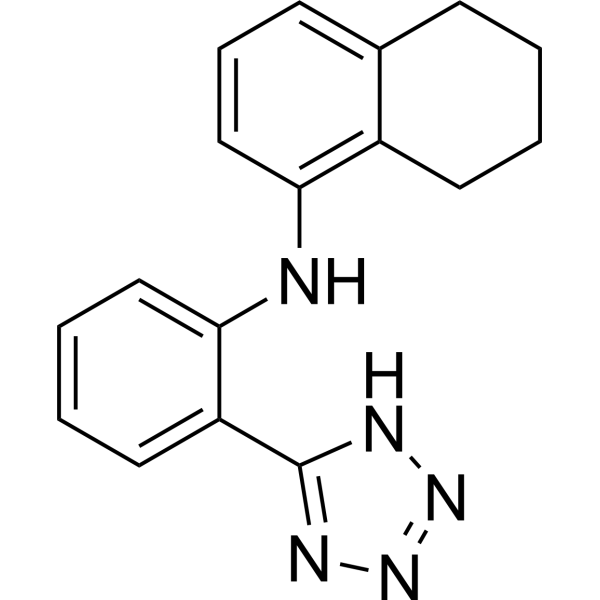
BL-1249 is a nonsteroidal anti-inflammatory agent (NSAID) and a potassium channel activator. BL-1249 potently activates K2P2.1 (TREK-1) and K2P10.1 (TREK-2) with EC50 values of 5.5 μM and 8.0 μM, respectively. BL-1249 extracellular application activates all TREK subfamily members but has no effect on other K2P subfamilies. BL-1249 exhibits more selective for the bladder (EC50 of 1.26 μM) than vascular tissue (EC50 of 21.0 μM).
For research use only. We do not sell to patients.
- Purity : 99.86%
- CAS No.: 18200-13-0
- Formula: C17H17N5
- Molecular Weight:291.35
-
Storage:Powder -20°C, 3 years ; In solvent -80°C, 6 months , -20°C, 1 month

To place orders, for customer services and technical support, please contact: MedChemExpress USA
Tel: 609-228-6898 E-mail: [email protected] [email protected]


-
 Biological Activity
-
Chemical Information
-
Solvent & Solubility
- Protocols
- Purity & Documentation
- References
-
 Help & FAQs


-

HY-P1422
SpadinTREK-1 Channel Blocker -
HY-W013712
GI-530159TREK1/2 Channels Opener -
HY-15416
NS309Potassium Channel Activator -
HY-B0112
MinoxidilEndogenous Metabolite -
HY-15209
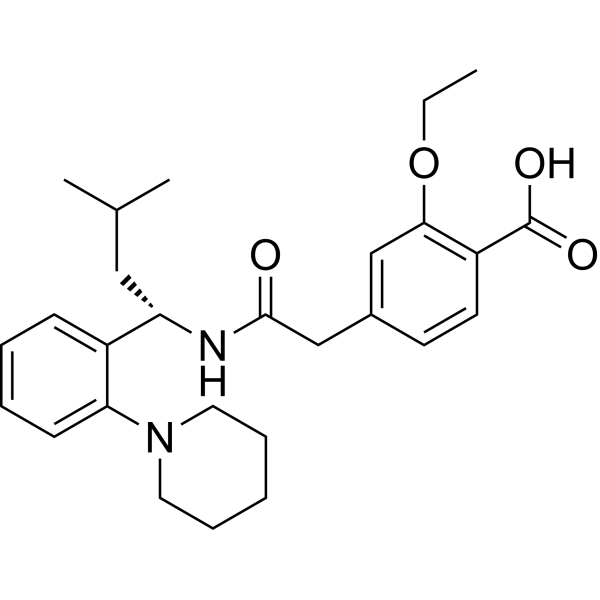
RepaglinideInsulin Secretagogue -
HY-B1793
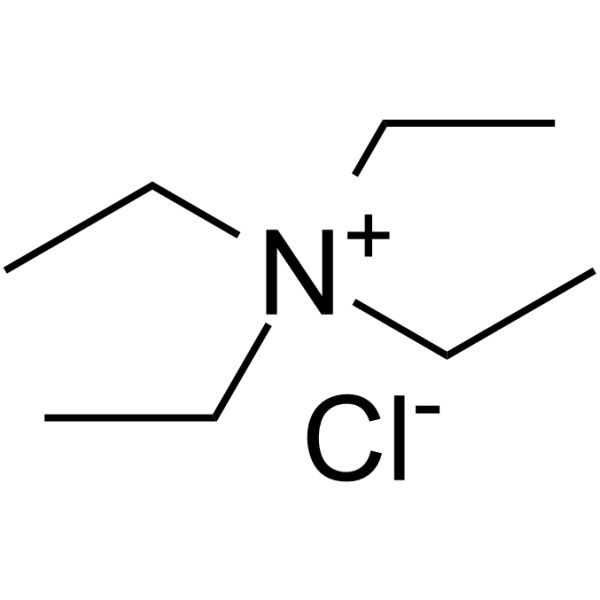
Tetraethylammonium chloridePotassium Channel Inhibitor -
HY-B1114
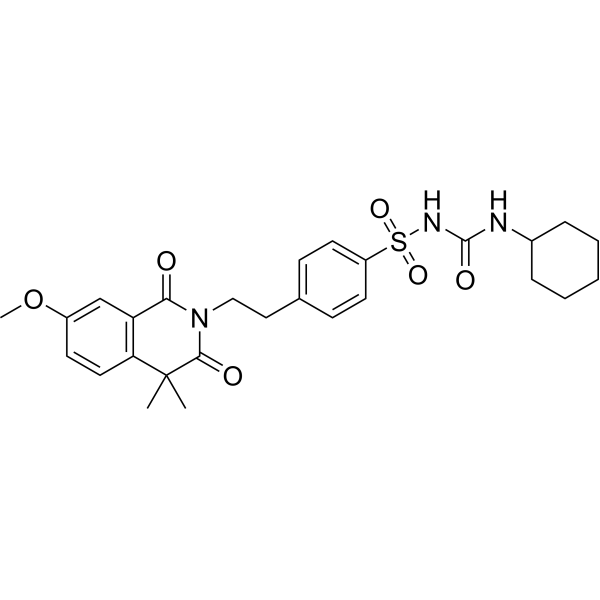
GliquidoneAnti-Diabetic Drug -

HY-108596R
BL-1249 (Standard)Reference Standard -
HY-12496
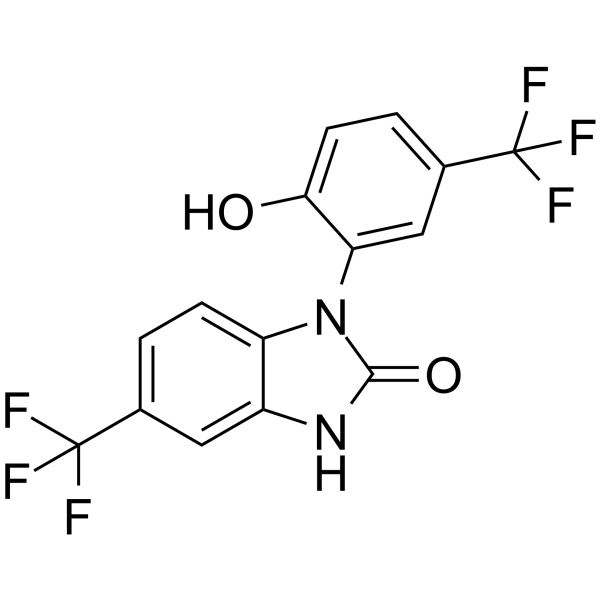
NS-1619BK Channel Opener -
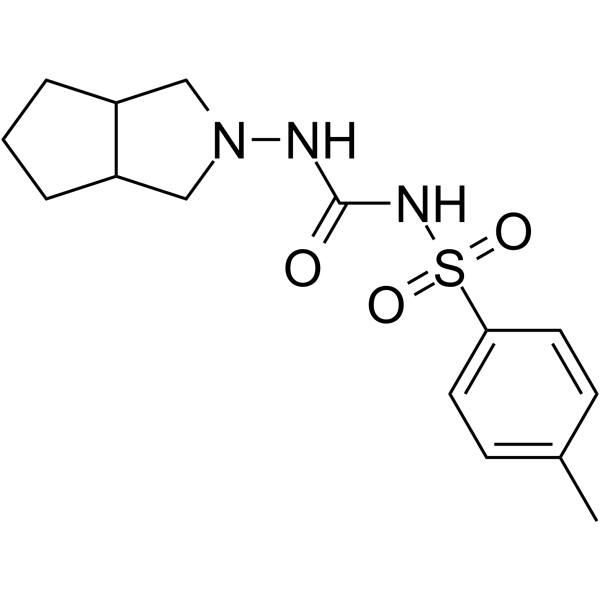
HY-B0753
GliclazidePotassium Currents Blocker -

HY-B0112R
Minoxidil (Standard)Endogenous Metabolite -
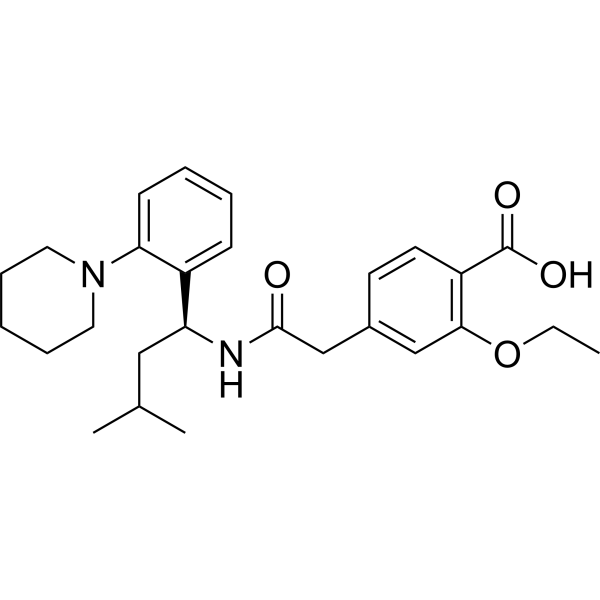
HY-15209R
Repaglinide (Standard)Insulin Secretagogue


Biological Activity
Description
IC50 & Target
EC50: 5.5 μM (TREK-1) and 8.0 μM (TREK-2)[1]
In Vitro
BL-1249 produces a concentration-dependent membrane hyperpolarization of cultured human bladder myocytes, assessed as either a reduction in fluorescence of the voltage-sensitive dye bis-(1,2-dibutylbarbituric acid)trimethine oxonol (EC50 of 1.26 μM) or by direct electrophysiological measurement EC50 of 1.49 μM). BL-1249 produced a concentration-dependent hyperpolarization with an EC50 of 21.0 μM in human aortic smooth muscle cells[1].
In in vitro organ bath experiments, BL-1249 produces a concentration-dependent relaxation of 30 mM KCl-induced contractions in rat bladder strips (EC50 of 1.12 μM), yet has no effect on aortic strips up to the highest concentration tested (10 μM). The bladder relaxation produced by BL-1249 is partially blocked by Ba2+ (1 and 10 mM)[1].
BL-1249 is a selective agonist of the TREK subfamily when applied extracellularly, having preferential action on K2P2.1(TREK-1) and K2P10.1(TREK-2) over K2P4.1(TRAAK) and establish that its mechanism of action relies on gating at the selectivity filter C-type gate[2].
MedChemExpress (MCE) has not independently confirmed the accuracy of these methods. They are for reference only.
In Vivo
BL-1249 (1 mg/kg) has little effect on mean arterial blood pressure, an observation again consistent with the in vitro bladder to vascular relaxant selectivity[1].
MedChemExpress (MCE) has not independently confirmed the accuracy of these methods. They are for reference only.


Chemical Information
-
CAS No. 18200-13-0
-
Appearance Solid
-
Molecular Weight 291.35
-
Formula C17H17N5
-
Color Off-white to light yellow
-
SMILES
C1(NC2=C3CCCCC3=CC=C2)=CC=CC=C1C4=NN=NN4
-
Shipping
Room temperature in continental US; may vary elsewhere.
-
Storage
Powder -20°C 3 years In solvent -80°C 6 months -20°C 1 month


Solvent & Solubility
In Vitro:
DMSO : 50 mg/mL (171.61 mM; ultrasonic and warming and heat to 60°C; Hygroscopic DMSO has a significant impact on the solubility of product, please use newly opened DMSO)
Please refer to the solubility information to select the appropriate solvent. Once prepared, please aliquot and store the solution to prevent product inactivation from repeated freeze-thaw cycles.
Storage method and period of stock solution: -80°C, 6 months; -20°C, 1 month. When stored at -80°C, please use it within 6 months. When stored at -20°C, please use it within 1 month.
Please refer to the solubility information to select the appropriate solvent. Once prepared, please aliquot and store the solution to prevent product inactivation from repeated freeze-thaw cycles.
Storage method and period of stock solution: -80°C, 6 months; -20°C, 1 month. When stored at -80°C, please use it within 6 months. When stored at -20°C, please use it within 1 month.
Concentration (start) × Volume (start) = Concentration (final) × Volume (final)
In Vivo:
Select the appropriate dissolution method based on your experimental animal and administration route.
- For the following dissolution methods, please ensure to first prepare a clear stock solution using an In Vitro approach and then sequentially add co-solvents:
- To ensure reliable experimental results, the clarified stock solution can be appropriately stored based on storage conditions. As for the working solution for In Vivo experiments, it is recommended to prepare freshly and use it on the same day.
- The percentages shown for the solvents indicate their volumetric ratio in the final prepared solution. If precipitation or phase separation occurs during preparation, heat and/or sonication can be used to aid dissolution.
Add each solvent one by one: 10% DMSO 40% PEG300 5% Tween-80 45% Saline
Solubility: ≥ 2.5 mg/mL (8.58 mM); Clear solution
This protocol yields a clear solution of ≥ 2.5 mg/mL (saturation unknown).
Taking 1 mL working solution as an example, add 100 μL DMSO stock solution (25.0 mg/mL) to 400 μL PEG300, and mix evenly; then add 50 μL Tween-80 and mix evenly; then add 450 μL Saline to adjust the volume to 1 mL.
Preparation of Saline: Dissolve 0.9 g sodium chloride in ddH₂O and dilute to 100 mL to obtain a clear Saline solution.
In Vivo Dissolution Calculator
Please enter the basic information of animal experiments:
-
-
-
-
Recommended: Prepare an additional quantity of animals to account for potential losses during experiments.
Please enter your animal formula composition:
-
%DMSO +
Recommended: Keep the proportion of DMSO in working solution below 2% if your animal is weak.
-
%+
-
+%Tween-80 + +
-
%Saline +
The co-solvents required include: DMSO, . All of co-solvents are available by MedChemExpress (MCE). , Tween 80. All of co-solvents are available by MedChemExpress (MCE).
Working solution concentration: 0.22 mg/mL
Method for preparing stock solution: mg drug dissolved in μL DMSO. Stock solution concentration: mg/mL.
1. Take μL DMSO stock solution;
2. Add μL .
μL , mix evenly;
3. Then add μL Tween 80, mix evenly;
4. Then add μL
Please ensure that the stock solution in the first step is dissolved to a clear state, and add co-solvents in sequence. You can use ultrasonic heating (ultrasonic cleaner, recommended frequency 20-40 kHz), vortexing, etc. to assist dissolution.


Purity & Documentation
-
Data Sheet (280 KB)
-
SDS (394 KB)
- English - EN (394 KB)
- Français - FR (394 KB)
- Deutsch - DE (394 KB)
- Norwegian - NO (394 KB)
- Español - ES (394 KB)
- Swedish - SV (394 KB)
- Italian - IT (394 KB)
- Korean - KR (394 KB)
- Portuguese - PT (394 KB)
-
Handling Instructions (2659 KB)
References
[1]. Tertyshnikova S, et al. BL-1249 [(5,6,7,8-tetrahydro-naphthalen-1-yl)-[2-(1H-tetrazol-5-yl)-phenyl]-amine]: a putative potassium channel opener with bladder-relaxant properties. J Pharmacol Exp Ther. 2005 Apr;313(1):250-9. [Content Brief]
[2]. Pope L, et al. Protein and Chemical Determinants of BL-1249 Action and Selectivity for K2P Channels. ACS Chem Neurosci. 2018 Dec 19;9(12):3153-3165. [Content Brief]
[3]. Iwaki Y, et al. Towards a TREK-1/2 (TWIK-Related K+ Channel 1 and 2) dual activator tool compound: Multi-dimensional optimization of BL-1249. Bioorg Med Chem Lett. 2019 Jul 1;29(13):1601-1604. [Content Brief]


Complete Stock Solution Preparation Table
Please refer to the solubility information to select the appropriate solvent. Once prepared, please aliquot and store the solution to prevent product inactivation from repeated freeze-thaw cycles.
Storage method and period of stock solution: -80°C, 6 months; -20°C, 1 month. When stored at -80°C, please use it within 6 months. When stored at -20°C, please use it within 1 month.
| Optional Solvent | Concentration Solvent Mass | 1 mg | 5 mg | 10 mg | 25 mg |
|---|---|---|---|---|---|
| DMSO | 1 mM | 3.4323 mL | 17.1615 mL | 34.3230 mL | 85.8074 mL |
| 5 mM | 0.6865 mL | 3.4323 mL | 6.8646 mL | 17.1615 mL | |
| 10 mM | 0.3432 mL | 1.7161 mL | 3.4323 mL | 8.5807 mL | |
| 15 mM | 0.2288 mL | 1.1441 mL | 2.2882 mL | 5.7205 mL | |
| 20 mM | 0.1716 mL | 0.8581 mL | 1.7161 mL | 4.2904 mL | |
| 25 mM | 0.1373 mL | 0.6865 mL | 1.3729 mL | 3.4323 mL | |
| 30 mM | 0.1144 mL | 0.5720 mL | 1.1441 mL | 2.8602 mL | |
| 40 mM | 0.0858 mL | 0.4290 mL | 0.8581 mL | 2.1452 mL | |
| 50 mM | 0.0686 mL | 0.3432 mL | 0.6865 mL | 1.7161 mL | |
| 60 mM | 0.0572 mL | 0.2860 mL | 0.5720 mL | 1.4301 mL | |
| 80 mM | 0.0429 mL | 0.2145 mL | 0.4290 mL | 1.0726 mL | |
| 100 mM | 0.0343 mL | 0.1716 mL | 0.3432 mL | 0.8581 mL |


BL-1249 Related Classifications
HY-108596 Related Classifications
 Powered by Bioz