



Basic green 4

Based on 1 Customer Validation
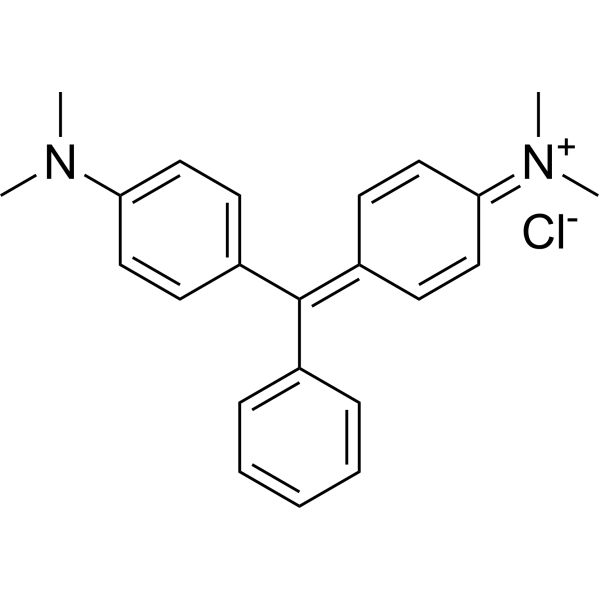
Basic green 4 (Malachite green) is a cationic dye that is widely used as a bactericide in aquaculture and is also commonly used in laboratories for the determination of phosphates. Basic green 4 exhibits high cytotoxicity and carcinogenicity to mammalian cells, specifically shown by its IC50 values of 2.03 µM for HEp-2 human laryngeal cells and 13.8 µM for Caco-2 human colorectal adenocarcinoma cells, and it can promote the development of liver tumors. The maximum absorbance wavelength is 621 nm.
For research use only. We do not sell to patients.
- Purity : 95.88%
- CAS No.: 569-64-2
- Formula: C23H25ClN2
- Molecular Weight:364.91
-
Storage:
4°C, sealed storage, away from moisture and light
* In solvent : -80°C, 6 months; -20°C, 1 month (sealed storage, away from moisture and light)

To place orders, for customer services and technical support, please contact: MedChemExpress USA
Tel: 609-228-6898 E-mail: [email protected] [email protected]


-
 Biological Activity
-
Chemical Information
-
Solvent & Solubility
- Protocols
- Purity & Documentation
- References
-
 Help & FAQs


-
HY-B0324A
Crystal VioletFluorochrome -

HY-DY2001
Crystal Violet (solution)Fluorochrome -
HY-N1442
Acid orange 7Azo Dye -
HY-D0236
Congo RedAzo Dye -
HY-123647
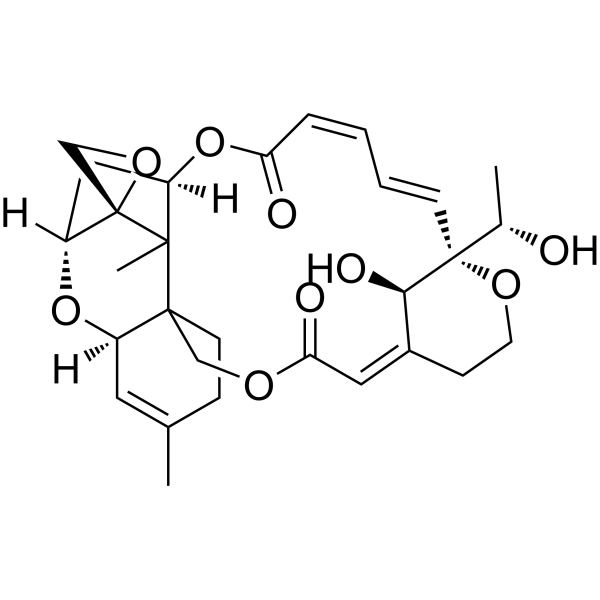
Satratoxin HRibosome Binding Agent\nApoptosis Inducer\nGenotoxin -
HY-W110794
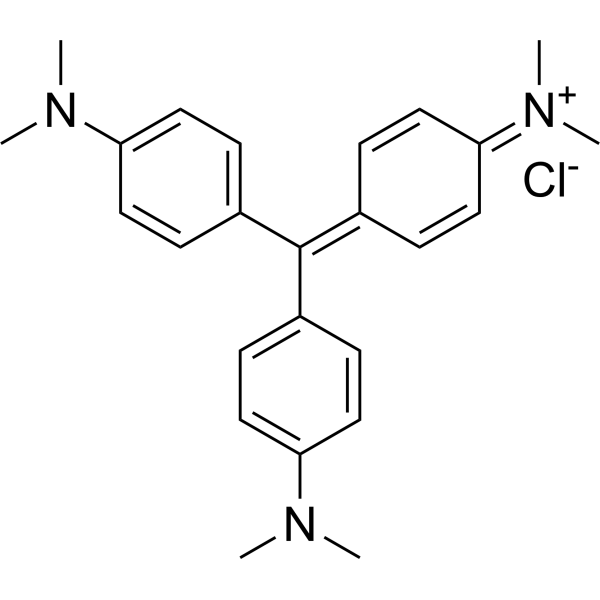
Crystal violet, IND (0.0-2.0)Biochemical Assay Reagent -

HY-N1442R
Acid orange 7 (Standard)Azo Dye -
HY-N6685S1
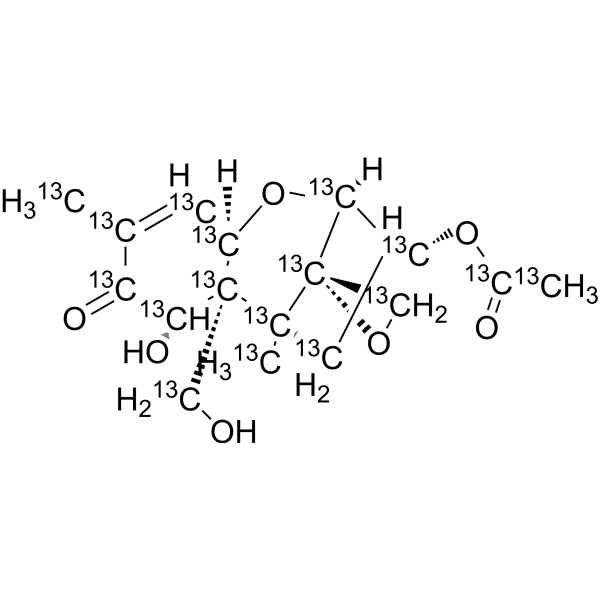
3-Acetyldeoxynivalenol-13C17Mycotoxin -
HY-152072S
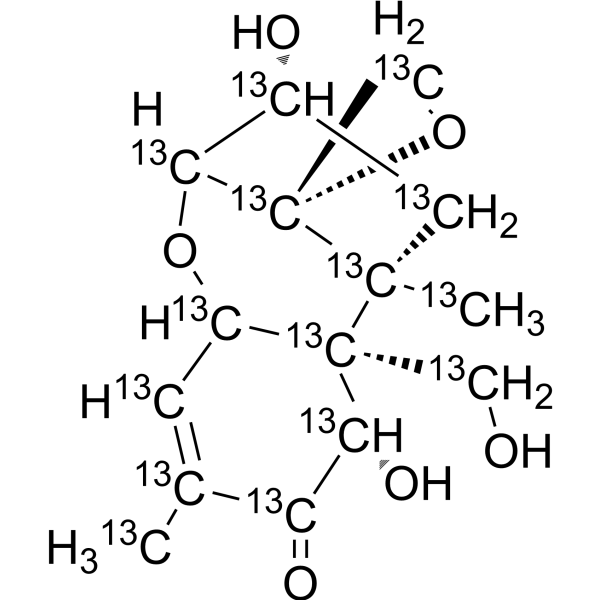
Deoxynivalenol-13C15 -
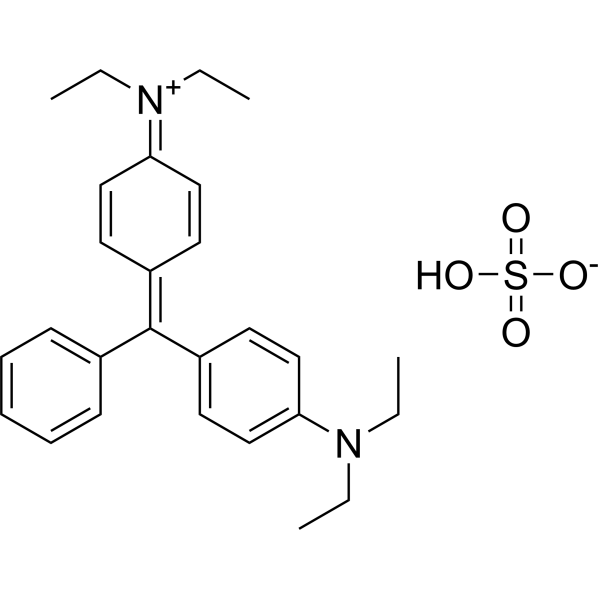
HY-D0008
Brilliant greenCationic Dye -
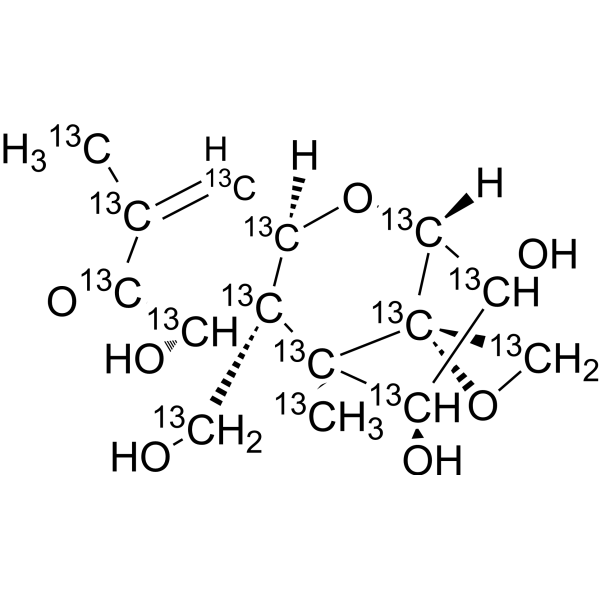
HY-N6801S
Nivalenol-13C15Stable Isotope


Biological Activity
Description
In Vitro
Guide (The following is our recommended experimental protocol. This protocol is for reference only and should be modified according to your specific needs).
Basic Green 4 Measurement of Phosphate[1]
(1) Preparation of Basic Green 4 storage solution: Slowly add concentrated sulfuric acid (60 mL, d=1.84 g/L) to 300 mL of water. Cool the solution to room temperature and add 0.44 g of Basic Green 4.
(2) Preparation of Basic Green 4 working solution: Add 10 mL of the dye to 2.5 mL of 7.5% ammonium molybdate, then add 0.2 mL of 11% Tween 20.
(3) Mix 1 volume of Basic Green 4 with 4 volumes of the phosphate sample.
(4) Let it sit for ten minutes, then measure the absorbance at 630 nm.
Basic Green 4 Fungal Inhibition[2]
(1) Collect fish eggs using spawning mats in a pond environment and rinse off the mud with well water.
(2) Place the fish eggs in a petri dish and add Basic Green 4 at a concentration of 2 ppm for 60 minutes, or at a concentration of 10 ppm for 10 minutes.
(3) Discard the Basic Green 4 and rinse the fish eggs multiple times with well water.
(4) Place the fish eggs in a petri dish with clean, oxygenated water and incubate at 22°C (72°F). Observe the newly hatched fry for 24 hours to determine the survival rate after treatment. Each concentration test is repeated six times.
MedChemExpress (MCE) has not independently confirmed the accuracy of these methods. They are for reference only.


Chemical Information
-
CAS No. 569-64-2
-
Appearance Solid
-
Molecular Weight 364.91
-
Formula C23H25ClN2
-
Color Green to black
-
SMILES
C/[N+](C)=C1C=C/C(C=C/1)=C(C2=CC=C(N(C)C)C=C2)\C3=CC=CC=C3.[Cl-]
-
Synonyms
Malachite green
-
Shipping
Room temperature in continental US; may vary elsewhere.
-
Storage
4°C, sealed storage, away from moisture and light
* In solvent : -80°C, 6 months; -20°C, 1 month (sealed storage, away from moisture and light)


Solvent & Solubility
In Vitro:
DMSO : 100 mg/mL (274.04 mM; Need ultrasonic; Hygroscopic DMSO has a significant impact on the solubility of product, please use newly opened DMSO)
H2O : 3.85 mg/mL (10.55 mM; Need ultrasonic)
Please refer to the solubility information to select the appropriate solvent. Once prepared, please aliquot and store the solution to prevent product inactivation from repeated freeze-thaw cycles.
Storage method and period of stock solution: -80°C, 6 months; -20°C, 1 month (sealed storage, away from moisture and light). When stored at -80°C, please use it within 6 months. When stored at -20°C, please use it within 1 month.
* Note: If you choose water as the stock solution, please dilute it to the working solution, then filter and sterilize it with a 0.22 μm filter before use.
Please refer to the solubility information to select the appropriate solvent. Once prepared, please aliquot and store the solution to prevent product inactivation from repeated freeze-thaw cycles.
Storage method and period of stock solution: -80°C, 6 months; -20°C, 1 month (sealed storage, away from moisture and light). When stored at -80°C, please use it within 6 months. When stored at -20°C, please use it within 1 month.
* Note: If you choose water as the stock solution, please dilute it to the working solution, then filter and sterilize it with a 0.22 μm filter before use.
Concentration (start) × Volume (start) = Concentration (final) × Volume (final)


Purity & Documentation
-
Data Sheet (274 KB)
-
SDS (862 KB)
- English - EN (862 KB)
- Français - FR (862 KB)
- Deutsch - DE (862 KB)
- Norwegian - NO (862 KB)
- Español - ES (862 KB)
- Swedish - SV (862 KB)
- Italian - IT (862 KB)
- Korean - KR (862 KB)
- Portuguese - PT (862 KB)
-
Handling Instructions (2659 KB)
References


Complete Stock Solution Preparation Table
Please refer to the solubility information to select the appropriate solvent. Once prepared, please aliquot and store the solution to prevent product inactivation from repeated freeze-thaw cycles.
Storage method and period of stock solution: -80°C, 6 months; -20°C, 1 month (sealed storage, away from moisture and light). When stored at -80°C, please use it within 6 months. When stored at -20°C, please use it within 1 month.
| Optional Solvent | Concentration Solvent Mass | 1 mg | 5 mg | 10 mg | 25 mg |
|---|---|---|---|---|---|
| H2O / DMSO | 1 mM | 2.7404 mL | 13.7020 mL | 27.4040 mL | 68.5100 mL |
| 5 mM | 0.5481 mL | 2.7404 mL | 5.4808 mL | 13.7020 mL | |
| 10 mM | 0.2740 mL | 1.3702 mL | 2.7404 mL | 6.8510 mL | |
| DMSO | 15 mM | 0.1827 mL | 0.9135 mL | 1.8269 mL | 4.5673 mL |
| 20 mM | 0.1370 mL | 0.6851 mL | 1.3702 mL | 3.4255 mL | |
| 25 mM | 0.1096 mL | 0.5481 mL | 1.0962 mL | 2.7404 mL | |
| 30 mM | 0.0913 mL | 0.4567 mL | 0.9135 mL | 2.2837 mL | |
| 40 mM | 0.0685 mL | 0.3426 mL | 0.6851 mL | 1.7128 mL | |
| 50 mM | 0.0548 mL | 0.2740 mL | 0.5481 mL | 1.3702 mL | |
| 60 mM | 0.0457 mL | 0.2284 mL | 0.4567 mL | 1.1418 mL | |
| 80 mM | 0.0343 mL | 0.1713 mL | 0.3426 mL | 0.8564 mL | |
| 100 mM | 0.0274 mL | 0.1370 mL | 0.2740 mL | 0.6851 mL |
* Note: If you choose water as the stock solution, please dilute it to the working solution, then filter and sterilize it with a 0.22 μm filter before use.


Basic green 4 Related Classifications
HY-D0203 Related Classifications
 Powered by Bioz