



BO-264
Based on 2 publication(s) in Google Scholar
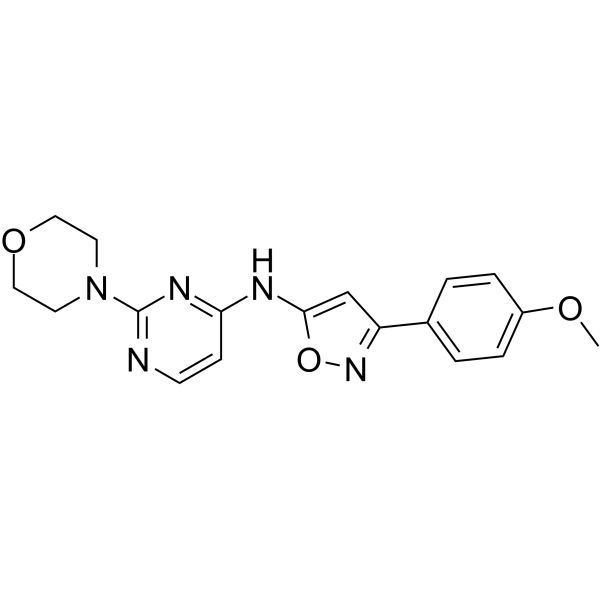
BO-264 is a highly potent and orally active transforming acidic coiled-coil 3 (TACC3) inhibitor with an IC50 of 188 nM and a Kd of 1.5 nM. BO-264 specifically blocks the function of FGFR3-TACC3 fusion protein. BO-264 induces spindle assembly checkpoint (SAC)-dependent mitotic arrest, DNA damage and apoptosis. BO-264 has broad-spectrum antitumor activity.
Para uso exclusivo en investigación. No vendemos a pacientes.
- Pureza : 99.76%
- No. CAS: 2408648-20-2
- Fòrmula: C18H19N5O3
- Peso molecular:353.38
-
Almacenamiento:Powder -20°C, 3 years , 4°C, 2 years ; In solvent -80°C, 6 months , -20°C, 1 month

To place orders, for customer services and technical support, please contact: MedChemExpress USA
Tel: 609-228-6898 E-mail: [email protected] [email protected]


-
 Actividad biológica
-
Chemical Information
-
Solvente y solubilidad
- Protocolo
- Pureza y Documentación
- Referencias
-
 Help & FAQs


-
HY-10996A
KHS101 hydrochlorideHSPD1/TACC3 Inhibitor -
HY-B0015
PaclitaxelAntitumor Agent -
HY-13311
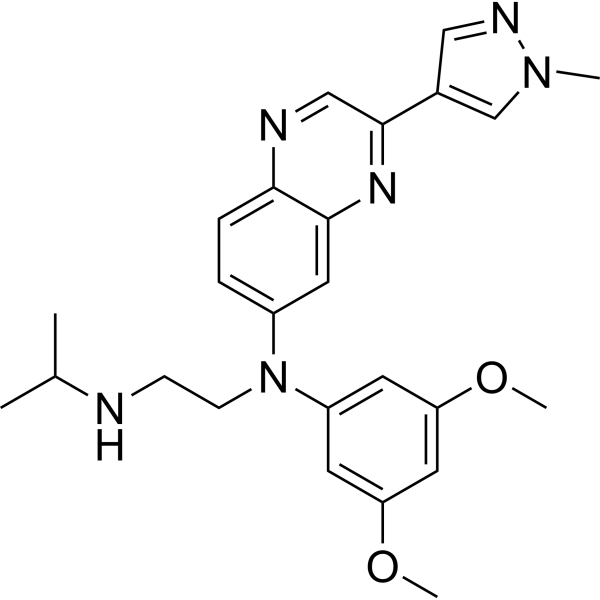
InfigratinibFGFR Inhibitor -
HY-18708
ErdafitinibFGFR Inhibitor -
HY-N0183
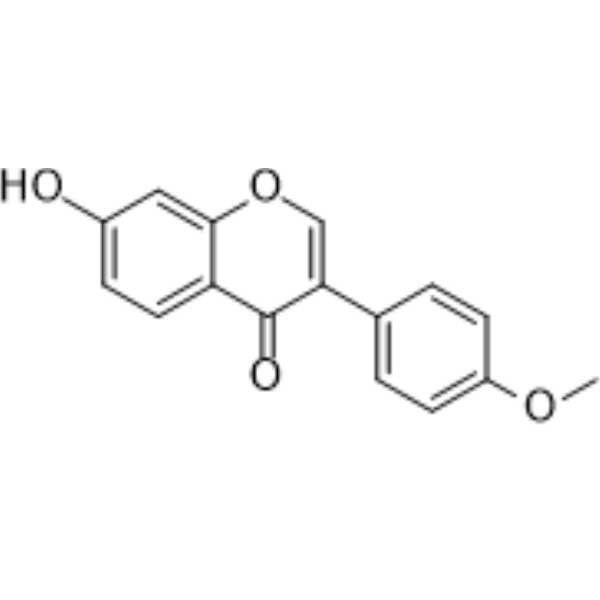
FormononetinFGFR2 Inhibitor -
HY-13330
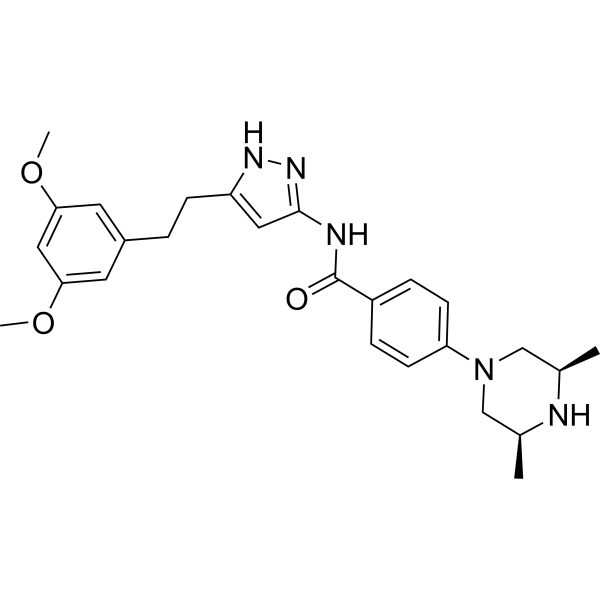
FexagratinibFGFR Inhibitor -
HY-101466
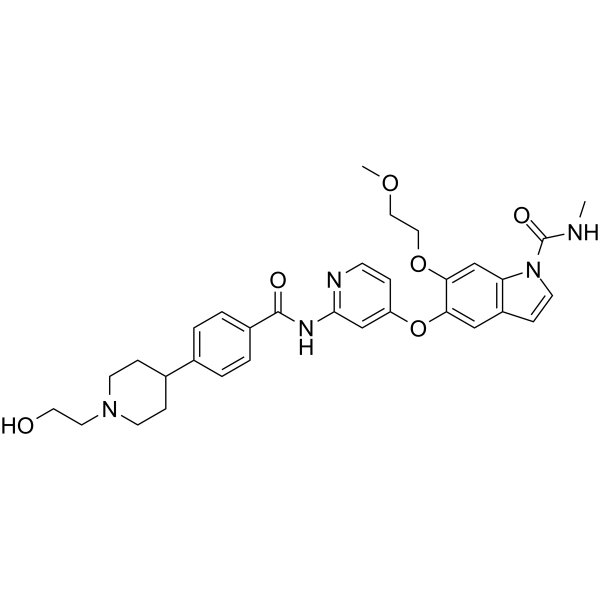
E7090FGFR1/2/3 Inhibitor -
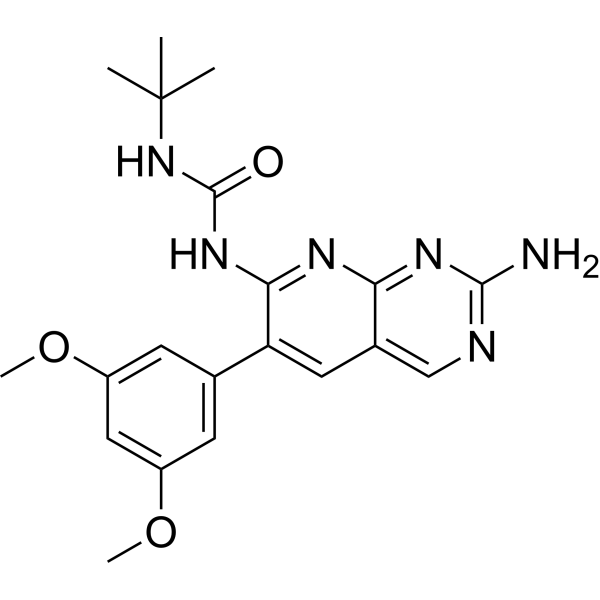
HY-101296
PD-166866FGFR1 Inhibitor -
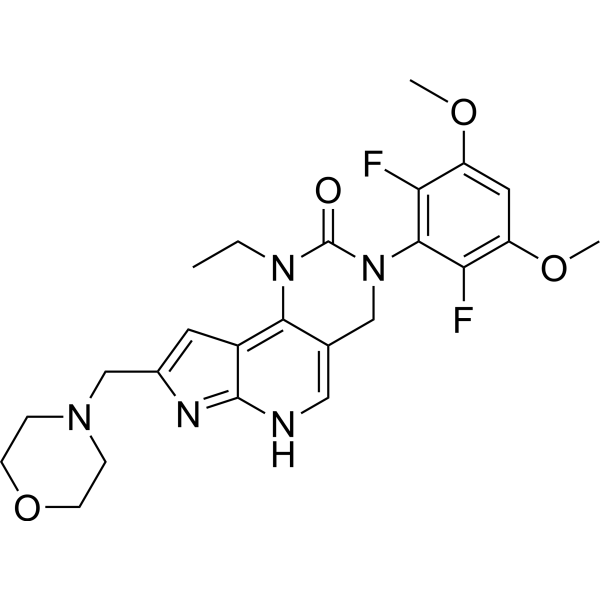
HY-109099
PemigatinibFGFR Inhibitor -
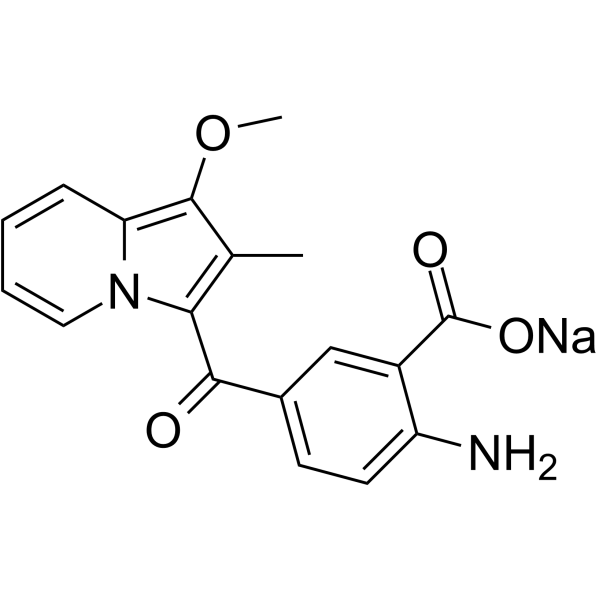
HY-15599
SSR128129EFGFR Inhibitor -
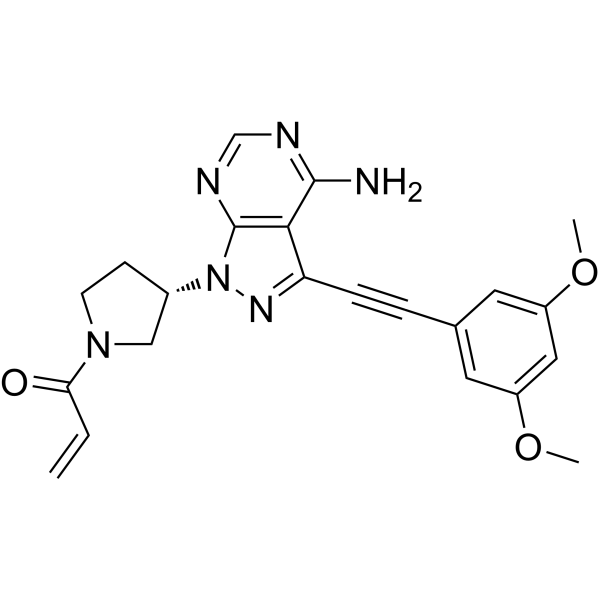
HY-100818
FutibatinibFGFR Inhibitor -
HY-17601
Alofanib
Publications Citing Use of MedChemExpress (MCE) BO-264
More

Actividad biológica
Descripciòn
IC50 & Target
IC50: 188 nM (Transforming acidic coiled-coil 3 (TACC3))[1]
Kd: 1.5 nM (TACC3)[1]
In Vitro
BO-264 (500 nM; 48 hours; JIMT-1 cells) treatment induces a prominent increase (from 4.1% to 45.6%) in the fraction of apoptotic cells as assessed by Annexin V/PI staining[1].
BO-264 (500 nM; 24 hours; RT112 cells) treatment decreases ERK1/2 phosphorylation, which is a marker for activated FGFR signaling along with a strong mitotic arrest[1].
BO-264 inhibits cell viability with IC50 values of 190 nM, 160 nM, 120 nM, 130 nM and 360 nM for JIMT-1, HCC1954, MDA-MB-231, MDA-MB-436 and CAL51, respectively. BO-264 specifically targets breast cancer cells while sparing normal cells. BO-264 treatment significantly reduces the average colony number of JIMT-1 cells[1].
BO-264 inhibits the viability of cancer cells with FGFR3-TACC3 fusion with IC50 values of 0.3 μM and 3.66 μM for RT112 and RT4, respectively[1].
BO-264 exhibits a remarkable anti-cancer activity against more than 90% of the NCI267 60 human cancer cell lines representing nine different subpanels with GI50 values less than 1 μM[1].
BO-264 induces mitotic arrest (prominent induces p-Histone H3 (Ser10)), apoptosis (cleaved PARP) and DNA damage, causes aberrant spindle formation and reduces centrosomal localization of TACC3 in JIMT-1 cells[1].
MedChemExpress (MCE) has not independently confirmed the accuracy of these methods. They are for reference only.
-
Cell Line:JIMT-1 cells
-
Concentration:500 nM
-
Incubation Time:48 hours
-
Result:Induced a prominent increase (from 4.1% to 45.6%) in the fraction of apoptotic cells as assessed by Annexin V/PI staining.
-
Cell Line:RT112 cells
-
Concentration:500 nM
-
Incubation Time:24 hours
-
Result:Decreased ERK1/2 phosphorylation.
In Vivo
MedChemExpress (MCE) has not independently confirmed the accuracy of these methods. They are for reference only.
-
Animal Model:Female nude mice injected with JIMT-1 cells[1]
-
Dosage:25 mg/kg
-
Administration:Oral administration; daily; for 3-4 weeks
-
Result:Showed a significant suppression of tumor growth.


Chemical Information
-
No. CAS 2408648-20-2
-
Appearance Solid
-
Peso molecular 353.38
-
Fòrmula C18H19N5O3
-
Color Off-white to light yellow
-
SMILES
COC1=CC=C(C2=NOC(NC3=NC(N4CCOCC4)=NC=C3)=C2)C=C1
-
Envío
Room temperature in continental US; may vary elsewhere.
-
Almacenamiento
Powder -20°C 3 years 4°C 2 years In solvent -80°C 6 months -20°C 1 month


Publications (2)
-
Journal Impact Factor
-
Most Recent


Solvente y solubilidad
In Vitro:
DMSO : 50 mg/mL (141.49 mM; Need ultrasonic; Hygroscopic DMSO has a significant impact on the solubility of product, please use newly opened DMSO)
Please refer to the solubility information to select the appropriate solvent. Once prepared, please aliquot and store the solution to prevent product inactivation from repeated freeze-thaw cycles.
Storage method and period of stock solution: -80°C, 6 months; -20°C, 1 month. When stored at -80°C, please use it within 6 months. When stored at -20°C, please use it within 1 month.
Please refer to the solubility information to select the appropriate solvent. Once prepared, please aliquot and store the solution to prevent product inactivation from repeated freeze-thaw cycles.
Storage method and period of stock solution: -80°C, 6 months; -20°C, 1 month. When stored at -80°C, please use it within 6 months. When stored at -20°C, please use it within 1 month.
Concentration (start) × Volume (start) = Concentration (final) × Volume (final)
In Vivo:
Select the appropriate dissolution method based on your experimental animal and administration route.
- For the following dissolution methods, please ensure to first prepare a clear stock solution using an In Vitro approach and then sequentially add co-solvents:
- To ensure reliable experimental results, the clarified stock solution can be appropriately stored based on storage conditions. As for the working solution for In Vivo experiments, it is recommended to prepare freshly and use it on the same day.
- The percentages shown for the solvents indicate their volumetric ratio in the final prepared solution. If precipitation or phase separation occurs during preparation, heat and/or sonication can be used to aid dissolution.
Add each solvent one by one: 10% DMSO 40% PEG300 5% Tween-80 45% Saline
Solubility: ≥ 2.08 mg/mL (5.89 mM); Clear solution
This protocol yields a clear solution of ≥ 2.08 mg/mL (saturation unknown).
Taking 1 mL working solution as an example, add 100 μL DMSO stock solution (20.8 mg/mL) to 400 μL PEG300, and mix evenly; then add 50 μL Tween-80 and mix evenly; then add 450 μL Saline to adjust the volume to 1 mL.
Preparation of Saline: Dissolve 0.9 g sodium chloride in ddH₂O and dilute to 100 mL to obtain a clear Saline solution.
Add each solvent one by one: 10% DMSO 90% (20% SBE-β-CD in Saline)
Solubility: ≥ 2.08 mg/mL (5.89 mM); Clear solution
This protocol yields a clear solution of ≥ 2.08 mg/mL (saturation unknown).
Taking 1 mL working solution as an example, add 100 μL DMSO stock solution (20.8 mg/mL) to 900 μL 20% SBE-β-CD in Saline, and mix evenly.
Preparation of 20% SBE-β-CD in Saline (4°C, storage for one week): 2 g SBE-β-CD powder is dissolved in 10 mL Saline, completely dissolve until clear.
In Vivo Dissolution Calculator
Please enter the basic information of animal experiments:
-
-
-
-
Recommended: Prepare an additional quantity of animals to account for potential losses during experiments.
Please enter your animal formula composition:
-
%DMSO +
Recommended: Keep the proportion of DMSO in working solution below 2% if your animal is weak.
-
%+
-
+%Tween-80 + +
-
%Saline +
The co-solvents required include: DMSO, . All of co-solvents are available by MedChemExpress (MCE). , Tween 80. All of co-solvents are available by MedChemExpress (MCE).
Working solution concentration: 0.22 mg/mL
Method for preparing stock solution: mg drug dissolved in μL DMSO. Stock solution concentration: mg/mL.
1. Take μL DMSO stock solution;
2. Add μL .
μL , mix evenly;
3. Then add μL Tween 80, mix evenly;
4. Then add μL
Please ensure that the stock solution in the first step is dissolved to a clear state, and add co-solvents in sequence. You can use ultrasonic heating (ultrasonic cleaner, recommended frequency 20-40 kHz), vortexing, etc. to assist dissolution.


Pureza y Documentación
-
Ficha de datos (276 KB)
-
SDS (254 KB)
- English - EN (254 KB)
- Français - FR (254 KB)
- Deutsch - DE (254 KB)
- Norwegian - NO (254 KB)
- Español - ES (254 KB)
- Swedish - SV (254 KB)
- Italian - IT (254 KB)
- Korean - KR (254 KB)
- Portuguese - PT (254 KB)
-
Instrucciones de manejo (2659 KB)
Referencias


Complete Stock Solution Preparation Table
Please refer to the solubility information to select the appropriate solvent. Once prepared, please aliquot and store the solution to prevent product inactivation from repeated freeze-thaw cycles.
Storage method and period of stock solution: -80°C, 6 months; -20°C, 1 month. When stored at -80°C, please use it within 6 months. When stored at -20°C, please use it within 1 month.
| Optional Solvent | Concentration Solvent Mass | 1 mg | 5 mg | 10 mg | 25 mg |
|---|---|---|---|---|---|
| DMSO | 1 mM | 2.8298 mL | 14.1491 mL | 28.2981 mL | 70.7454 mL |
| 5 mM | 0.5660 mL | 2.8298 mL | 5.6596 mL | 14.1491 mL | |
| 10 mM | 0.2830 mL | 1.4149 mL | 2.8298 mL | 7.0745 mL | |
| 15 mM | 0.1887 mL | 0.9433 mL | 1.8865 mL | 4.7164 mL | |
| 20 mM | 0.1415 mL | 0.7075 mL | 1.4149 mL | 3.5373 mL | |
| 25 mM | 0.1132 mL | 0.5660 mL | 1.1319 mL | 2.8298 mL | |
| 30 mM | 0.0943 mL | 0.4716 mL | 0.9433 mL | 2.3582 mL | |
| 40 mM | 0.0707 mL | 0.3537 mL | 0.7075 mL | 1.7686 mL | |
| 50 mM | 0.0566 mL | 0.2830 mL | 0.5660 mL | 1.4149 mL | |
| 60 mM | 0.0472 mL | 0.2358 mL | 0.4716 mL | 1.1791 mL | |
| 80 mM | 0.0354 mL | 0.1769 mL | 0.3537 mL | 0.8843 mL | |
| 100 mM | 0.0283 mL | 0.1415 mL | 0.2830 mL | 0.7075 mL |


BO-264 Related Classifications
HY-135960 Related Classifications
 Powered by Bioz