



Enibarcimab
Based on 1 publication(s) in Google Scholar
Enibarcimab is a humanized, non-neutralizing monoclonal antibody targeting adrenomedullin (ADM). Enibarcimab binds to the N-terminus of ADM, retains ADM in the circulation, and mobilizes interstitial ADM to increase the level of active bio-ADM, ultimately stabilizing blood vessels. Enibarcimab can be used in research related to septic shock and acute heart failure.
Para uso exclusivo en investigación. No vendemos a pacientes.
- Pureza : 99.68%
- No. CAS: 2305638-98-4
- Peso molecular:145.82 kDa
-
Almacenamiento:
Please store the product under the recommended conditions in the Certificate of Analysis.


To place orders, for customer services and technical support, please contact: MedChemExpress USA
Tel: 609-228-6898 E-mail: [email protected] [email protected]


-
 Actividad biológica
-
Chemical Information
- Protocolo
- Pureza y Documentación
- Referencias
-
 Help & FAQs


Publications Citing Use of MedChemExpress (MCE) Enibarcimab
More

Actividad biológica
Descripciòn
Isotype
Human IgG1 kappa
Recommend Isotype Controls
Species Reactivity
Human
IC50 & Target
Adrenomedullin
In Vitro
Enibarcimab binds to the N-terminus of ADM with high affinity to form a complex. The Enibarcimab-ADM complex cannot freely cross the endothelial barrier into the interstitial space, leading to the accumulation of bio-ADM in the vascular lumen, thereby stabilizing the vascular barrier and reducing edema and congestion[1][2].
MedChemExpress (MCE) has not independently confirmed the accuracy of these methods. They are for reference only. Further protocols information, click here.
Gene ID
Accession
Conjugated
Unconjugated
Reconsititution
The product can be reconstituted/diluted with sterile PBS or saline.
Format
-
Human IgG1 kappa
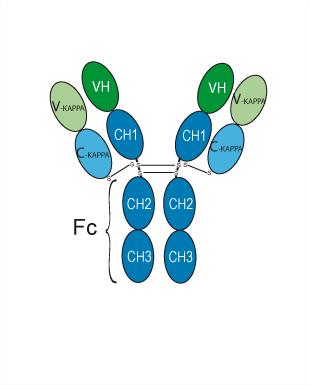
Aplicación
ELISA, FACS, Functional assay
Verified Bioactivity
-
 Immobilized Adrenomedullin/ADM Protein, Human can bind Enibarcimab. The EC50 for this effect is 11.77 ng/mL.


Chemical Information
-
No. CAS 2305638-98-4
-
Appearance Liquid
-
Peso molecular 145.82 kDa
-
Color Colorless to light yellow
-
SMILES
[Enibarcimab]
-
Envío
Shipping with dry ice.
-
Formulation
Please refer to the lot-specific COA for specific buffer information.
-
Almacenamiento
Please store the product under the recommended conditions in the Certificate of Analysis.


Publications (1)
-
Journal Impact Factor
-
Most Recent

Protocolo
-
Research Protocol for Cardiovascular Diseases
Cardiovascular disease can be modeled as maladaptive cardiac remodeling, where ischemic injury or pressure overload activates inflammatory signaling, fibroblast activation, extracellular-matrix deposition, cardiomyocyte hypertrophy, vascular remodeling, and progressive ventricular dysfunction. The TGF-β/SMAD axis is a central profibrotic pathway after myocardial injury and pressure overload, while innate immune and cytokine pathways regulate leukocyte recruitment, scar formation, and adverse remodeling. Key unresolved questions include which inflammatory signals are reparative versus harmful, when fibrosis is protective versus maladaptive, and whether pathway inhibition improves function without weakening necessary infarct healing or compensatory remodeling.


Pureza y Documentación
-
Ficha de datos (257 KB)
-
SDS (251 KB)
- English - EN (251 KB)
- Français - FR (251 KB)
- Deutsch - DE (251 KB)
- Norwegian - NO (251 KB)
- Español - ES (251 KB)
- Swedish - SV (251 KB)
- Italian - IT (251 KB)
- Korean - KR (251 KB)
- Portuguese - PT (251 KB)
-
Inhibitory Antibodies User Guide (603 KB)
Referencias
[1].
Knothe C, et al; ADRENOSS-2 Investigators. Enibarcimab for the treatment of septic shock in patients selected by a combination of the biomarkers bio-ADM and DPP3: A prespecified subgroup analysis of the AdrenOSS-2 trial. J Crit Care. 2025 Aug;88:155077.
[Content Brief]
[2]. Hartopo AB, et al. The ADESTE trial: A phase 2 study of enibarcimab, a monoclonal antibody targeting adrenomedullin, in acute heart failure. ESC Heart Fail. 2025;12(3):1848-1860. [Content Brief]

Calculators
Concentration (start) × Volume (start) = Concentration (final) × Volume (final)


Enibarcimab Related Classifications
HY-P99177 Related Classifications
 Powered by Bioz