



Lixudebart

Based on 1 Customer Validation
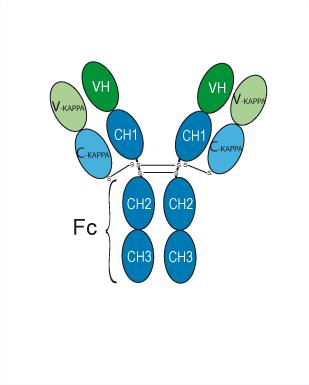
Lixudebart (ALE.F02) is a humanized immunoglobulin G1-kappa, anti-CLDN1 monoclonal antibody. Lixudebart disrupts CLDN1 interactions with CD44 and MMP14, reduces renal macrophage infiltration, epithelial activation, and urinary albumin-to-creatinine ratio, and attenuates glomerulosclerosis. Lixudebart can be used for the research of focal segmental glomerulosclerosis.
Para uso exclusivo en investigación. No vendemos a pacientes.
- Pureza : 98.88%
- No. CAS: 2749515-10-2
- Peso molecular:144.94 kDa
-
Almacenamiento:
Please store the product under the recommended conditions in the Certificate of Analysis.


To place orders, for customer services and technical support, please contact: MedChemExpress USA
Tel: 609-228-6898 E-mail: [email protected] [email protected]


-
 Actividad biológica
-
Chemical Information
- Protocolo
- Pureza y Documentación
- Referencias
-
 Help & FAQs






Actividad biológica
Descripciòn
Isotype
Human IgG1 kappa
Recommend Isotype Controls
Species Reactivity
Human
IC50 & Target
[1]|
Claudin-1 |
In Vitro
Ensayo clínico
| NCT Number | Sponsor | Condition | Start Date |
Phase

|
|---|---|---|---|---|
| NCT01329991 | Plexxikon| | 2011-05 | PHASE1 |
Gene ID
Accession
O95832
Conjugated
Unconjugated
Reconsititution
The product can be reconstituted/diluted with sterile PBS or saline.
Format
-
Human IgG1 kappa
Aplicación
ELISA, FACS, Functional assay
Verified Bioactivity
-
 Immobilized Claudin-1/CLDN1 Protein-VLP, Human can bind Lixudebart. The EC50 for this effect is 34.76 ng/mL.
 -
 Flow Cytometry analysis of PC-3 cells labelling CLDN1 (red) with Lixudebart (anti-CLDN1) (HY-P990045). Goat Anti-Human IgG (Alexa Fluor 488) (HY-P83776) at a dilution of 1/1000 was used as the secondary antibody. Blue-Human IgG1 kappa (HY-P99001). Black-Unlabelled control, cells without incubation with primary antibody.


Chemical Information
-
No. CAS 2749515-10-2
-
Appearance Liquid
-
Peso molecular 144.94 kDa
-
Color Colorless to light yellow
-
SMILES
[Lixudebart]
-
Synonyms
ALE.F02
-
Envío
Shipping with dry ice.
-
Formulation
Please refer to the lot-specific COA for specific buffer information.
-
Almacenamiento
Please store the product under the recommended conditions in the Certificate of Analysis.

Protocolo
-
Phagocytosis Functional Assay
A phagocytosis functional assay measures the ability of phagocytic cells, such as neutrophils, macrophages, monocytes, or microglia/macrophages, to bind and internalize particulate targets including bacteria, yeast particles, beads, or myelin particles. Fluorescent flow-cytometry assays detect target uptake as fluorescence associated with gated phagocytes, while pH-sensitive dyes such as pHrodo increase signal in acidic phagosomal compartments and therefore preferentially report internalized particles rather than particles remaining outside the cell. Microscopy or high-content imaging can be used to confirm intracellular localization and, in some protocols, to follow uptake kinetics.
-
Nephrotoxicity Study
This protocol assesses nephrotoxicity by combining functional kidney injury readouts, urinary/tissue injury biomarkers, and renal histopathology. Serum creatinine and BUN reflect impaired kidney function, while KIM-1, NGAL, clusterin, osteopontin, IL-18, cystatin C, nephrin, Oat5, urinary protein, glucose, and alkaline phosphatase have been used to detect tubular injury in cisplatin-, gentamicin-, and acetaminophen-induced nephrotoxicity models.


Pureza y Documentación
-
Ficha de datos (256 KB)
-
SDS (251 KB)
- English - EN (251 KB)
- Français - FR (251 KB)
- Deutsch - DE (251 KB)
- Norwegian - NO (251 KB)
- Español - ES (251 KB)
- Swedish - SV (251 KB)
- Italian - IT (251 KB)
- Korean - KR (251 KB)
- Portuguese - PT (251 KB)
-
Inhibitory Antibodies User Guide (603 KB)
Referencias

Calculators
Concentration (start) × Volume (start) = Concentration (final) × Volume (final)


Lixudebart Related Classifications
HY-P990045 Related Classifications
 Powered by Bioz