
247 Results for "

translational diffusion coefficient

" in MedChemExpress (MCE) Product Catalog:
Products (247)

247 Results for "translational diffusion coefficient" in MCE Product Catalog:

Referencia número: HY-W012382
No. CAS: 537-55-3
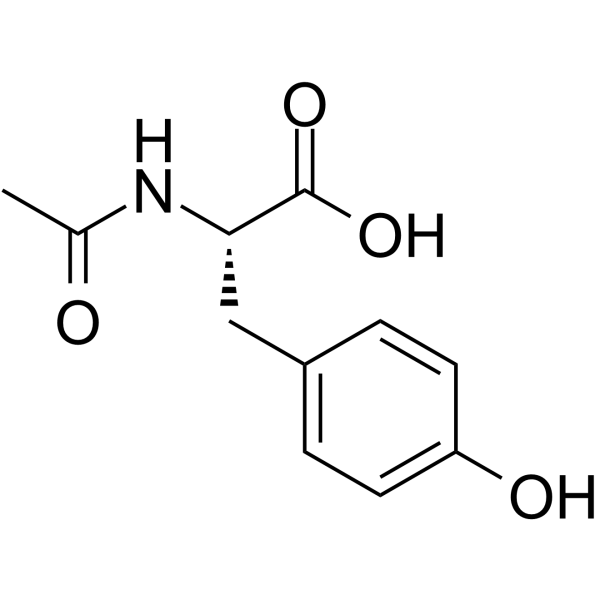
N-Acetyl-L-tyrosine is an orally active endogenous mitochondrial stress response regulator that can permeate the cell membrane by passive diffusion. N-Acetyl-L-tyrosine induces low-level reactive oxygen species (ROS) generation by transiently perturbing mitochondrial membrane potential, triggering reverse signaling to activate FoxO and Keap1 pathways. As a result, N-Acetyl-L-tyrosine enhances the expression of antioxidant enzyme genes, exerting anti-stress and cytoprotective effects. N-Acetyl-L-tyrosine can improve heat stress tolerance, inhibit tumor growth, and regulate energy metabolism. N-Acetyl-L-tyrosine can be used in the research of aging, metabolic diseases (such as diabetes), and cancer .
loading...
    loading...
Referencia número: HY-14854R
No. CAS: 867257-26-9
Synonyms: ATI-5923 (Standard)
Áreas de investigación:  

Cardiovascular Disease

Tecarfarin (ATI-5923) (Standard) is the analytical standard of Tecarfarin. This product is intended for research and analytical applications. Tecarfarin is an orally active VKOR inhibitor with an IC50 of 0.67 μM against VKORC1. Tecarfarin blocks the post-translational modification of vitamin K-dependent coagulation factors II, VII, IX and X, reducing their levels and activities. Tecarfarin prolongs prothrombin time, attenuates venous and arterial thrombosis, increases ear incision bleeding volume, and exerts reversible anticoagulant effects. Tecarfarin is applicable to research related to arterial and venous thrombosis as well as other diseases requiring anticoagulation .
loading...
    loading...
Referencia número: HY-182674
No. CAS: 1322645-32-8
Áreas de investigación:  

Infection Cancer

VGD020 is a highly potent and selective Sec61 translocon inhibitor . VGD020 suppresses the expression of cell surface CD4 by inhibiting signal peptide-dependent co-translational ER translocation, interferes with the initiation of ER translocation of dengue virus polyprotein, and reduces the expression of Sortilin in breast cancer cells. VGD020 exhibits broad anti-flavivirus and anti-HIV activities. VGD020 can be used in research related to dengue virus infection, Zika virus infection, yellow fever virus infection, human immunodeficiency virus infection, and breast cancer .
loading...
    loading...
Referencia número: HY-121235S1
Synonyms: SCH-10304-13C,d3
Clonixin- 13C,d3 (SCH-10304- 13C,d3) is the deuterium and 13C-labeled Clonixin (HY-121235). Clonixin is an orally active non-steroidal anti-inflammatory agent (NSAID) that inhibits COX synthesis. Clonixin acts as a voltage-gated L-type calcium channel blocker, exerts vasodilatory effects by antagonizing Ca 2+ in vascular smooth muscle. Clonixin inhibits TGF-β, reduces lung coefficient, immune cell infiltration level, oxidative stress response, airway resistance, hydroxyproline content and collagen deposition. Clonixin can be used in research related to inflammation such as idiopathic pulmonary fibrosis and moderate to severe pain.
loading...
    loading...
Referencia número: HY-L910V
50,000 compounds
MegaUni 50K Virtual Diversity Library consists of 50,000 novel, synthetically accessible, lead-like compounds. With MCE's 40,662 Building Blocks, covering around 273 reaction types, more than 40 million molecules were generated. Based on Morgan Fingerprint and Tanimoto Coefficient, molecular clustering analysis was carried out, and molecules closest to each clustering center were extracted to form a drug-like and synthesizable diversity library. The selected 50,000 drug-like molecules have 46,744 unique Bemis-Murcko Scaffolds (BMS), each containing only 1-3 compounds. This diverse library is highly recommended for virtual screening and novel lead discovery.
Referencia número: HY-B0396
No. CAS: 161715-24-8
Synonyms: L084
Target:  

Antibiotic Bacterial OAT

Áreas de investigación:  

Infection

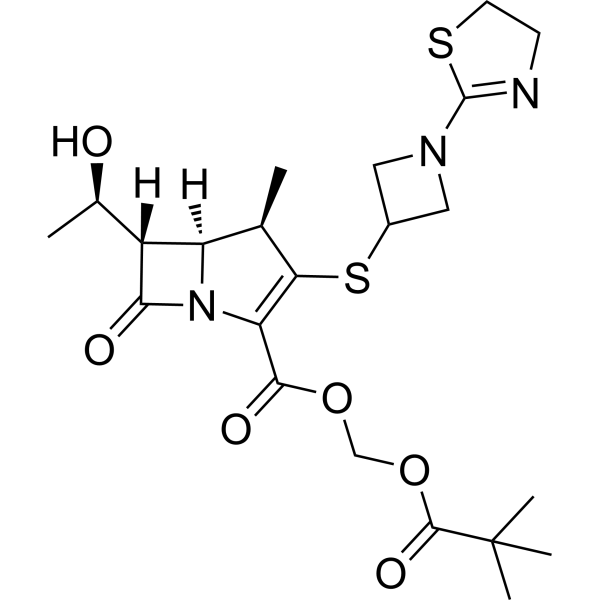
Tebipenem pivoxil (L084 hydrobromide) is an orally active carbapenem Antibiotic. Tebipenem pivoxil acts as a substrate of OATP1A2 with high affinity for this transporter (Km = 41.1 μM) . Tebipenem pivoxil achieves intestinal absorption via carrier-mediated uptake and simple diffusion. Tebipenem pivoxil inhibits the growth of Gram-positive bacteria, Gram-negative bacteria, multidrug-resistant bacteria, and pathogens producing extended-spectrum β-lactamases. Tebipenem pivoxil eliminates intestinal infection pathogens and reduces mortality in septic mice. Tebipenem pivoxil can be used in research related to bacterial pneumonia, severe gastrointestinal infections, bacterial sepsis, complicated urinary tract infections, and acute pyelonephritis .
loading...
    loading...
Referencia número: HY-B0396A
No. CAS: 211558-19-9
Synonyms: L084 hydrochloride
Target:  

Antibiotic Bacterial OAT

Áreas de investigación:  

Infection

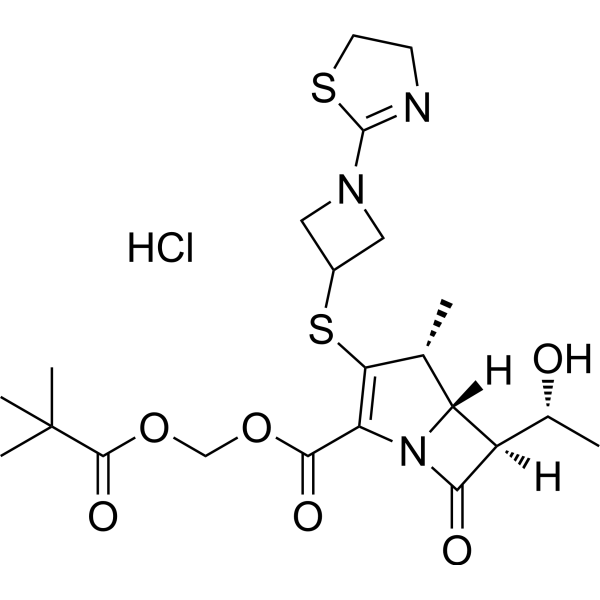
Tebipenem pivoxil hydrochloride (L084 hydrochloride) is an orally active carbapenem Antibiotic. Tebipenem pivoxil hydrochloride acts as a substrate of OATP1A2 with high affinity for this transporter (Km = 41.1 μM) . Tebipenem pivoxil hydrochloride achieves intestinal absorption via carrier-mediated uptake and simple diffusion. Tebipenem pivoxil hydrochloride inhibits the growth of Gram-positive bacteria, Gram-negative bacteria, multidrug-resistant bacteria, and pathogens producing extended-spectrum β-lactamases. Tebipenem pivoxil hydrochloride eliminates intestinal infection pathogens and reduces mortality in septic mice. Tebipenem pivoxil hydrochloride can be used in research related to bacterial pneumonia, severe gastrointestinal infections, bacterial sepsis, complicated urinary tract infections, and acute pyelonephritis .
loading...
    loading...
Referencia número: HY-W010514
No. CAS: 1460-57-7
trans-Cyclohexane-1,2-diol (TCHD) is a transient dilator of the nuclear pore complex (NPC). By interacting with the hydrophobic core (FG nucleoporin) of the NPC, trans-Cyclohexane-1,2-diol can disrupt the NPC structure and reversibly increase the permeability of the nuclear pore, allowing macromolecules larger than 40 kDa (such as plasmid DNA) to enter the cell nucleus by passive diffusion, thereby enhancing the nuclear import efficiency of non-viral vectors. trans-Cyclohexane-1,2-diol can improve the efficiency of in vitro electrotransfection or lipid-mediated gene transfection, especially significantly increasing gene expression in differentiated airway epithelial cells .
loading...
    loading...
Referencia número: HY-156045B
No. CAS: 12774-36-6
Cross-linked dextran G 150 is a hydrophilic gel based on molecular size exclusion and targeted for the separation of macromolecules. Cross-linked dextran G 150 functions through the gel permeation mechanism, where the cross-linked structure forms a three-dimensional network with specific pore diameters, achieving separation based on the molecular volumetric flow. Cross-linked dextran G 150 can be used to regulate the distribution coefficient of permeating solutes and maintain the permeation balance, such as in gel filtration chromatography for the purification and analysis of biological macromolecules like proteins and nucleic acids. Cross-linked dextran G 150 can also be used as a gel filtration filler (particle size range: 40-120 μm; spherical protein separation range: 5-300 kDa) .
loading...
    loading...
Referencia número: HY-156045C
No. CAS: 9041-36-5
Cross-linked dextran G 200 is a hydrophilic gel based on molecular size exclusion and targeted macromolecular separation. Cross-linked dextran G 200 works through the gel permeation mechanism, and the cross-linked structure forms a three-dimensional network with a specific pore size, achieving separation based on the molecular hydrodynamic volume. Cross-linked dextran G 200 can be used to adjust the osmotic solute distribution coefficient and the ability to maintain osmotic equilibrium, such as in gel filtration chromatography for purification and analysis of biomacromolecules such as proteins and nucleic acids . Cross-linked dextran G 200 can also be used as a gel filtration filler (particle size range: 40-120 μm; globular protein separation range: 5-600 kDa) .
loading...
    loading...
Referencia número: HY-L187
2,196 compounds

Fragment-based drug development (FBDD) is a strategy for drug discovery that can be applied both academically and commercially to enhance the identification of some non-drug targets. Fragment-based drug development has identified low molecular weight molecules (<300 Da) capable of binding to related macromolecules. These fragments can cover a wide chemical space and are easy to optimize later. Currently, several fragment-based drugs have entered clinical trials, of which two drugs, Vemurafenib and Venetoclax, have been approved for marketing.

Based on Tanimoto coefficient, MCE uses similarity algorithm to carefully select 2,196 high-structurally diverse 'RO3' compliant fragment molecules from large-scale fragment molecules, which can be applied to fragment based drug development.

Referencia número: HY-B0396B
No. CAS: 1381788-20-0
Synonyms: L084 hydrobromide
Target:  

Antibiotic Bacterial OAT

Áreas de investigación:  

Infection

Tebipenem pivoxil hydrobromide (L084 hydrobromide) is an orally active carbapenem Antibiotic. Tebipenem pivoxil hydrobromide acts as a substrate of OATP1A2 with high affinity for this transporter (Km = 41.1 μM) . Tebipenem pivoxil hydrobromide achieves intestinal absorption via carrier-mediated uptake and simple diffusion. Tebipenem pivoxil hydrobromide inhibits the growth of Gram-positive bacteria, Gram-negative bacteria, multidrug-resistant bacteria, and pathogens producing extended-spectrum β-lactamases. Tebipenem pivoxil hydrobromide eliminates intestinal infection pathogens and reduces mortality in septic mice. Tebipenem pivoxil hydrobromide can be used in research related to bacterial pneumonia, severe gastrointestinal infections, bacterial sepsis, complicated urinary tract infections, and acute pyelonephritis .
loading...
    loading...
Referencia número: HY-14854S
Synonyms: ATI-5923-13C,d3
Tecarfarin- 13C,d3 (ATI-5923- 13C,d3) is 13C labeled Tecarfarin. Tecarfarin is an orally active VKOR inhibitor with an IC50 of 0.67 μM against VKORC1. Tecarfarin blocks the post-translational modification of vitamin K-dependent coagulation factors II, VII, IX and X, reducing their levels and activities. Tecarfarin prolongs prothrombin time, attenuates venous and arterial thrombosis, increases ear incision bleeding volume, and exerts reversible anticoagulant effects. Tecarfarin is applicable to research related to arterial and venous thrombosis as well as other diseases requiring anticoagulation .
loading...
    loading...
Referencia número: HY-153108
Pureza:  99.62%
Synonyms: ARCA cap solution (100 mM)
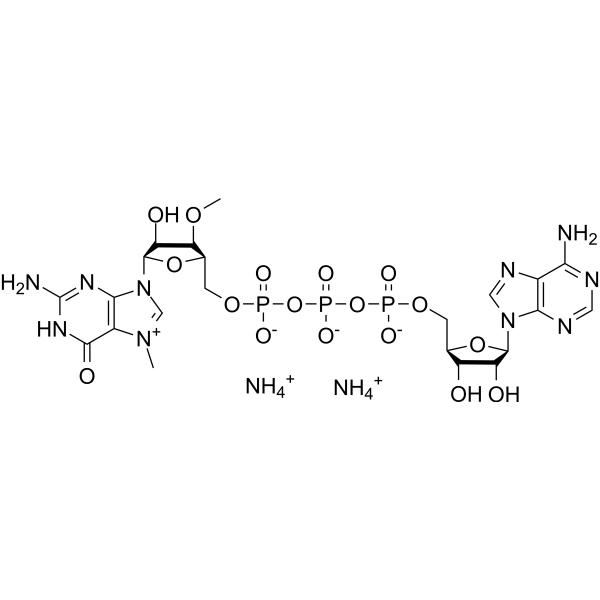
3'-O-Me-m7G(5')ppp(5')A (ARCA cap) solution (100 mM), anti-reverse cap analog, has a special RNA cap structure. 3'-O-Me-m7G(5')ppp(5')A solution (100 mM) improves mRNA translation efficiency and stability, reduces translational inhibition by proteins such as IFIT1, and enables stronger and longer-lasting expression of the target protein. The RNA cap structure is a common feature of mRNAs in some RNA viruses and eukaryotes, and it serves as a signal for translation initiation .
loading...
    loading...
Referencia número: HY-160109A
No. CAS: 1334320-77-2
Target:  

Mucin

Áreas de investigación:  

Inflammation/Immunology

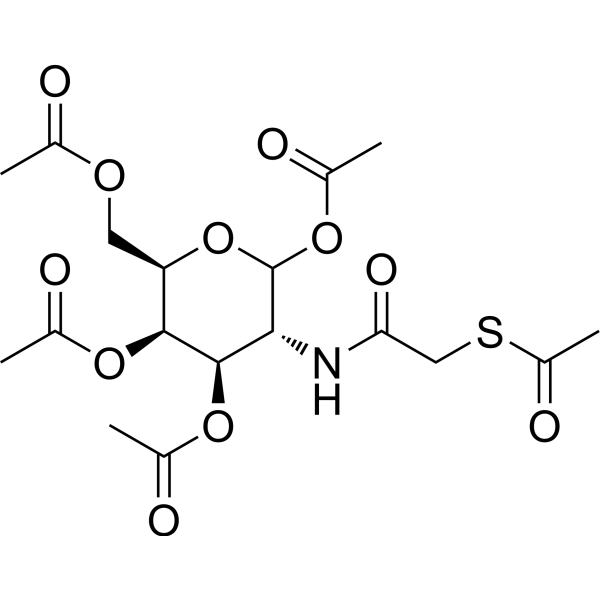
Ac5GalNTGc epimer is an analogue of hexosamine and the racemate of Ac5GalNTGc (HY-160109). Ac5GalNTGc is a potent, peracetylated C-2 thioglycolyl-substituted GalNAc analog that efficiently inhibits mucin-type O-glycan biosynthesis. Ac5GalNTGc reduces leukocyte sialyl-Lewis-X expression and inhibits L-/P-selectin mediated rolling under flow, as well as P-selectin dependent leukocyte-platelet adhesion. Ac5GalNTGc exhibits anti-inflammatory activity in a thioglycollate-induced acute peritonitis model. Ac5GalNTGc can be used for studies of O-glycan/mucin biology, inflammation, and related translational research .
loading...
    loading...
Referencia número: HY-172815
No. CAS: 3079913-81-5
Áreas de investigación:  

Cancer

IDB-001 is a human ribosomal peptidyl transferase center (PTC) inhibitor that induces conformational changes and blocks translational elongation in specific sequence contexts through complementary interactions with Asp/Glu residues in nascent polypeptides. IDB-001 preferentially stalls ribosomes at positions containing acidic peptide motifs, thereby inhibiting cancer cell proliferation, and activates the integrated stress response via eIF2α phosphorylation at high concentrations. In addition, IDB-001 mildly triggers ribotoxic stress responses through phosphorylation of JNK and p38. IDB-001 has been applied to mechanistic studies of triple-negative breast cancer .
loading...
    loading...
Referencia número: HY-183942
No. CAS: 2196246-28-1
Áreas de investigación:  

Cancer

USP7-IN-20 is a highly selective USP7 inhibitor that binds allosterically to the allosteric pocket of USP7 in a non-competitive and reversible manner. USP7-IN-20 downregulates MDM2 protein levels and stabilizes p53, thereby inducing p21 expression and enhancing the ubiquitin-dependent degradation of MDM2. USP7-IN-20 effectively binds endogenous USP7 to inhibit cancer cell proliferation, and also induces apoptosis by promoting the cleavage of PARP and caspase 3. USP7-IN-20 can be widely used in cancer-related basic and translational research.
loading...
    loading...
Referencia número: HY-P82159
Synonyms: ILF3; DRBF; MPHOSPH4; NF90; Interleukin enhancer-binding factor 3; Double-stranded RNA-binding protein 76; DRBP76; M-phase phosphoprotein 4; MPP4; Nuclear factor associated with dsRNA; NFAR; Nuclear factor of activated T-cells 90 kDa; NF-AT-90; translational control protein 80; TCP80

Host:  

Rabbit

Application:  

WB, IHC-P, ICC/IF, IP, FC

Reactivity:  

Human, Mouse

loading...
    loading...
Referencia número: HY-D3085
No. CAS: 2882924-23-2
Target:  

Fluorescent Dye

Áreas de investigación:  

Metabolic Disease Inflammation/Immunology

SSR-LDs is a fluorescent probe for lipid droplet polarity detection and lipid droplet imaging. SSR-LDs exhibits polarity-dependent fluorescence: it produces intense short-wavelength emission in low-polarity environments, while generating weak long-wavelength emission in high-polarity environments. SSR-LDs enters cells via free diffusion, specifically targets lipid droplets, and is unaffected by intracellular viscosity or pH values ranging from 4.5 to 9.0. SSR-LDs shows variable Ex/Em wavelengths in different solvents, including 590/663 nm in THF, 600/660 nm in mouse tissue and in vivo imaging, and an excitation wavelength of 580 nm with an emission wavelength range of 610-750 nm in cell imaging. SSR-LDs can be used for research related to fatty liver, liver injury and hepatitis .
loading...
    loading...
Referencia número: HY-W012382R
No. CAS: 537-55-3
N-Acetyl-L-tyrosine (Standard) is the analytical standard of N-Acetyl-L-tyrosine (HY-W012382). This product is intended for research and analytical applications. N-Acetyl-L-tyrosine is an orally active endogenous mitochondrial stress response regulator that can permeate the cell membrane by passive diffusion. N-Acetyl-L-tyrosine induces low-level reactive oxygen species (ROS) generation by transiently perturbing mitochondrial membrane potential, triggering reverse signaling to activate FoxO and Keap1 pathways. As a result, N-Acetyl-L-tyrosine enhances the expression of antioxidant enzyme genes, exerting anti-stress and cytoprotective effects. N-Acetyl-L-tyrosine can improve heat stress tolerance, inhibit tumor growth, and regulate energy metabolism. N-Acetyl-L-tyrosine can be used in the research of aging, metabolic diseases (such as diabetes), and cancer .
loading...
    loading...

