



Gingerenone A (Standard)
Gingerenone A (Standard) is the analytical standard of Gingerenone A. This product is intended for research and analytical applications. Gingerenone A is an Nrf2-Gpx4 activator that can induce Ferroptosis in liver damage with oral activity. Gingerenone A has anti-inflammatory, anti-diabetic, anti-tumor, and pro-aging effects in mice.
Nos produits utilisent uniquement pour la recherche. Nous ne vendons pas aux patients.
- Pureté : 98%
- CAS No.: 128700-97-0
- Formule: C21H24O5
- Masse moléculaire:356.41
-
Stockage:
Please store the product under the recommended conditions in the Certificate of Analysis.


To place orders, for customer services and technical support, please contact: MedChemExpress USA
Tel: 609-228-6898 E-mail: [email protected] [email protected]


-
 Product Information
-
Chemical Information
- Pureté et documentation
-
 Help & FAQs


-
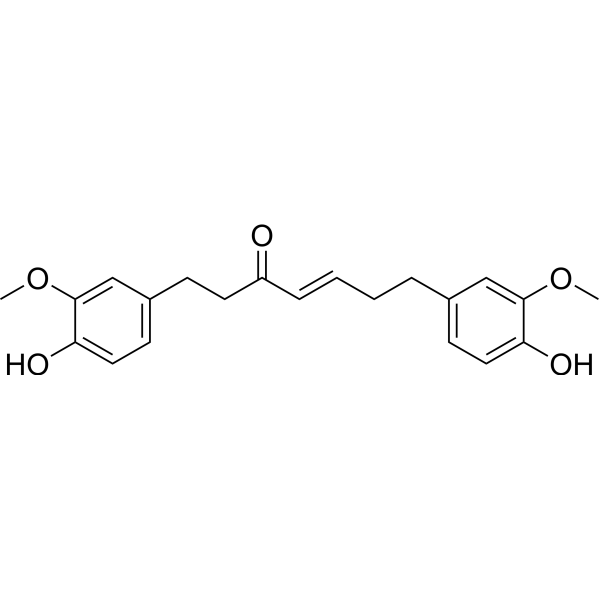
HY-120912
Gingerenone ANrf2-Gpx4 Activator -
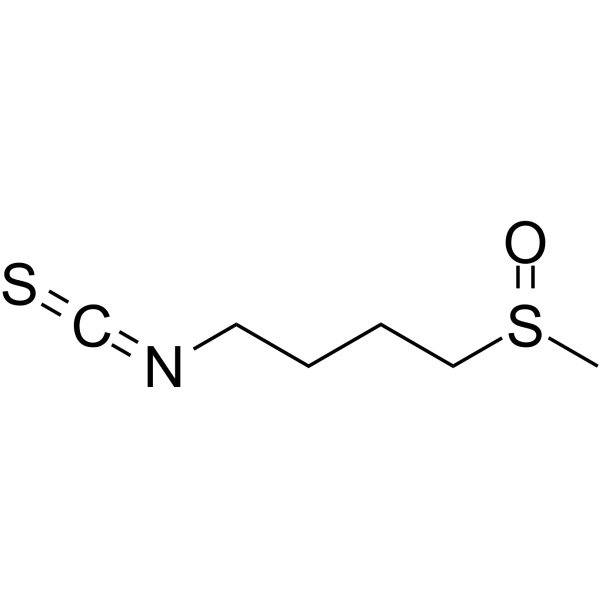
HY-13755
SulforaphaneKeap1/Nrf2/ARE Inducer -
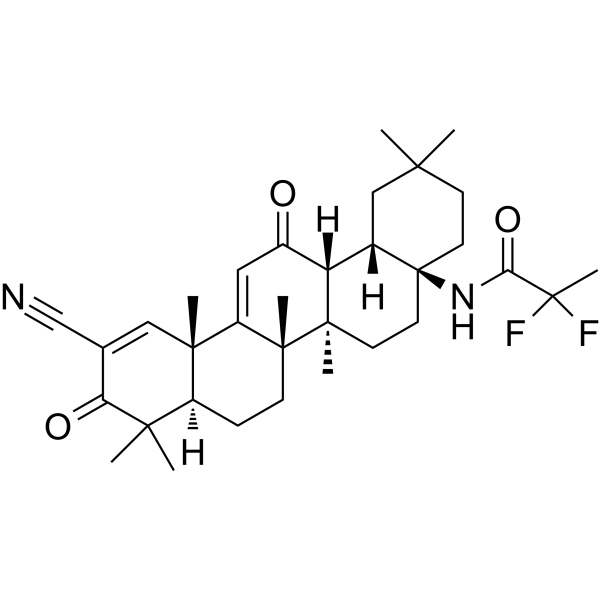
HY-12212
OmaveloxoloneNrf2 Activator -
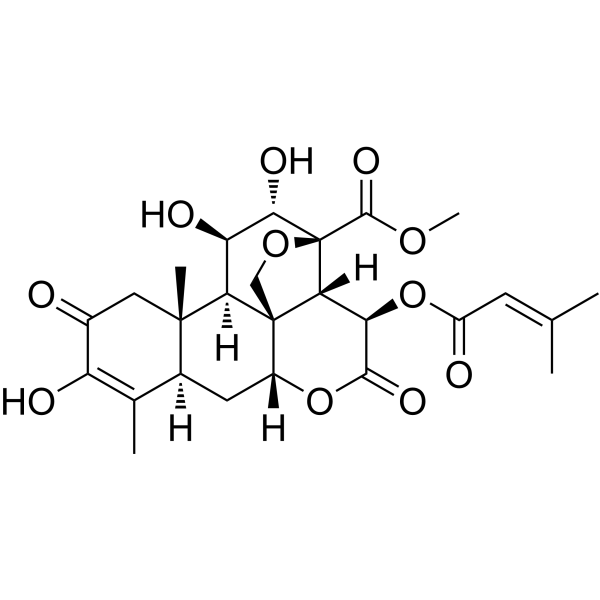
HY-19543
BrusatolNrf2 Inhibitor -
HY-B2230
HinokitiolVirus Protease Inhibitor -
HY-Z0548
Methyl 3,4-dihydroxybenzoate -
HY-100523
ML385Nrf2 Inhibitor -
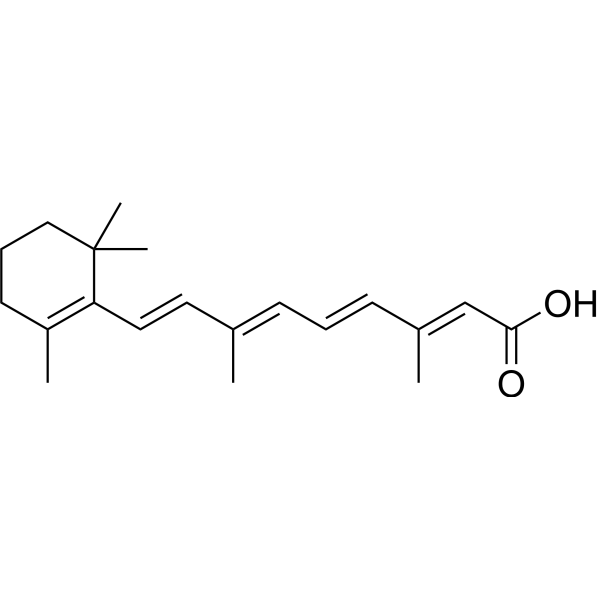
HY-14649
Retinoic acidRAR Agonist -
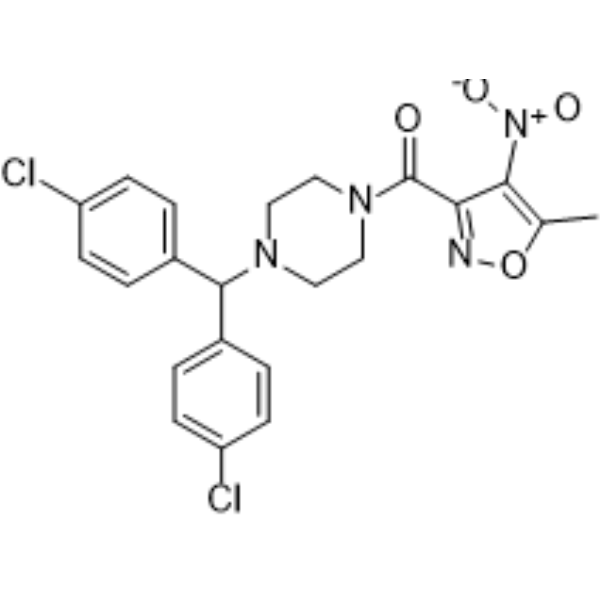
HY-100003
ML-210Selective GPX4 Inhibitor -
HY-14649R
Retinoic acid (Standard) -
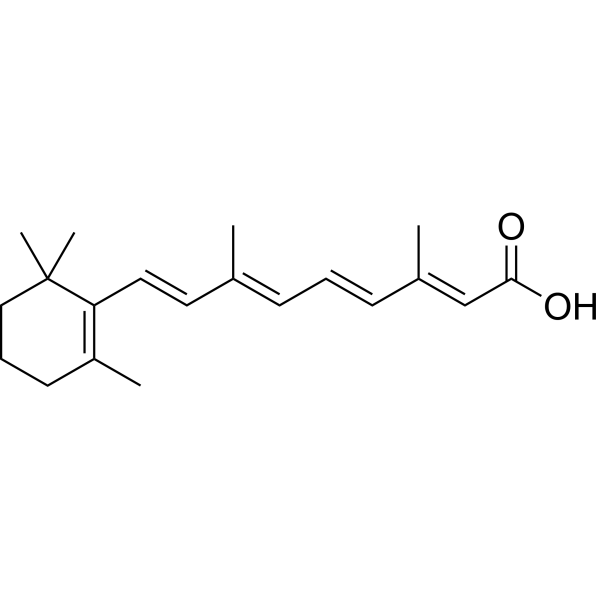
HY-14649G
Retinoic acid (GMP)RAR Agonist -
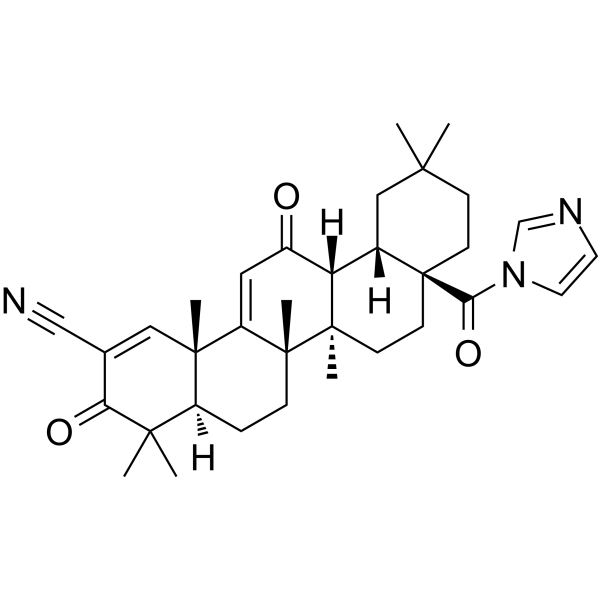
HY-15725
CDDO-ImNrf2 Activator


Product Information
Information
Application
The compound is the grade of analytical standard, which is the reference standard supplied assay. It is commonly used in qualitative, quantitative and methodological research experiments in HPLC, GC and MS.


Chemical Information
-
CAS No. 128700-97-0
-
Masse moléculaire 356.41
-
Formule C21H24O5
-
SMILES
O=C(/C=C/CCC1=CC=C(O)C(OC)=C1)CCC2=CC=C(O)C(OC)=C2
-
Structure Classification
-
Initial Source
-
Livraison
Room temperature in continental US; may vary elsewhere.
-
Stockage
Please store the product under the recommended conditions in the Certificate of Analysis.


Pureté et documentation
Références
[1]. Junhong Chen, et al. Gingerenone A Sensitizes the Insulin Receptor and Increases Glucose Uptake by Inhibiting the Activity of p70 S6 Kinase. Mol Nutr Food Res.2018 Dec;62(23):e1800709. [Content Brief]
[2]. Sujin Suk, et al. Gingerenone A, a polyphenol present in ginger, suppresses obesity and adipose tissue inflammation in high-fat diet-fed mice. Mol Nutr Food Res. 2017 Oct;61(10):10.1002/mnfr.201700139. [Content Brief]
[3]. Yu TJ, et al. Gingerenone A Induces Antiproliferation and Senescence of Breast Cancer Cells. Antioxidants (Basel). 2022 Mar 19;11(3):587. [Content Brief]
[4]. Chen Y, et al. Gingerenone A Alleviates Ferroptosis in Secondary Liver Injury in Colitis Mice via Activating Nrf2-Gpx4 Signaling Pathway. J Agric Food Chem. 2022 Oct 5;70(39):12525-12534. [Content Brief]

Calculators
Concentration (start) × Volume (start) = Concentration (final) × Volume (final)


Gingerenone A (Standard) Related Classifications
HY-120912R Related Classifications
 Powered by Bioz