



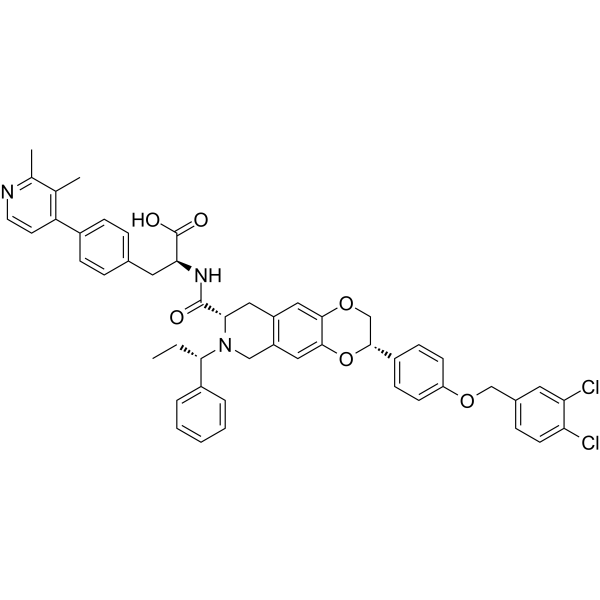
TT-OAD2 free base
TT-OAD2 free base is a non-peptide glucagon-like peptide-1 (GLP-1) receptor agonist with an EC50 of 5 nM. TT-OAD2 free base has the potential for diabetes treatment.
For research use only. We do not sell to patients.
- CAS No.: 1246826-07-2
- Formula: C50H47Cl2N3O6
- Molecular Weight:856.83
-
Storage:
Please store the product under the recommended conditions in the Certificate of Analysis.

To place orders, for customer services and technical support, please contact: MedChemExpress USA
Tel: 609-228-6898 E-mail: [email protected] [email protected]


-
 Biological Activity
-
Chemical Information
- Protocols
- Purity & Documentation
- References
-
 Help & FAQs


-

HY-P0014
LiraglutideGLP-1R Agonist -
HY-112185
OrforglipronGLP-1R Agonist -

HY-P0054A
GLP-1(7-36), amideGCGR Agonist -
HY-P0055
GLP-1(7-37)Intestinal Insulinotropic Hormone -
HY-125824
DanuglipronGLP-1R Agonist -

HY-P0120
DulaglutideGLP-1 Receptor Agonist -

HY-P0119
LixisenatideGLP-1 Agonist -
HY-101116
GLP-1R Antagonist 1GLP-1R Antagonist -

HY-P3463
BeinaglutideAnti-obesity Agent -

HY-P5311
AlbiglutideGLP-1 Receptor Agonist -
HY-103546
BETPGLP-1 Agonist -
HY-13443A
Exendin-4 acetateGLP-1 Receptor Agonist


Biological Activity
Description
IC50 & Target
EC50: 5 nM (GLP-1 receptor)[2]
In Vitro
TT-OAD2 (0-10 μM) inhibits GLP-1- and oxyntomodulin-mediated cAMP, calcium, pERK1/2 and β-arrestin responses in a concentration-dependent manner in HEK293A cells[1].
MedChemExpress (MCE) has not independently confirmed the accuracy of these methods. They are for reference only. Further protocols information, click here.
In Vivo
MedChemExpress (MCE) has not independently confirmed the accuracy of these methods. They are for reference only.
-
Animal Model:Male human GLP-1 receptor knock-in and knockout mice (6-11 months of age) with intravenous glucose tolerance tests[1]
-
Dosage:3 mg/kg
-
Administration:Intravenous injection (Single dose)
-
Result:Induced plasma insulin.


Chemical Information
-
CAS No. 1246826-07-2
-
Molecular Weight 856.83
-
Formula C50H47Cl2N3O6
-
SMILES
O=C(O)[C@H](CC1=CC=C(C2=C(C)C(C)=NC=C2)C=C1)NC([C@H]3N([C@H](C4=CC=CC=C4)CC)CC5=C(C=C(OC[C@H](C6=CC=C(OCC7=CC=C(Cl)C(Cl)=C7)C=C6)O8)C8=C5)C3)=O
-
Shipping
Room temperature in continental US; may vary elsewhere.
-
Storage
Please store the product under the recommended conditions in the Certificate of Analysis.

Protocols
-
Research Protocol for Metabolic Diseases
AMP-activated protein kinase, AMPK, is a conserved cellular energy sensor that responds to reduced cellular energy status and coordinates metabolism by increasing ATP-generating catabolic pathways while suppressing ATP-consuming anabolic processes. In metabolic disease research, the AMPK pathway is experimentally relevant because it regulates hepatic lipid synthesis, fatty acid oxidation, glucose production, skeletal-muscle glucose disposal, mTORC1-linked biosynthesis, autophagy, mitochondrial homeostasis, and whole-body energy balance. The central pathway logic is that energy stress, metformin, exercise-like stimulation, or direct AMPK activators increase AMPKα Thr172 phosphorylation and downstream substrate phosphorylation, including ACC and RAPTOR. Phosphorylation of ACC suppresses lipogenesis and supports fatty acid oxidation, whereas phosphorylation of RAPTOR suppresses mTORC1 signaling and links cellular energy status to growth and protein synthesis control. The pathway is linked


Purity & Documentation
References

Calculators
Concentration (start) × Volume (start) = Concentration (final) × Volume (final)


TT-OAD2 free base Related Classifications
HY-129658 Related Classifications
 Powered by Bioz