



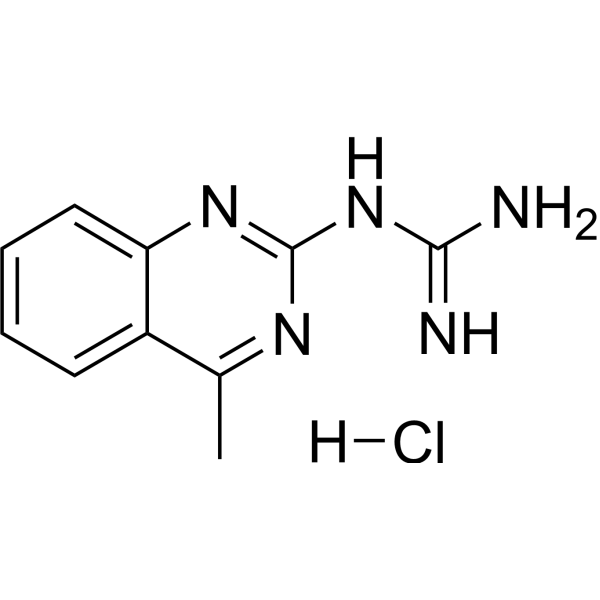
GMQ hydrochloride
Based on 1 publication(s) in Google Scholar
GMQ (hydrochloride) is a ASIC (acid-sensing ion) channel activator with an EC50 value of 1.83 mM for ASIC3 at pH 7.4. GMQ (hydrochloride) opens only ASIC3 but no other ASICs at pH 7.4. GMQ (hydrochloride) can be used for neurological disease research.
For research use only. We do not sell to patients.
- Purity : 99.86%
- CAS No.: 5361-15-9
- Formula: C10H12ClN5
- Molecular Weight:237.69
-
Storage:
4°C, sealed storage, away from moisture and light
* In solvent : -80°C, 6 months; -20°C, 1 month (sealed storage, away from moisture and light)

To place orders, for customer services and technical support, please contact: MedChemExpress USA
Tel: 609-228-6898 E-mail: [email protected] [email protected]


-
 Biological Activity
-
Chemical Information
-
Solvent & Solubility
- Protocols
- Purity & Documentation
- References
-
 Help & FAQs


-
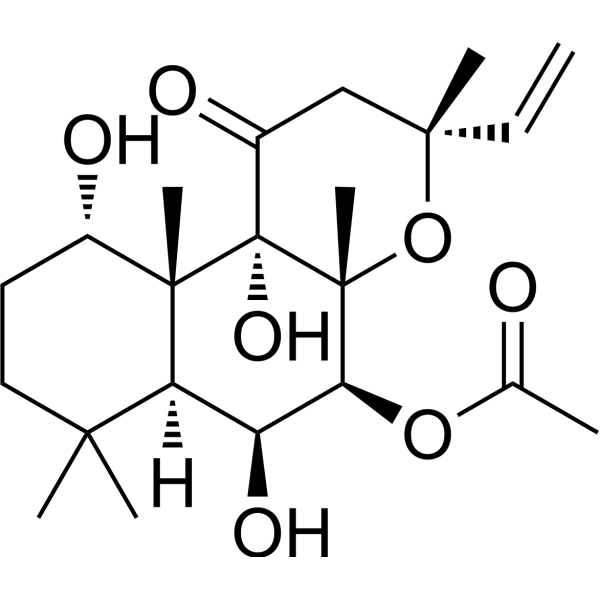
HY-15371
ForskolinAdenylate Cyclase Activator -

HY-107757R
GMQ hydrochloride (Standard)Reference Standard -
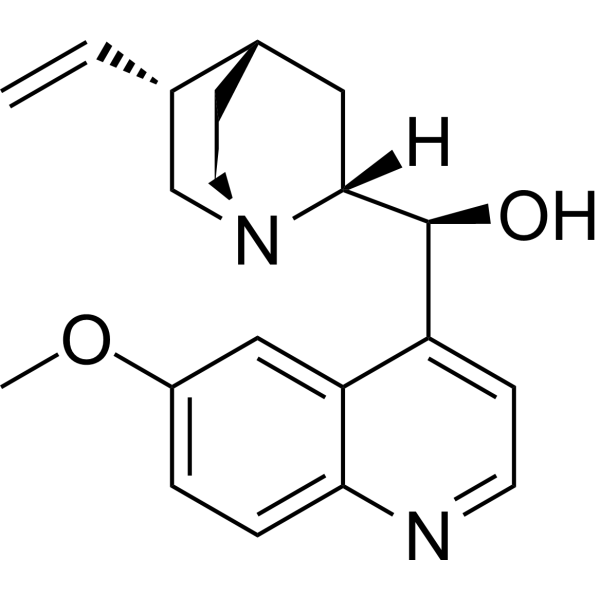
HY-B1751
Quinidine (15% dihydroquinidine)Anti-arrythmic Agent -
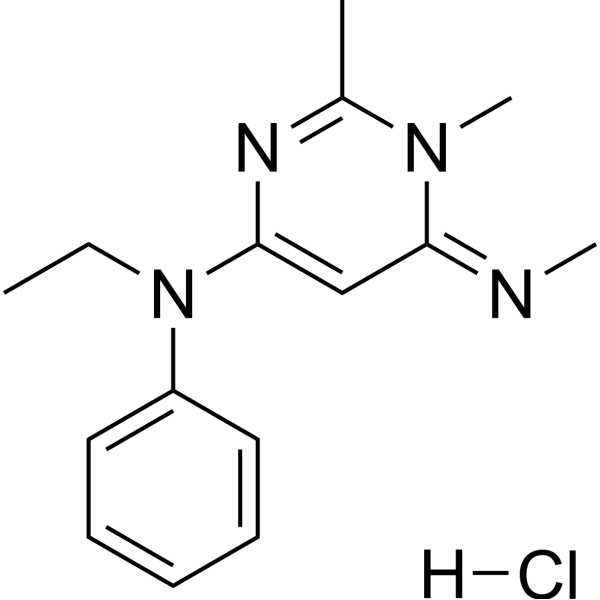
HY-101346
ZD7288HCN Channel Blocker -
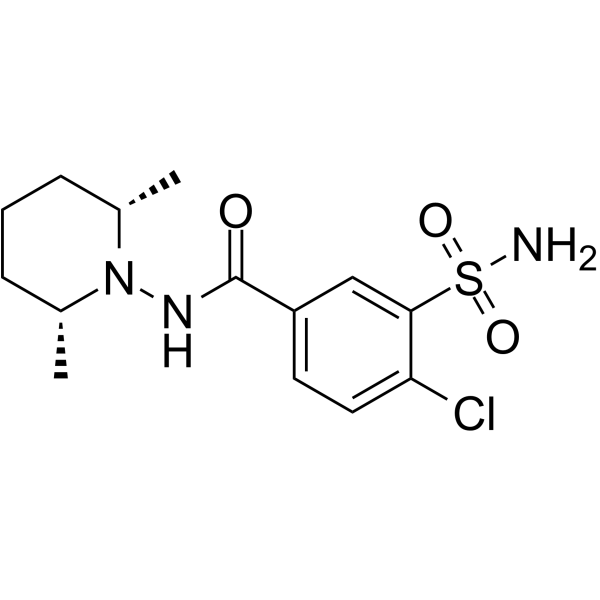
HY-B1477
ClopamideDiuretic Agent -
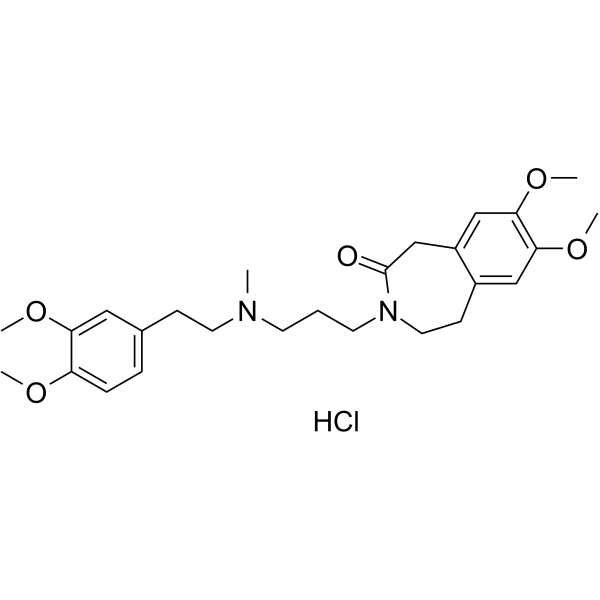
HY-13422
Zatebradine hydrochlorideHCN Channel Antagonist -
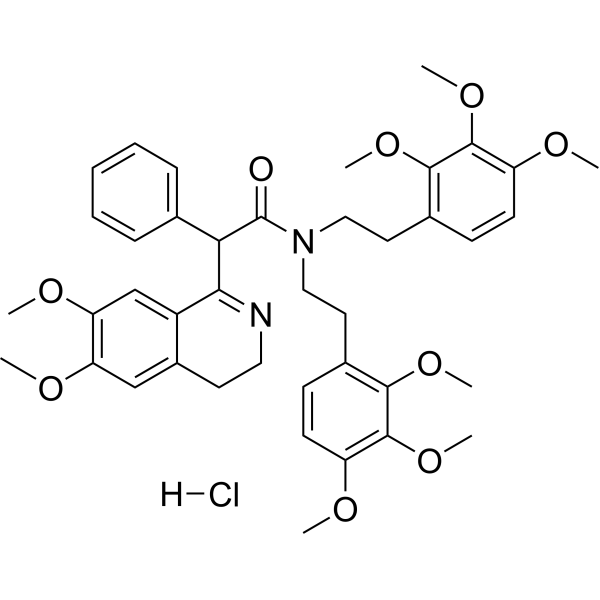
HY-107756
LOE 908 hydrochlorideNSCC Inhibitor -
![3-Azaspiro[5.5]undecane hydrochloride](https://file.medchemexpress.com/product_pic/hy-107755.gif)
HY-107755
3-Azaspiro[5.5]undecane hydrochlorideA/M2 Inhibitor -

HY-B1477R
Clopamide (Standard)Diuretic Agent -
![3-Azaspiro[5.5]undecane hydrochloride (Standard)](https://file.medchemexpress.com/product_pic/hy-107755r.gif)
HY-107755R
3-Azaspiro[5.5]undecane hydrochloride (Standard)Reference Standard -

HY-B1751R
Quinidine (15% dihydroquinidine) (Standard)Reference Standard -

HY-13422R
Zatebradine hydrochloride (Standard)HCN Channel Antagonist
Publications Citing Use of MedChemExpress (MCE) GMQ hydrochloride
More

Biological Activity
Description
In Vitro
GMQ (hydrochloride) (1 mM) generates a sustained inward current at pH 7.4 in CHO cells[1]. GMQ (hydrochloride) blocks ASIC pore at high concentrations with IC50 values of 3.24, 1.52 and 6.74 mM for ASIC1a, ASIC1b and ASIC3, respectively[1].
MedChemExpress (MCE) has not independently confirmed the accuracy of these methods. They are for reference only. Further protocols information, click here.


Chemical Information
-
CAS No. 5361-15-9
-
Appearance Solid
-
Molecular Weight 237.69
-
Formula C10H12ClN5
-
Color White to off-white
-
SMILES
CC1=NC(NC(N)=N)=NC2=CC=CC=C12.Cl
-
Synonyms
2-Guanidine-4-methylquinazoline hydrochloride
-
Shipping
Room temperature in continental US; may vary elsewhere.
-
Storage
4°C, sealed storage, away from moisture and light
* In solvent : -80°C, 6 months; -20°C, 1 month (sealed storage, away from moisture and light)


Publications (1)
-
Journal Impact Factor
-
Most Recent
-
Eur J Pharmacol
2-guanidine-4-methylquinazoline inhibits platelet activation and thrombosis by targeting the acid-sensing ion channel 3. [Abstract]2026 May 30:1030:179005. PMID: 42219052


Solvent & Solubility
In Vitro:
H2O : 10 mg/mL (42.07 mM; Need ultrasonic)
Please refer to the solubility information to select the appropriate solvent. Once prepared, please aliquot and store the solution to prevent product inactivation from repeated freeze-thaw cycles.
Storage method and period of stock solution: -80°C, 6 months; -20°C, 1 month (sealed storage, away from moisture and light). When stored at -80°C, please use it within 6 months. When stored at -20°C, please use it within 1 month.
* Note: If you choose water as the stock solution, please dilute it to the working solution, then filter and sterilize it with a 0.22 μm filter before use.
Please refer to the solubility information to select the appropriate solvent. Once prepared, please aliquot and store the solution to prevent product inactivation from repeated freeze-thaw cycles.
Storage method and period of stock solution: -80°C, 6 months; -20°C, 1 month (sealed storage, away from moisture and light). When stored at -80°C, please use it within 6 months. When stored at -20°C, please use it within 1 month.
* Note: If you choose water as the stock solution, please dilute it to the working solution, then filter and sterilize it with a 0.22 μm filter before use.
Concentration (start) × Volume (start) = Concentration (final) × Volume (final)

Protocols
-
Research Protocol for Neurological Diseases
PINK1/Parkin-mediated mitophagy pathway is a mitochondrial quality-control signaling axis in which mitochondrial depolarization stabilizes PINK1 on damaged mitochondria, activates Parkin recruitment and E3 ubiquitin ligase activity, promotes ubiquitination of outer mitochondrial membrane proteins, recruits selective autophagy adaptors, and drives lysosomal degradation of damaged mitochondria. In neurological disease research, this pathway is experimentally important because neurons, especially dopaminergic neurons, are highly dependent on mitochondrial integrity, and defective mitochondrial turnover can lead to mitochondrial dysfunction, oxidative stress, impaired neuronal survival, α-synuclein accumulation, and neuroinflammatory damage-associated signals. The genetic disease link is strongest in Parkinson’s disease because mutations in PRKN/parkin cause autosomal recessive juvenile parkinsonism, mutations in PINK1 cause hereditary early-onset Parkinson’s disease, and Drosophila studie


Purity & Documentation
-
Data Sheet (271 KB)
-
SDS (393 KB)
- English - EN (393 KB)
- Français - FR (393 KB)
- Deutsch - DE (393 KB)
- Norwegian - NO (393 KB)
- Español - ES (393 KB)
- Swedish - SV (393 KB)
- Italian - IT (393 KB)
- Korean - KR (393 KB)
- Portuguese - PT (393 KB)
-
Handling Instructions (2659 KB)
References


Complete Stock Solution Preparation Table
Please refer to the solubility information to select the appropriate solvent. Once prepared, please aliquot and store the solution to prevent product inactivation from repeated freeze-thaw cycles.
Storage method and period of stock solution: -80°C, 6 months; -20°C, 1 month (sealed storage, away from moisture and light). When stored at -80°C, please use it within 6 months. When stored at -20°C, please use it within 1 month.
| Optional Solvent | Concentration Solvent Mass | 1 mg | 5 mg | 10 mg | 25 mg |
|---|---|---|---|---|---|
| H2O | 1 mM | 4.2072 mL | 21.0358 mL | 42.0716 mL | 105.1790 mL |
| 5 mM | 0.8414 mL | 4.2072 mL | 8.4143 mL | 21.0358 mL | |
| 10 mM | 0.4207 mL | 2.1036 mL | 4.2072 mL | 10.5179 mL | |
| 15 mM | 0.2805 mL | 1.4024 mL | 2.8048 mL | 7.0119 mL | |
| 20 mM | 0.2104 mL | 1.0518 mL | 2.1036 mL | 5.2590 mL | |
| 25 mM | 0.1683 mL | 0.8414 mL | 1.6829 mL | 4.2072 mL | |
| 30 mM | 0.1402 mL | 0.7012 mL | 1.4024 mL | 3.5060 mL | |
| 40 mM | 0.1052 mL | 0.5259 mL | 1.0518 mL | 2.6295 mL |
* Note: If you choose water as the stock solution, please dilute it to the working solution, then filter and sterilize it with a 0.22 μm filter before use.


GMQ hydrochloride Related Classifications
HY-107757 Related Classifications
 Powered by Bioz