



Golocdacimab
Based on 2 publication(s) in Google Scholar
Gocdacimab (MEDI6570) is a fully human IgG1 monoclonal antibody inhibitor targeting the lectin-like oxidized low-density lipoprotein receptor LOX-1. By binding to LOX-1 and blocking its function, gocdacimab effectively reduces the level of free soluble LOX-1, thereby inhibiting key pathological processes such as lipid accumulation, foam cell formation, and vascular wall inflammation. Gocdacimab can interfere with atherosclerosis-related mechanisms, and it is used for research on atherosclerosis, and type 2 diabetes mellitus.
For research use only. We do not sell to patients.
- Purity : 99.11%
- CAS No.: 2418540-63-1
- Molecular Weight:146.64 kDa
-
Storage:
Please store the product under the recommended conditions in the Certificate of Analysis.


To place orders, for customer services and technical support, please contact: MedChemExpress USA
Tel: 609-228-6898 E-mail: [email protected] [email protected]


-
 Biological Activity
-
Chemical Information
- Protocols
- Purity & Documentation
- References
-
 Help & FAQs


Publications Citing Use of MedChemExpress (MCE) Golocdacimab
More

Biological Activity
Description
Isotype
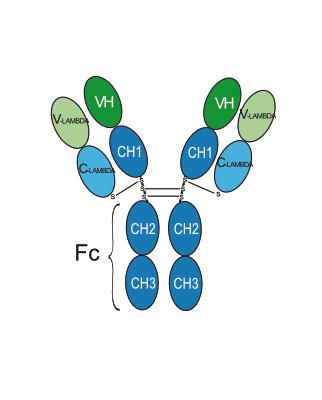
Human IgG1 lambda2
Recommend Isotype Controls
Species Reactivity
Human
IC50 & Target
OLR1
In Vivo
1. Directly bind to and block the LOX-1 receptor:
MEDI6570 specifically binds to LOX-1, antagonizes its interaction with ligands such as oxLDL, and inhibits the activation of the LOX-1 signaling pathway. Abnormal activation of the LOX-1 signaling pathway is a key contributor to increased cardiovascular risk in type 2 diabetes.
2. Regulate key inflammatory biomarkers:
It regulates inflammatory biomarkers such as IL-16 and IL-18 that are associated with the LOX-1 signaling pathway. These biomarkers represent potential nodes linking the LOX-1 signaling pathway to cardiovascular risk. By altering their expression levels, MEDI6570 interrupts the transmission of cardiovascular risk mediated by the LOX-1 signaling pathway and improves inflammation-related pathological conditions in patients with type 2 diabetes.
3. Affect neutrophil-related pathways:
It induces the production of neutrophil-related biomarkers such as CEACAM8, PRTN3, PGLYRP1, CPB1, GRN and LTBR, indicating that it can regulate neutrophil-related pathways. Neutrophils exert potential effects in LOX-1-mediated pathological responses, and this regulatory effect further interferes with the downstream pathological impacts of the LOX-1 signaling pathway.
4. Inhibit abnormal activation of multiple LOX-1-related pathways:
It regulates multiple pathological pathways associated with the LOX-1 signaling pathway, including oxidative stress, apoptosis, cell adhesion and migration, improves pathological changes caused by abnormalities of these pathways in patients with type 2 diabetes, and reduces the risk of cardiovascular complications.
MedChemExpress (MCE) has not independently confirmed the accuracy of these methods. They are for reference only.
Gene ID
Accession
4973
Conjugated
Unconjugated
Reconsititution
The product can be reconstituted/diluted with sterile PBS or saline.
Format
-
Human IgG1 lambda2
Application
ELISA, FACS, Functional assay


Chemical Information
-
CAS No. 2418540-63-1
-
Appearance Liquid
-
Molecular Weight 146.64 kDa
-
Color Colorless to light yellow
-
SMILES
[Golocdacimab]
-
Synonyms
MEDI6570
-
Shipping
Shipping with dry ice.
-
Formulation
Please refer to the lot-specific COA for specific buffer information.
-
Storage
Please store the product under the recommended conditions in the Certificate of Analysis.


Publications (2)
-
Journal Impact Factor
-
Most Recent
-
Mol Ther
Dyslipidemia-associated natural IgM improves oncolytic virus TILT-123 efficacy through antibody-dependent enhancement in solid tumors. [Abstract]2026 Jan 20:S1525-0016(26)00020-1. PMID: 41566775 -

Protocols
-
3T3-L1 preadipocyte-to-adipocyte differentiation
3T3-L1 preadipocytes are induced to differentiate after growth arrest using adipogenic media containing insulin, dexamethasone, and IBMX; differentiation is assessed by lipid-droplet accumulation, triglyceride increase, Oil Red O staining, and adipocyte-marker induction such as PPARγ and C/EBPα.
-
Research Protocol for Cardiovascular Diseases
Cardiovascular disease can be modeled as maladaptive cardiac remodeling, where ischemic injury or pressure overload activates inflammatory signaling, fibroblast activation, extracellular-matrix deposition, cardiomyocyte hypertrophy, vascular remodeling, and progressive ventricular dysfunction. The TGF-β/SMAD axis is a central profibrotic pathway after myocardial injury and pressure overload, while innate immune and cytokine pathways regulate leukocyte recruitment, scar formation, and adverse remodeling. Key unresolved questions include which inflammatory signals are reparative versus harmful, when fibrosis is protective versus maladaptive, and whether pathway inhibition improves function without weakening necessary infarct healing or compensatory remodeling.
-
Research Protocol for Inflammation-related Diseases
The NLRP3 inflammasome is a cytosolic innate immune signaling platform that integrates priming signals and danger-signal activation to promote caspase-1 activation, maturation of IL-1β and IL-18, and gasdermin D-mediated pyroptotic cell death. The core experimental logic is to determine whether inflammatory disease phenotypes are driven by increased NLRP3 expression, ASC-containing inflammasome assembly, caspase-1 cleavage, GSDMD cleavage, and extracellular release of IL-1β/IL-18 rather than by nonspecific cell injury alone. The pathway is strongly linked to inflammation-related disease phenotypes because monosodium urate crystals activate NALP3/NLRP3 inflammasome signaling in gout-like crystal inflammation, cholesterol crystals activate NLRP3 inflammasomes in atherogenesis models, and DSS-induced intestinal inflammation has been reported to involve NLRP3 inflammasome activity. However, experimental colitis studies also show context-dependent protective effects of NLRP3 inflammasome co
-
Research Protocol for Metabolic Diseases
AMP-activated protein kinase, AMPK, is a conserved cellular energy sensor that responds to reduced cellular energy status and coordinates metabolism by increasing ATP-generating catabolic pathways while suppressing ATP-consuming anabolic processes. In metabolic disease research, the AMPK pathway is experimentally relevant because it regulates hepatic lipid synthesis, fatty acid oxidation, glucose production, skeletal-muscle glucose disposal, mTORC1-linked biosynthesis, autophagy, mitochondrial homeostasis, and whole-body energy balance. The central pathway logic is that energy stress, metformin, exercise-like stimulation, or direct AMPK activators increase AMPKα Thr172 phosphorylation and downstream substrate phosphorylation, including ACC and RAPTOR. Phosphorylation of ACC suppresses lipogenesis and supports fatty acid oxidation, whereas phosphorylation of RAPTOR suppresses mTORC1 signaling and links cellular energy status to growth and protein synthesis control. The pathway is linked
-
Lipid Droplets: Oil Red O/Sudan Dye Lipid Staining
Lipid droplets are intracellular organelles with a neutral-lipid core that stores triacylglycerols and sterol esters, and Oil Red O or Sudan dyes detect these hydrophobic lipid deposits by partitioning into retained lipids in fresh or frozen specimens. Oil Red O stains neutral triglycerides and lipids in frozen tissue sections or air-dried cytologic preparations, while Sudan Black B has also been used as a histochemical fat stain for lipid-rich tissue structures.


Purity & Documentation
-
Data Sheet (261 KB)
-
SDS (251 KB)
- English - EN (251 KB)
- Français - FR (251 KB)
- Deutsch - DE (251 KB)
- Norwegian - NO (251 KB)
- Español - ES (251 KB)
- Swedish - SV (251 KB)
- Italian - IT (251 KB)
- Korean - KR (251 KB)
- Portuguese - PT (251 KB)
-
Inhibitory Antibodies User Guide (603 KB)
References

Calculators
Concentration (start) × Volume (start) = Concentration (final) × Volume (final)


Golocdacimab Related Classifications
HY-P99646 Related Classifications
 Powered by Bioz