



Insulin glulisine

Based on 1 Customer Validation
Insulin glulisine (HMR 1964) is a rapid-acting insulin analog whose pharmacokinetic and pharmacodynamic properties mimic physiological insulin secretion in humans, with a rapid onset of action. Insulin glulisine controls hyperglycemia. Insulin glulisine is applicable to research related to type 1 diabetes and type 2 diabetes.
For research use only. We do not sell to patients.
- Purity : 95%
- CAS No.: 207748-29-6
- Formula: C258H384N64O78S6
- Molecular Weight:5822.57
-
Storage:
Please store the product under the recommended conditions in the Certificate of Analysis.


To place orders, for customer services and technical support, please contact: MedChemExpress USA
Tel: 609-228-6898 E-mail: [email protected] [email protected]


-
 Biological Activity
-
Chemical Information
- Protocols
- Purity & Documentation
- References
-
 Help & FAQs


-
HY-108743
Insulin degludecInsulin Analogue -
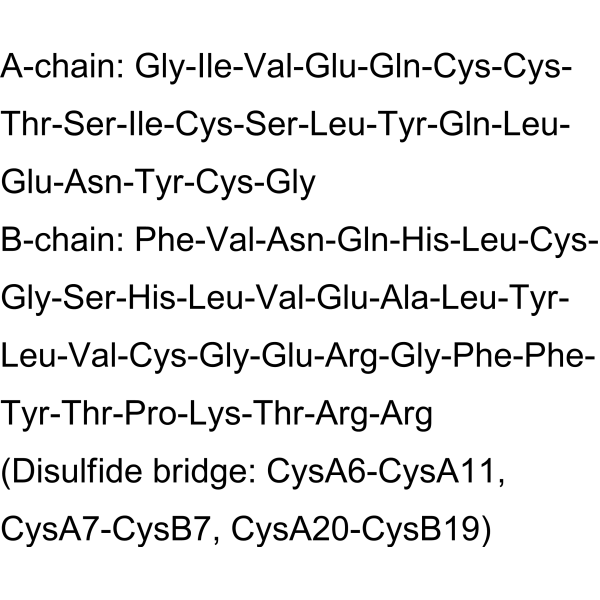
HY-108719
Insulin glargineInsulin Analog -
HY-109556
Insulin DetemirArtificial Insulin -
HY-P0035
Insulin (human)Recombinant Human Insulin -

HY-P0035A
Insulin solution (human)Polypeptide Hormone -
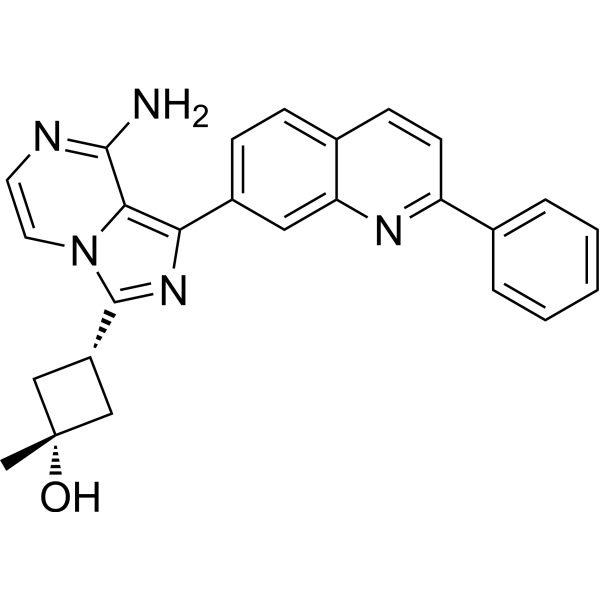
HY-10191
LinsitinibIGF-1R/Insulin Receptor Inhibitor -
HY-108767
Insulin asparth-Insulin Analog -
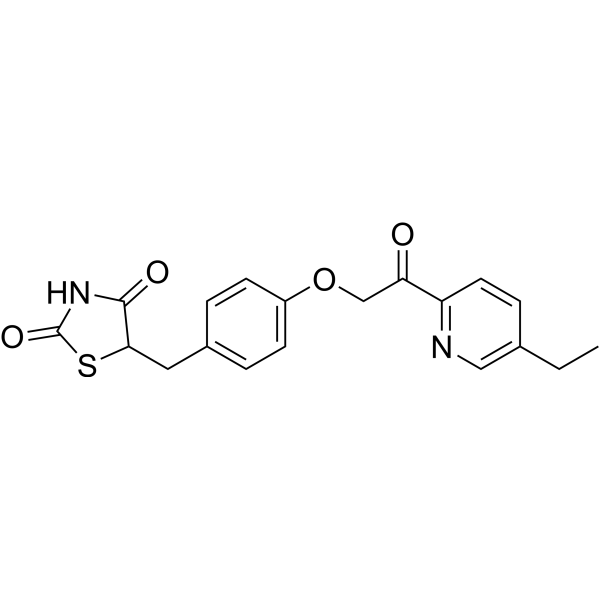
HY-100550
MSDC 0160Insulin Sensitizer -
HY-P99665
Insulin efsitora alfaInsulin Receptor Agonist -
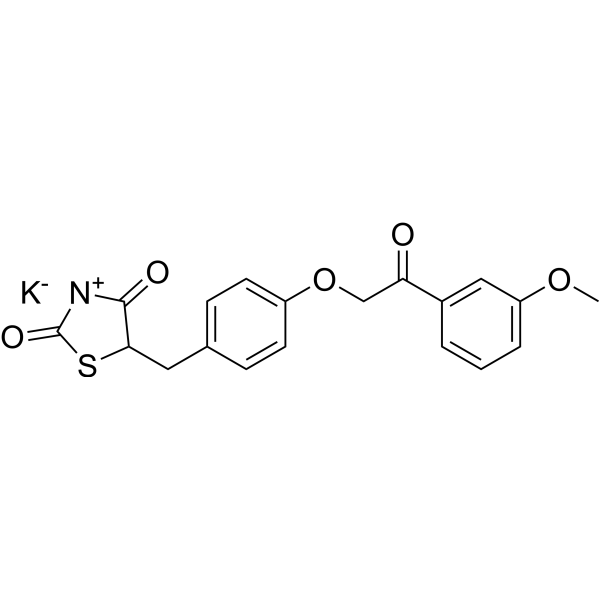
HY-108022A
Azemiglitazone potassiumInsulin Sensitizer -
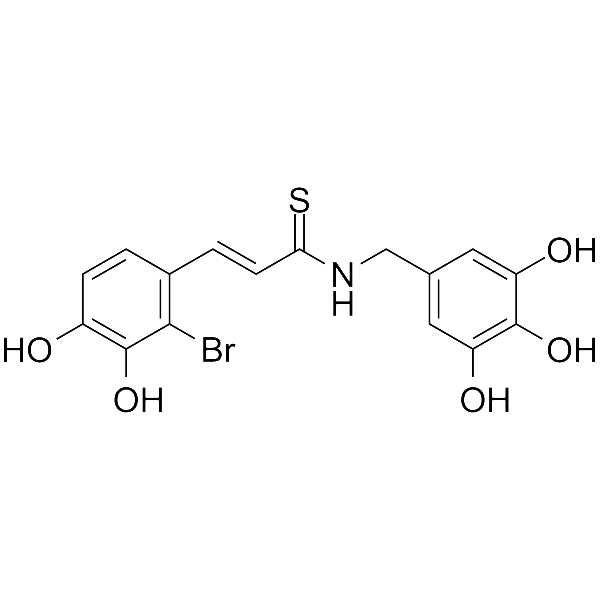
HY-145935
NT219IRS1/2/STAT3 Inhibitor -
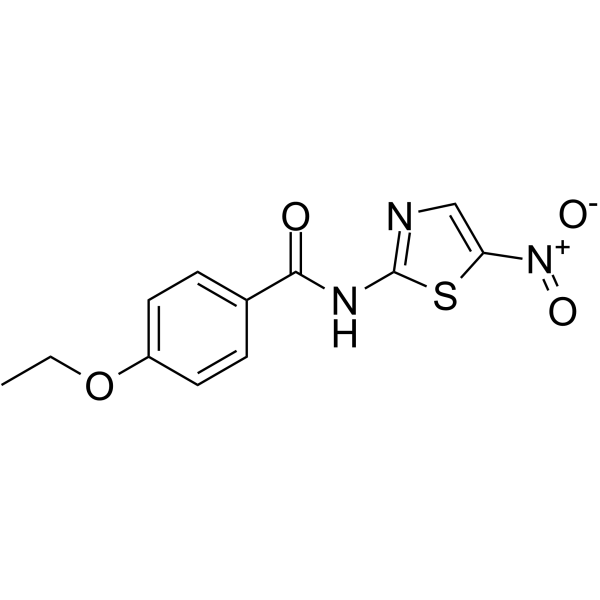
HY-115461
MID-1MG53-IRS-1 Interaction Disruptor


Biological Activity
Description
In Vivo
MedChemExpress (MCE) has not independently confirmed the accuracy of these methods. They are for reference only.
Clinical Trial
| NCT Number | Sponsor | Condition | Start Date |
Phase

|
|---|---|---|---|---|
| NCT01329991 | Plexxikon| | 2011-05 | PHASE1 |


Chemical Information
-
CAS No. 207748-29-6
-
Appearance Liquid
-
Molecular Weight 5822.57
-
Formula C258H384N64O78S6
-
Color Colorless to light yellow
-
Synonyms
HMR 1964
-
Shipping
Room temperature in continental US; may vary elsewhere.
-
Storage
Please store the product under the recommended conditions in the Certificate of Analysis.

Protocols
-
Research Protocol for Endocrine Diseases
Endocrine diseases often arise from disrupted hormone production, hormone signaling, or target-tissue responsiveness; for diabetes-focused endocrine disease models, insulin signaling regulates glucose uptake, hepatic glucose output, lipid metabolism, and β-cell compensation. Type 2 diabetes develops through interacting defects in insulin resistance, β-cell dysfunction, adipose inflammation, hepatic glucose overproduction, altered incretin signaling, and ectopic lipid metabolism. A major unresolved question is whether endocrine dysfunction is driven primarily by target-tissue insulin resistance, intrinsic β-cell failure, immune/inflammatory stress, or combined multi-organ failure that differs by disease stage.
-
Human Islet Cell Culture
The method of preserving islets in vitro, with purified reduced immunogenicity. The steps are islet isolation, islet cell purification, in vitro determination of islet function and islet cell culture.
-
Research Protocol for Metabolic Diseases
AMP-activated protein kinase, AMPK, is a conserved cellular energy sensor that responds to reduced cellular energy status and coordinates metabolism by increasing ATP-generating catabolic pathways while suppressing ATP-consuming anabolic processes. In metabolic disease research, the AMPK pathway is experimentally relevant because it regulates hepatic lipid synthesis, fatty acid oxidation, glucose production, skeletal-muscle glucose disposal, mTORC1-linked biosynthesis, autophagy, mitochondrial homeostasis, and whole-body energy balance. The central pathway logic is that energy stress, metformin, exercise-like stimulation, or direct AMPK activators increase AMPKα Thr172 phosphorylation and downstream substrate phosphorylation, including ACC and RAPTOR. Phosphorylation of ACC suppresses lipogenesis and supports fatty acid oxidation, whereas phosphorylation of RAPTOR suppresses mTORC1 signaling and links cellular energy status to growth and protein synthesis control. The pathway is linked


Purity & Documentation
-
Data Sheet (256 KB)
-
SDS (252 KB)
- English - EN (252 KB)
- Français - FR (252 KB)
- Deutsch - DE (252 KB)
- Norwegian - NO (252 KB)
- Español - ES (252 KB)
- Swedish - SV (252 KB)
- Italian - IT (252 KB)
- Korean - KR (252 KB)
- Portuguese - PT (252 KB)
-
Handling Instructions (2659 KB)
References

Calculators
Concentration (start) × Volume (start) = Concentration (final) × Volume (final)


Insulin glulisine Related Classifications
HY-109555 Related Classifications
 Powered by Bioz