



Isecarosmab

Based on 1 Customer Validation
Isecarosmab (M-6495) is an anti-ADAMTS monoclonal antibody (mAb) with a KD value of 3.65 pM. Isecarosmab has chondroprotective and anti-inflammatory activities. Isecarosmab can bind albumin to extend plasma half-life.
For research use only. We do not sell to patients.
- Purity : 96.95%
- CAS No.: 2254082-79-4
- Molecular Weight:28.89 kDa
-
Storage:
Please store the product under the recommended conditions in the Certificate of Analysis.

To place orders, for customer services and technical support, please contact: MedChemExpress USA
Tel: 609-228-6898 E-mail: [email protected] [email protected]


-
 Biological Activity
-
Chemical Information
- Protocols
- Purity & Documentation
- References
-
 Help & FAQs


-

HY-P99115
EnvafolimabAnti PD-L1 Antibody -

HY-P99397
SonelokimabAnti-IL-17A/F Antibody -

HY-P990748
LunsekimigNanobody -

HY-P99796
OzoralizumabAnti-TNFα Antibody -

HY-P99943
ErfonrilimabAnti-PDL1/CTLA-4 Antibody -

HY-P99638
GefurulimabAnti-C5/albumin Dual Antibody -

HY-P99947
RimteravimabBivalent VHH-Fc Antibody


Biological Activity
Description
Isotype
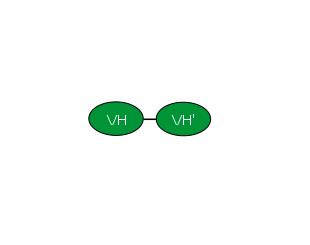
VH-VH'
Species Reactivity
Human
IC50 & Target
ALB & ADAMTSL5
In Vitro
Isecarosmab binds ADAMTS-5, but not ADAMTS-1, ADAMTS-4 and ADAMTS-15[1].
Isecarosmab (1-100 nM, 5 days) decreases huARGS, exAGNxI and GAG after pro-inflammatory stimulation in the bovine and OA human cartilage explants[1].
Isecarosmab (24-72 h) blocks ADAMTS-5-mediated DCS TLR2 activation[2].
MedChemExpress (MCE) has not independently confirmed the accuracy of these methods. They are for reference only. Further protocols information, click here.
In Vivo
MedChemExpress (MCE) has not independently confirmed the accuracy of these methods. They are for reference only.
Clinical Trial
| NCT Number | Sponsor | Condition | Start Date |
Phase

|
|---|---|---|---|---|
| NCT01329991 | Plexxikon| | 2011-05 | PHASE1 |
Gene ID
Accession
Conjugated
Unconjugated
Reconsititution
The product can be reconstituted/diluted with sterile PBS or saline.
Format
-
VH-VH'
Application
ELISA, FACS, Functional assay


Chemical Information
-
CAS No. 2254082-79-4
-
Appearance Liquid
-
Molecular Weight 28.89 kDa
-
Color Colorless to light yellow
-
SMILES
[Isecarosmab]
-
Synonyms
M-6495
-
Shipping
Shipping with dry ice.
-
Formulation
Please refer to the lot-specific COA for specific buffer information.
-
Storage
Please store the product under the recommended conditions in the Certificate of Analysis.

Protocols
-
Protocol for Pharmacokinetic Study
Pharmacokinetic studies quantify how an organism handles a drug over time through absorption, distribution, metabolism, and excretion, and the core experimental readout is the concentration-time profile of parent drug and, when relevant, metabolites in biological matrices such as plasma, whole blood, urine, bile, or tissue. Pharmacokinetic analysis links dose, route, exposure, clearance, half-life, distribution, bioavailability, and systemic exposure to drug efficacy and toxicity hypotheses rather than measuring a signaling pathway directly. The literature links pharmacokinetics to drug-development phenotypes by showing that drug metabolism and pharmacokinetics influence compound progression, exposure-response interpretation, safety margins, dosing strategy, and failure risk during discovery and development. DMPK science contributes to compound optimization by integrating physicochemical properties, in vitro metabolism, transporter behavior, in vivo exposure, and pharmacodynamic contex
-
Research Protocol for Inflammation-related Diseases
The NLRP3 inflammasome is a cytosolic innate immune signaling platform that integrates priming signals and danger-signal activation to promote caspase-1 activation, maturation of IL-1β and IL-18, and gasdermin D-mediated pyroptotic cell death. The core experimental logic is to determine whether inflammatory disease phenotypes are driven by increased NLRP3 expression, ASC-containing inflammasome assembly, caspase-1 cleavage, GSDMD cleavage, and extracellular release of IL-1β/IL-18 rather than by nonspecific cell injury alone. The pathway is strongly linked to inflammation-related disease phenotypes because monosodium urate crystals activate NALP3/NLRP3 inflammasome signaling in gout-like crystal inflammation, cholesterol crystals activate NLRP3 inflammasomes in atherogenesis models, and DSS-induced intestinal inflammation has been reported to involve NLRP3 inflammasome activity. However, experimental colitis studies also show context-dependent protective effects of NLRP3 inflammasome co


Purity & Documentation
-
Data Sheet (258 KB)
-
SDS (251 KB)
- English - EN (251 KB)
- Français - FR (251 KB)
- Deutsch - DE (251 KB)
- Norwegian - NO (251 KB)
- Español - ES (251 KB)
- Swedish - SV (251 KB)
- Italian - IT (251 KB)
- Korean - KR (251 KB)
- Portuguese - PT (251 KB)
-
Inhibitory Antibodies User Guide (603 KB)
References
[1]. Siebuhr AS, et al. The Anti-ADAMTS-5 Nanobody® M6495 Protects Cartilage Degradation Ex Vivo. Int J Mol Sci. 2020 Aug 20;21(17):5992. [Content Brief]
[2]. Sharma N, et al. Inflammation and joint destruction may be linked to the generation of cartilage metabolites of ADAMTS-5 through activation of toll-like receptors. Osteoarthritis Cartilage. 2020 May;28(5):658-668. [Content Brief]

Calculators
Concentration (start) × Volume (start) = Concentration (final) × Volume (final)


Isecarosmab Related Classifications
HY-P99671 Related Classifications
 Powered by Bioz