



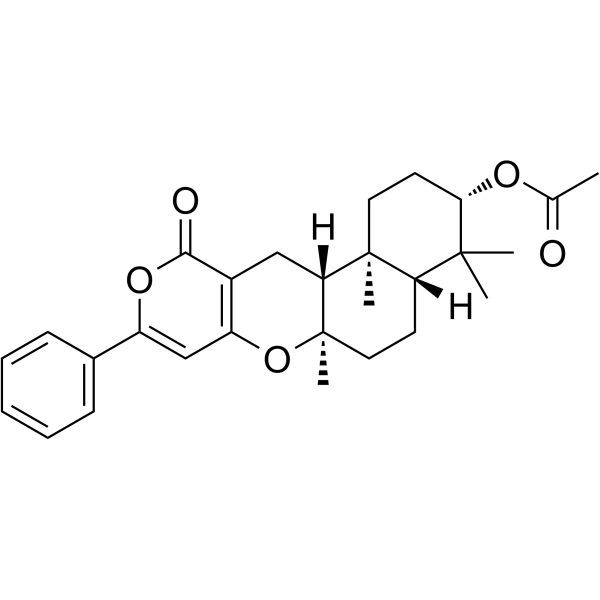
Phenylpyropene C
Phenylpyropene C (S14-95), a JAK/STAT pathway inhibitor, can inhibit IFN-γ mediated expression of the reporter gene (IC50=5.4~10.8 μM). Phenylpyropene C also is an inhibitor of acyl-CoA, with an IC50 of 16.0 μM.
For research use only. We do not sell to patients.
- CAS No.: 419532-92-6
- Formula: C28H34O5
- Molecular Weight:450.57
-
Storage:
Please store the product under the recommended conditions in the Certificate of Analysis.

To place orders, for customer services and technical support, please contact: MedChemExpress USA
Tel: 609-228-6898 E-mail: [email protected] [email protected]


-
 Biological Activity
-
Chemical Information
- Protocols
- Purity & Documentation
- References
-
 Help & FAQs




Biological Activity
Description
IC50 & Target
[1]|
ACAT 16.0 μM (IC50) |
In Vitro
Phenylpyropene C (0.1-1000 μM) inhibits ACAT activity with the IC50 of 16.0 μM in a dose dependent fashion[1].
Phenylpyropene C inhibits the IFN-γ mediated expression of the reporter gene with IC50s of 5.4 μM to approximately 10.8 μM[2].
Phenylpyropene C inhibits the expression of the proinflammatory enzymes COX-2 and NOS II at 10.8 μM in LPS/IFN-γ stimulated J774 mouse macrophages[2].
Phenylpyropene C inhibits the activation of the p38 MAP kinase, which is involved in the inducible expression of many proinflammatory genes[2].
MedChemExpress (MCE) has not independently confirmed the accuracy of these methods. They are for reference only.


Chemical Information
-
CAS No. 419532-92-6
-
Molecular Weight 450.57
-
Formula C28H34O5
-
SMILES
C[C@@]12[C@]3([H])[C@](OC4=C(C(OC(C5=CC=CC=C5)=C4)=O)C3)(CC[C@@]1([H])C(C)([C@H](CC2)OC(C)=O)C)C
-
Synonyms
S14-95
-
Shipping
Room temperature in continental US; may vary elsewhere.
-
Storage
Please store the product under the recommended conditions in the Certificate of Analysis.


Purity & Documentation
References
[1]. Rho MC, et, al. Phenylpyropene C, a new inhibitor of acyl-CoA: cholesterol acyltransferase produced by Penicillium griseofulvum F1959. J Antibiot (Tokyo). 2002 Feb;55(2):211-4. [Content Brief]
[2]. Erkel G, et, al. S14-95, a novel inhibitor of the JAK/STAT pathway from a Penicillium species. J Antibiot (Tokyo). 2003 Apr;56(4):337-43. [Content Brief]

Calculators
Concentration (start) × Volume (start) = Concentration (final) × Volume (final)


Phenylpyropene C Related Classifications
HY-115734 Related Classifications
 Powered by Bioz