



IWP-3

Based on 1 Customer Validation
IWP-3 is a Wnt production inhibitor with an IC50 of 40 nM. IWP-3 also acts as a CK1δ inhibitor, with an IC50 of 1.89 μM against rat full-length CK1δ. IWP-3 inhibits the function of Porcupine (Porcn), thereby blocking the palmitoylation of Wnt proteins, suppressing the canonical Wnt signaling pathway, reducing the proliferative capacity of cancer cells, promoting the differentiation of mesoderm into cardiomyocytes and increasing cardiomyocyte yield. IWP-3 reduces embryonic cell division, alters the cell movement along the anterior-posterior axis of embryos, and causes embryonic shortening. IWP-3 can be used in studies related to cancers such as pancreatic cancer.
For research use only. We do not sell to patients.
- Purity : 99.27%
- CAS No.: 687561-60-0
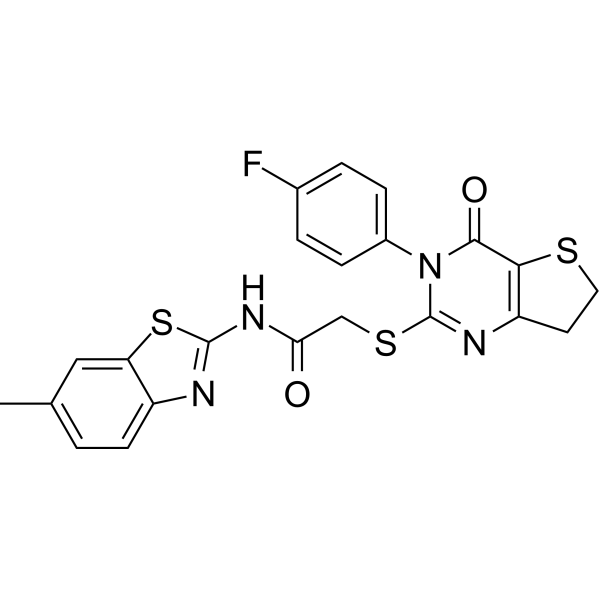
- Formula: C22H17FN4O2S3
- Molecular Weight:484.59
-
Storage:Powder -20°C, 3 years ; In solvent -80°C, 6 months , -20°C, 1 month

To place orders, for customer services and technical support, please contact: MedChemExpress USA
Tel: 609-228-6898 E-mail: [email protected] [email protected]


-
 Biological Activity
-
Chemical Information
-
Solvent & Solubility
- Protocols
- Purity & Documentation
- References
-
 Help & FAQs


-
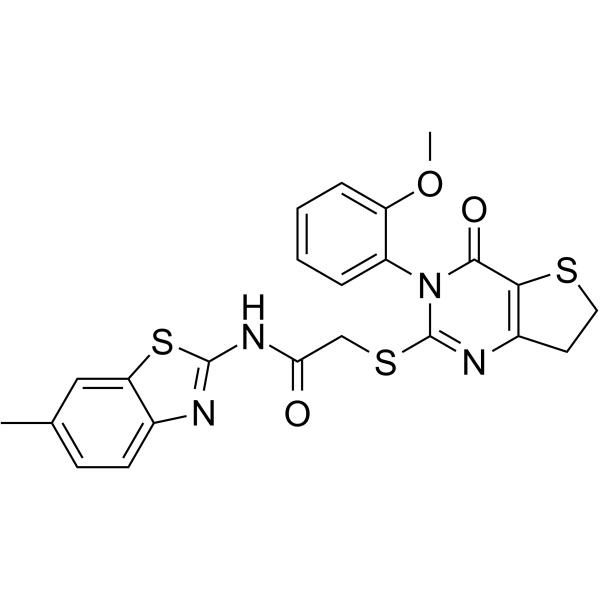
HY-12879
IWP-4Wnt/CK1δ/ε Inhibitor -
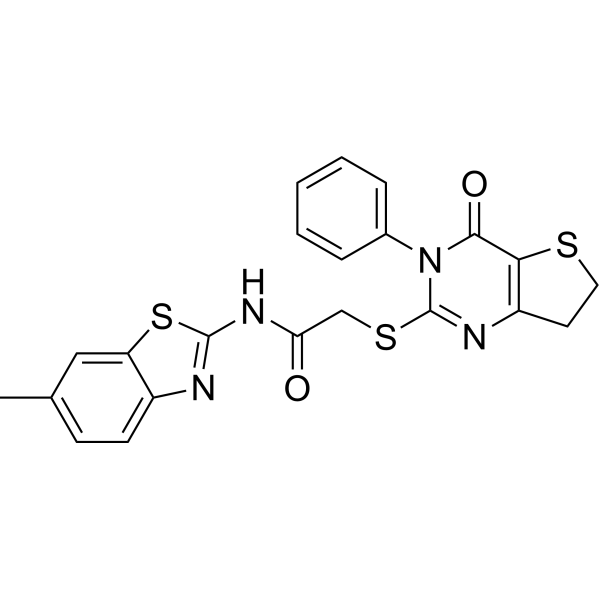
HY-13912
IWP-2Wnt Production Inhibitor -
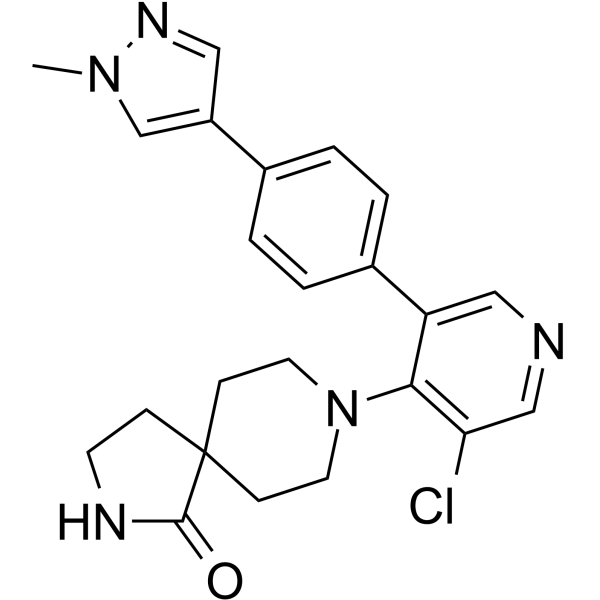
HY-12681
CCT251545WNT Pathway Inhibitor -
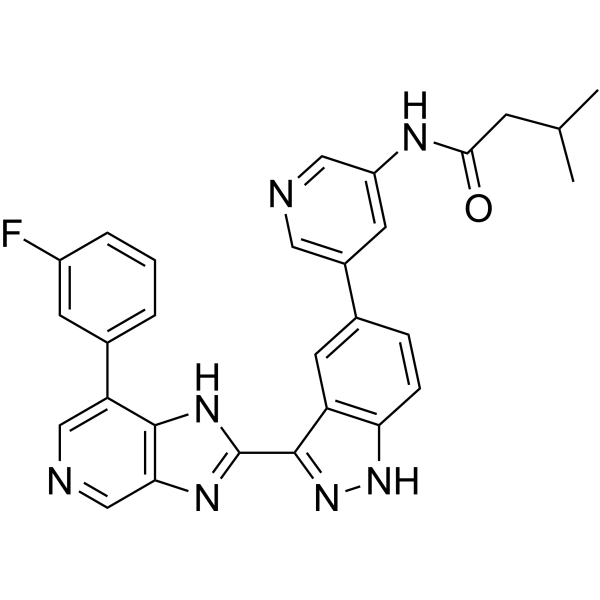
HY-109049
AdavivintWnt Pathway Inhibitor -
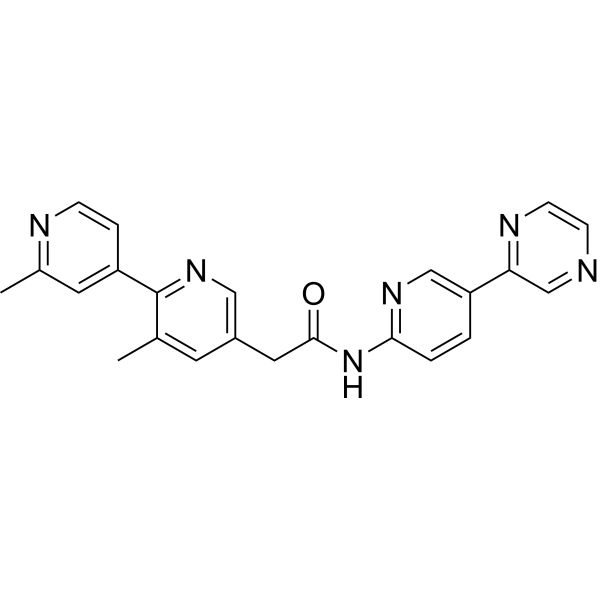
HY-17545
LGK974PORCN Inhibitor -
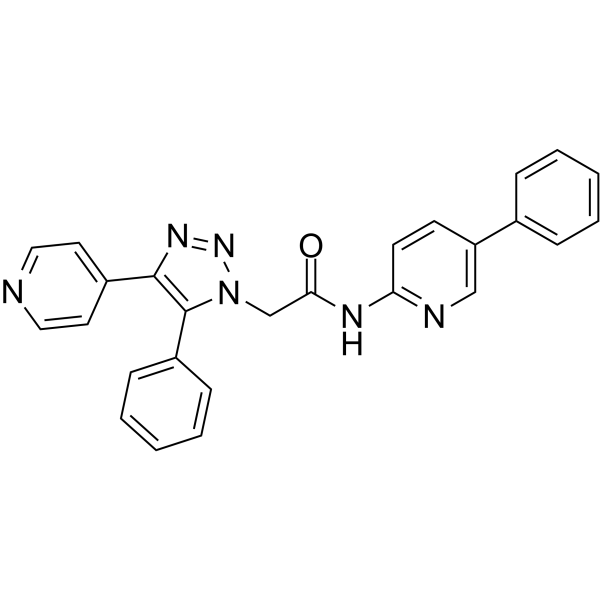
HY-100853
IWP-O1Porcn Inhibitor -
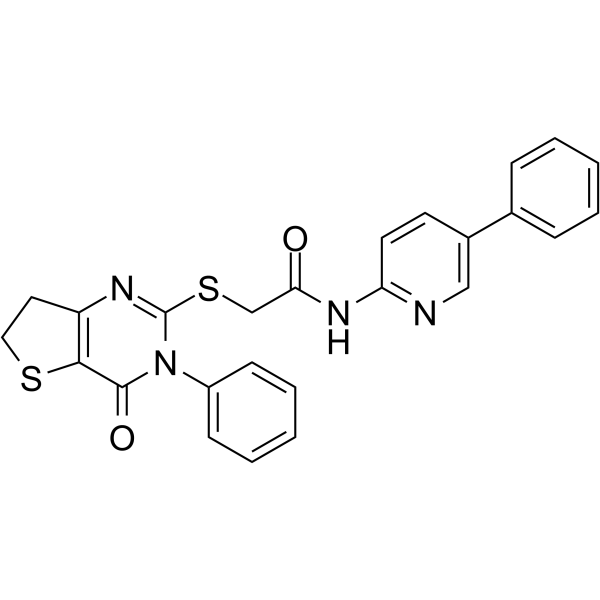
HY-15825
IWP L6Porcn Inhibitor -
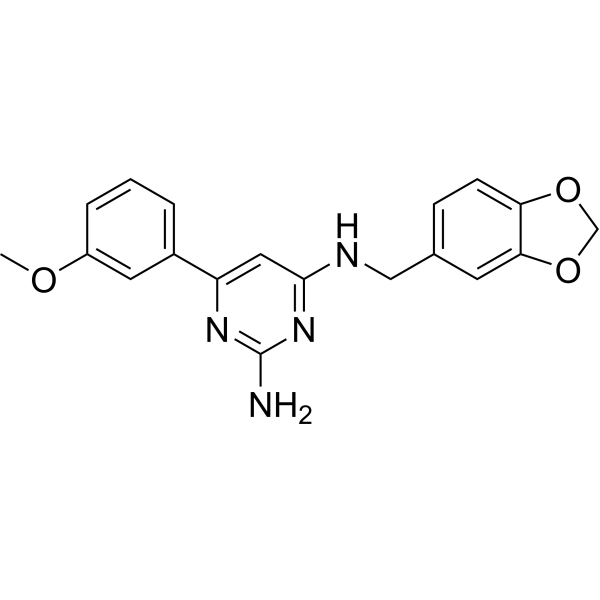
HY-19987
BML-284Wnt Signaling Activator -
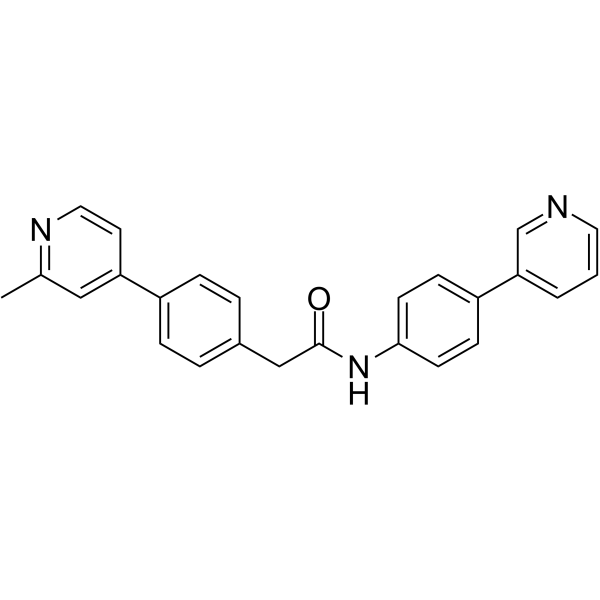
HY-15659
Wnt-C59PORCN Inhibitor -
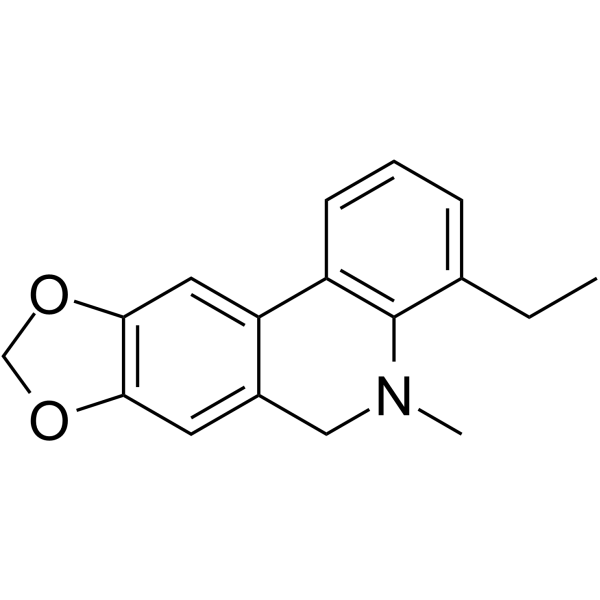
HY-122816
HLY78Wnt/β-catenin Activator -
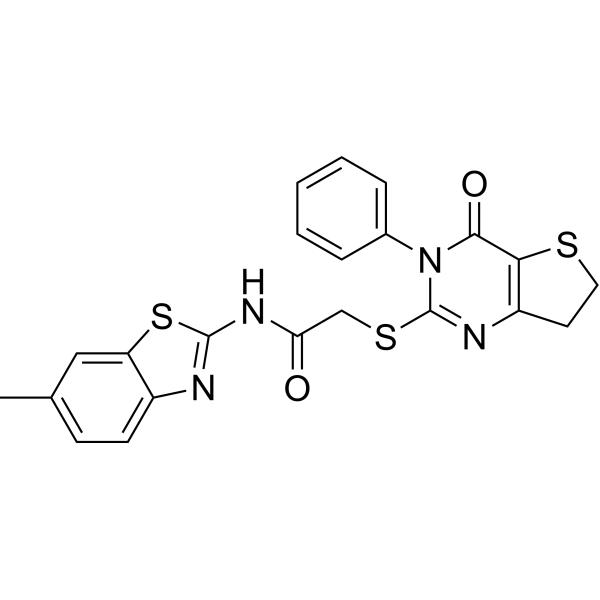
HY-13912G
IWP-2 (GMP)Wnt Inhibitor (GMP) -
HY-101130
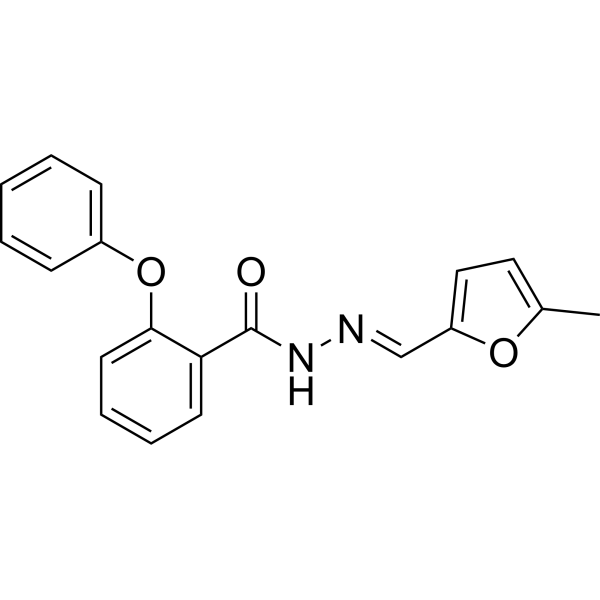
PNU-74654β-catenin/TCF Interaction Inhibitor


Biological Activity
Description
IC50 & Target
[1]|
CK1δ 1.89 μM (IC50) |
Cellular Effect
|
Cell Line

|
Type | Value | Description | References |
|---|---|---|---|---|
| CAPAN-1 | EC50 |
>10 μM
Compound: IWP-3
|
Antiproliferative activity against human Capan1 cells after 48 hrs by MTT assay
Antiproliferative activity against human Capan1 cells after 48 hrs by MTT assay
|
[PMID: 29630366] |
| HEK293 | EC50 |
3.5 μM
Compound: IWP-3
|
Antiproliferative activity against human HEK293 cells after 48 hrs by MTT assay
Antiproliferative activity against human HEK293 cells after 48 hrs by MTT assay
|
[PMID: 29630366] |
| HEK-293T | IC50 |
538 nM
Compound: 3, IWP-3
|
Inhibition of beta-casein-dependent canonical Wnt3 pathway in human HEK293T cells by luciferase reporter gene assay
Inhibition of beta-casein-dependent canonical Wnt3 pathway in human HEK293T cells by luciferase reporter gene assay
|
[PMID: 22191557] |
| HT-29 | EC50 |
>10 μM
Compound: IWP-3
|
Antiproliferative activity against human HT-29 cells after 48 hrs by MTT assay
Antiproliferative activity against human HT-29 cells after 48 hrs by MTT assay
|
[PMID: 29630366] |
| MIA PaCa-2 | EC50 |
5.34 μM
Compound: IWP-3
|
Antiproliferative activity against human MIAPaCa2 cells after 48 hrs by MTT assay
Antiproliferative activity against human MIAPaCa2 cells after 48 hrs by MTT assay
|
[PMID: 29630366] |
| PANC-1 | EC50 |
4.87 μM
Compound: IWP-3
|
Antiproliferative activity against human PANC1 cells after 48 hrs by MTT assay
Antiproliferative activity against human PANC1 cells after 48 hrs by MTT assay
|
[PMID: 29630366] |
| SW-620 | EC50 |
8.62 μM
Compound: IWP-3
|
Antiproliferative activity against human SW620 cells after 48 hrs by MTT assay
Antiproliferative activity against human SW620 cells after 48 hrs by MTT assay
|
[PMID: 29630366] |
In Vitro
IWP-3 potently induces cardiogenesis in day 4 mesodermal cells derived from human embryonic stem cells, with an EC50 of 1214 nM. It drives mesodermal progenitor cells to form cardiomyocytes without expanding other mesodermal lineages[1].
IWP-3 (10 μM) does not inhibit the kinase activity of bovine GST-CK1α, exerts moderate inhibitory effects on the kinase activities of human GST-CK1γ3 and human CK1ε, and significantly inhibits the purified kinase activities of rat GST-CK1δ and rat CK1δKD[2].
IWP-3 inhibits purified rat CK1δKD, GST-wtCK1δ and GST-M82FCK1δ with IC50 values of 0.55 μM, 1.89 μM and 0.15 μM, respectively[2].
IWP-3 (0.313 μM-10 μM; 48 h) inhibits the proliferation of MiaPaCa2, Panc-1, Panc-89, HEK293 and SW620 cancer cell lines, with EC50 values ranging from 3.50 μM to 8.62 μM; in contrast, it exerts no inhibitory effect on the proliferation of A818-6, HT29 and Capan1 cells even at concentrations as high as 10 μM[2].
IWP-3 (0.45-45 µM; 1-4 h) causes significant shortening of germband length at 2 h and 3 h of incubation and a significant reduction in cell proliferation at 2 h of incubation when applied to dissected Tribolium castaneum EFA-nGFP transgenic embryos[3].
IWP-3 (45 µM; 2 h) significantly reduces total cell displacement and net cell movement across all germband regions, and decreases the proportion of cells moving along the anterior-posterior axis during 2-hour live-cell imaging when treated on dissected Tribolium castaneum EFA-nGFP transgenic embryos[3].
IWP-3 is a Wnt production inhibitor with an IC50 of 40 nM; it blocks palmitoylation of Wnt protein by inhibiting Porcn[4].
MedChemExpress (MCE) has not independently confirmed the accuracy of these methods. They are for reference only. Further protocols information, click here.


Chemical Information
-
CAS No. 687561-60-0
-
Appearance Solid
-
Molecular Weight 484.59
-
Formula C22H17FN4O2S3
-
Color White to light yellow
-
SMILES
O=C(NC1=NC2=CC=C(C)C=C2S1)CSC3=NC(CCS4)=C4C(N3C5=CC=C(F)C=C5)=O
-
Shipping
Room temperature in continental US; may vary elsewhere.
-
Storage
Powder -20°C 3 years In solvent -80°C 6 months -20°C 1 month


Solvent & Solubility
In Vitro:
DMSO : 16.67 mg/mL (34.40 mM; ultrasonic and warming and heat to 60°C; Hygroscopic DMSO has a significant impact on the solubility of product, please use newly opened DMSO)
Please refer to the solubility information to select the appropriate solvent. Once prepared, please aliquot and store the solution to prevent product inactivation from repeated freeze-thaw cycles.
Storage method and period of stock solution: -80°C, 6 months; -20°C, 1 month. When stored at -80°C, please use it within 6 months. When stored at -20°C, please use it within 1 month.
Please refer to the solubility information to select the appropriate solvent. Once prepared, please aliquot and store the solution to prevent product inactivation from repeated freeze-thaw cycles.
Storage method and period of stock solution: -80°C, 6 months; -20°C, 1 month. When stored at -80°C, please use it within 6 months. When stored at -20°C, please use it within 1 month.
Concentration (start) × Volume (start) = Concentration (final) × Volume (final)

Protocols
-
Cell Cytotoxicity Assay
Cytotoxicity assays are usually based on the assessment of cell membrane damage, which can also be indirectly detected by measuring cell viability. Detection methods include MTT assay, CKK-8 assay, LDH assay and ATP assay, etc.
-
CFSE Dye Dilution Proliferation Assay
The CFSE (carboxyfluorescein diacetate succinimidyl ester) dye dilution proliferation assay is based on the covalent labeling of intracellular proteins by a cell-permeant fluorescent dye that becomes fluorescent upon intracellular ester cleavage and then is stably retained within cells. As labeled cells divide, the dye is partitioned equally between daughter cells, resulting in a stepwise halving of fluorescence intensity that can be quantified by flow cytometry to determine the number of cell divisions undergone by each cell population. This fluorescence dilution approach enables quantitative tracking of lymphocyte proliferation at the single-cell level over multiple rounds of division. CFSE-based proliferation analysis has been widely applied to measure antigen-driven lymphocyte expansion in vitro, where discrete fluorescence peaks correspond to successive cell divisions and allow reconstruction of proliferative history within heterogeneous populations.
-
Dye-dilution cell tracking and proliferation staining
Dye-dilution cell tracking assays quantify cell proliferation by covalently labeling intracellular proteins with a stable fluorescent dye that is equally partitioned between daughter cells during mitosis, resulting in stepwise halving of fluorescence intensity with each cell division as measured by flow cytometry histograms. Carboxyfluorescein diacetate succinimidyl ester (CFSE) is a prototypical dye that diffuses into cells, is enzymatically converted into a fluorescent compound, and then covalently binds intracellular amine groups, producing long-lived fluorescence suitable for tracking multiple rounds of division in vitro and in vivo. Successive generations of dividing cells form discrete peaks of decreasing fluorescence intensity, enabling estimation of proliferation history, precursor frequency, and division index within heterogeneous populations. Alternative dyes such as CellTrace Violet (CTV) and far-red membrane dyes (e. g. , PKH26) follow the same dilution principle but differ


Purity & Documentation
-
Data Sheet (276 KB)
-
SDS (393 KB)
- English - EN (393 KB)
- Français - FR (393 KB)
- Deutsch - DE (393 KB)
- Norwegian - NO (393 KB)
- Español - ES (393 KB)
- Swedish - SV (393 KB)
- Italian - IT (393 KB)
- Korean - KR (393 KB)
- Portuguese - PT (393 KB)
-
Handling Instructions (2659 KB)
References
[1]. Willems E, et al. Small-molecule inhibitors of the Wnt pathway potently promote cardiomyocytes from human embryonic stem cell-derived mesoderm. Circulation research. 2011 Aug 05;109(4):360-4. [Content Brief]
[2]. García-Reyes B, et al. Discovery of Inhibitor of Wnt Production 2 (IWP-2) and Related Compounds As Selective ATP-Competitive Inhibitors of Casein Kinase 1 (CK1) δ/ε. Journal of medicinal chemistry. 2018 May 10;61(9):4087-4102. [Content Brief]


Complete Stock Solution Preparation Table
Please refer to the solubility information to select the appropriate solvent. Once prepared, please aliquot and store the solution to prevent product inactivation from repeated freeze-thaw cycles.
Storage method and period of stock solution: -80°C, 6 months; -20°C, 1 month. When stored at -80°C, please use it within 6 months. When stored at -20°C, please use it within 1 month.
| Optional Solvent | Concentration Solvent Mass | 1 mg | 5 mg | 10 mg | 25 mg |
|---|---|---|---|---|---|
| DMSO | 1 mM | 2.0636 mL | 10.3180 mL | 20.6360 mL | 51.5900 mL |
| 5 mM | 0.4127 mL | 2.0636 mL | 4.1272 mL | 10.3180 mL | |
| 10 mM | 0.2064 mL | 1.0318 mL | 2.0636 mL | 5.1590 mL | |
| 15 mM | 0.1376 mL | 0.6879 mL | 1.3757 mL | 3.4393 mL | |
| 20 mM | 0.1032 mL | 0.5159 mL | 1.0318 mL | 2.5795 mL | |
| 25 mM | 0.0825 mL | 0.4127 mL | 0.8254 mL | 2.0636 mL | |
| 30 mM | 0.0688 mL | 0.3439 mL | 0.6879 mL | 1.7197 mL |


IWP-3 Related Classifications
HY-100536 Related Classifications
 Powered by Bioz