



AR-9281
Based on 1 publication(s) in Google Scholar
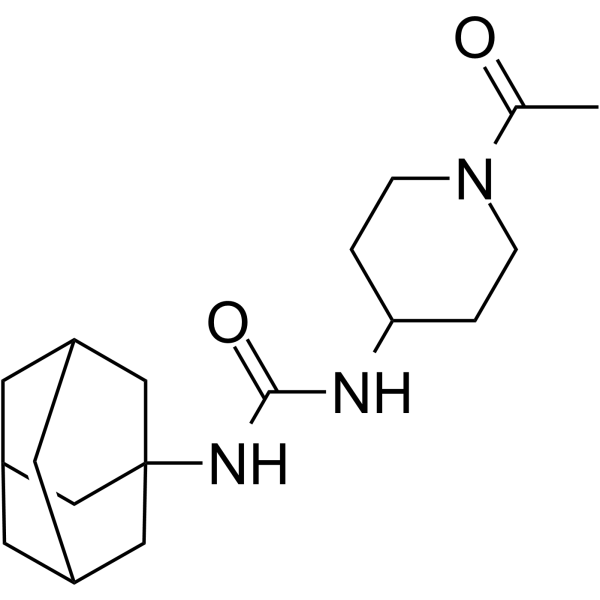
AR9281 (APAU) is a potent, selective and orally active soluble epoxide hydrolase (s-EH) inhibitor. AR-9281 can inhibits human sEH (HsEH) and murine sEH (MsEH) with IC50 values of 13.8 nM and 1.7 nM, respectively. AR9281 can be used for the research of inflammation, hypertension and type 2 diabetes.
商品は「研究用試薬」です。人や動物の医療用・臨床診断用・食品用の製品ではありません。
研究用途以外に使用した場合、当社は一切の責任を負いかねます。
- 純度 : 99.69%
- CAS 番号: 913548-29-5
- 分子式: C18H29N3O2
- 分子量:319.44
-
保管条件:Powder -20°C, 3 years , 4°C, 2 years ; In solvent -80°C, 2 years , -20°C, 1 year

To place orders, for customer services and technical support, please contact: MedChemExpress USA
Tel: 609-228-6898 E-mail: [email protected] [email protected]


-
 生物活性
生物活性
-
化学情報
-
溶剤 & 溶解度
- プロトコル
- 純度とドキュメンテーション
- 参考文献
-
 Help & FAQs


-
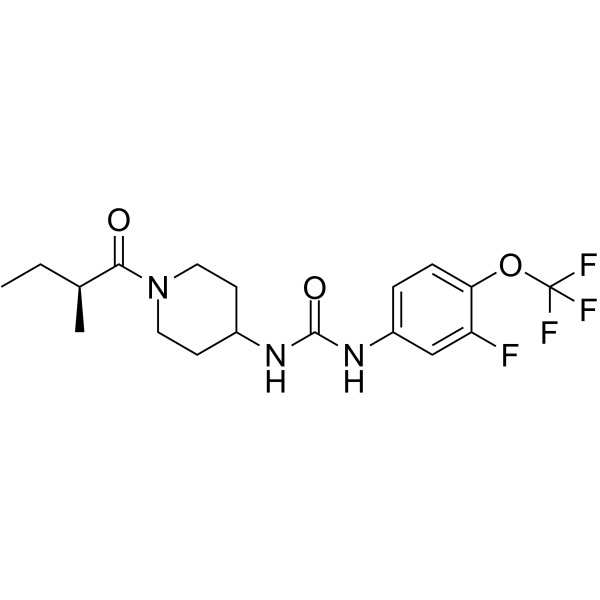
HY-135653
EC5026sEH Inhibitor -
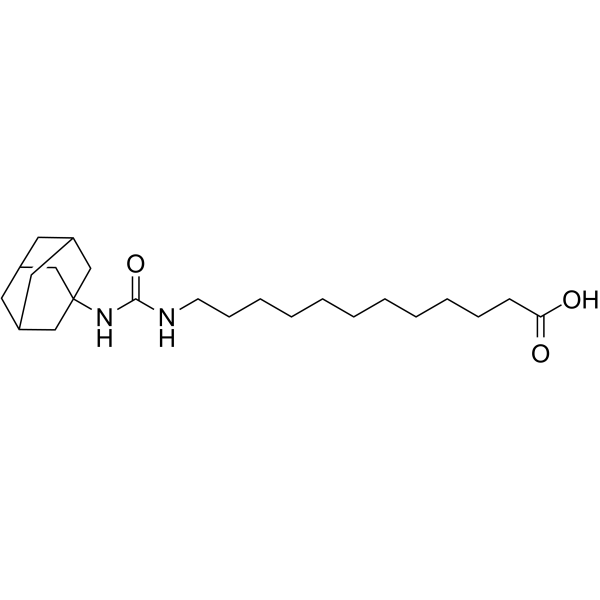
HY-108570
AUDAsEH Inhibitor -
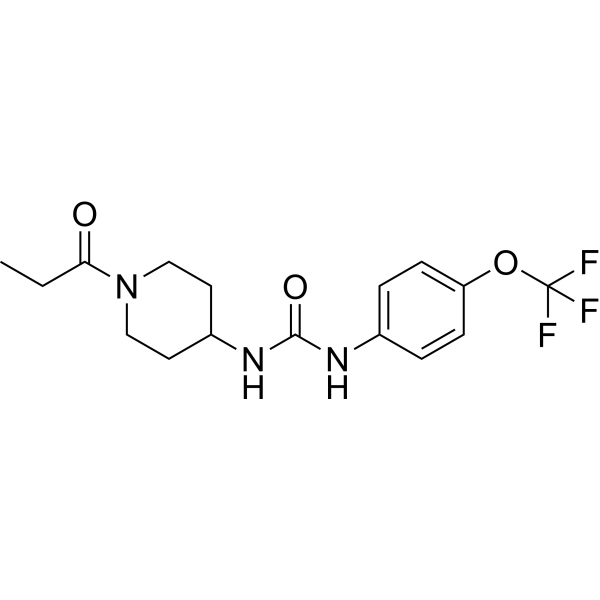
HY-101294
TPPUsEH Inhibitor -
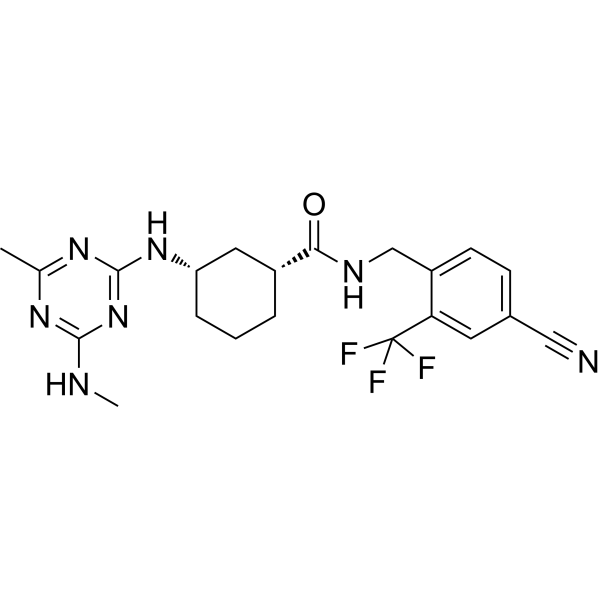
HY-19644
GSK2256294AsEH Inhibitor -
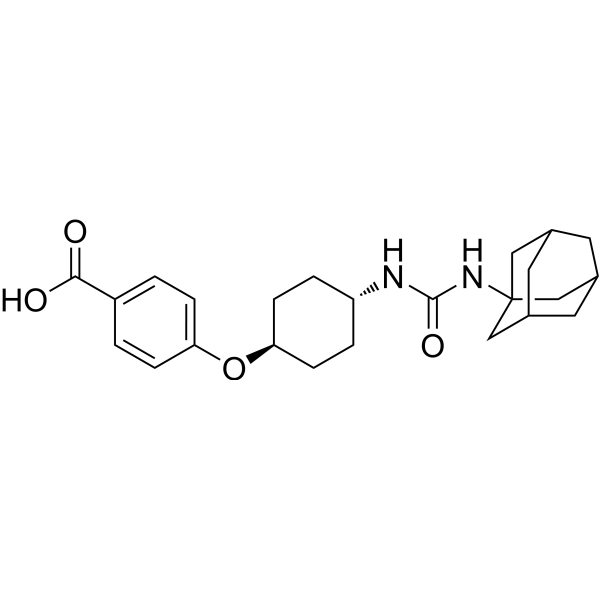
HY-113974
trans-AUCBsEH Inhibitor -
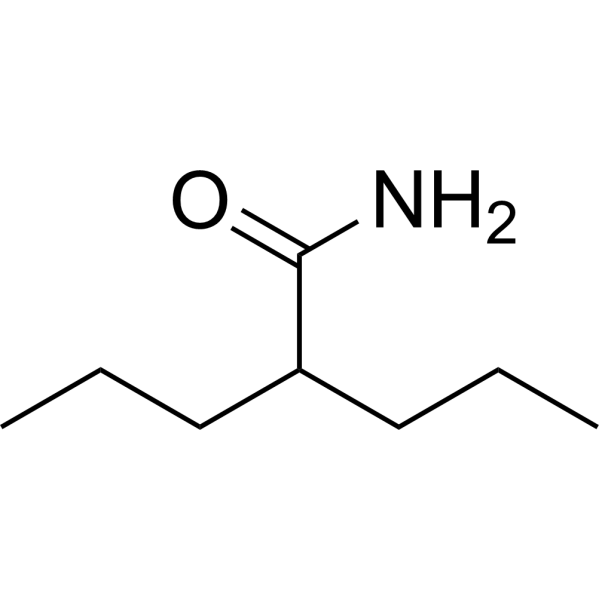
HY-B2117
ValpromideAntiepileptic Agent -
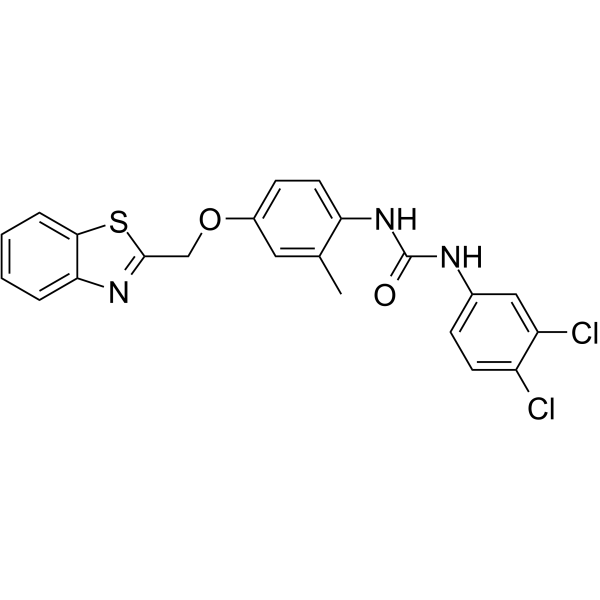
HY-128171
DiflapolinFLAP/sEH Inhibitor -
HY-Y0873A
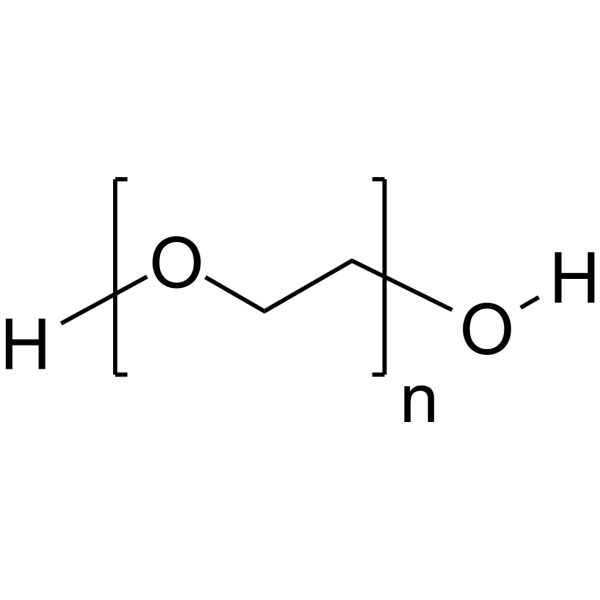
PEG400 -
HY-124063
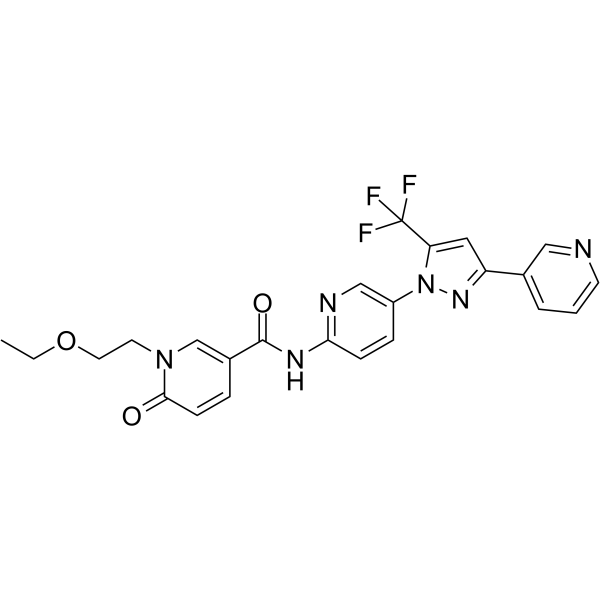
BI-1935sEH Inhibitor -
HY-126326
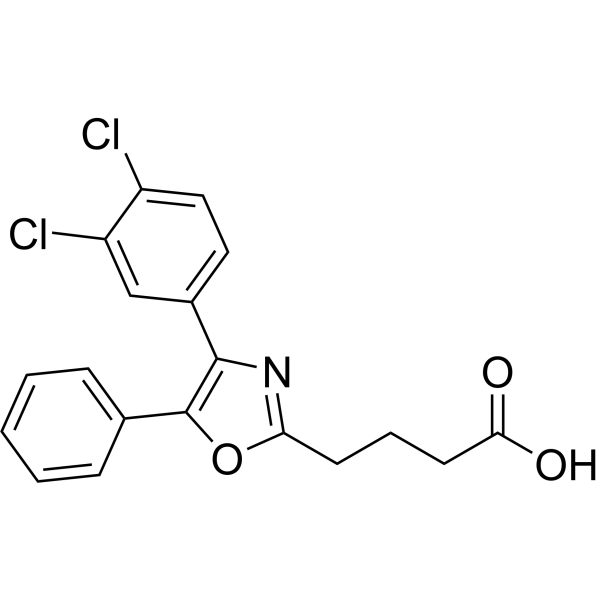
SWE101Epoxide Hydrolase Inhibitor -

HY-111151R
AR-9281 (Standard)s-EH Inhibitor -

HY-101294R
TPPU (Standard)sEH Inhibitor
MedChemExpress(MCE)の使用を引用している文献 AR-9281
More

生物活性
製品説明
IC50 & Target
IC50: 13.8 nM (HsEH); 1.7 nM (MsEH)[1]
Cellular Effect
|
Cell Line

|
Type | Value | Description | References |
|---|---|---|---|---|
| HUVEC | IC50 |
57 nM
Compound: 14a, AR9281
|
Inhibition of soluble epoxide hydrolase in HUVEC assessed inhibition of as conversion of 14, 15-EET to 14, 15-DHET
Inhibition of soluble epoxide hydrolase in HUVEC assessed inhibition of as conversion of 14, 15-EET to 14, 15-DHET
|
[PMID: 21211973] |
| Sf21 | IC50 |
3 nM
Compound: AR9281
|
Inhibition of murine soluble epoxide hydrolase expressed in baculovirus infected Sf21 cells using NEPC as substrate by fluorescence based assay
Inhibition of murine soluble epoxide hydrolase expressed in baculovirus infected Sf21 cells using NEPC as substrate by fluorescence based assay
|
[PMID: 31488357] |
| Sf21 | IC50 |
8 nM
Compound: AR9281
|
Inhibition of recombinant human liver soluble epoxide hydrolase expressed in baculovirus infected Sf21 cells using NEPC as substrate by fluorescence based assay
Inhibition of recombinant human liver soluble epoxide hydrolase expressed in baculovirus infected Sf21 cells using NEPC as substrate by fluorescence based assay
|
[PMID: 31488357] |
体外実験
AR-9281 (APAU) has inhibitory activity for human sEH (HsEH) and murine sEH (MsEH) with IC50 values of 13.8 nM and 1.7 nM, respectively[1].
MedChemExpress (MCE) has not independently confirmed the accuracy of these methods. They are for reference only.
体内実験
MedChemExpress (MCE) has not independently confirmed the accuracy of these methods. They are for reference only.
-
Animal Model:T2DM rat model[2]
-
Dosage:150-200 mg/dL
-
Administration:oral(drinking), for 6 weeks
-
Result:Attenuated the progressive increase of blood glucose concentration and preserved mitochondrial structure and myofibril morphology in cardiac myocytes.
Protected the intracellular Ca2+ effector system.
Had less downregulation of sarco(endo)plasmic reticulum Ca2+ ATPase (SERCA) and lowed expression of hypertrophic markers.
臨床実験
| NCT Number | Sponsor | Condition | Start Date |
Phase
|
|---|---|---|---|---|
| NCT01329991 | 2011-05 | PHASE1 |


化学情報
-
CAS 番号 913548-29-5
-
性状 Solid
-
分子量 319.44
-
分子式 C18H29N3O2
-
Color White to off-white
-
SMILES
O=C(NC1(C2)CC3CC2CC(C3)C1)NC4CCN(C(C)=O)CC4
-
別名
APAU
-
輸送条件
Room temperature in continental US; may vary elsewhere.
-
保管条件
Powder -20°C 3 years 4°C 2 years In solvent -80°C 2 years -20°C 1 year


Publications (1)
-
Journal Impact Factor
-
Most Recent


溶剤 & 溶解度
体外:
DMSO : 25 mg/mL (78.26 mM; Need ultrasonic; Hygroscopic DMSO has a significant impact on the solubility of product, please use newly opened DMSO)
Please refer to the solubility information to select the appropriate solvent. Once prepared, please aliquot and store the solution to prevent product inactivation from repeated freeze-thaw cycles.
Storage method and period of stock solution: -80°C, 2 years; -20°C, 1 year. When stored at -80°C, please use it within 2 years. When stored at -20°C, please use it within 1 year.
Please refer to the solubility information to select the appropriate solvent. Once prepared, please aliquot and store the solution to prevent product inactivation from repeated freeze-thaw cycles.
Storage method and period of stock solution: -80°C, 2 years; -20°C, 1 year. When stored at -80°C, please use it within 2 years. When stored at -20°C, please use it within 1 year.
濃度 (開始) × 体積 (開始) = 濃度 (終了) × 体積 (終了)
体内:
Select the appropriate dissolution method based on your experimental animal and administration route.
- For the following dissolution methods, please ensure to first prepare a clear stock solution using an In Vitro approach and then sequentially add co-solvents:
- To ensure reliable experimental results, the clarified stock solution can be appropriately stored based on storage conditions. As for the working solution for In Vivo experiments, it is recommended to prepare freshly and use it on the same day.
- The percentages shown for the solvents indicate their volumetric ratio in the final prepared solution. If precipitation or phase separation occurs during preparation, heat and/or sonication can be used to aid dissolution.
Add each solvent one by one: 10% DMSO 40% PEG300 5% Tween-80 45% Saline
Solubility: ≥ 2.08 mg/mL (6.51 mM); Clear solution
This protocol yields a clear solution of ≥ 2.08 mg/mL (saturation unknown).
Taking 1 mL working solution as an example, add 100 μL DMSO stock solution (20.8 mg/mL) to 400 μL PEG300, and mix evenly; then add 50 μL Tween-80 and mix evenly; then add 450 μL Saline to adjust the volume to 1 mL.
Preparation of Saline: Dissolve 0.9 g sodium chloride in ddH₂O and dilute to 100 mL to obtain a clear Saline solution.
Add each solvent one by one: 10% DMSO 90% (20% SBE-β-CD in Saline)
Solubility: ≥ 2.08 mg/mL (6.51 mM); Clear solution
This protocol yields a clear solution of ≥ 2.08 mg/mL (saturation unknown).
Taking 1 mL working solution as an example, add 100 μL DMSO stock solution (20.8 mg/mL) to 900 μL 20% SBE-β-CD in Saline, and mix evenly.
Preparation of 20% SBE-β-CD in Saline (4°C, storage for one week): 2 g SBE-β-CD powder is dissolved in 10 mL Saline, completely dissolve until clear.
In Vivo Dissolution Calculator
Please enter the basic information of animal experiments:
-
-
-
-
Recommended: Prepare an additional quantity of animals to account for potential losses during experiments.
Please enter your animal formula composition:
-
%DMSO +
Recommended: Keep the proportion of DMSO in working solution below 2% if your animal is weak.
-
%+
-
+%Tween-80 + +
-
%Saline +
The co-solvents required include: DMSO, . All of co-solvents are available by MedChemExpress (MCE). , Tween 80. All of co-solvents are available by MedChemExpress (MCE).
Working solution concentration: 0.22 mg/mL
Method for preparing stock solution: mg drug dissolved in μL DMSO. Stock solution concentration: mg/mL.
1. Take μL DMSO stock solution;
2. Add μL .
μL , mix evenly;
3. Then add μL Tween 80, mix evenly;
4. Then add μL
Please ensure that the stock solution in the first step is dissolved to a clear state, and add co-solvents in sequence. You can use ultrasonic heating (ultrasonic cleaner, recommended frequency 20-40 kHz), vortexing, etc. to assist dissolution.


純度とドキュメンテーション
-
データシート (277 KB)
-
SDS (393 KB)
- English - EN (393 KB)
- Français - FR (393 KB)
- Deutsch - DE (393 KB)
- Norwegian - NO (393 KB)
- Español - ES (393 KB)
- Swedish - SV (393 KB)
- Italian - IT (393 KB)
- Korean - KR (393 KB)
- Portuguese - PT (393 KB)
-
取扱説明書 (2659 KB)
参考文献
[1]. Fangyu Du, et al. Discovery of memantyl urea derivatives as potent soluble epoxide hydrolase inhibitors against lipopolysaccharide-induced sepsis. Eur J Med Chem. 2021 Nov 5;223:113678. [Content Brief]
[2]. Kathleen Guglielmino, et al. Pharmacological inhibition of soluble epoxide hydrolase provides cardioprotection in hyperglycemic rats. Am J Physiol Heart Circ Physiol. 2012 Oct 1;303(7):H853-62. [Content Brief]


Complete Stock Solution Preparation Table
Please refer to the solubility information to select the appropriate solvent. Once prepared, please aliquot and store the solution to prevent product inactivation from repeated freeze-thaw cycles.
Storage method and period of stock solution: -80°C, 2 years; -20°C, 1 year. When stored at -80°C, please use it within 2 years. When stored at -20°C, please use it within 1 year.
| Optional Solvent | Concentration Solvent Mass | 1 mg | 5 mg | 10 mg | 25 mg |
|---|---|---|---|---|---|
| DMSO | 1 mM | 3.1305 mL | 15.6524 mL | 31.3048 mL | 78.2620 mL |
| 5 mM | 0.6261 mL | 3.1305 mL | 6.2610 mL | 15.6524 mL | |
| 10 mM | 0.3130 mL | 1.5652 mL | 3.1305 mL | 7.8262 mL | |
| 15 mM | 0.2087 mL | 1.0435 mL | 2.0870 mL | 5.2175 mL | |
| 20 mM | 0.1565 mL | 0.7826 mL | 1.5652 mL | 3.9131 mL | |
| 25 mM | 0.1252 mL | 0.6261 mL | 1.2522 mL | 3.1305 mL | |
| 30 mM | 0.1043 mL | 0.5217 mL | 1.0435 mL | 2.6087 mL | |
| 40 mM | 0.0783 mL | 0.3913 mL | 0.7826 mL | 1.9565 mL | |
| 50 mM | 0.0626 mL | 0.3130 mL | 0.6261 mL | 1.5652 mL | |
| 60 mM | 0.0522 mL | 0.2609 mL | 0.5217 mL | 1.3044 mL |


AR-9281 関連分類
HY-111151 関連分類
 Powered by Bioz