



HB007

Based on 1 Customer Validation
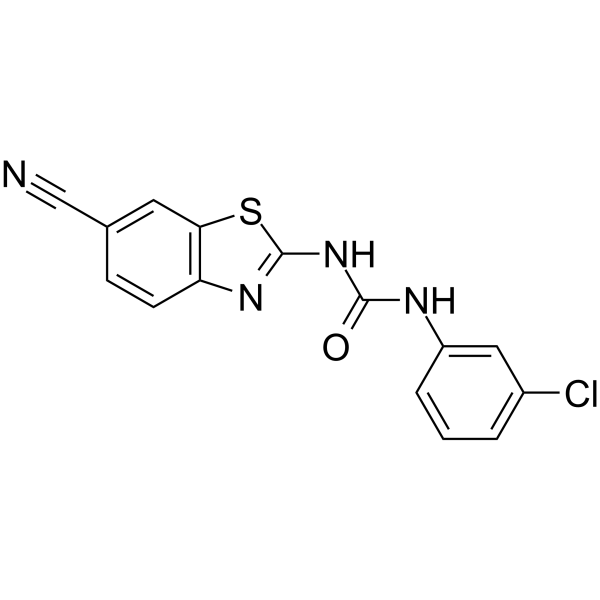
HB007 is a SUMO1 molecular glue degrader targeting CAPRIN1 and FBXO42. HB007 selectively binds CAPRIN1 to induce CAPRIN1-FBXO42 interaction, recruits SUMO1 to the CAPRIN1-CUL1-FBXO42 E3 ligase complex, and drives SUMO1 ubiquitination and degradation without affecting SUMO2/3. HB007 induces TCF4 deSUMOylation and proteasomal degradation to inhibit StarD7 transcriptional activity, reduces StarD7 mRNA and protein levels, and triggers ER stress and ROS production. HB007 can be used for the research of brain cancer, breast cancer, colon cancer, lung cancer.
商品は「研究用試薬」です。人や動物の医療用・臨床診断用・食品用の製品ではありません。
研究用途以外に使用した場合、当社は一切の責任を負いかねます。
- 純度 : 99.73%
- CAS 番号: 2387821-46-5
- 分子式: C15H9ClN4OS
- 分子量:328.78
-
保管条件:Powder -20°C, 3 years , 4°C, 2 years ; In solvent -80°C, 6 months , -20°C, 1 month

To place orders, for customer services and technical support, please contact: MedChemExpress USA
Tel: 609-228-6898 E-mail: [email protected] [email protected]


-
 生物活性
生物活性
-
化学情報
-
溶剤 & 溶解度
- プロトコル
- 純度とドキュメンテーション
- 参考文献
-
 Help & FAQs


-
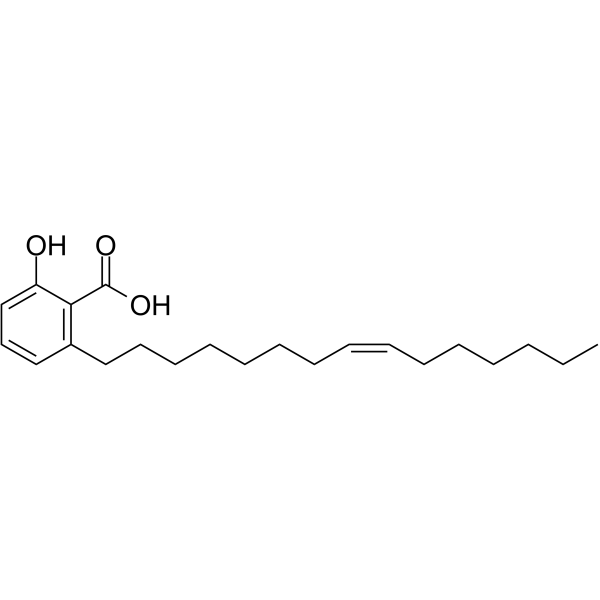
HY-N0077
Ginkgolic acidE1/E2/E3 Enzyme Inhibitor -
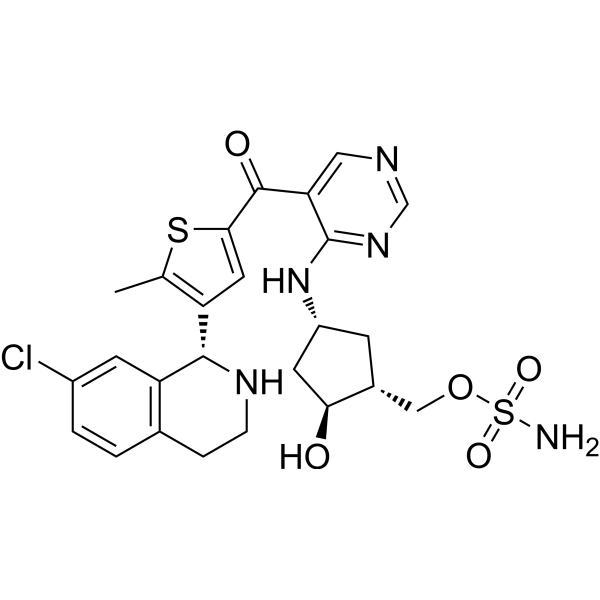
HY-111789
SubasumstatSUMOylation Inhibitor -
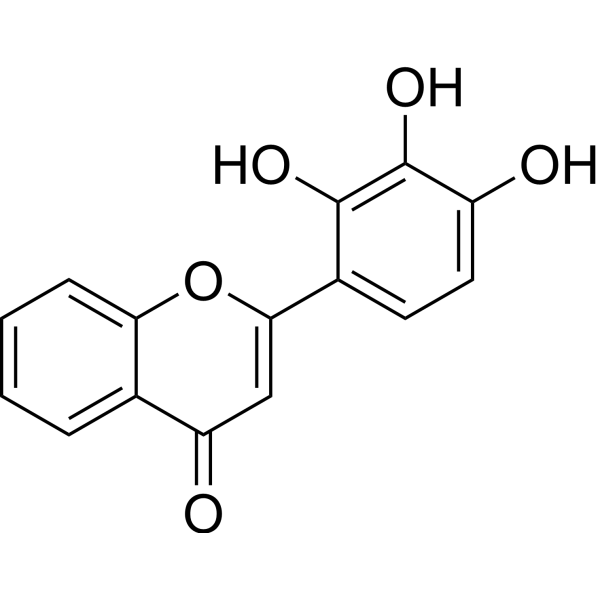
HY-114166
2-D08Sumoylation Inhibitor -
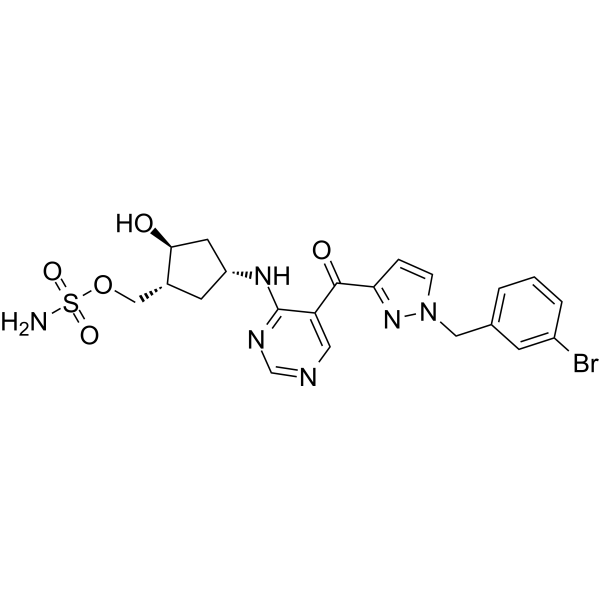
HY-108702
ML-792SUMO-Activating Enzyme Inhibitor -
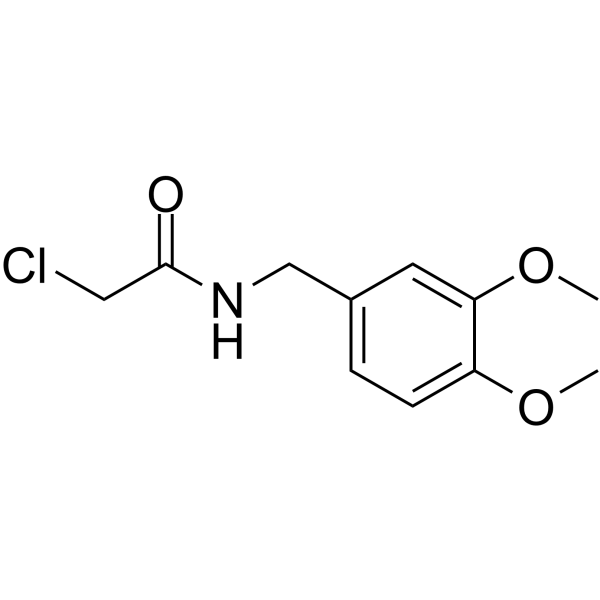
HY-101836
DKM 2-93UBA5 Inhibitor -
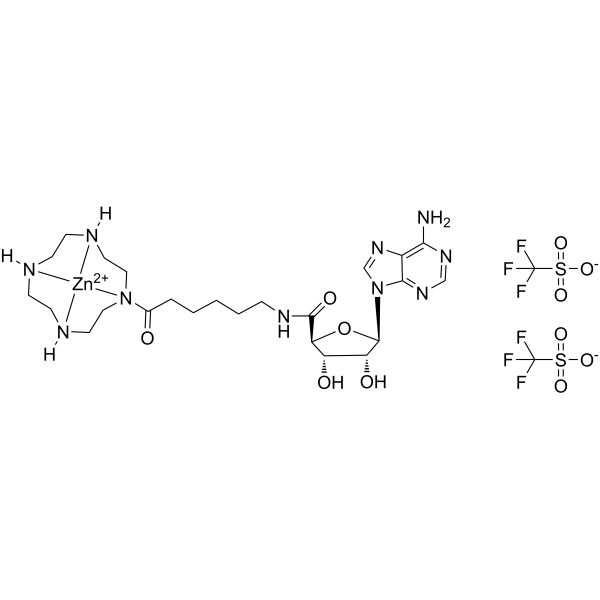
HY-148266
UBA5-IN-1UBA5 Inhibitor -
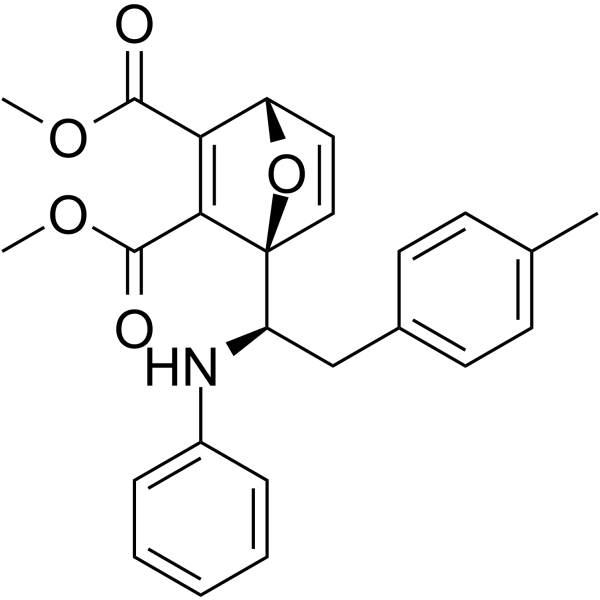
HY-114304
COH000SUMO E1 Inhibitor -
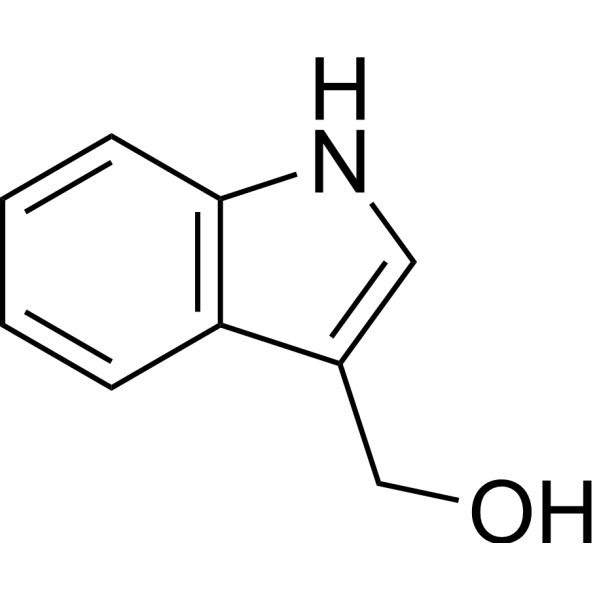
HY-N0170
Indole-3-carbinolEndogenous Metabolite -
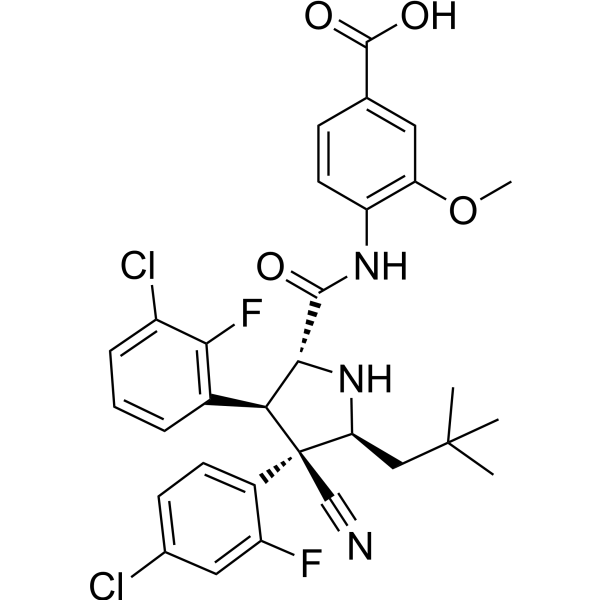
HY-15676
IdasanutlinMDM2 Inhibitor -
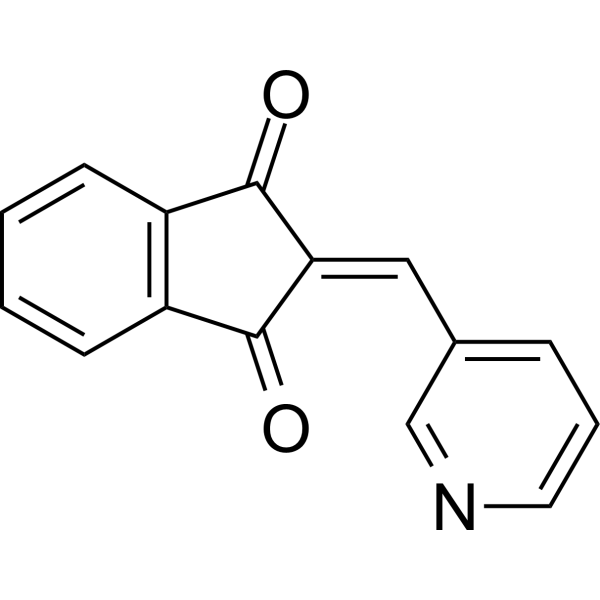
HY-19817
PRT4165E1/E2/E3 Enzyme Inhibitor -
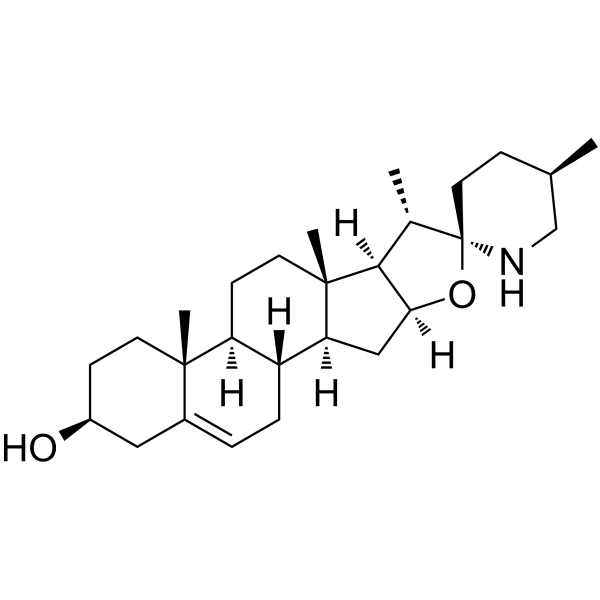
HY-N0068
SolasodineSteroidal Alkaloid -
HY-18658
Siremadlinp53-MDM2 Inhibitor


生物活性
製品説明
IC50 & Target
SUMO1[1]
Cellular Effect
|
Cell Line

|
Type | Value | Description | References |
|---|---|---|---|---|
| LN-229 | IC50 |
1.470 μM
|
Inhibition of human LN-229 glioblastoma cell viability incubated for 48 hrs by CellTiter-Glo Assay.
Inhibition of human LN-229 glioblastoma cell viability incubated for 48 hrs by CellTiter-Glo Assay.
|
c9c19c72-4767-4a7a-a4e8-ff559f8f2df7 |
体外実験
HB007 (0-4 μM; 24-72 h) requires StarD7, SUMO1, and CAPRIN1 for its anticancer activity, including ER stress induction, ROS accumulation, and StarD7 downregulation, in HCT116 human colorectal cancer cells[1].
HB007 (0-6 μM; 48 h-5 days) reduces organoid formation, StarD7 expression, and TCF4 expression in patient-derived colon cancer 3D organoids[1].
HB007 (0.0625-32 μM; 48 h) potently inhibits LN-229 glioblastoma cell viability with an IC50 of 1.470 μM[2].
HB007 (1-4 μM; 48 h) induces a dose-dependent decrease in survivability of patient-derived glioblastoma neurospheroids[2].
HB007 (1-2 μM; 48 h) causes a dose-dependent reduction in normalized SUMO-1-ylated protein levels in patient-derived glioblastoma neurospheroids[2].
HB007 (1-2 μM; 48 h) causes a dose-dependent reduction in normalized CDK4 protein levels in patient-derived glioblastoma neurospheroids[2].
HB007 (0.3-1.5 μM; 15 days) potently inhibits the growth of human brain glioblastoma, breast carcinoma, colorectal carcinoma, and non-small cell lung carcinoma cell lines with IC50 values of 0.3 to 1.5 μM, while exhibiting minimal growth inhibition against matched normal cells[3].
HB007 (24-48 h) selectively degrades SUMO1 and inhibits its conjugation to substrate proteins in human colon and brain cancer cells over 24 to 48 h, with no effect on SUMO2/3 levels or SUMO1 levels in normal lung epithelial cells[3].
HB007 (48 h) induces polyubiquitination of unconjugated SUMO1 in human brain, colon, and lung cancer cells after 48 h of treatment[3].
HB007 (24 h) decreases the half-life of SUMO1 from 11 to 1.5 h in human brain glioblastoma LN229 cells[3].
HB007 binds directly to recombinant human CAPRIN1 with a high affinity of 10 nM in vitro[3].
HB007 (500 nM-10 μM; 1 h) competitively blocks the binding of both recombinant and cellular CAPRIN1 to biotinylated HB007 in a dose-dependent manner[3].
HB007 (24 h; 15 days) requires CAPRIN1, FBXO42, and SUMO1 for mediated SUMO1 degradation and cancer cell growth inhibition in human colon cancer HCT116 cells[3].
HB007 induces the interaction of unconjugated SUMO1 with the CUL1-FBXO42 E3 ligase complex and the interaction of CAPRIN1 with FBXO42 in human colon and brain cancer cells[3].
HB007 (10 μM) exhibits high selectivity against a panel of 68 human functional proteins, with only minor inhibition of three GPCRs[3].
HB007 (10 μM) does not inhibit the cytochrome P450 enzymes CYP2C9, CYP2D6, or CYP3A4 in human liver microsomes[3].
HB007 (1 μM; 45 min) exhibits sufficient metabolic stability in mouse, rat, and human liver microsomes[3].
MedChemExpress (MCE) has not independently confirmed the accuracy of these methods. They are for reference only.
-
Cell Line:LN-229 glioblastoma cells
-
Concentration:0.0625-32 μM
-
Incubation Time:48 h
-
Result:Induced dose-dependent inhibition of LN-229 cell viability, with an IC50 of 1.470 μM.
-
Cell Line:LN-229 glioblastoma cells
-
Concentration:2 μM
-
Incubation Time:24 h
-
Result:Resulted in a visible decrease in conjugated SUMO1 proteins compared to DMSO-treated controls.
-
Cell Line:LN-229 glioblastoma cells
-
Concentration:1-4 μM
-
Incubation Time:48 h
-
Result:Induced a dose-dependent decrease in normalized CDK4 protein levels, with the lowest levels observed at 4 μM treatment.
-
Cell Line:human brain glioblastoma, breast carcinoma, colorectal carcinoma, non-small cell lung carcinoma cell lines; matched normal lung, colon, breast, brain cells
-
Concentration:0.3-1.5 μM (growth inhibition IC50 determination)
-
Incubation Time:15 days (2D colony formation assay)
-
Result:Inhibited the growth of a panel of human cancer cell lines with IC50 values ranging from 0.3 to 1.5 μM.
Showed much lower growth inhibition effects on matched normal cells, with IC50 values significantly higher than those observed in cancer cell lines.
Inhibited colony formation of cancer cells when treated every other day for 15 days.
体内実験
HB007 (i.p.; once daily; 14 days) effectively suppresses the growth of subcutaneous cancer cell line-derived xenografts in athymic BALB/c mice[3].
HB007 (i.p.; once daily; 14 days) effectively suppresses the growth of multiple human cancer PDXs and increases survival of PDX-bearing NSG mice without causing observable toxicity[3].
MedChemExpress (MCE) has not independently confirmed the accuracy of these methods. They are for reference only.
-
Animal Model:athymic BALB/c (female, 6-8 weeks old, colon cancer PDX NCI519858 implanted subcutaneously)[1]
-
Dosage:50 mg/kg (15-day regimen); 3-50 mg/kg (3-day regimen)
-
Administration:i.p.; daily; 15 days (50 mg/kg); i.p.; daily; 3 days (3, 10, 30, 50 mg/kg)
-
Result:Suppressed colon cancer PDX progression effectively.
Reduced StarD7 protein levels and total SUMO1 (but not SUMO2/3) protein levels in PDX xenografts in a dose-dependent manner.
Significantly decreased the number of Ki-67-positive cells in PDX xenografts.


化学情報
-
CAS 番号 2387821-46-5
-
性状 Solid
-
分子量 328.78
-
分子式 C15H9ClN4OS
-
Color Light yellow to yellow
-
SMILES
N#CC1=CC2=C(N=C(NC(NC3=CC(Cl)=CC=C3)=O)S2)C=C1
-
輸送条件
Room temperature in continental US; may vary elsewhere.
-
保管条件
Powder -20°C 3 years 4°C 2 years In solvent -80°C 6 months -20°C 1 month


溶剤 & 溶解度
体外:
DMSO : 31.25 mg/mL (95.05 mM; ultrasonic and warming and heat to 60°C; Hygroscopic DMSO has a significant impact on the solubility of product, please use newly opened DMSO)
Please refer to the solubility information to select the appropriate solvent. Once prepared, please aliquot and store the solution to prevent product inactivation from repeated freeze-thaw cycles.
Storage method and period of stock solution: -80°C, 6 months; -20°C, 1 month. When stored at -80°C, please use it within 6 months. When stored at -20°C, please use it within 1 month.
Please refer to the solubility information to select the appropriate solvent. Once prepared, please aliquot and store the solution to prevent product inactivation from repeated freeze-thaw cycles.
Storage method and period of stock solution: -80°C, 6 months; -20°C, 1 month. When stored at -80°C, please use it within 6 months. When stored at -20°C, please use it within 1 month.
濃度 (開始) × 体積 (開始) = 濃度 (終了) × 体積 (終了)
体内:
Select the appropriate dissolution method based on your experimental animal and administration route.
- For the following dissolution methods, please ensure to first prepare a clear stock solution using an In Vitro approach and then sequentially add co-solvents:
- To ensure reliable experimental results, the clarified stock solution can be appropriately stored based on storage conditions. As for the working solution for In Vivo experiments, it is recommended to prepare freshly and use it on the same day.
- The percentages shown for the solvents indicate their volumetric ratio in the final prepared solution. If precipitation or phase separation occurs during preparation, heat and/or sonication can be used to aid dissolution.
Add each solvent one by one: 10% DMSO 90% (20% SBE-β-CD in Saline)
Solubility: 2.08 mg/mL (6.33 mM); Suspended solution; Need ultrasonic
This protocol yields a suspended solution of 2.08 mg/mL. Suspended solution can be used for oral and intraperitoneal injection.
Taking 1 mL working solution as an example, add 100 μL DMSO stock solution (20.8 mg/mL) to 900 μL 20% SBE-β-CD in Saline, and mix evenly.
Preparation of 20% SBE-β-CD in Saline (4°C, storage for one week): 2 g SBE-β-CD powder is dissolved in 10 mL Saline, completely dissolve until clear.
In Vivo Dissolution Calculator
Please enter the basic information of animal experiments:
-
-
-
-
Recommended: Prepare an additional quantity of animals to account for potential losses during experiments.
Please enter your animal formula composition:
-
%DMSO +
Recommended: Keep the proportion of DMSO in working solution below 2% if your animal is weak.
-
%+
-
+%Tween-80 + +
-
%Saline +
The co-solvents required include: DMSO, . All of co-solvents are available by MedChemExpress (MCE). , Tween 80. All of co-solvents are available by MedChemExpress (MCE).
Working solution concentration: 0.22 mg/mL
Method for preparing stock solution: mg drug dissolved in μL DMSO. Stock solution concentration: mg/mL.
1. Take μL DMSO stock solution;
2. Add μL .
μL , mix evenly;
3. Then add μL Tween 80, mix evenly;
4. Then add μL
Please ensure that the stock solution in the first step is dissolved to a clear state, and add co-solvents in sequence. You can use ultrasonic heating (ultrasonic cleaner, recommended frequency 20-40 kHz), vortexing, etc. to assist dissolution.


純度とドキュメンテーション
-
データシート (291 KB)
-
SDS (251 KB)
- English - EN (251 KB)
- Français - FR (251 KB)
- Deutsch - DE (251 KB)
- Norwegian - NO (251 KB)
- Español - ES (251 KB)
- Swedish - SV (251 KB)
- Italian - IT (251 KB)
- Korean - KR (251 KB)
- Portuguese - PT (251 KB)
-
取扱説明書 (2659 KB)
参考文献


Complete Stock Solution Preparation Table
Please refer to the solubility information to select the appropriate solvent. Once prepared, please aliquot and store the solution to prevent product inactivation from repeated freeze-thaw cycles.
Storage method and period of stock solution: -80°C, 6 months; -20°C, 1 month. When stored at -80°C, please use it within 6 months. When stored at -20°C, please use it within 1 month.
| Optional Solvent | Concentration Solvent Mass | 1 mg | 5 mg | 10 mg | 25 mg |
|---|---|---|---|---|---|
| DMSO | 1 mM | 3.0415 mL | 15.2077 mL | 30.4155 mL | 76.0387 mL |
| 5 mM | 0.6083 mL | 3.0415 mL | 6.0831 mL | 15.2077 mL | |
| 10 mM | 0.3042 mL | 1.5208 mL | 3.0415 mL | 7.6039 mL | |
| 15 mM | 0.2028 mL | 1.0138 mL | 2.0277 mL | 5.0692 mL | |
| 20 mM | 0.1521 mL | 0.7604 mL | 1.5208 mL | 3.8019 mL | |
| 25 mM | 0.1217 mL | 0.6083 mL | 1.2166 mL | 3.0415 mL | |
| 30 mM | 0.1014 mL | 0.5069 mL | 1.0138 mL | 2.5346 mL | |
| 40 mM | 0.0760 mL | 0.3802 mL | 0.7604 mL | 1.9010 mL | |
| 50 mM | 0.0608 mL | 0.3042 mL | 0.6083 mL | 1.5208 mL | |
| 60 mM | 0.0507 mL | 0.2535 mL | 0.5069 mL | 1.2673 mL | |
| 80 mM | 0.0380 mL | 0.1901 mL | 0.3802 mL | 0.9505 mL |


HB007 関連分類
HY-139662 関連分類
 Powered by Bioz