



Talquetamab
Based on 1 publication(s) in Google Scholar
Talquetamab (JNJ-64407564) is a humanized bispecific antibody that binds to GPRC5D (member of G protein-coupled receptor family C5 group D) and CD3 to induce T cell-mediated killing of GPRC5D-expressing MM cells through T cell recruitment and activation. Talquetamab (JNJ-64407564) has antitumor activity.
商品は「研究用試薬」です。人や動物の医療用・臨床診断用・食品用の製品ではありません。
研究用途以外に使用した場合、当社は一切の責任を負いかねます。
- 純度 : 99.72%
- CAS 番号: 2226212-40-2
- 分子量:144.58 kDa
-
保管条件:
Please store the product under the recommended conditions in the Certificate of Analysis.



To place orders, for customer services and technical support, please contact: MedChemExpress USA
Tel: 609-228-6898 E-mail: [email protected] [email protected]


-
 生物活性
生物活性
-
化学情報
- プロトコル
- 純度とドキュメンテーション
- 参考文献
-
 Help & FAQs


-

HY-P99392
TeclistamabBCMA/CD3 Dual Antibodies -

HY-P99024
GlofitamabT-Cell-Engaging Bispecific Antibody -

HY-P99601
CevostamabAnti-FcRH5/CD3 TDB -

HY-P99033
MosunetuzumabCD20/CD3 Inhibitor -

HY-P99931
EpcoritamabAnti-CD3/CD20 Antibody -

HY-P99909
ElranatamabAnti-CD3E/TNFRSF17 Antibody -

HY-P9963
BlinatumomabAntineoplastic Agent -

HY-P99802
PasotuxizumabAnti-PSMA/CD3 mAb -

HY-P99575
Tarlatamabanti-DLL3/CD3 BiTE antibody -

HY-P99038
OdronextamabCD20/CD3 Inhibitor -

HY-P99152
MuromonabCD3 Monoclonal Antibody -

HY-P99222
TeplizumabAnti-human CD3 Antibody
MedChemExpress(MCE)の使用を引用している文献 Talquetamab
More

生物活性
製品説明
Isotype
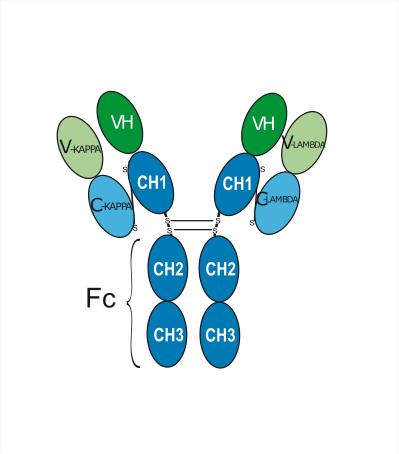
Ig(G4-kappa_G4-lambda2)
Recommend Isotype Controls
Species Reactivity
Human
IC50 & Target
GPRC5D & CD3E
体外実験
Talquetamab (0.00128-4.0 μg/mL, 48 h) effectively induces multiple myeloma cell lysis and leads to a significant increase in the proportion of activated CD4+ and CD8+ T cells, as well as to a dose-dependent increase in the levels of granzyme B and inflammatory cytokines such as IL-6, IL-8 and TNF-α[1].
MedChemExpress (MCE) has not independently confirmed the accuracy of these methods. They are for reference only. Further protocols information, click here.
体内実験
MedChemExpress (MCE) has not independently confirmed the accuracy of these methods. They are for reference only.
-
Animal Model:Female NSG mice with H929 cells[2]
-
Dosage:0.1-10 µg (0.005 mg/kg)
-
Administration:Subcutaneous injection; on days 0, 3, 5, 7, and 10
-
Result:Completely blocked tumor formation at 1 μg and 10 μg doses.
-
Animal Model:Female NSG mice with human MM cells[2]
-
Dosage:0.1-50 µg (0.005 mg/kg)
-
Administration:Intravenous injection; on days 15, 18, 22, 24, 29, 32, and 36
-
Result:Significantly inhibited tumor growth by 65% at the dose of 1μg and showed significant anti-tumor activity at 10 and 50 μg with complete tumor regression.
臨床実験
| NCT Number | Sponsor | Condition | Start Date |
Phase

|
|---|---|---|---|---|
| NCT01329991 | Plexxikon| | 2011-05 | PHASE1 |
遺伝子ID
アクセッション番号
Conjugated
Unconjugated
Reconsititution
The product can be reconstituted/diluted with sterile PBS or saline.
Format
-
Human Ig(G4-kappa_G4-lambda2)
アプリケーション
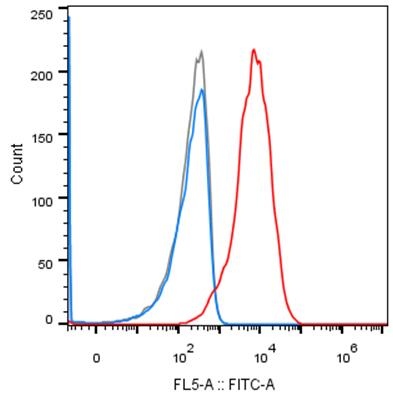
ELISA, FACS, Functional assay
Verified Bioactivity


化学情報
-
CAS 番号 2226212-40-2
-
性状 Liquid
-
分子量 144.58 kDa
-
Color Colorless to light yellow
-
SMILES
[Talquetamab]
-
別名
JNJ-64407564
-
輸送条件
Shipping with dry ice.
-
Formulation
Please refer to the lot-specific COA for specific buffer information.
-
保管条件
Please store the product under the recommended conditions in the Certificate of Analysis.


Publications (1)
-
Journal Impact Factor
-
Most Recent
-
MAbs
Optimizing human FcRn mouse models to improve pharmacokinetic evaluation of antibody drug candidates. [Abstract]2026 Dec 31;18(1):2649990. PMID: 41878863

プロトコル
-
Subcutaneous Cell-Line-Derived Xenograft
Subcutaneous cell-line-derived xenograft (CDX) models are established by implanting cultured human cancer cell lines into immunodeficient mice, where the injected cells form localized tumors that can be monitored in vivo as a measure of tumorigenic potential, growth kinetics, and treatment response. These models are widely used in oncology research because they allow reproducible tumor formation and enable comparative assessment of tumor growth between different cell lines or genetic manipulations in a controlled in vivo microenvironment. Subcutaneous implantation of cancer cells in immunodeficient mice is a standard approach for evaluating tumor growth behavior and therapeutic response across multiple cancer types, including prostate, esophageal, pancreatic, and colon cancer models.
-
Research Protocol for Cancer Immunology
Cancer immunology studies how the immune system recognizes, suppresses, edits, or fails to eliminate malignant cells through tumor antigen release, antigen presentation, T-cell priming, immune trafficking, tumor-cell killing, and feedback inhibition in the tumor microenvironment. The cancer-immunity cycle links tumor antigenicity, dendritic-cell priming, CD8+ T-cell infiltration, cytotoxic function, and immune-checkpoint regulation to tumor rejection or immune escape. Immune-checkpoint pathways such as PD-1/PD-L1 and CTLA-4 suppress antitumor T-cell activity and can be therapeutically blocked, but many tumors remain resistant because of poor antigen presentation, weak T-cell infiltration, suppressive myeloid cells, regulatory T cells, and tumor-intrinsic immune-exclusion programs. Unresolved questions include which immune-cell states predict response, how tumor-intrinsic pathways exclude immune cells, how myeloid suppression limits checkpoint blockade, and which combination strategies


純度とドキュメンテーション
-
データシート (262 KB)
-
SDS (251 KB)
- English - EN (251 KB)
- Français - FR (251 KB)
- Deutsch - DE (251 KB)
- Norwegian - NO (251 KB)
- Español - ES (251 KB)
- Swedish - SV (251 KB)
- Italian - IT (251 KB)
- Korean - KR (251 KB)
- Portuguese - PT (251 KB)
-
Inhibitory Antibodies User Guide (603 KB)
参考文献
[1]. Christie P M Verkleij, et al. Preclinical activity and determinants of response of the GPRC5DxCD3 bispecific antibody talquetamab in multiple myeloma. Blood Adv. 2021 Apr 27;5(8):2196-2215. [Content Brief]
[2]. Kodandaram Pillarisetti, et al. A T-cell-redirecting bispecific G-protein-coupled receptor class 5 member D x CD3 antibody to treat multiple myeloma. Blood. 2020 Apr 9;135(15):1232-1243. [Content Brief]

Calculators
濃度 (開始) × 体積 (開始) = 濃度 (終了) × 体積 (終了)


Talquetamab 関連分類
HY-P99394 関連分類
 Powered by Bioz