



Violacein

Based on 1 Customer Validation
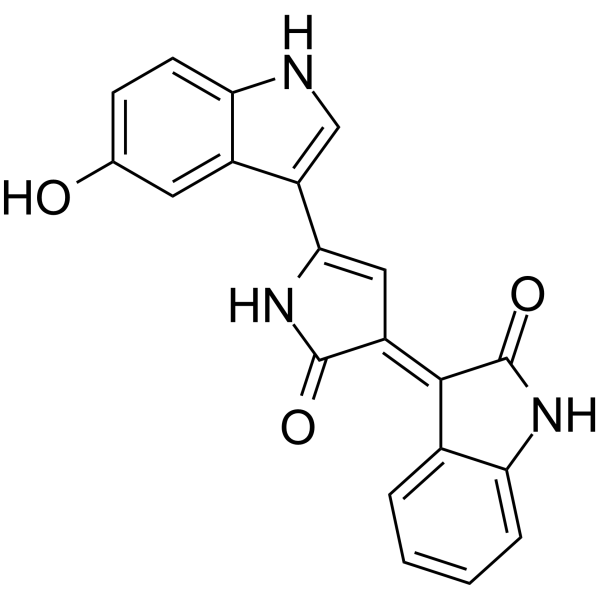
Violacein, a secondary metabolite produced by several microorganisms, possesses potent anticancer and low side effects. Violacein possesses antioxidant properties. Apoptosis inducer.
商品は「研究用試薬」です。人や動物の医療用・臨床診断用・食品用の製品ではありません。
研究用途以外に使用した場合、当社は一切の責任を負いかねます。
- 純度 : 99.97%
- CAS 番号: 548-54-9
- 分子式: C20H13N3O3
- 分子量:343.34
-
保管条件:Powder -20°C, 3 years ; In solvent -80°C, 6 months , -20°C, 1 month

To place orders, for customer services and technical support, please contact: MedChemExpress USA
Tel: 609-228-6898 E-mail: [email protected] [email protected]


-
 生物活性
生物活性
-
化学情報
-
溶剤 & 溶解度
- プロトコル
- 純度とドキュメンテーション
- 参考文献
-
 Help & FAQs


-
HY-N6693
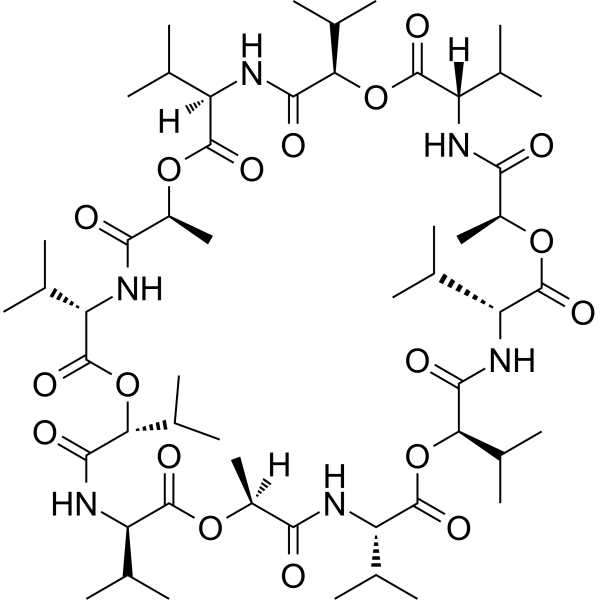
ValinomycinAntibiotic -
HY-B0413S
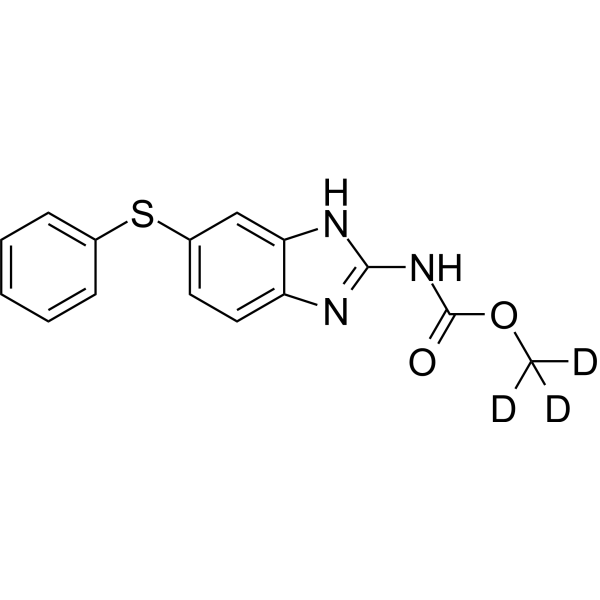
Fenbendazole-d3Stable Isotope -
HY-133694
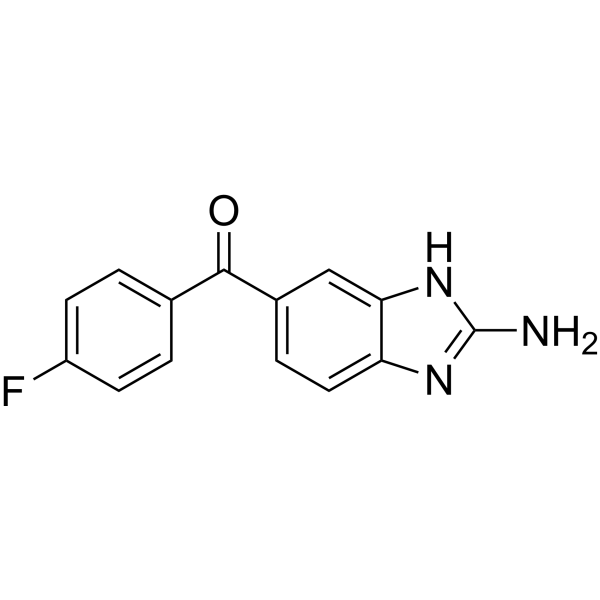
2-AminoflubendazoleDrug Metabolite -

HY-126858
Ambuic acidERK/JNK Inhibitor -
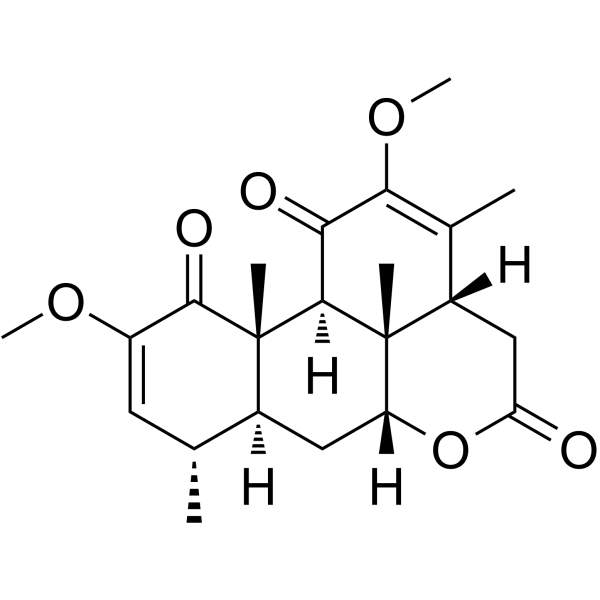
HY-N1581
QuassinAnti-plasmodial Agent -
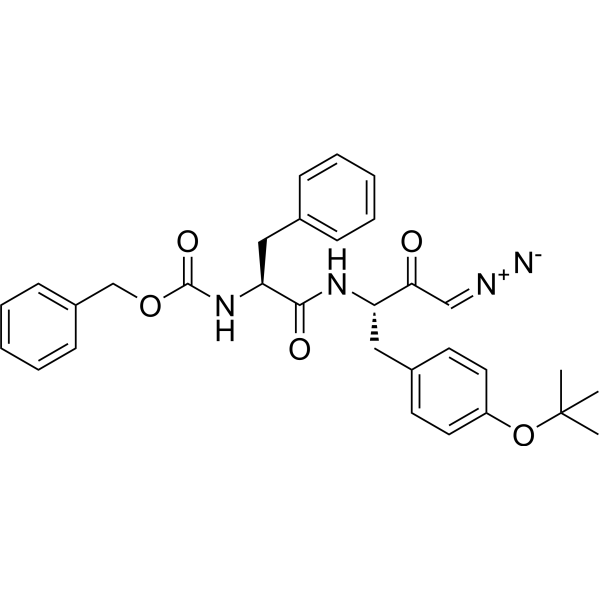
HY-138208
Z-Phe-Tyr(tBu)-diazomethylketoneCathepsin L Inhibitor -
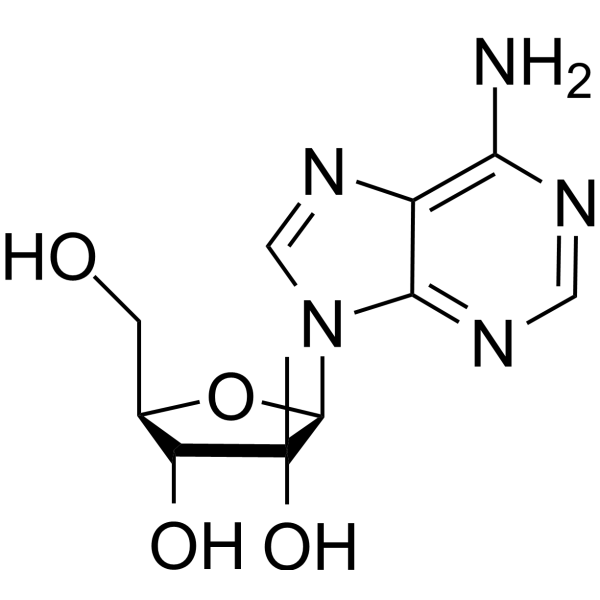
HY-125371
2'-C-MethyladenosineHCV Replication Inhibitor -
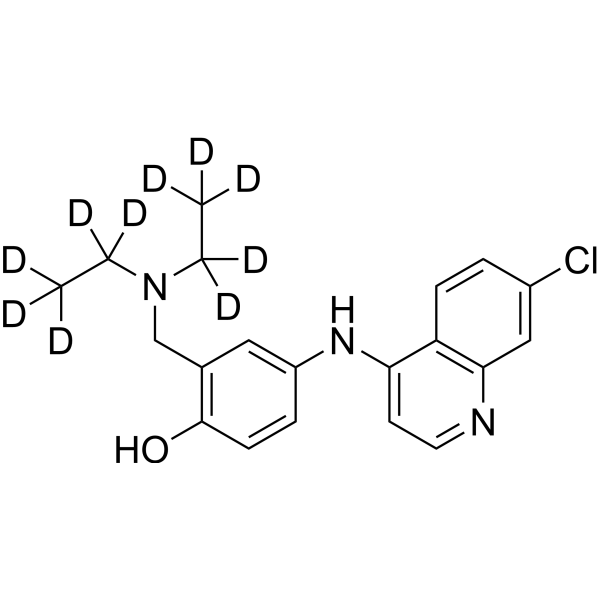
HY-B1322AS
Amodiaquine-d10Stable Isotope -

HY-138149
2-epi-Abamectin -
HY-N9194
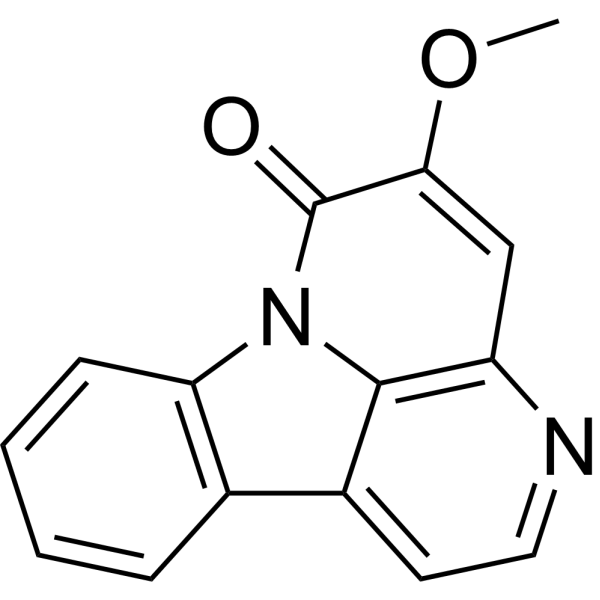
5-Methoxycanthin-6-oneLeishmanicidal Agent -

HY-W408239
N-Pentadecanoyl-L-homoserine lactoneBacterial Regulator -

HY-133694R
2-Aminoflubendazole (Standard)Drug Metabolite
Endogenous Metabolite アイソフォーム固有の製品をすべて表示
More

生物活性
製品説明
IC50 & Target
|
Microbial Metabolite |
Cellular Effect
|
Cell Line

|
Type | Value | Description | References |
|---|---|---|---|---|
| Caco-2 | IC50 |
>1.5 μM
Compound: violacein
|
Cytotoxicity against Homo sapiens (human) Caco2 cells after 24 to 48 hr by MTT assay
Cytotoxicity against Homo sapiens (human) Caco2 cells after 24 to 48 hr by MTT assay
|
10.1007/s00044-011-9654-9 |
| DLD-1 | IC50 |
>1.5 μM
Compound: violacein
|
Cytotoxicity against Homo sapiens (human) DLD1 cells after 24 to 48 hr by MTT assay
Cytotoxicity against Homo sapiens (human) DLD1 cells after 24 to 48 hr by MTT assay
|
10.1007/s00044-011-9654-9 |
| HCT-116 | IC50 |
>1.5 μM
Compound: violacein
|
Cytotoxicity against Homo sapiens (human) HCT116 cells after 24 to 48 hr by MTT assay
Cytotoxicity against Homo sapiens (human) HCT116 cells after 24 to 48 hr by MTT assay
|
10.1007/s00044-011-9654-9 |
| HEp-2 | IC50 |
2.2 μM
Compound: violacein
|
Cytotoxicity against Homo sapiens (human) Hep2 cells
Cytotoxicity against Homo sapiens (human) Hep2 cells
|
10.1007/s00044-011-9654-9 |
| HL-60 | IC50 |
0.8 μM
Compound: violacein
|
Cytotoxicity against Homo sapiens (human) HL60 cells
Cytotoxicity against Homo sapiens (human) HL60 cells
|
10.1007/s00044-011-9654-9 |
| HT-29 | IC50 |
>1.5 μM
Compound: violacein
|
Cytotoxicity against Homo sapiens (human) HT-29 cells after 24 to 48 hr by MTT assay
Cytotoxicity against Homo sapiens (human) HT-29 cells after 24 to 48 hr by MTT assay
|
10.1007/s00044-011-9654-9 |
| K562 | IC50 |
<1 μM
Compound: violacein
|
Cytotoxicity against Homo sapiens (human) K562 cells
Cytotoxicity against Homo sapiens (human) K562 cells
|
10.1007/s00044-011-9654-9 |
| KM12 | GI50 |
0.03 μM
Compound: violacein
|
Cytotoxicity against Homo sapiens (human) KM12 cells
Cytotoxicity against Homo sapiens (human) KM12 cells
|
10.1007/s00044-011-9654-9 |
| Lymphocyte | IC50 |
10 μM
Compound: violacein
|
Cytotoxicity against Homo sapiens (human) Lymphocyte
Cytotoxicity against Homo sapiens (human) Lymphocyte
|
10.1007/s00044-011-9654-9 |
| MOLT-4 | GI50 |
0.03 μM
Compound: violacein
|
Cytotoxicity against Homo sapiens (human) MOLT4 cells
Cytotoxicity against Homo sapiens (human) MOLT4 cells
|
10.1007/s00044-011-9654-9 |
| NCI-H460 | GI50 |
0.03 μM
Compound: violacein
|
Cytotoxicity against Homo sapiens (human) NCI-H460 cells
Cytotoxicity against Homo sapiens (human) NCI-H460 cells
|
10.1007/s00044-011-9654-9 |
| U-937 | IC50 |
<1 μM
Compound: violacein
|
Cytotoxicity against Homo sapiens (human) U937 cells
Cytotoxicity against Homo sapiens (human) U937 cells
|
10.1007/s00044-011-9654-9 |
| V79 | IC50 |
5 μM
Compound: violacein
|
Cytotoxicity against Cricetulus griseus V79 cells
Cytotoxicity against Cricetulus griseus V79 cells
|
10.1007/s00044-011-9654-9 |
| Vero | IC50 |
2.2 μM
Compound: violacein
|
Cytotoxicity against Homo sapiens (human) Vero cells
Cytotoxicity against Homo sapiens (human) Vero cells
|
10.1007/s00044-011-9654-9 |
体外実験
Violacein (0.25-3 µM; 24h; HCT116 and HT29 cells) possesses anticancer activity in both 2D and 3D cell models[1].
Violacein decreases RTKs expression and disturbs signaling pathways in CRC cells[1].
MedChemExpress (MCE) has not independently confirmed the accuracy of these methods. They are for reference only.
-
Cell Line:HCT116 and HT29 (1.8 × 10⁴ cells/well-100 µL) cells.
-
Concentration:0.25, 0.5, 1.0, 1.5, 2.0, 2.5, and 3.0 µM.
-
Incubation Time:24h.
-
Result:In the 2D culture model, the violacein treatment reduced the cell viability, since there was a decrease in formazan production in the HT29 and HCT116 cell lines. Moreover, HT29 was more sensitive to violacein, as evidenced by the IC50 value (0.6 μM) compared to HCT116 (1.2 μM).


化学情報
-
CAS 番号 548-54-9
-
性状 Solid
-
分子量 343.34
-
分子式 C20H13N3O3
-
Color Brown to black
-
SMILES
O=C1/C(C2=CC=CC=C2N1)=C3C=C(C(C4=C5)=CNC4=CC=C5O)NC\3=O
-
別名
バイオラセイン
-
Structure Classification
-
Initial Source
Chromobacterium violaceum
-
輸送条件
Room temperature in continental US; may vary elsewhere.
-
保管条件
Powder -20°C 3 years In solvent -80°C 6 months -20°C 1 month


溶剤 & 溶解度
体外:
DMSO : 10 mg/mL (29.13 mM; Need ultrasonic; Hygroscopic DMSO has a significant impact on the solubility of product, please use newly opened DMSO)
Please refer to the solubility information to select the appropriate solvent. Once prepared, please aliquot and store the solution to prevent product inactivation from repeated freeze-thaw cycles.
Storage method and period of stock solution: -80°C, 6 months; -20°C, 1 month. When stored at -80°C, please use it within 6 months. When stored at -20°C, please use it within 1 month.
Please refer to the solubility information to select the appropriate solvent. Once prepared, please aliquot and store the solution to prevent product inactivation from repeated freeze-thaw cycles.
Storage method and period of stock solution: -80°C, 6 months; -20°C, 1 month. When stored at -80°C, please use it within 6 months. When stored at -20°C, please use it within 1 month.
濃度 (開始) × 体積 (開始) = 濃度 (終了) × 体積 (終了)


純度とドキュメンテーション
-
データシート (278 KB)
-
SDS (252 KB)
- English - EN (252 KB)
- Français - FR (252 KB)
- Deutsch - DE (252 KB)
- Norwegian - NO (252 KB)
- Español - ES (252 KB)
- Swedish - SV (252 KB)
- Italian - IT (252 KB)
- Korean - KR (252 KB)
- Portuguese - PT (252 KB)
-
取扱説明書 (2659 KB)
参考文献
[1]. Patricia F de Souza Oliveira, et al. Violacein negatively modulates the colorectal cancer survival and epithelial-mesenchymal transition. J Cell Biochem. 2022 Jul;123(7):1247-1258. [Content Brief]
[2]. Marlon Konzen, et al. Antioxidant properties of violacein: possible relation on its biological function. Bioorg Med Chem. 2006 Dec 15;14(24):8307-13. [Content Brief]


Complete Stock Solution Preparation Table
Please refer to the solubility information to select the appropriate solvent. Once prepared, please aliquot and store the solution to prevent product inactivation from repeated freeze-thaw cycles.
Storage method and period of stock solution: -80°C, 6 months; -20°C, 1 month. When stored at -80°C, please use it within 6 months. When stored at -20°C, please use it within 1 month.
| Optional Solvent | Concentration Solvent Mass | 1 mg | 5 mg | 10 mg | 25 mg |
|---|---|---|---|---|---|
| DMSO | 1 mM | 2.9126 mL | 14.5628 mL | 29.1256 mL | 72.8141 mL |
| 5 mM | 0.5825 mL | 2.9126 mL | 5.8251 mL | 14.5628 mL | |
| 10 mM | 0.2913 mL | 1.4563 mL | 2.9126 mL | 7.2814 mL | |
| 15 mM | 0.1942 mL | 0.9709 mL | 1.9417 mL | 4.8543 mL | |
| 20 mM | 0.1456 mL | 0.7281 mL | 1.4563 mL | 3.6407 mL | |
| 25 mM | 0.1165 mL | 0.5825 mL | 1.1650 mL | 2.9126 mL |


Violacein 関連分類
HY-119809 関連分類
 Powered by Bioz