



680C91 (Standard)
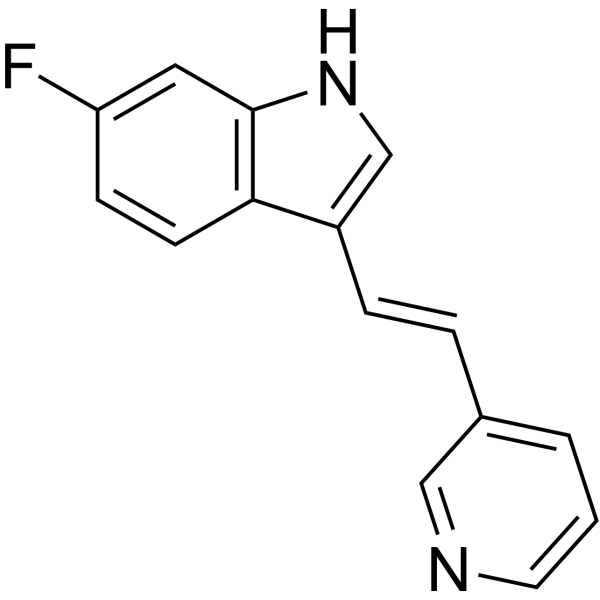
680C91 (Standard) is the analytical standard of 680C91 (HY-108681). This product is intended for research and analytical applications. 680C91 is an orally active, selective tryptophan 2,3-dioxygenase (TDO) inhibitor with a Ki of 51 nM. TDO is the key enzyme of tryptophan catabolism. 680C91 can be used for the research of cancer immunotherapy and Alzheimer’s Disease.
연구목적의 판매만을 진행합니다. 환자를 대상으로 한 판매는 하지 않습니다.
- CAS No.: 163239-22-3
- 화학식: C15H11FN2
- 분자량:238.26
-
보관:
Please store the product under the recommended conditions in the Certificate of Analysis.


To place orders, for customer services and technical support, please contact: MedChemExpress USA
Tel: 609-228-6898 E-mail: [email protected] [email protected]


-
 Product Information
-
Chemical Information
- 순도&문서
-
 Help & FAQs


-
HY-108681
680C91TDO Inhibitor -
HY-33298
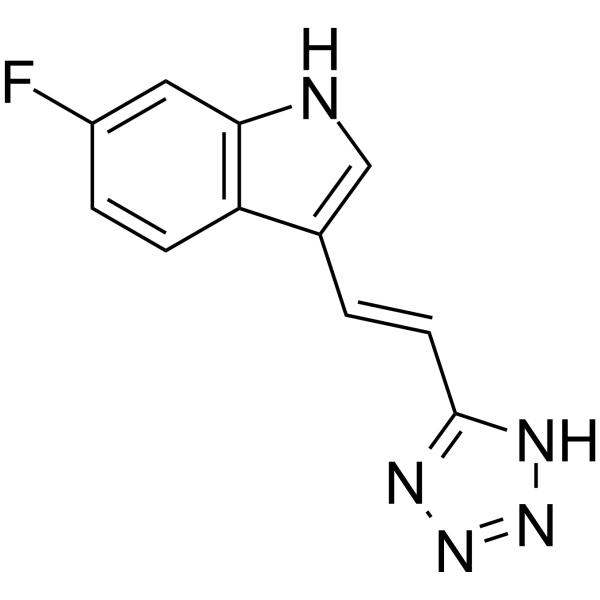
LM10TDO Inhibitor -
HY-130055
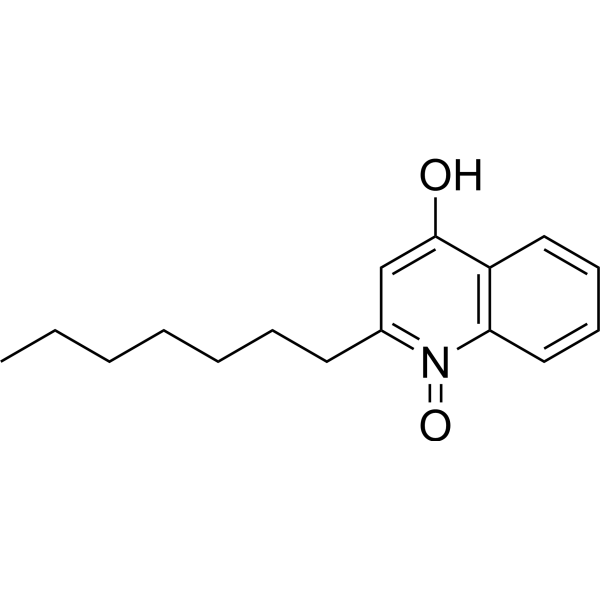
HQNONDH-2 Inhibitor -
HY-100621
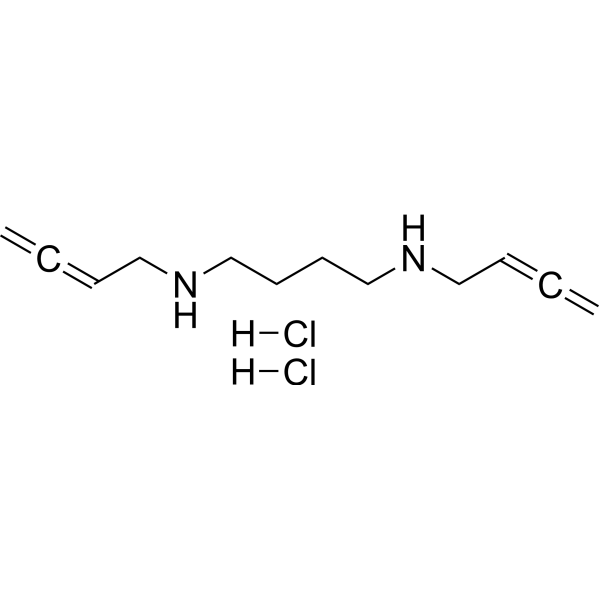
MDL 72527Polyamine Oxidase Inhibitor -
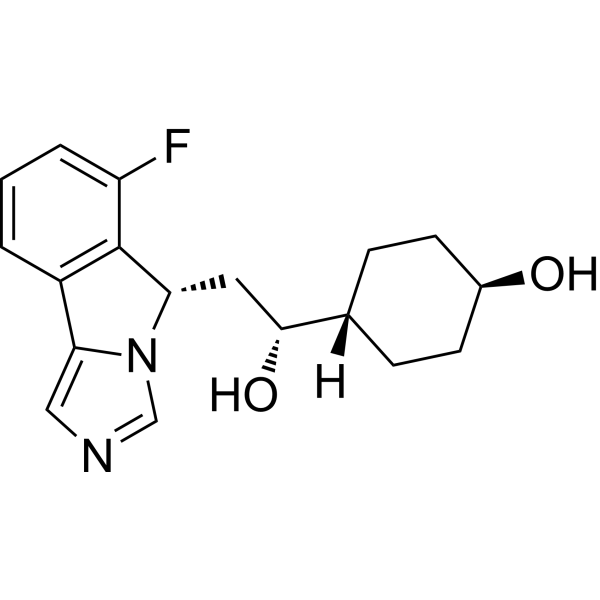
HY-18770B
NavoximodIDO Inhibitor -
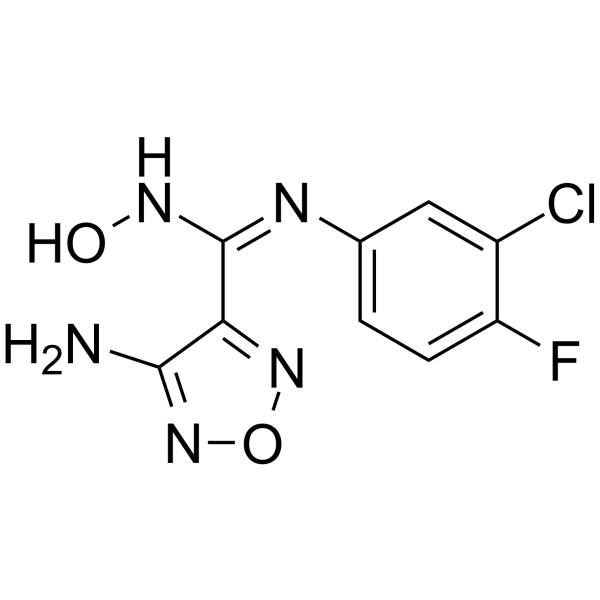
HY-15683
IDO5LIDO Inhibitor -

HY-130055R
HQNO (Standard)NDH-2 Inhibitor -

HY-100621R
MDL 72527 (Standard)Polyamine Oxidase Inhibitor -

HY-15683R
IDO5L (Standard)IDO Inhibitor -
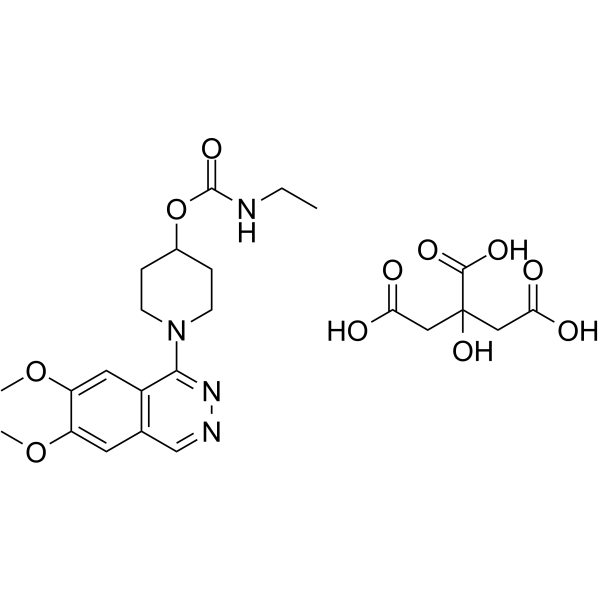
HY-108680
Carbazeran citratePDE Inhibitor


Product Information
Information
신청
The compound is the grade of analytical standard, which is the reference standard supplied assay. It is commonly used in qualitative, quantitative and methodological research experiments in HPLC, GC and MS.


Chemical Information
-
CAS No. 163239-22-3
-
분자량 238.26
-
화학식 C15H11FN2
-
SMILES
FC1=CC2=C(C=C1)C(/C=C/C3=CC=CN=C3)=CN2
-
선적
Room temperature in continental US; may vary elsewhere.
-
보관
Please store the product under the recommended conditions in the Certificate of Analysis.


순도&문서
References
[1]. Li DD, et al. Differential expression and regulation of Tdo2 during mouse decidualization. J Endocrinol. 2013 Dec 2;220(1):73-83. [Content Brief]
[2]. M Salter, et al. The effects of an inhibitor of tryptophan 2,3-dioxygenase and a combined inhibitor of tryptophan 2,3-dioxygenase and 5-HT reuptake in the rat. Neuropharmacology. 1995 Feb;34(2):217-27. [Content Brief]
[3]. M Salter, et al. The effects of a novel and selective inhibitor of tryptophan 2,3-dioxygenase on tryptophan and serotonin metabolism in the rat. Biochem Pharmacol. 1995 May 17;49(10):1435-42. [Content Brief]
[5]. Tsai-Der Chuang, et al. Tryptophan catabolism is dysregulated in leiomyomas. Fertil Steril. 2021 Oct;116(4):1160-1171. [Content Brief]
[6]. Sophie Imbeault, et al. Effects of IDO1 and TDO2 inhibition on cognitive deficits and anxiety following LPS-induced neuroinflammation. Acta Neuropsychiatr. 2020 Feb;32(1):43-53. [Content Brief]

Calculators
Concentration (start) × Volume (start) = Concentration (final) × Volume (final)


680C91 (Standard) Related Classifications
HY-108681R Related Classifications
 Powered by Bioz