



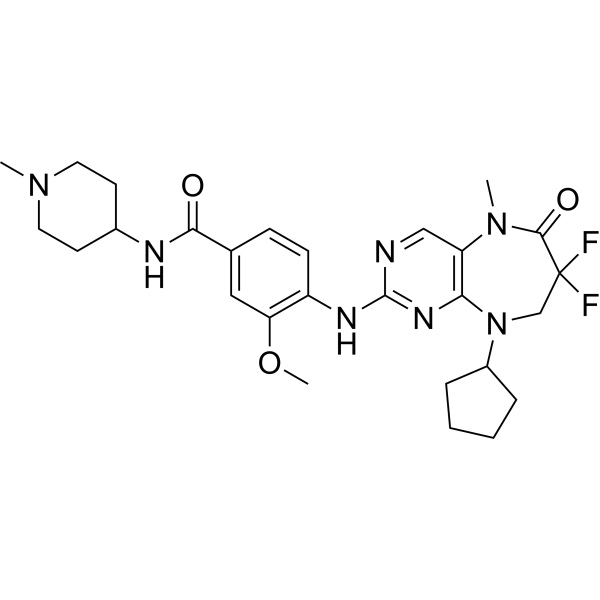
TAK-960
Based on 2 publication(s) in Google Scholar
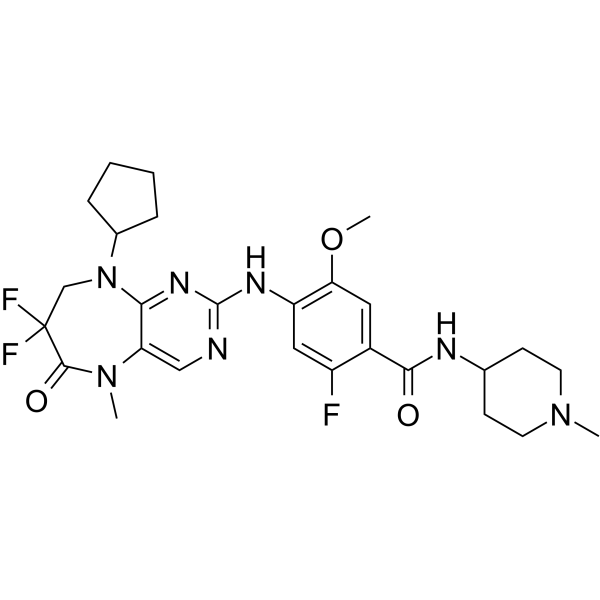
TAK-960 is an orally available, selective inhibitor of polo-like kinase 1 (PLK1), with an IC50 of 0.8 nM. TAK-960 also shows inhibitory activities against PLK2 and PLK3, with IC50s of 16.9 and 50.2 nM, respectively. TAK-960 inhibits proliferation of multiple cancer cell lines and exhibits significant efficacy against multiple tumor xenografts.
연구목적의 판매만을 진행합니다. 환자를 대상으로 한 판매는 하지 않습니다.
- Purity : 99.75%
- CAS No.: 1137868-52-0
- 화학식: C27H34F3N7O3
- 분자량:561.60
-
보관:Powder -20°C, 3 years , 4°C, 2 years ; In solvent -80°C, 2 years , -20°C, 1 year

To place orders, for customer services and technical support, please contact: MedChemExpress USA
Tel: 609-228-6898 E-mail: [email protected] [email protected]


-
 Biological Activity
-
Chemical Information
-
용액&용해도
- Protocol
- 순도&문서
- References
-
 Help & FAQs


-
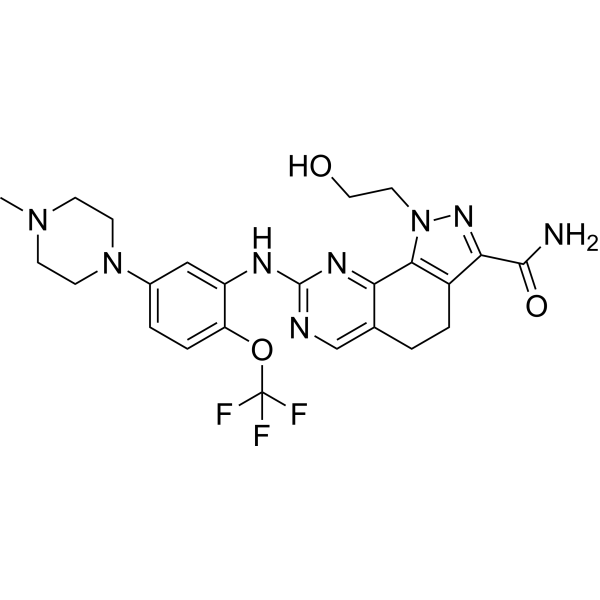
HY-15828
OnvansertibPLK1 Inhibitor -
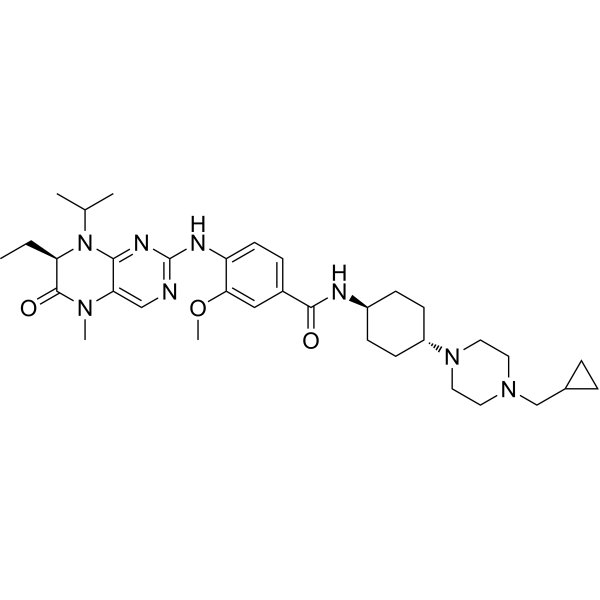
HY-12137
VolasertibPLK1 Inhibitor -
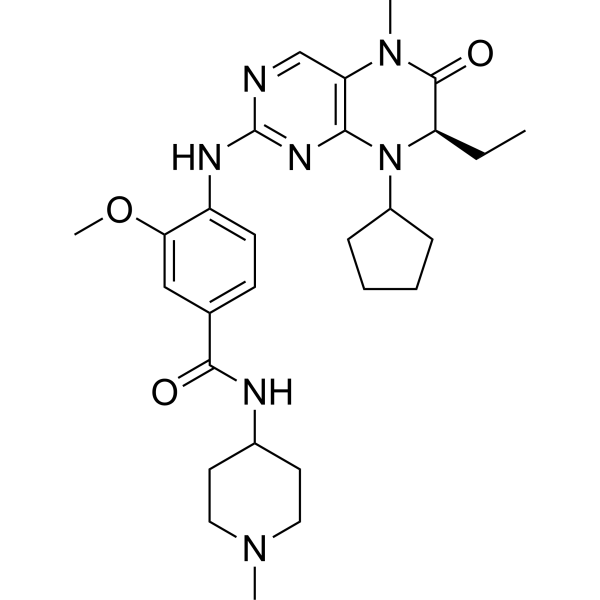
HY-50698
BI 2536PLK1 Inhibitor -
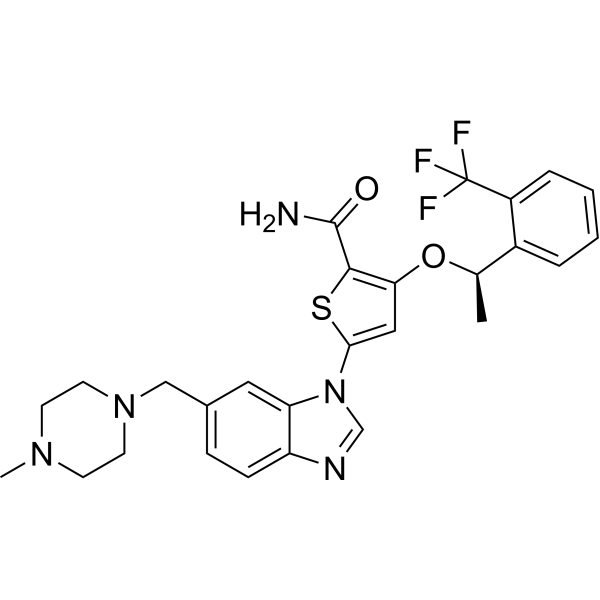
HY-50877
GSK461364PLK1 Inhibitor -
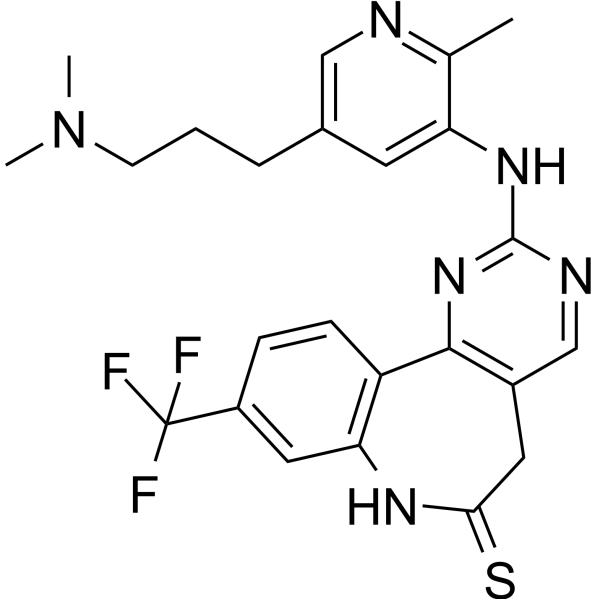
HY-15155
MLN0905PLK1 Inhibitor -
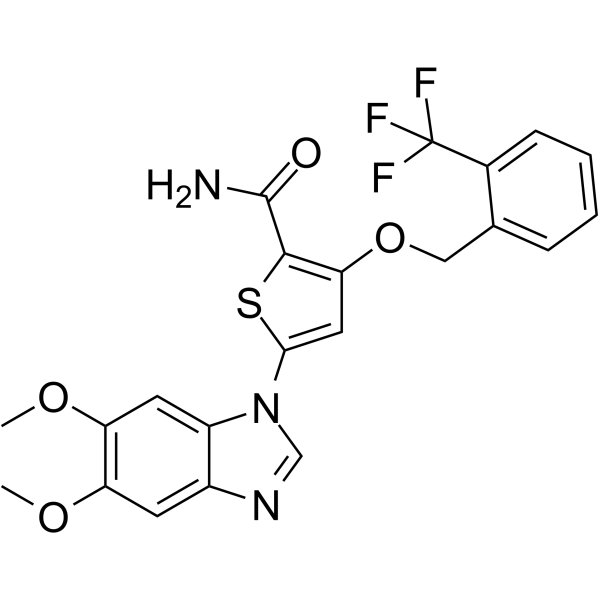
HY-11003
GW843682XPLK Inhibitor -
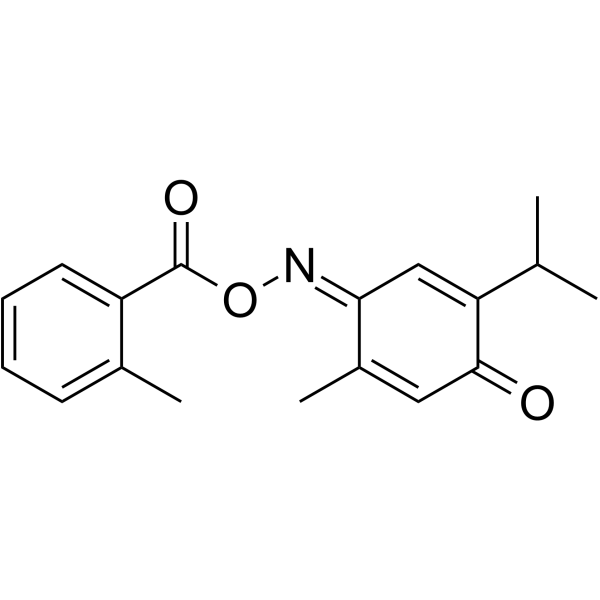
HY-12134
PoloxinPLK Inhibitor -
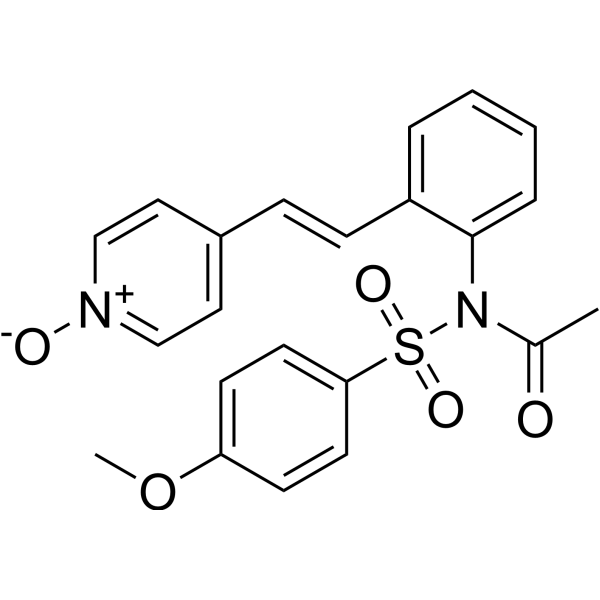
HY-12045
HMN-214PLK1 Inhibitor -
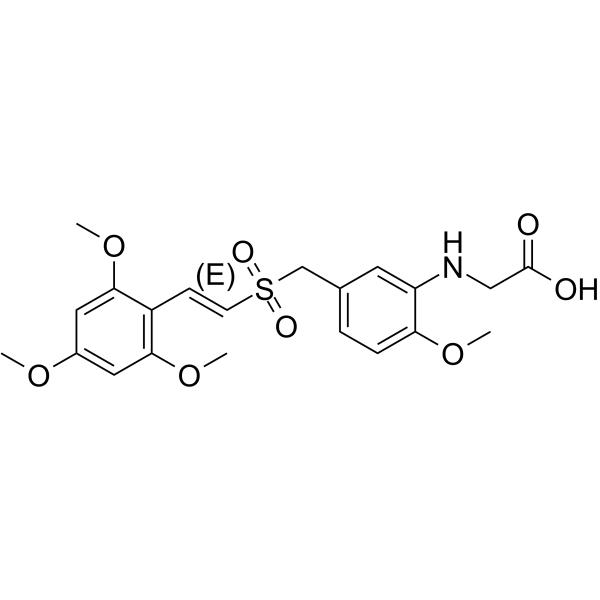
HY-12037A
RigosertibPI3K Inhibitor -
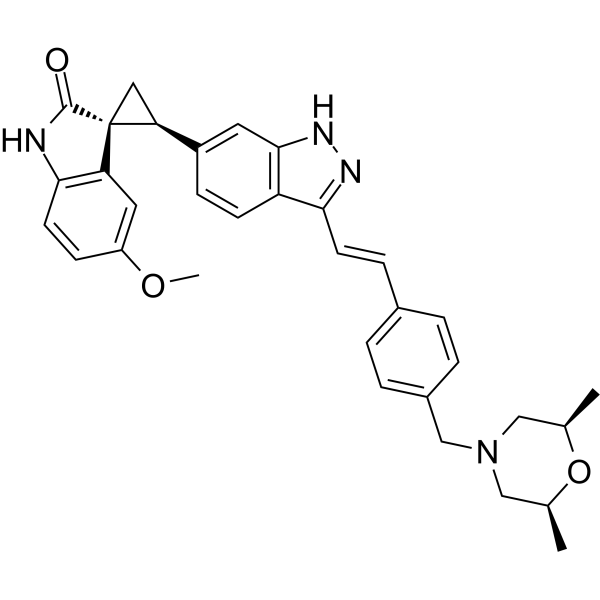
HY-12300
OcifisertibPLK4 Inhibitor -
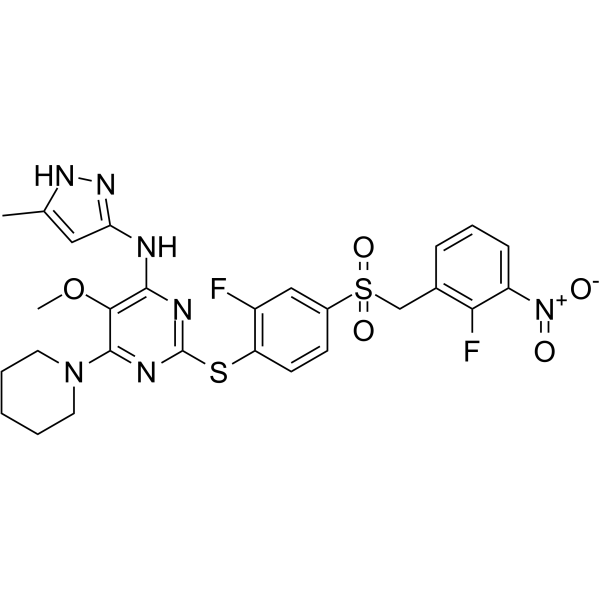
HY-18683
Centrinone-BPLK4 Inhibitor -
HY-15161
Ro3280PLK1 Inhibitor
Publications Citing Use of MedChemExpress (MCE) TAK-960
More

Biological Activity
제품 설명
IC50 & Target
[1]|
PLK1 0.8 nM (IC50) |
PLK2 16.9 nM (IC50) |
PLK3 50.2 nM (IC50) |
FAK/PTK2 19.6 nM (IC50) |
MLCK/MYLK 25.6 nM (IC50) |
FES/FPS 58.2 nM (IC50) |
Cellular Effect
|
Cell Line

|
Type | Value | Description | References |
|---|---|---|---|---|
| HT-29 | EC50 |
3 nM
Compound: 24, TAK-960
|
Antiproliferative activity against human HT-29 cells after 72 hrs by Cell Titer-Glo Assay
Antiproliferative activity against human HT-29 cells after 72 hrs by Cell Titer-Glo Assay
|
[PMID: 23664874] |
In Vitro
TAK-960 treatment causes accumulation of G2-M cells, aberrant polo mitosis morphology, and increased phosphorylation of histone H3 (pHH3). TAK-960 (2-1000 nM; 72 hours) inhibits proliferation of multiple cancer cell lines, with mean EC50 values ranging from 8.4 to 46.9 nM, but not in nondividing normal cells[1].
TAK-960 (8?nM) leads to G2/M cell cycle arrest without significant cytotoxicity in HeLa cells[2].
MedChemExpress (MCE) has not independently confirmed the accuracy of these methods. They are for reference only.
-
Cell Line:HT-29, HCT116, COLO320DM, HCT-15, RKO, SW480, K-562….Hela, DU 145 cells
-
Concentration:2-1000 nM
-
Incubation Time:72 hours
-
Result:Inhibited proliferation of human cancer cell lines regardless of TP53 and KRAS mutation and MDR1 expression status.
In Vivo
In animal models, TAK-960 (p.o.) increases pHH3 in a dose-dependent manner and significantly inhibits the growth of HT-29 colorectal cancer xenografts[1].
MedChemExpress (MCE) has not independently confirmed the accuracy of these methods. They are for reference only.
-
Animal Model:nude mice or SCID mice (bearing HCT116, PC-3, BT474, A549, NCI-H1299, NCI-H1975, A2780, and MV4-11 cells)[1]
-
Dosage:10 mg/kg
-
Administration:P.o.; once daily for 2 weeks
-
Result:Substantial antitumor activity and good tolerability.
Clinical Trial
| NCT Number | Sponsor | Condition | Start Date |
Phase
|
|---|---|---|---|---|
| NCT01329991 | 2011-05 | PHASE1 |


Chemical Information
-
CAS No. 1137868-52-0
-
Appearance Solid
-
분자량 561.60
-
화학식 C27H34F3N7O3
-
Color White to light yellow
-
SMILES
O=C(NC1CCN(C)CC1)C2=CC(OC)=C(NC3=NC=C(N4C)C(N(C5CCCC5)CC(F)(F)C4=O)=N3)C=C2F
-
선적
Room temperature in continental US; may vary elsewhere.
-
보관
Powder -20°C 3 years 4°C 2 years In solvent -80°C 2 years -20°C 1 year


Publications (2)
-
Journal Impact Factor
-
Most Recent
-
Sci Transl Med
PP2A inhibition is a druggable MEK inhibitor resistance mechanism in KRAS-mutant lung cancer cells. [Abstract]2018 Jul 18;10(450):eaaq1093. PMID: 30021885 -
Cancer Lett
Inhibition of the mitotic kinase PLK1 overcomes therapeutic resistance to BET inhibitors in triple negative breast cancer. [Abstract]2020 Oct 28:491:50-59. PMID: 32735909


용액&용해도
In Vitro:
DMSO : 16.67 mg/mL (29.68 mM; ultrasonic and warming and heat to 60°C; Hygroscopic DMSO has a significant impact on the solubility of product, please use newly opened DMSO)
Please refer to the solubility information to select the appropriate solvent. Once prepared, please aliquot and store the solution to prevent product inactivation from repeated freeze-thaw cycles.
Storage method and period of stock solution: -80°C, 2 years; -20°C, 1 year. When stored at -80°C, please use it within 2 years. When stored at -20°C, please use it within 1 year.
Please refer to the solubility information to select the appropriate solvent. Once prepared, please aliquot and store the solution to prevent product inactivation from repeated freeze-thaw cycles.
Storage method and period of stock solution: -80°C, 2 years; -20°C, 1 year. When stored at -80°C, please use it within 2 years. When stored at -20°C, please use it within 1 year.
Concentration (start) × Volume (start) = Concentration (final) × Volume (final)
In Vivo:
Select the appropriate dissolution method based on your experimental animal and administration route.
- For the following dissolution methods, please ensure to first prepare a clear stock solution using an In Vitro approach and then sequentially add co-solvents:
- To ensure reliable experimental results, the clarified stock solution can be appropriately stored based on storage conditions. As for the working solution for In Vivo experiments, it is recommended to prepare freshly and use it on the same day.
- The percentages shown for the solvents indicate their volumetric ratio in the final prepared solution. If precipitation or phase separation occurs during preparation, heat and/or sonication can be used to aid dissolution.
Add each solvent one by one: 10% DMSO 40% PEG300 5% Tween-80 45% Saline
Solubility: ≥ 1.67 mg/mL (2.97 mM); Clear solution
This protocol yields a clear solution of ≥ 1.67 mg/mL (saturation unknown).
Taking 1 mL working solution as an example, add 100 μL DMSO stock solution (16.7 mg/mL) to 400 μL PEG300, and mix evenly; then add 50 μL Tween-80 and mix evenly; then add 450 μL Saline to adjust the volume to 1 mL.
Preparation of Saline: Dissolve 0.9 g sodium chloride in ddH₂O and dilute to 100 mL to obtain a clear Saline solution.
In Vivo Dissolution Calculator
Please enter the basic information of animal experiments:
-
-
-
-
Recommended: Prepare an additional quantity of animals to account for potential losses during experiments.
Please enter your animal formula composition:
-
%DMSO +
Recommended: Keep the proportion of DMSO in working solution below 2% if your animal is weak.
-
%+
-
+%Tween-80 + +
-
%Saline +
The co-solvents required include: DMSO, . All of co-solvents are available by MedChemExpress (MCE). , Tween 80. All of co-solvents are available by MedChemExpress (MCE).
Working solution concentration: 0.22 mg/mL
Method for preparing stock solution: mg drug dissolved in μL DMSO. Stock solution concentration: mg/mL.
1. Take μL DMSO stock solution;
2. Add μL .
μL , mix evenly;
3. Then add μL Tween 80, mix evenly;
4. Then add μL
Please ensure that the stock solution in the first step is dissolved to a clear state, and add co-solvents in sequence. You can use ultrasonic heating (ultrasonic cleaner, recommended frequency 20-40 kHz), vortexing, etc. to assist dissolution.


순도&문서
-
Data Sheet (276 KB)
-
SDS (393 KB)
- English - EN (393 KB)
- Français - FR (393 KB)
- Deutsch - DE (393 KB)
- Norwegian - NO (393 KB)
- Español - ES (393 KB)
- Swedish - SV (393 KB)
- Italian - IT (393 KB)
- Korean - KR (393 KB)
- Portuguese - PT (393 KB)
-
Handling Instructions (2659 KB)
References
[1]. Hikichi Y, et al. TAK-960, a novel, orally available, selective inhibitor of polo-like kinase 1, shows broad-spectrum preclinical antitumor activity in multiple dosing regimens. Mol Cancer Ther. 2012 Mar;11(3):700-9. [Content Brief]
[2]. Inoue M, et al. PLK1 blockade enhances therapeutic effects of radiation by inducing cell cycle arrest at the mitotic phase. Sci Rep. 2015 Oct 27;5:15666. [Content Brief]


Complete Stock Solution Preparation Table
Please refer to the solubility information to select the appropriate solvent. Once prepared, please aliquot and store the solution to prevent product inactivation from repeated freeze-thaw cycles.
Storage method and period of stock solution: -80°C, 2 years; -20°C, 1 year. When stored at -80°C, please use it within 2 years. When stored at -20°C, please use it within 1 year.
| Optional Solvent | Concentration Solvent Mass | 1 mg | 5 mg | 10 mg | 25 mg |
|---|---|---|---|---|---|
| DMSO | 1 mM | 1.7806 mL | 8.9031 mL | 17.8063 mL | 44.5157 mL |
| 5 mM | 0.3561 mL | 1.7806 mL | 3.5613 mL | 8.9031 mL | |
| 10 mM | 0.1781 mL | 0.8903 mL | 1.7806 mL | 4.4516 mL | |
| 15 mM | 0.1187 mL | 0.5935 mL | 1.1871 mL | 2.9677 mL | |
| 20 mM | 0.0890 mL | 0.4452 mL | 0.8903 mL | 2.2258 mL | |
| 25 mM | 0.0712 mL | 0.3561 mL | 0.7123 mL | 1.7806 mL |


TAK-960 Related Classifications
HY-15160 Related Classifications
 Powered by Bioz