



DCIP sodium
Based on 1 publication(s) in Google Scholar
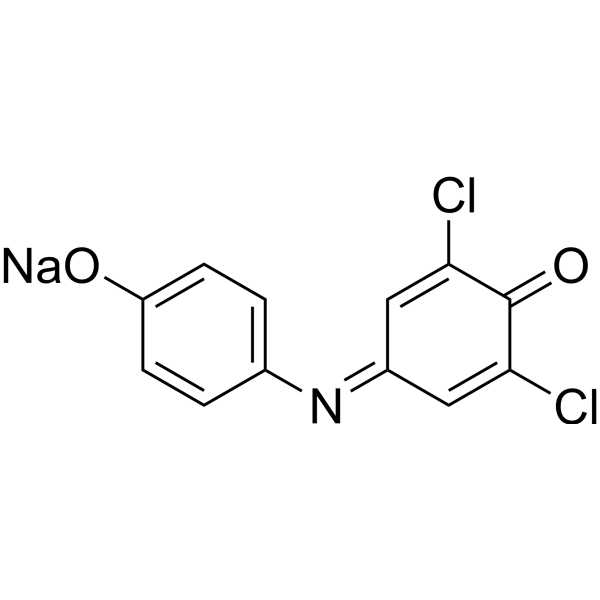
DCIP sodium is a blue dye commonly used in various biochemical and biotechnological applications as an indicator of redox reactions. DCIP sodium has unique chemical properties that change color according to the oxidation state of the substance being tested. It is commonly used in enzyme assays, such as measuring the activity of succinate dehydrogenase, or in protein quantification methods, such as the Lowry assay.
연구목적의 판매만을 진행합니다. 환자를 대상으로 한 판매는 하지 않습니다.
- Purity : 98.0%
- CAS No.: 620-45-1
- 화학식: C12H6Cl2NNaO2
- 분자량:290.07
-
보관:
4°C, sealed storage, away from moisture and light
* In solvent : -80°C, 6 months; -20°C, 1 month (sealed storage, away from moisture and light)

To place orders, for customer services and technical support, please contact: MedChemExpress USA
Tel: 609-228-6898 E-mail: [email protected] [email protected]


-
 Biological Activity
-
Chemical Information
- Protocol
- 순도&문서
-
 Help & FAQs


-
HY-W004520
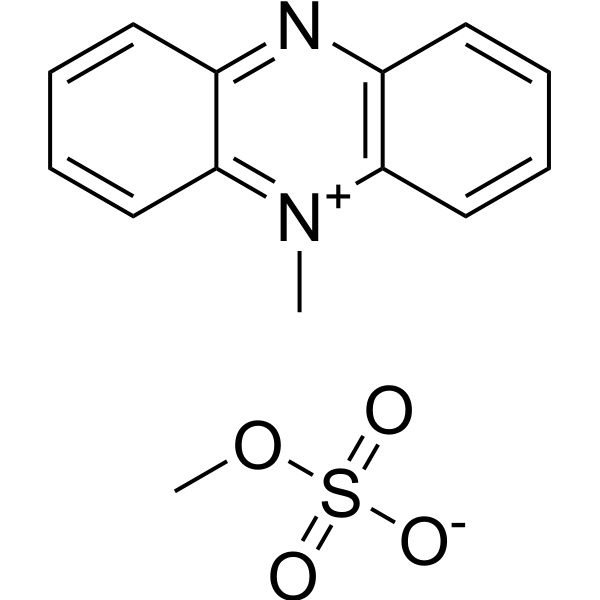
Phenazine methylsulfateApoptosis Iducer -
HY-B1654
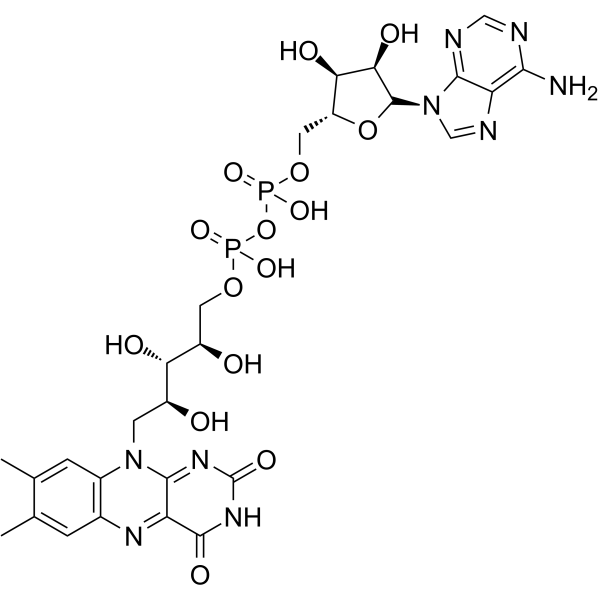
Flavin adenine dinucleotideRedox Cofactor -
HY-D0843
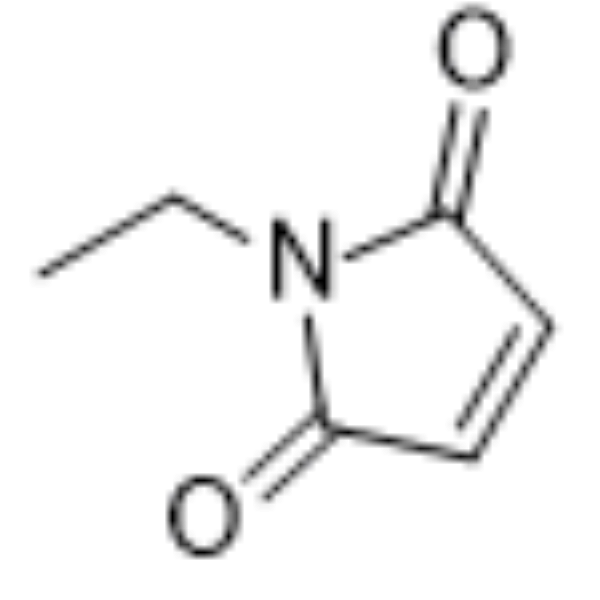
N-EthylmaleimideCysteine Residues Modifier -
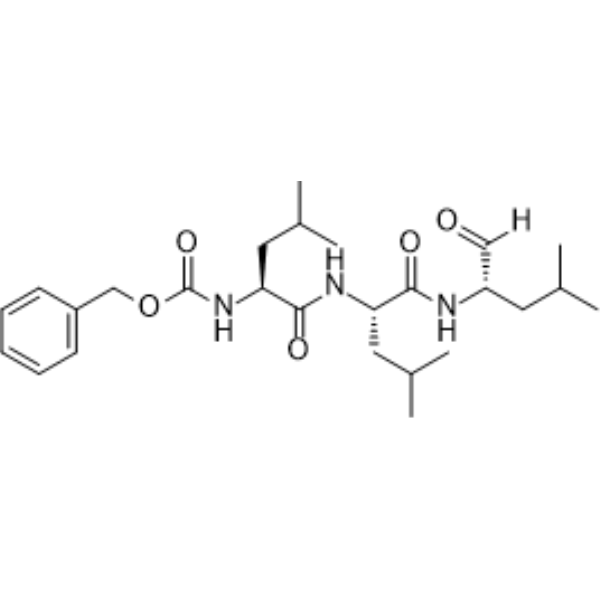
HY-13259
MG-132Proteasome Inhibitor -
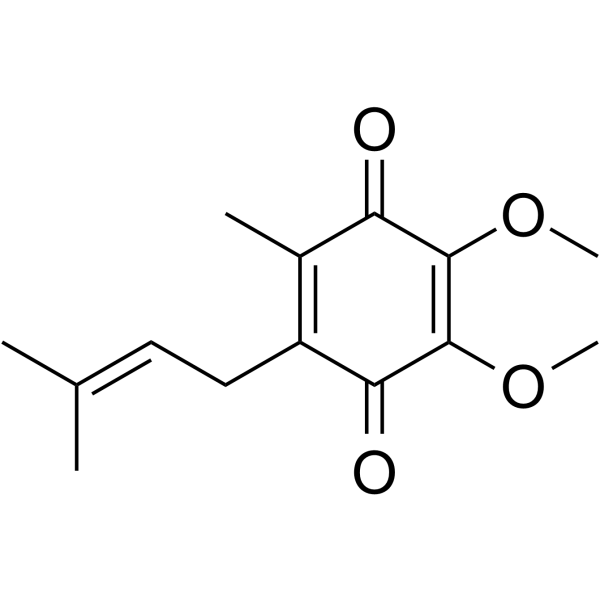
HY-113449
Ubiquinone-1Endogenous Metabolite -
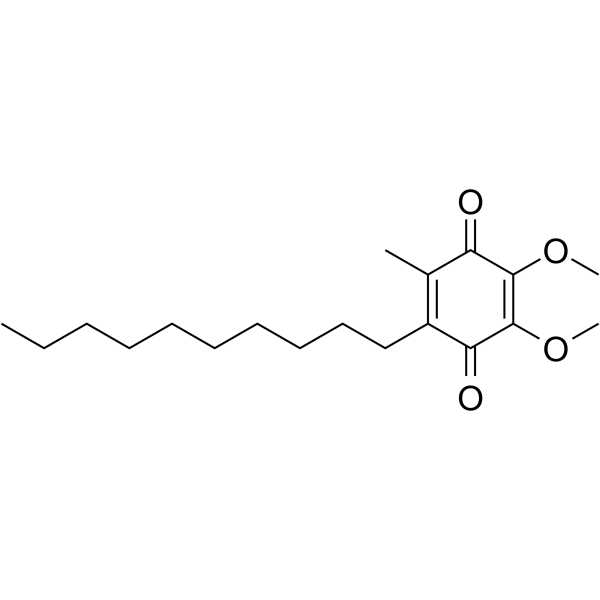
HY-121134
DecylubiquinoneROS Inhibitor -

HY-D0018R
DCIP sodium (Standard)Biochemical Assay Reagent
Publications Citing Use of MedChemExpress (MCE) DCIP sodium
More

Biological Activity
제품 설명
In Vitro
DCIP (Dichlorophenylindophenol) sodium is a biochemical reagent that can be used as a biological material or organic compound for life science related research.
MedChemExpress (MCE) has not independently confirmed the accuracy of these methods. They are for reference only.


Chemical Information
-
CAS No. 620-45-1
-
Appearance Solid
-
분자량 290.07
-
화학식 C12H6Cl2NNaO2
-
SMILES
O=C1C(Cl)=C/C(C=C1Cl)=N/C2=CC=C(C=C2)O[Na]
-
Synonyms
Dichlorophenylindophenol sodium; DCPIP sodium; Indochlorophenol sodium
-
선적
Room temperature in continental US; may vary elsewhere.
-
보관
4°C, sealed storage, away from moisture and light
* In solvent : -80°C, 6 months; -20°C, 1 month (sealed storage, away from moisture and light)


Publications (1)
-
Journal Impact Factor
-
Most Recent
-
EMBO Mol Med
De novo pyrimidine synthesis is a collateral metabolic vulnerability in NF2-deficient mesothelioma. [Abstract]2025 Jul 24. PMID: 40707702


순도&문서
-
Data Sheet (242 KB)
-
SDS (394 KB)
- English - EN (394 KB)
- Français - FR (394 KB)
- Deutsch - DE (394 KB)
- Norwegian - NO (394 KB)
- Español - ES (394 KB)
- Swedish - SV (394 KB)
- Italian - IT (394 KB)
- Korean - KR (394 KB)
- Portuguese - PT (394 KB)
-
Handling Instructions (2659 KB)

Calculators
Concentration (start) × Volume (start) = Concentration (final) × Volume (final)


DCIP sodium Related Classifications
HY-D0018 Related Classifications
 Powered by Bioz