



Pratensein
Based on 3 publication(s) in Google Scholar
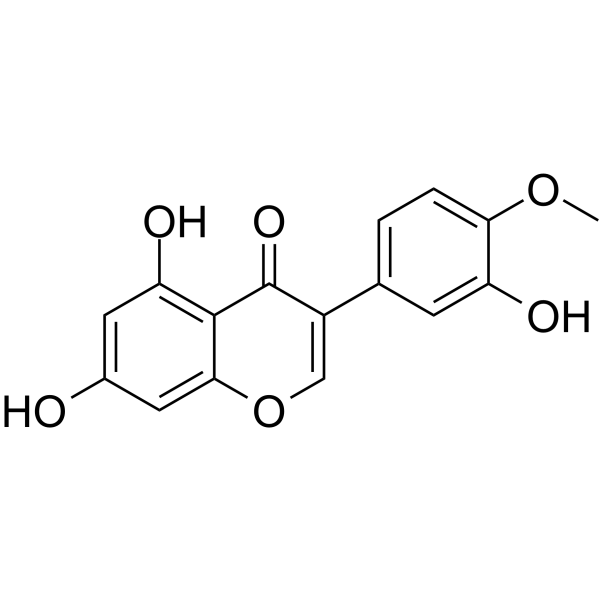
Pratensein, a flavonoid, ameliorates β-amyloid-induced cognitive impairment in rats via reducing oxidative damage and restoring synapse and BDNF levels.
연구목적의 판매만을 진행합니다. 환자를 대상으로 한 판매는 하지 않습니다.
- Purity : 99.92%
- CAS No.: 2284-31-3
- 화학식: C16H12O6
- 분자량:300.26
-
보관:
-20°C, sealed storage, away from moisture and light
* In solvent : -80°C, 6 months; -20°C, 1 month (sealed storage, away from moisture and light)

To place orders, for customer services and technical support, please contact: MedChemExpress USA
Tel: 609-228-6898 E-mail: [email protected] [email protected]


-
 Biological Activity
-
Chemical Information
-
용액&용해도
- Protocol
- 순도&문서
- References
-
 Help & FAQs


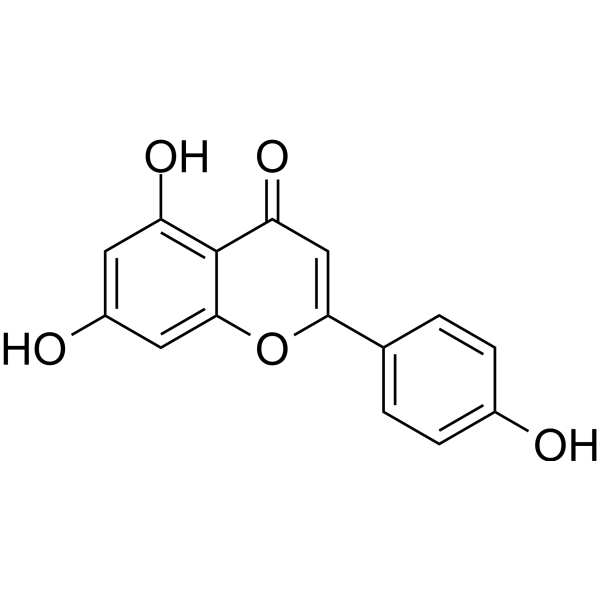
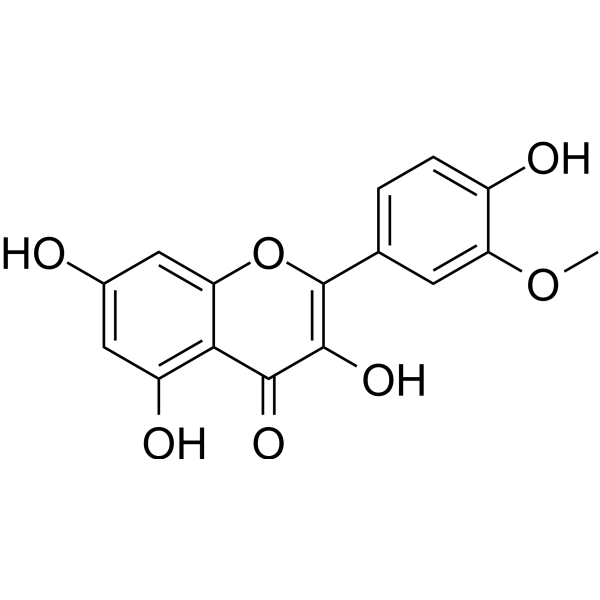
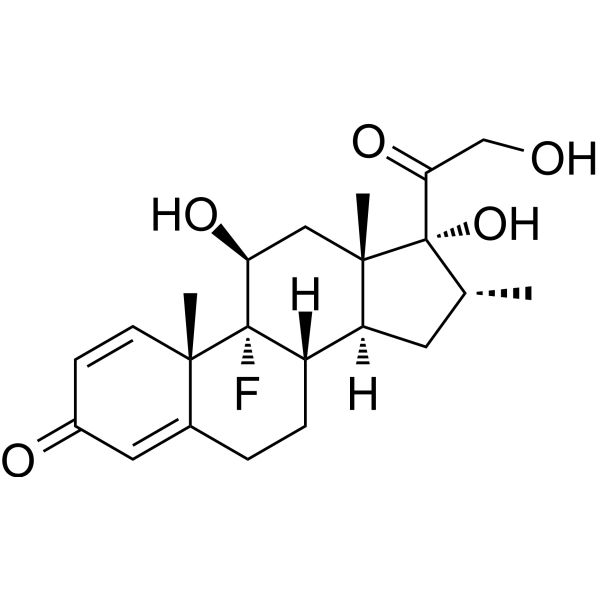
Publications Citing Use of MedChemExpress (MCE) Pratensein
More

Biological Activity
제품 설명
Cellular Effect
|
Cell Line

|
Type | Value | Description | References |
|---|---|---|---|---|
| A549 | IC50 |
>100 μM
Compound: 17
|
Cytotoxicity against human A549 cells after 72 hrs by MTT assay
Cytotoxicity against human A549 cells after 72 hrs by MTT assay
|
[PMID: 18440233] |
| B16-BL6 | IC50 |
>100 μM
Compound: 17
|
Cytotoxicity against mouse B16-BL6 cells after 72 hrs by MTT assay
Cytotoxicity against mouse B16-BL6 cells after 72 hrs by MTT assay
|
[PMID: 18440233] |
| BV-2 | IC50 |
>100 μM
Compound: 3
|
Antineuroinflammatory activity in mouse BV2 cells assessed as inhibition of LPS-induced NO production after 24 hrs in presence of LPS by Griess reaction based assay
Antineuroinflammatory activity in mouse BV2 cells assessed as inhibition of LPS-induced NO production after 24 hrs in presence of LPS by Griess reaction based assay
|
[PMID: 28911817] |
| BV-2 | IC50 |
26.3 μM
Compound: 10
|
Antiinflammatory activity in mouse BV2 cells assessed as inhibition of LPS-induced nitric oxide production
Antiinflammatory activity in mouse BV2 cells assessed as inhibition of LPS-induced nitric oxide production
|
[PMID: 29482940] |
| HeLa | IC50 |
>100 μM
Compound: 17
|
Cytotoxicity against human HeLa cells after 72 hrs by MTT assay
Cytotoxicity against human HeLa cells after 72 hrs by MTT assay
|
[PMID: 18440233] |
| HT-1080 | IC50 |
>100 μM
Compound: 17
|
Cytotoxicity against human HT1080 cells after 72 hrs by MTT assay
Cytotoxicity against human HT1080 cells after 72 hrs by MTT assay
|
[PMID: 18440233] |
| Lewis lung carcinoma cell line | IC50 |
>100 μM
Compound: 17
|
Cytotoxicity against mouse LLC cells after 72 hrs by MTT assay
Cytotoxicity against mouse LLC cells after 72 hrs by MTT assay
|
[PMID: 18440233] |
In Vivo
Pratensein (20 mg/kg; p.o.; once daily for 3 weeks) ameliorates learning and memory deficits in Aβ1-42 rat model of Alzheimer’s disease[1].
MedChemExpress (MCE) has not independently confirmed the accuracy of these methods. They are for reference only.
-
Animal Model:Male 10-week old Wistar rats[1]
-
Dosage:20 mg/kg
-
Administration:P.o.; once daily for 3 weeks
-
Result:The spatial learning and memory ability of rats was improved.


Chemical Information
-
CAS No. 2284-31-3
-
Appearance Solid
-
분자량 300.26
-
화학식 C16H12O6
-
Color White to off-white
-
SMILES
O=C1C(C2=CC=C(OC)C(O)=C2)=COC3=CC(O)=CC(O)=C13
-
Structure Classification
-
Initial Source
-
선적
Room temperature in continental US; may vary elsewhere.
-
보관
-20°C, sealed storage, away from moisture and light
* In solvent : -80°C, 6 months; -20°C, 1 month (sealed storage, away from moisture and light)


Publications (3)


용액&용해도
In Vitro:
DMSO : 50 mg/mL (166.52 mM; Need ultrasonic; Hygroscopic DMSO has a significant impact on the solubility of product, please use newly opened DMSO)
Please refer to the solubility information to select the appropriate solvent. Once prepared, please aliquot and store the solution to prevent product inactivation from repeated freeze-thaw cycles.
Storage method and period of stock solution: -80°C, 6 months; -20°C, 1 month (sealed storage, away from moisture and light). When stored at -80°C, please use it within 6 months. When stored at -20°C, please use it within 1 month.
Please refer to the solubility information to select the appropriate solvent. Once prepared, please aliquot and store the solution to prevent product inactivation from repeated freeze-thaw cycles.
Storage method and period of stock solution: -80°C, 6 months; -20°C, 1 month (sealed storage, away from moisture and light). When stored at -80°C, please use it within 6 months. When stored at -20°C, please use it within 1 month.
Concentration (start) × Volume (start) = Concentration (final) × Volume (final)


순도&문서
-
Data Sheet (273 KB)
-
SDS (252 KB)
- English - EN (252 KB)
- Français - FR (252 KB)
- Deutsch - DE (252 KB)
- Norwegian - NO (252 KB)
- Español - ES (252 KB)
- Swedish - SV (252 KB)
- Italian - IT (252 KB)
- Korean - KR (252 KB)
- Portuguese - PT (252 KB)
-
Handling Instructions (2659 KB)
References


Complete Stock Solution Preparation Table
Please refer to the solubility information to select the appropriate solvent. Once prepared, please aliquot and store the solution to prevent product inactivation from repeated freeze-thaw cycles.
Storage method and period of stock solution: -80°C, 6 months; -20°C, 1 month (sealed storage, away from moisture and light). When stored at -80°C, please use it within 6 months. When stored at -20°C, please use it within 1 month.
| Optional Solvent | Concentration Solvent Mass | 1 mg | 5 mg | 10 mg | 25 mg |
|---|---|---|---|---|---|
| DMSO | 1 mM | 3.3304 mL | 16.6522 mL | 33.3045 mL | 83.2612 mL |
| 5 mM | 0.6661 mL | 3.3304 mL | 6.6609 mL | 16.6522 mL | |
| 10 mM | 0.3330 mL | 1.6652 mL | 3.3304 mL | 8.3261 mL | |
| 15 mM | 0.2220 mL | 1.1101 mL | 2.2203 mL | 5.5507 mL | |
| 20 mM | 0.1665 mL | 0.8326 mL | 1.6652 mL | 4.1631 mL | |
| 25 mM | 0.1332 mL | 0.6661 mL | 1.3322 mL | 3.3304 mL | |
| 30 mM | 0.1110 mL | 0.5551 mL | 1.1101 mL | 2.7754 mL | |
| 40 mM | 0.0833 mL | 0.4163 mL | 0.8326 mL | 2.0815 mL | |
| 50 mM | 0.0666 mL | 0.3330 mL | 0.6661 mL | 1.6652 mL | |
| 60 mM | 0.0555 mL | 0.2775 mL | 0.5551 mL | 1.3877 mL | |
| 80 mM | 0.0416 mL | 0.2082 mL | 0.4163 mL | 1.0408 mL | |
| 100 mM | 0.0333 mL | 0.1665 mL | 0.3330 mL | 0.8326 mL |


Pratensein Related Classifications
HY-N7981 Related Classifications
 Powered by Bioz