



Lonaprisan
Lonaprisan (ZK 230211; BAY86 5044) is an antagonist for progesterone receptor, with IC50 of 3.6 pM and 2.5 pM for PR-A and PR-B, respectively. Lonaprisan exhibits antiprogestagenic activity in rabbits, interrupts early pregnancy in rats, and exhibits antitumor efficacy against DMBA (HY-W011845)-induced mammary tumor. Lonaprisan reveals antiglucocorticoid and antiandrogenic effect.
For research use only. We do not sell to patients.
- CAS No.: 211254-73-8
- Formula: C28H29F5O3
- Molecular Weight:508.52
-
Storage:
Please store the product under the recommended conditions in the Certificate of Analysis.


To place orders, for customer services and technical support, please contact: MedChemExpress USA
Tel: 609-228-6898 E-mail: [email protected] [email protected]


-
 Biological Activity
-
Chemical Information
- Protocols
- Purity & Documentation
- References
-
 Help & FAQs


-
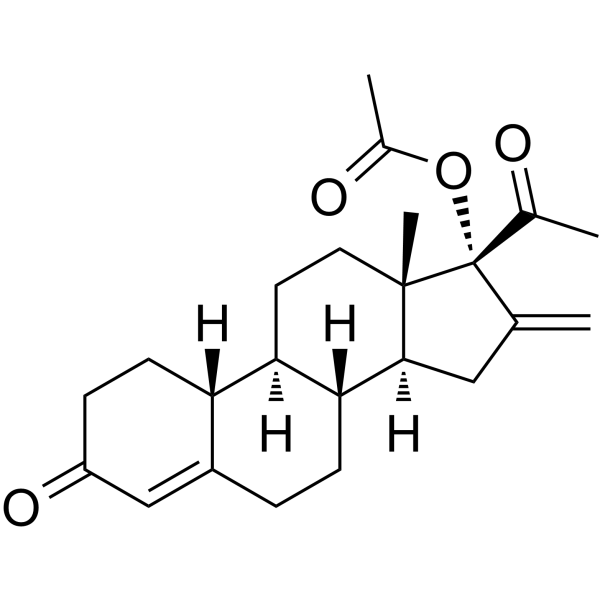
HY-13071
NestoronProgesterone Receptor Agonist -
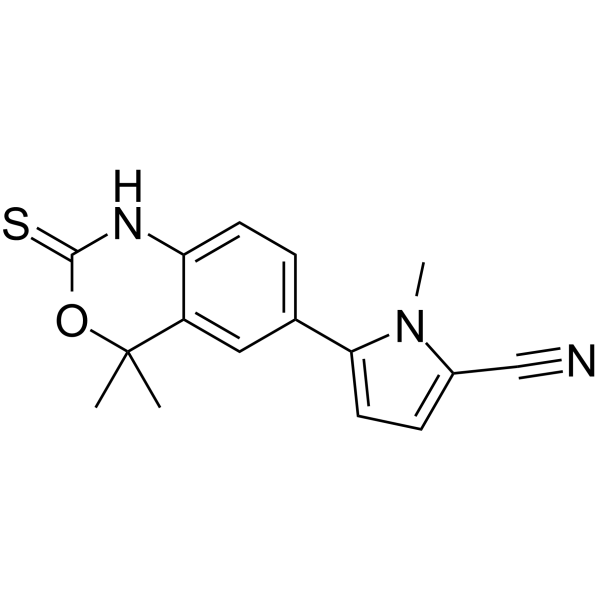
HY-15606
TanaprogetProgesterone Receptor Agonist -
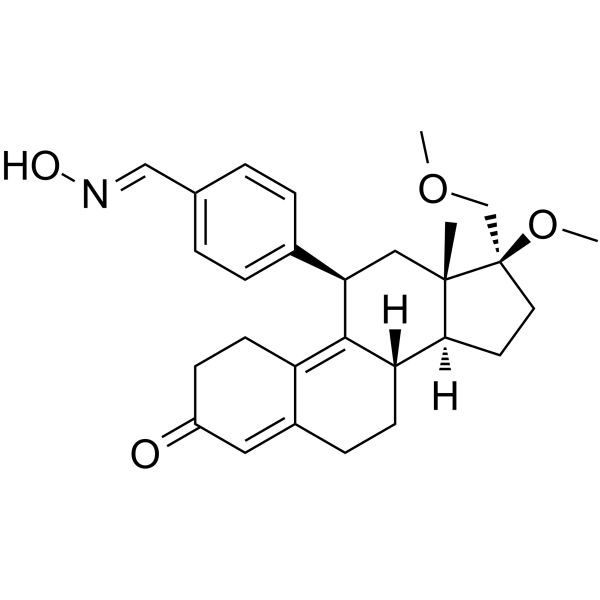
HY-119433
Asoprisnil -
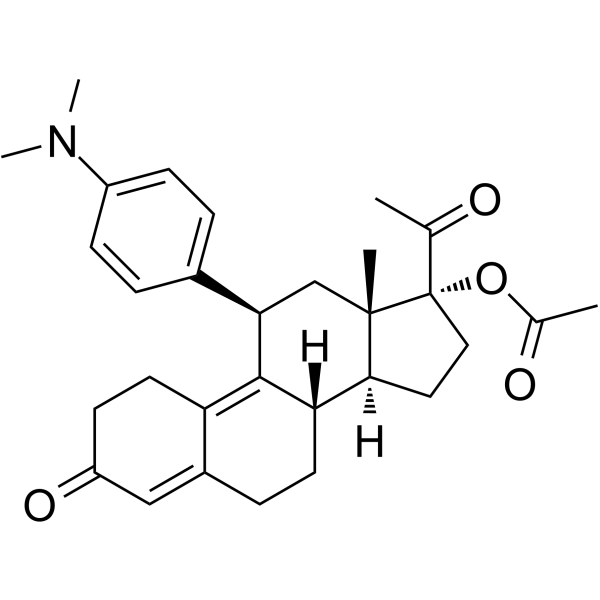
HY-16508
Ulipristal acetateSelective Progesterone Receptor Modulator -
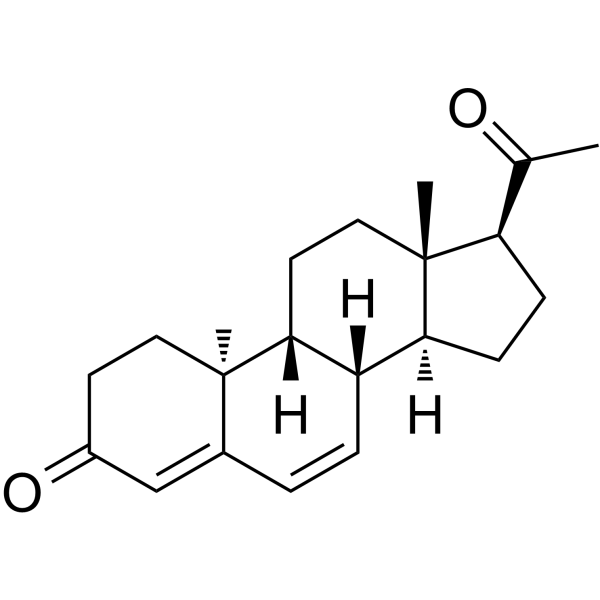
HY-B0257A
DydrogesteroneProgestogen -
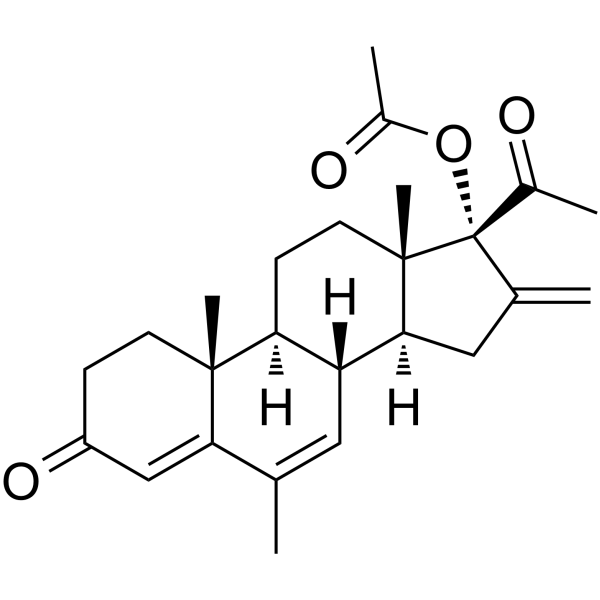
HY-111614
Melengestrol acetateContraceptive Agent -

HY-109568
LynestrenolPXR Agonist -
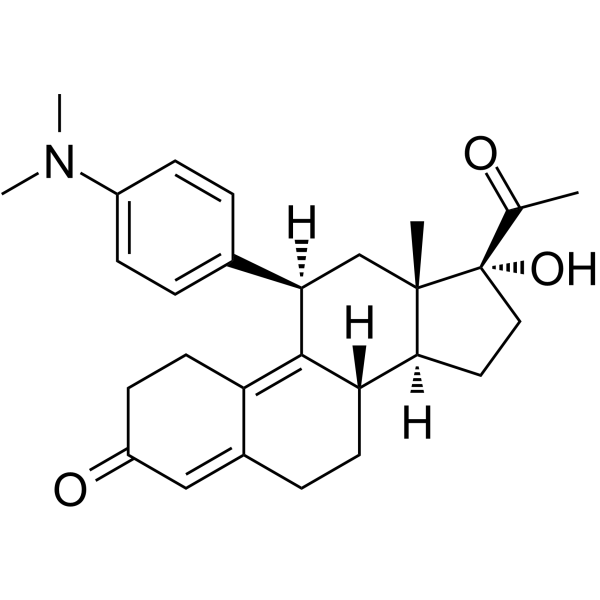
HY-14959
UlipristalSelective Progesterone Receptor Modulator -
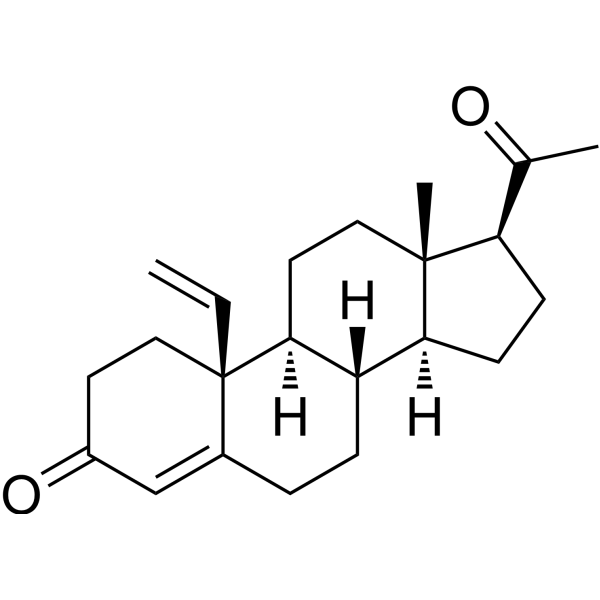
HY-131547
Org OD 02-0mPRα Agonist -
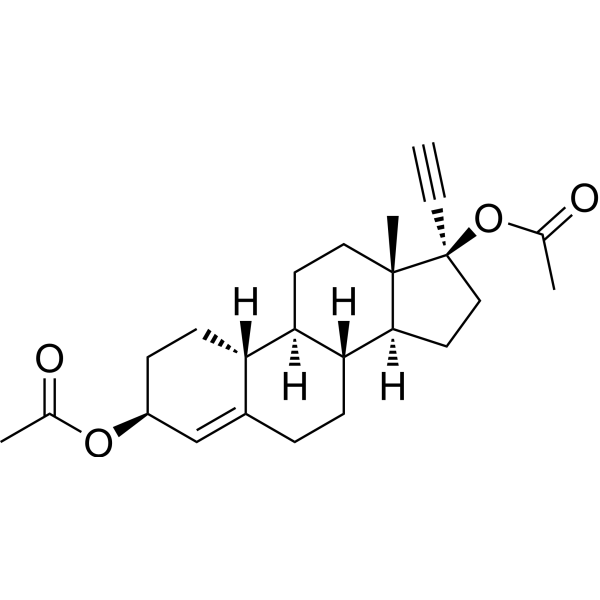
HY-B1089
Ethynodiol diacetateProgesterone Receptor Agonist -
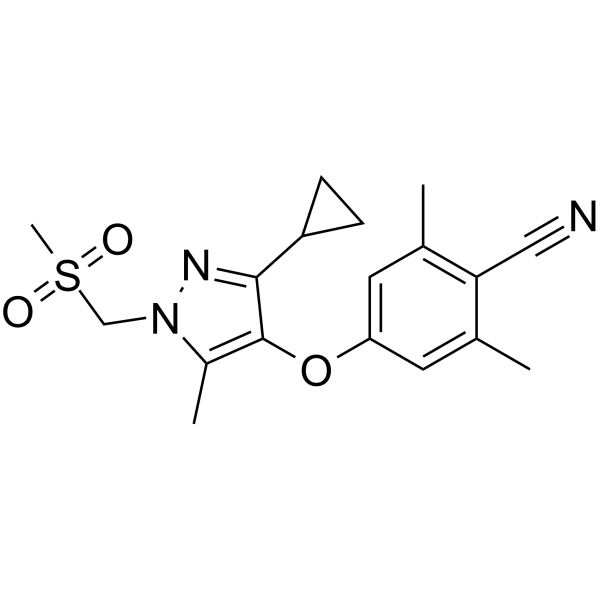
HY-11028
PF-02413873Progesterone Receptor Antagonist -
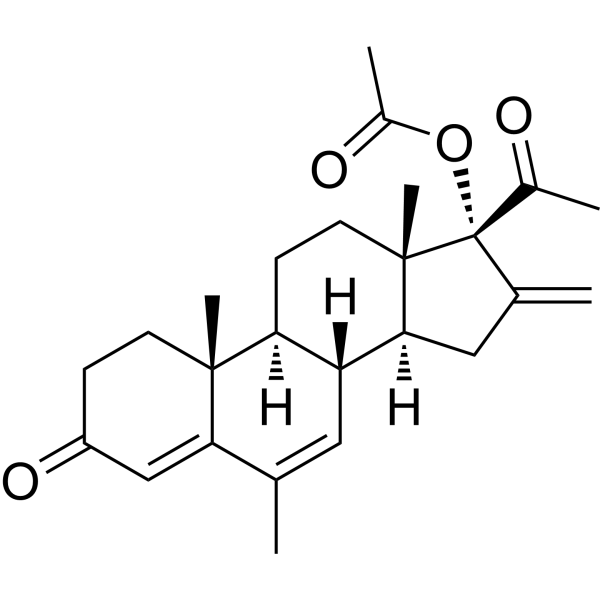
HY-111614R
Melengestrol acetate (Standard)


Biological Activity
Description
IC50 & Target
IC50: 3.6 pM (progesterone receptor A), 2.5 pM (progesterone receptor B)
Cellular Effect
|
Cell Line

|
Type | Value | Description | References |
|---|---|---|---|---|
| CV-1 | IC50 |
54 nM
Compound: ZK-230211
|
In vitro antagonist potency in transactivation assay in CV-1 cells expressing androgen receptor
In vitro antagonist potency in transactivation assay in CV-1 cells expressing androgen receptor
|
[PMID: 11150172] |
| NIH3T3 | IC50 |
16 nM
Compound: ZK-230211
|
In vitro antagonist potency in transactivation assay in NIH3T3 cells expressing glucocorticoid receptor
In vitro antagonist potency in transactivation assay in NIH3T3 cells expressing glucocorticoid receptor
|
[PMID: 11150172] |
Clinical Trial
| NCT Number | Sponsor | Condition | Start Date |
Phase
|
|---|---|---|---|---|
| NCT01329991 | Plexxikon| | 2011-05 | PHASE1 |


Chemical Information
-
CAS No. 211254-73-8
-
Molecular Weight 508.52
-
Formula C28H29F5O3
-
SMILES
O=C1CCC2=C3[C@@H](C4=CC=C(C(C)=O)C=C4)C[C@@]5(C)[C@](CC[C@@]5(O)C(F)(C(F)(F)F)F)([H])[C@]3([H])CCC2=C1
-
Synonyms
ZK 230211; BAY86 5044
-
Shipping
Room temperature in continental US; may vary elsewhere.
-
Storage
Please store the product under the recommended conditions in the Certificate of Analysis.

Protocols
-
Cell Cytotoxicity Assay
Cytotoxicity assays are usually based on the assessment of cell membrane damage, which can also be indirectly detected by measuring cell viability. Detection methods include MTT assay, CKK-8 assay, LDH assay and ATP assay, etc.
-
Patient-Derived Xenograft (PDX)
Patient-derived xenograft (PDX) models are generated by engrafting primary human tumor tissue directly into immunodeficient mice, allowing in vivo propagation of patient tumor biology without initial in vitro adaptation. These models are used to preserve key histopathological and molecular characteristics of the original tumor and enable assessment of tumor growth dynamics and therapeutic response in a living organism. The biological readout is tumor engraftment and subsequent growth in the murine host, which reflects the ability of human tumor cells to survive, vascularize, and expand in an immunocompromised microenvironment.
-
Breast Cancer Modeling
Breast cancer is a heterogeneous cancer, and it has been distinguished into four subtypes: luminal A, luminal B, HER2-positive and basal-like. Molecular mutations, epigenetic alterations, hormone exposure and immune microenvironment are related to the progression of breast cancer.


Purity & Documentation
References

Calculators
Concentration (start) × Volume (start) = Concentration (final) × Volume (final)


Lonaprisan Related Classifications
HY-16290 Related Classifications
 Powered by Bioz