



Lysophosphatidylethanolamines, egg

Based on 1 Customer Validation
Lysophosphatidylethanolamines, egg (Lyso-PE (egg); LPE (egg); L-α-lysophosphatidylethanolamine) is a naturally occurring lysophospholipid isolated from purified egg phosphatidylcholine. Lysophosphatidylethanolamines, egg acts as a hepatic lipid biomarker in oleic acid-induced hepatocytes. The level of Lysophosphatidylethanolamines, egg decreases in mice fed a high-fat diet. Lysophosphatidylethanolamines, egg can be used in studies related to non-alcoholic fatty liver disease and hyperlipidemia.
For research use only. We do not sell to patients.
- Purity : 99.0%
- CAS No.: 97281-40-8
-
Storage:Powder -20°C, 3 years ; In solvent -80°C, 6 months , -20°C, 1 month


To place orders, for customer services and technical support, please contact: MedChemExpress USA
Tel: 609-228-6898 E-mail: [email protected] [email protected]


-
 Biological Activity
-
Chemical Information
-
Solvent & Solubility
- Protocols
- Purity & Documentation
- References
-
 Help & FAQs


-

HY-139414
LysophosphatidylcholinesHemolytic Agent -

HY-A0183
PhosphatidylserineAnti-Inflammatory/Immunosuppressive Signal -
HY-B2235
LecithinEndogenous Metabolite -

HY-B2235B
L-α-Lecithin (egg yolk, Type XVI-E), 99%Biochemical Reagent -

HY-B2235C
L-α-Lecithin (soybean)Lutein Bioavailability Enhancer -

HY-B2235A
L-α-Lecithin (egg yolk), 75%Biochemical Reagent -

HY-125854
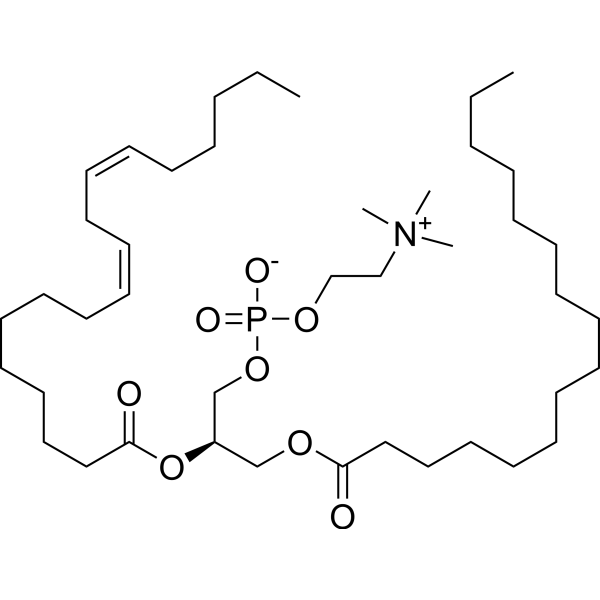
Phosphatidylcholines, eggPhosphatidylcholine -

HY-113123
LysoPC(14:0/0:0)Lysophosphatidylcholine -

HY-W355700
1-Oleoyl-2-hydroxy-sn-glycero-3-phosphoethanolamineDeltamethrin Metabolite -

HY-111376
PyrrophenonePLA2 Inhibitor -
HY-141617
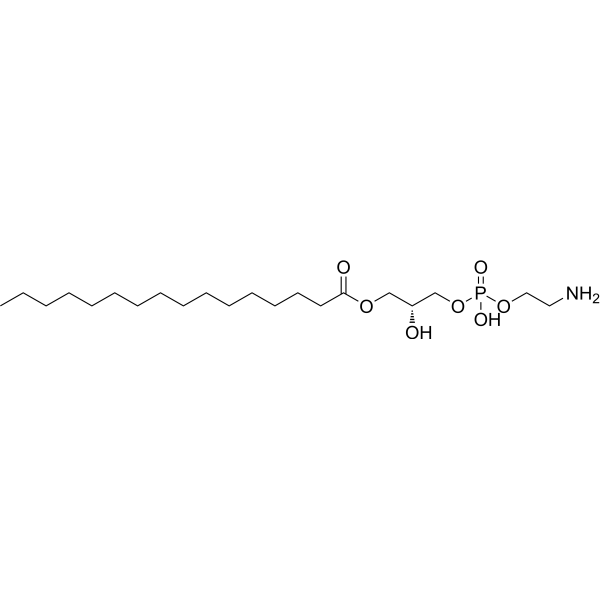
1-Palmitoyl-2-hydroxy-sn-glycero-3-PEOccurring Lysophospholipid -
HY-W013061
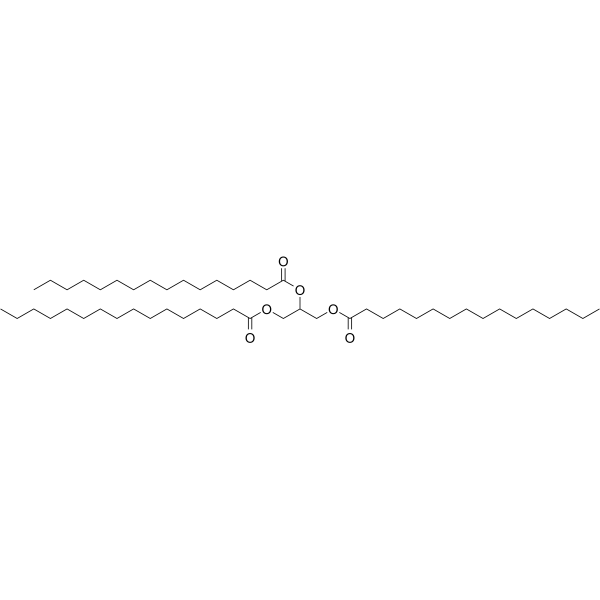
Propane-1,2,3-triyl tripalmitateGlycerol Tristearate Lymphatic Transport Promoter
All Endogenous Metabolite Isoforms
More

Biological Activity
Description
In Vitro
Lysophosphatidylethanolamines, egg is present as an impurity at 3.5% in purified egg phosphatidylcholine, with no direct fatty acid profile determined for this lysophosphatidylethanolamine (egg) fraction[1].
Lysophosphatidylethanolamines (lysoPE), egg yolk digest (1 mg/mL; 24 h) significantly up-regulates 7 distinct species relative to OA-only treated OA-induced HepG2 cells[2].
MedChemExpress (MCE) has not independently confirmed the accuracy of these methods. They are for reference only. Further protocols information, click here.
In Vivo
MedChemExpress (MCE) has not independently confirmed the accuracy of these methods. They are for reference only.


Chemical Information
-
CAS No. 97281-40-8
-
Appearance Solid
-
Color White to off-white
-
SMILES
[Lysophosphatidylethanolamines, egg]
-
Synonyms
Lyso-PE (egg); LPE (egg); L-α-lysophosphatidylethanolamine
-
Shipping
Room temperature in continental US; may vary elsewhere.
-
Storage
Powder -20°C 3 years In solvent -80°C 6 months -20°C 1 month


Solvent & Solubility
In Vitro:
Methanol : 1 mg/mL (ultrasonic and warming and heat to 60°C)

Protocols
-
Research Protocol for Metabolic Diseases
AMP-activated protein kinase, AMPK, is a conserved cellular energy sensor that responds to reduced cellular energy status and coordinates metabolism by increasing ATP-generating catabolic pathways while suppressing ATP-consuming anabolic processes. In metabolic disease research, the AMPK pathway is experimentally relevant because it regulates hepatic lipid synthesis, fatty acid oxidation, glucose production, skeletal-muscle glucose disposal, mTORC1-linked biosynthesis, autophagy, mitochondrial homeostasis, and whole-body energy balance. The central pathway logic is that energy stress, metformin, exercise-like stimulation, or direct AMPK activators increase AMPKα Thr172 phosphorylation and downstream substrate phosphorylation, including ACC and RAPTOR. Phosphorylation of ACC suppresses lipogenesis and supports fatty acid oxidation, whereas phosphorylation of RAPTOR suppresses mTORC1 signaling and links cellular energy status to growth and protein synthesis control. The pathway is linked


Purity & Documentation
-
Data Sheet (272 KB)
-
SDS (252 KB)
- English - EN (252 KB)
- Français - FR (252 KB)
- Deutsch - DE (252 KB)
- Norwegian - NO (252 KB)
- Español - ES (252 KB)
- Swedish - SV (252 KB)
- Italian - IT (252 KB)
- Korean - KR (252 KB)
- Portuguese - PT (252 KB)
-
Handling Instructions (2659 KB)
References

Calculators
Concentration (start) × Volume (start) = Concentration (final) × Volume (final)


Lysophosphatidylethanolamines, egg Related Classifications
HY-156041 Related Classifications
 Powered by Bioz
Keywords
- Lysophosphatidylethanolamines, egg
- 97281-40-8
- Lyso-PE (egg)
- LPE (egg)
- L-α-lysophosphatidylethanolamine
- Endogenous Metabolite
- HepG2 cells
- hyperlipidemia
- non-alcoholic fatty liver disease
- mice
- hepatic lipid biomarker
- high-fat diet-associated obesity
- egg phosphatidylcholine
- oleic acid-induced liver cells
- Inhibitor
- inhibitor
- inhibit