



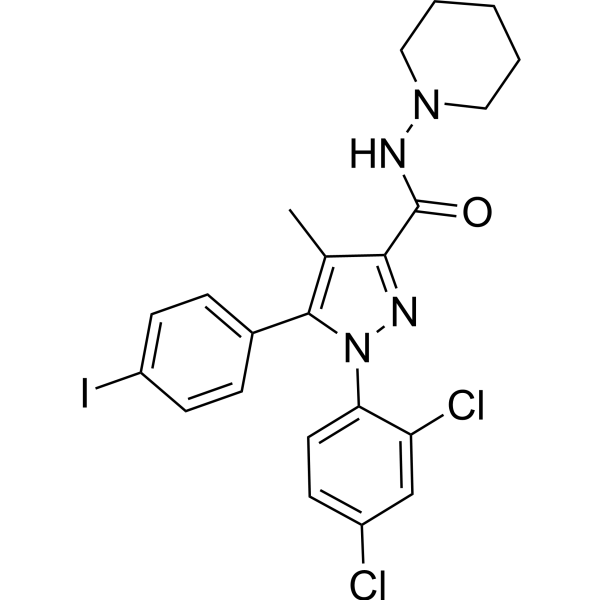
AM251
Based on 27 publication(s) in Google Scholar
AM251 is a selective cannabinoid 1 (CB1) receptor antagonist with an IC50 of 8 nM. AM251 also acts as a potent GPR55 agonist with an EC50 of 39 nM.
For research use only. We do not sell to patients.
- Purity : 99.09%
- CAS No.: 183232-66-8
- Formula: C22H21Cl2IN4O
- Molecular Weight:555.24
-
Storage:Powder -20°C, 3 years , 4°C, 2 years ; In solvent -80°C, 2 years , -20°C, 1 year

To place orders, for customer services and technical support, please contact: MedChemExpress USA
Tel: 609-228-6898 E-mail: [email protected] [email protected]


-
 Biological Activity
-
Chemical Information
-
Solvent & Solubility
- Purity & Documentation
- References
-
 Help & FAQs


-
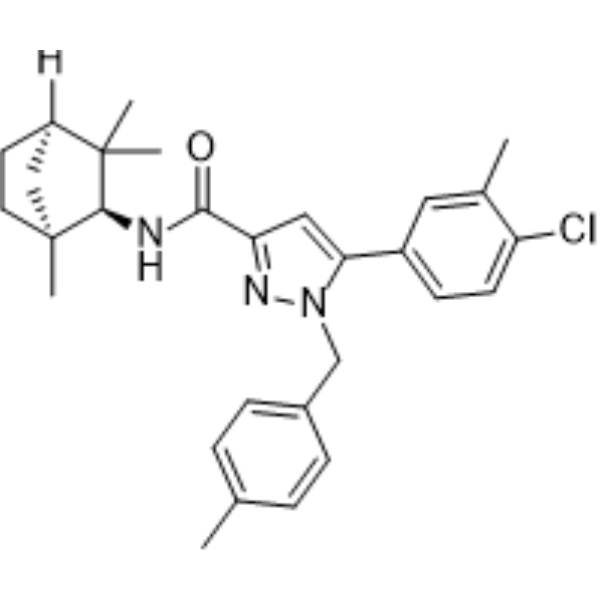
HY-13439
SR144528CB2 Receptor Antagonist -
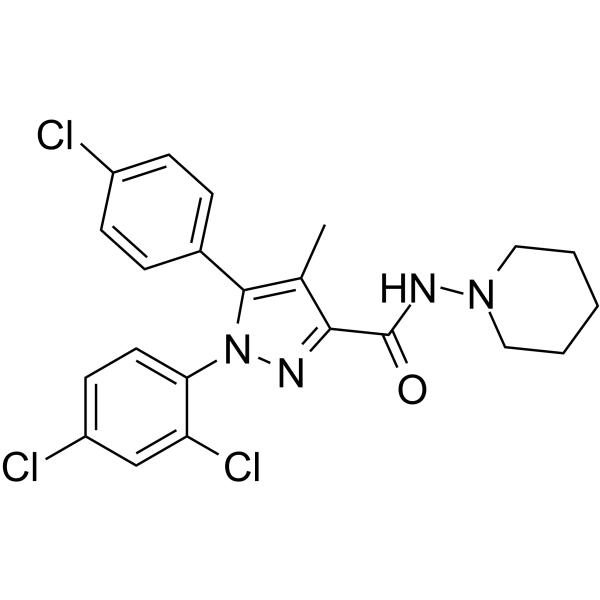
HY-14136
Rimonabant -
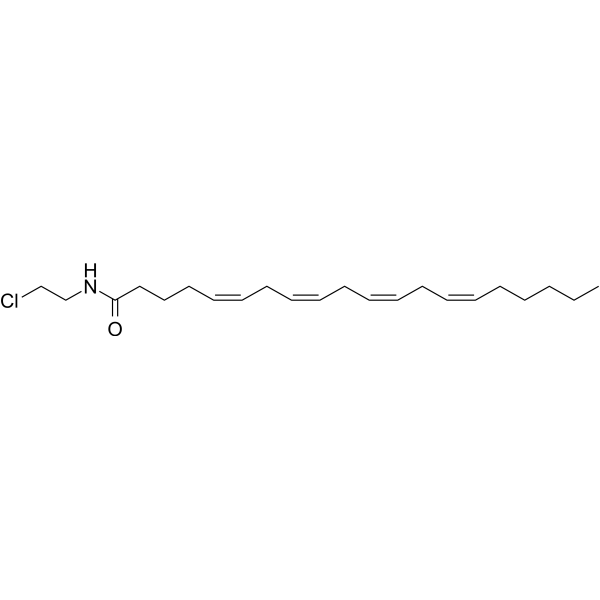
HY-110004
ACEABiochemical Assay Reagent -
HY-14137
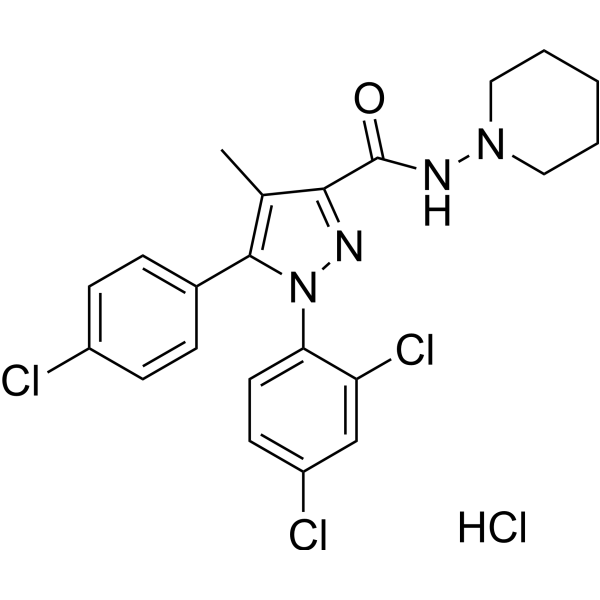
Rimonabant HydrochlorideCB1 Antagonist -
HY-10863
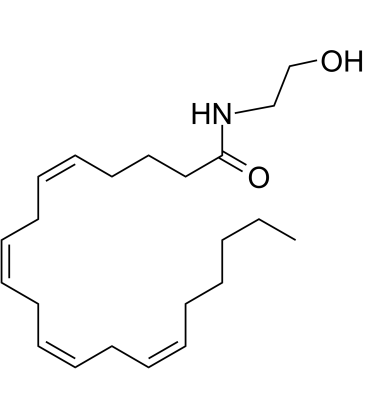
AnandamideCB1/2 Agonist -
HY-Y1891
Tween 80 -
HY-13259
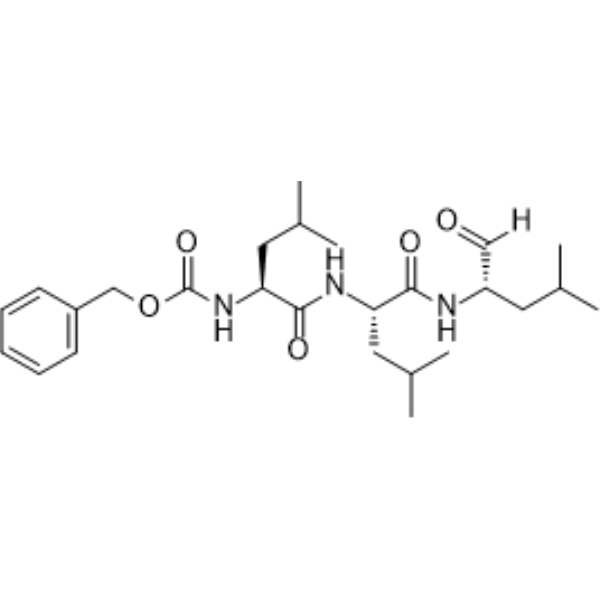
MG-132Proteasome Inhibitor -
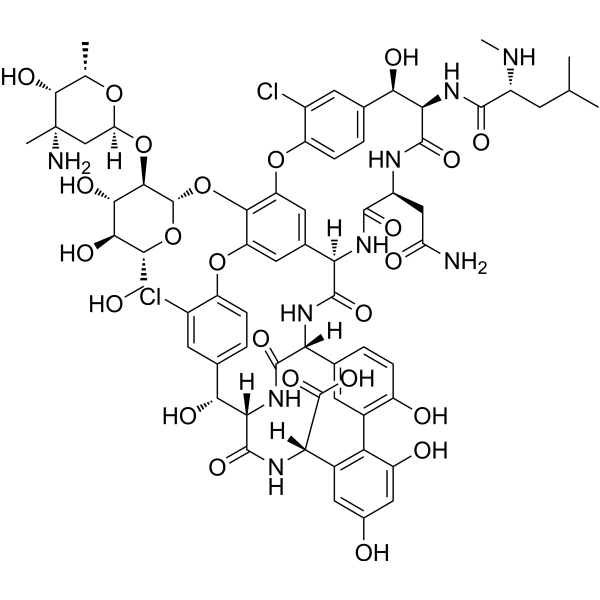
HY-B0671
VancomycinAntibiotic -
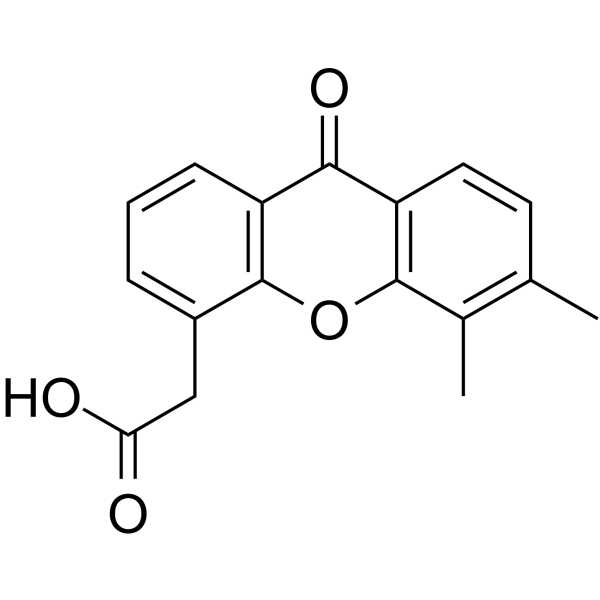
HY-10964
VadimezanVascular Disrupting Agent -
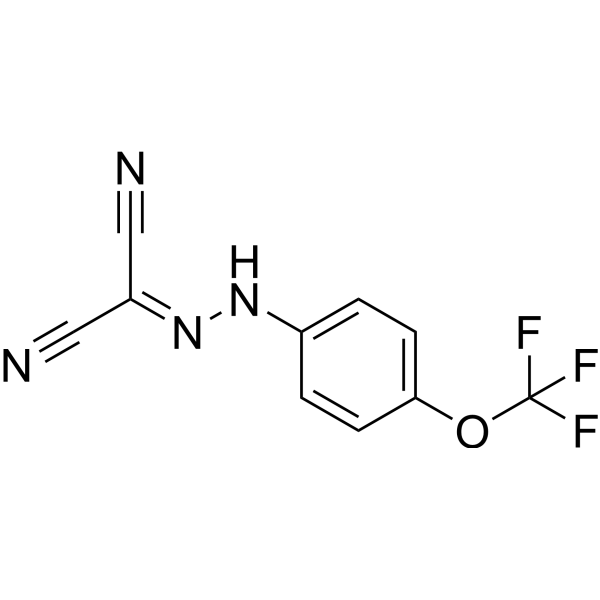
HY-100410
FCCPOXPHOS Uncoupler -
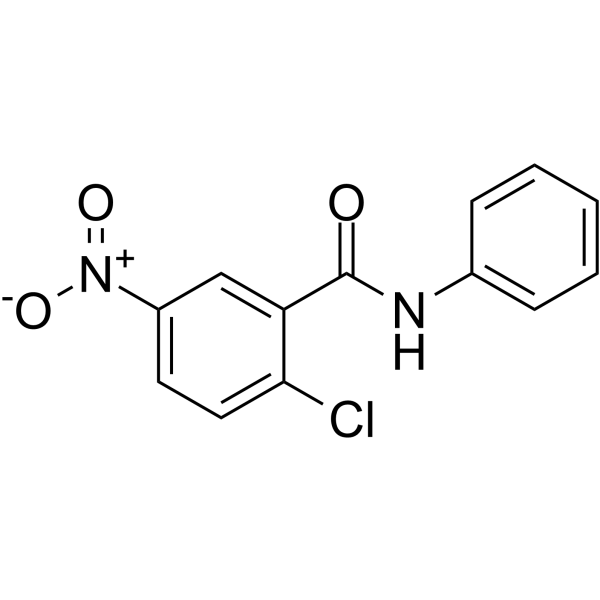
HY-16578
GW9662PPARγ Antagonist -
HY-N6785
Okadaic acidPP1/PP2A Inhibitor
Publications Citing Use of MedChemExpress (MCE) AM251
More- Signal Transduct Target Ther. 2022 Jun 24;7(1):190. [Abstract]
- Cell Host Microbe. 2026 Jun 10;34(6):1000-1017.e5. [Abstract]
- EBioMedicine. 2020 Mar;53:102696. [Abstract]
- Acta Pharmacol Sin. 2025 Apr;46(4):904-921. [Abstract]
- Sci China Life Sci. 2022 Feb;65(2):341-361. [Abstract]
- J Headache Pain. 2023 Apr 21;24(1):44. [Abstract]
- Cell Rep. 2020 Mar 24;30(12):4209-4219.e7. [Abstract]
- Transl Psychiatry. 2026 Jul 2.
- Food Biosci. 2026 Apr 2;79:108812.
- Eur J Pharmacol. 2024 Jan 15:963:176245. [Abstract]
- Int J Mol Sci. 2025 May 7;26(9):4430. [Abstract]
- Int J Mol Sci. 2022 Dec 23;24(1):240. [Abstract]
- Mol Neurobiol. 2024 May;61(5):2949-2963. [Abstract]
- Mol Neurobiol. 2021 Oct;58(10):4944-4958. [Abstract]
- Psychiatry Res. 2021 Jun:300:113917. [Abstract]
- Sci Rep. 2026 Apr 10;16(1):16876. [Abstract]
- Neurochem Res. 2024 Aug;49(8):2165-2178. [Abstract]
- Front Mol Neurosci. 2017 Aug 7:10:247. [Abstract]
- Eur J Pain. 2017 May;21(5):804-814. [Abstract]
- Am J Physiol Renal Physiol. 2017 Mar 1;312(3):F482-F488. [Abstract]
- Neuroscience. 2022 Jan 1:480:56-64. [Abstract]
- Clin Exp Pharmacol Physiol. 2018 Aug;45(8):832-840. [Abstract]
- The George Washington University. 2026.
- bioRxiv. 2025 Nov 28.
- SSRN. 2025 Mar 24.
- Patent. US20230192657A1.
- Research Square Print. 2022 Aug.
 Customer Validation & Images

-
In Vivo Efficacy Study
-
In Vivo Efficacy Study
-
Cell Migration/Invasion Assay
-
Cell Migration/Invasion Assay
-
WB


Biological Activity
Description
IC50 & Target
IC50: 8 nM (CB1 receptor)[1]
Cellular Effect
|
Cell Line

|
Type | Value | Description | References |
|---|---|---|---|---|
| CHO | IC50 |
0.32 nM
Compound: AM-251
|
Displacement of [3H]SR-141716 from human wild type CB1R expressed in CHO cells
Displacement of [3H]SR-141716 from human wild type CB1R expressed in CHO cells
|
[PMID: 18333607] |
| CHO | IC50 |
0.59 nM
Compound: AM-251
|
Displacement of [3H]SR-141716 from human CBR1 S383A mutant expressed in CHO cells
Displacement of [3H]SR-141716 from human CBR1 S383A mutant expressed in CHO cells
|
[PMID: 18333607] |
| CHO | IC50 |
190 nM
Compound: AM-251
|
Displacement of [3H]CP-55940 from human CB1R W279A mutant expressed in CHO cells
Displacement of [3H]CP-55940 from human CB1R W279A mutant expressed in CHO cells
|
[PMID: 18333607] |
| CHO | IC50 |
3.5 nM
Compound: AM-251
|
Displacement of [3H]CP-55940 from human wild type CB1R expressed in CHO cells
Displacement of [3H]CP-55940 from human wild type CB1R expressed in CHO cells
|
[PMID: 18333607] |
| CHO | IC50 |
30 nM
Compound: AM-251
|
Displacement of [3H]CP-55940 from human CB1R F200L mutant expressed in CHO cells
Displacement of [3H]CP-55940 from human CB1R F200L mutant expressed in CHO cells
|
[PMID: 18333607] |
| CHO | IC50 |
340 nM
Compound: AM-251
|
Displacement of [3H]CP-55940 from human CB1R F170L mutant expressed in CHO cells
Displacement of [3H]CP-55940 from human CB1R F170L mutant expressed in CHO cells
|
[PMID: 18333607] |
| CHO | IC50 |
60 nM
Compound: AM-251
|
Displacement of [3H]CP-55940 from human CB1R K192L mutant expressed in CHO cells
Displacement of [3H]CP-55940 from human CB1R K192L mutant expressed in CHO cells
|
[PMID: 18333607] |
| HEK293 | EC50 |
0.63 μM
Compound: AM251
|
Agonist activity at human GPR55 expressed in HEK293 cells assessed as increase in oscillation Ca2+ transients by fura-2 dye based fluorescence analysis
Agonist activity at human GPR55 expressed in HEK293 cells assessed as increase in oscillation Ca2+ transients by fura-2 dye based fluorescence analysis
|
10.1039/C3MD00394A |
| Sf9 | EC50 |
0.07 μM
Compound: AM251
|
Inverse agonist activity at human CB1 receptor expressed in Sf9 cells coexpressing Gbeta1gamma2 and RSG4 assessed as degradation of [gamma-33P]GTP after 20 mins by steady-state GTPase assay
Inverse agonist activity at human CB1 receptor expressed in Sf9 cells coexpressing Gbeta1gamma2 and RSG4 assessed as degradation of [gamma-33P]GTP after 20 mins by steady-state GTPase assay
|
[PMID: 25096297] |
In Vitro
AM251 is a CB1 receptor antagonist/inverse agonist. AM251 produces an agonist response in HEK293 cells, similar to that found in the yeast expression system[2].
AM-251 reduces cholesteryl ester synthesis in unstimulated and acetylated LDL-stimulated Raw 264.7 macrophages, CB2+/+ and CB2-/- peritoneal macrophages[3].
MedChemExpress (MCE) has not independently confirmed the accuracy of these methods. They are for reference only. .
In Vivo
One-way ANOVA shows that AM251 (AM-251) injected into the rats significantly decreases both of the percentage of entries in the open arms and time spent in the open arms, compare to controls. The Tukey-Kramer test analysis reveals a significant reduction for the doses of 1 mg/kg (P<0.05) and 5 mg/kg (P<0.01) compare to control rats in the time spent in the open arms. Also, AM251 significantly decreases percentage of entries in the open arms for the doses of 1 and 5 mg/kg (P<0.05)[5].
MedChemExpress (MCE) has not independently confirmed the accuracy of these methods. They are for reference only.


Chemical Information
-
CAS No. 183232-66-8
-
Appearance Solid
-
Molecular Weight 555.24
-
Formula C22H21Cl2IN4O
-
Color White to off-white
-
SMILES
O=C(C1=NN(C2=CC=C(Cl)C=C2Cl)C(C3=CC=C(I)C=C3)=C1C)NN4CCCCC4
-
Shipping
Room temperature in continental US; may vary elsewhere.
-
Storage
Powder -20°C 3 years 4°C 2 years In solvent -80°C 2 years -20°C 1 year


Publications (27)
-
Journal Impact Factor
-
Most Recent
-
Signal Transduct Target Ther
2022 Jun 24;7(1):190. PMID: 35739093 -
Cell Host Microbe
Microbiota-driven gut-brain signaling underlies antidepressant effects of a GLP-1 analog. [Abstract]2026 Jun 10;34(6):1000-1017.e5. PMID: 42269582 -
EBioMedicine
2020 Mar;53:102696. PMID: 32143183
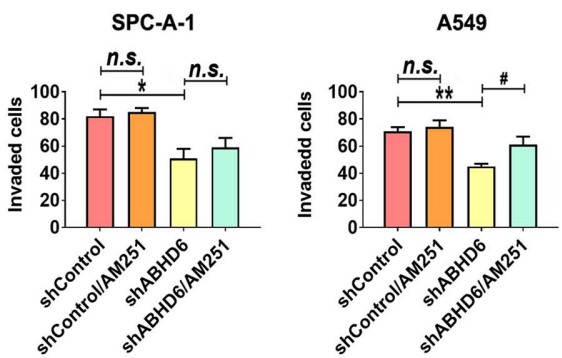
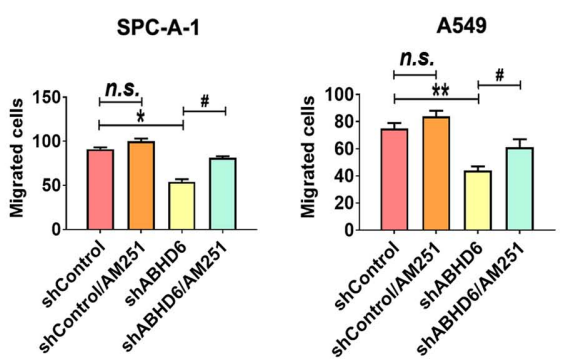
AM251 purchased from MedChemExpress. Usage Cited in: EBioMedicine. 2020 Mar;53:102696. [Abstract]
Invasion of shControl/shABHD6 SPC-A-1 and A549 cells with or without 50 nM AM251 (8 h) treatment.
AM251 purchased from MedChemExpress. Usage Cited in: EBioMedicine. 2020 Mar;53:102696. [Abstract]
Migration of shControl/shABHD6 SPC-A-1 and A549 cells with or without 50 nM AM251 (8 h) treatment.
-
Acta Pharmacol Sin
Differential regulation of pruritic sensation and emotion by cannabinoid type 1 receptors on mPFC glutamatergic and GABAergic neurons. [Abstract]2025 Apr;46(4):904-921. PMID: 39663420
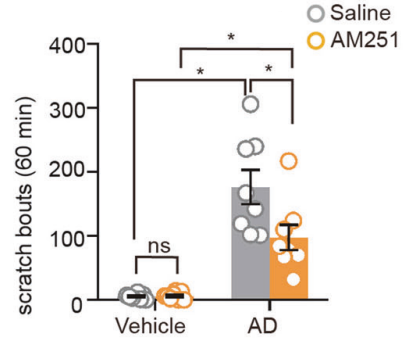
AM251 purchased from MedChemExpress. Usage Cited in: Acta Pharmacol Sin. 2025 Apr;46(4):904-921. [Abstract]
AM251 (2.5 mg/mL; 200 nL was microinjected into the mPFC at 30 nL/min via a cannula-connected pump) administration resulted in a significant reduction in chronic itch-induced scratching.
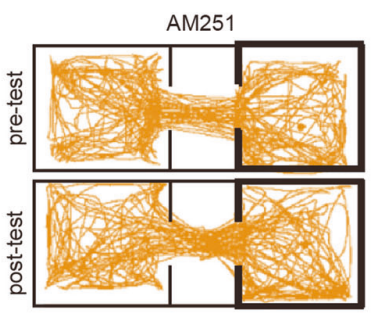
AM251 purchased from MedChemExpress. Usage Cited in: Acta Pharmacol Sin. 2025 Apr;46(4):904-921. [Abstract]
Representative image showing the spatial location of CQ:AM251 (2.5 mg/mL; 200 nL was microinjected into the mPFC at 30 nL/min via a cannula-connected pump) mice before and after CQ conditioning.
-
Sci China Life Sci
2022 Feb;65(2):341-361. PMID: 34047913 -
J Headache Pain
Activation of CB1R alleviates central sensitization by regulating HCN2-pNR2B signaling in a chronic migraine rat model. [Abstract]2023 Apr 21;24(1):44. PMID: 37085778 -
Cell Rep
Cannabinoids Rescue Cocaine-Induced Seizures by Restoring Brain Glycine Receptor Dysfunction. [Abstract]2020 Mar 24;30(12):4209-4219.e7. PMID: 32209479 -
-
-
Eur J Pharmacol
Cannabidiol represses miR-143 to promote cardiomyocyte proliferation and heart regeneration after myocardial infarction. [Abstract]2024 Jan 15:963:176245. PMID: 38052413 -
Int J Mol Sci
Intraplantar β-Caryophyllene Alleviates Pain and Inflammation in STZ-Induced Diabetic Peripheral Neuropathy via CB2 Receptor Activation. [Abstract]2025 May 7;26(9):4430. PMID: 40362667 -
Int J Mol Sci
Blockade of CB1 or Activation of CB2 Cannabinoid Receptors Is Differentially Efficacious in the Treatment of the Early Pathological Events in Streptozotocin-Induced Diabetic Rats. [Abstract]2022 Dec 23;24(1):240. PMID: 36613692 -
Mol Neurobiol
Electroacupuncture Exerts Analgesic Effects by Restoring Hyperactivity via Cannabinoid Type 1 Receptors in the Anterior Cingulate Cortex in Chronic Inflammatory Pain. [Abstract]2024 May;61(5):2949-2963. PMID: 37957422 -
Mol Neurobiol
mGluR5-Mediated eCB Signaling in the Nucleus Accumbens Controls Vulnerability to Depressive-Like Behaviors and Pain After Chronic Social Defeat Stress. [Abstract]2021 Oct;58(10):4944-4958. PMID: 34227060 -
Psychiatry Res
Inhibition of CB1 receptor alleviates electroconvulsive shock-induced memory impairment by regulating hippocampal synaptic plasticity in depressive rats. [Abstract]2021 Jun:300:113917. PMID: 33848965 -
Sci Rep
2026 Apr 10;16(1):16876. PMID: 41963448 -
Neurochem Res
Gut Microbiota-Mediated Alterations of Hippocampal CB1R Regulating the Diurnal Variation of Cognitive Impairment Induced by Hepatic Ischemia-Reperfusion Injury in Mice. [Abstract]2024 Aug;49(8):2165-2178. PMID: 38824460 -
Front Mol Neurosci
MPTP-Induced Dopamine Depletion in Basolateral Amygdala via Decrease of D2R Activation Suppresses GABAA Receptors Expression and LTD Induction Leading to Anxiety-Like Behaviors. [Abstract]2017 Aug 7:10:247. PMID: 28824377 -
Eur J Pain
Endocannabinoid activation of CB1 receptors contributes to long-lasting reversal of neuropathic pain by repetitive spinal cord stimulation. [Abstract]2017 May;21(5):804-814. PMID: 28107590 -
Am J Physiol Renal Physiol
Role of cannabinoid receptor type 1 in tibial and pudendal neuromodulation of bladder overactivity in cats. [Abstract]2017 Mar 1;312(3):F482-F488. PMID: 27927655 -
Neuroscience
Cannabinoid Receptor Type 2 Agonist Reduces Morphine Tolerance via Mitogen Activated Protein Kinase Phosphatase Induction and Mitogen Activated Protein Kinase Dephosphorylation. [Abstract]2022 Jan 1:480:56-64. PMID: 34774714 -
Clin Exp Pharmacol Physiol
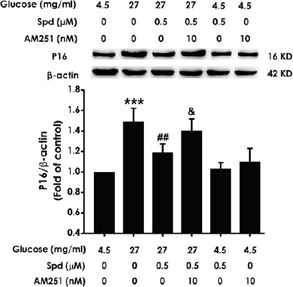
Spermidine prevents high glucose-induced senescence in HT-22 cells by upregulation of CB1 receptor. [Abstract]2018 Aug;45(8):832-840. PMID: 29699000
AM251 purchased from MedChemExpress. Usage Cited in: Clin Exp Pharmacol Physiol. 2018 Aug;45(8):832-840. [Abstract]
Pretreatment of AM251 (10 nM, for 30 minutes) reverses the Spermidine (Spd)-provided suppression on the high glucose (HG)-induced upregulations of p16INK4a in HT-22 cells.
-
-
-
-
-


Solvent & Solubility
In Vitro:
DMSO : 25 mg/mL (45.03 mM; Need ultrasonic; Hygroscopic DMSO has a significant impact on the solubility of product, please use newly opened DMSO)
Please refer to the solubility information to select the appropriate solvent. Once prepared, please aliquot and store the solution to prevent product inactivation from repeated freeze-thaw cycles.
Storage method and period of stock solution: -80°C, 2 years; -20°C, 1 year. When stored at -80°C, please use it within 2 years. When stored at -20°C, please use it within 1 year.
Please refer to the solubility information to select the appropriate solvent. Once prepared, please aliquot and store the solution to prevent product inactivation from repeated freeze-thaw cycles.
Storage method and period of stock solution: -80°C, 2 years; -20°C, 1 year. When stored at -80°C, please use it within 2 years. When stored at -20°C, please use it within 1 year.
Concentration (start) × Volume (start) = Concentration (final) × Volume (final)
In Vivo:
Select the appropriate dissolution method based on your experimental animal and administration route.
- For the following dissolution methods, please ensure to first prepare a clear stock solution using an In Vitro approach and then sequentially add co-solvents:
- To ensure reliable experimental results, the clarified stock solution can be appropriately stored based on storage conditions. As for the working solution for In Vivo experiments, it is recommended to prepare freshly and use it on the same day.
- The percentages shown for the solvents indicate their volumetric ratio in the final prepared solution. If precipitation or phase separation occurs during preparation, heat and/or sonication can be used to aid dissolution.
Add each solvent one by one: 10% DMSO 40% PEG300 5% Tween-80 45% Saline
Solubility: ≥ 2.5 mg/mL (4.50 mM); Clear solution
This protocol yields a clear solution of ≥ 2.5 mg/mL (saturation unknown).
Taking 1 mL working solution as an example, add 100 μL DMSO stock solution (25.0 mg/mL) to 400 μL PEG300, and mix evenly; then add 50 μL Tween-80 and mix evenly; then add 450 μL Saline to adjust the volume to 1 mL.
Preparation of Saline: Dissolve 0.9 g sodium chloride in ddH₂O and dilute to 100 mL to obtain a clear Saline solution.
In Vivo Dissolution Calculator
Please enter the basic information of animal experiments:
-
-
-
-
Recommended: Prepare an additional quantity of animals to account for potential losses during experiments.
Please enter your animal formula composition:
-
%DMSO +
Recommended: Keep the proportion of DMSO in working solution below 2% if your animal is weak.
-
%+
-
+%Tween-80 + +
-
%Saline +
The co-solvents required include: DMSO, . All of co-solvents are available by MedChemExpress (MCE). , Tween 80. All of co-solvents are available by MedChemExpress (MCE).
Working solution concentration: 0.22 mg/mL
Method for preparing stock solution: mg drug dissolved in μL DMSO. Stock solution concentration: mg/mL.
1. Take μL DMSO stock solution;
2. Add μL .
μL , mix evenly;
3. Then add μL Tween 80, mix evenly;
4. Then add μL
Please ensure that the stock solution in the first step is dissolved to a clear state, and add co-solvents in sequence. You can use ultrasonic heating (ultrasonic cleaner, recommended frequency 20-40 kHz), vortexing, etc. to assist dissolution.


Purity & Documentation
-
Data Sheet (284 KB)
-
SDS (393 KB)
- English - EN (393 KB)
- Français - FR (393 KB)
- Deutsch - DE (393 KB)
- Norwegian - NO (393 KB)
- Español - ES (393 KB)
- Swedish - SV (393 KB)
- Italian - IT (393 KB)
- Korean - KR (393 KB)
- Portuguese - PT (393 KB)
-
Handling Instructions (2659 KB)
References
[1]. Bruno A, et al. Beyond radio-displacement techniques for identification of CB1 ligands: the first application of afluorescence-quenching assay. Sci Rep. 2014 Jan 20;4:3757. [Content Brief]
[2]. Sharir H, et al. Pharmacological characterization of GPR55, a putative cannabinoid receptor. Pharmacol Ther. 2010 Jun;126(3):301-13. [Content Brief]
[3]. Thewke D, et al. AM-251 and SR144528 are acyl CoA:cholesterol acyltransferase inhibitors. Biochem Biophys Res Commun. 2009 Apr 3;381(2):181-6. [Content Brief]
[4]. Carey LM, et al. A pro-nociceptive phenotype unmasked in mice lacking fatty-acid amide hydrolase. Mol Pain. 2016 May 13;12. pii: 1744806916649192. [Content Brief]
[5]. Komaki A, et al. Study the Effect of Endocannabinoid System on Rat Behavior in Elevated Plus-Maze. Basic Clin Neurosci. 2015 Jul;6(3):147-53. [Content Brief]
[6]. Jiang X, et al. Role of cannabinoid receptor type 1 in tibial and pudendal neuromodulation of bladder overactivity in cats. Am J Physiol Renal Physiol. 2017 Mar 1;312(3):F482-F488. [Content Brief]
[7]. Sun L, et al. Endocannabinoid activation of CB1 receptors contributes to long-lasting reversal of neuropathic pain by repetitive spinal cord stimulation. Eur J Pain. 2017 May;21(5):804-814. [Content Brief]


Complete Stock Solution Preparation Table
Please refer to the solubility information to select the appropriate solvent. Once prepared, please aliquot and store the solution to prevent product inactivation from repeated freeze-thaw cycles.
Storage method and period of stock solution: -80°C, 2 years; -20°C, 1 year. When stored at -80°C, please use it within 2 years. When stored at -20°C, please use it within 1 year.
| Optional Solvent | Concentration Solvent Mass | 1 mg | 5 mg | 10 mg | 25 mg |
|---|---|---|---|---|---|
| DMSO | 1 mM | 1.8010 mL | 9.0051 mL | 18.0102 mL | 45.0256 mL |
| 5 mM | 0.3602 mL | 1.8010 mL | 3.6020 mL | 9.0051 mL | |
| 10 mM | 0.1801 mL | 0.9005 mL | 1.8010 mL | 4.5026 mL | |
| 15 mM | 0.1201 mL | 0.6003 mL | 1.2007 mL | 3.0017 mL | |
| 20 mM | 0.0901 mL | 0.4503 mL | 0.9005 mL | 2.2513 mL | |
| 25 mM | 0.0720 mL | 0.3602 mL | 0.7204 mL | 1.8010 mL | |
| 30 mM | 0.0600 mL | 0.3002 mL | 0.6003 mL | 1.5009 mL | |
| 40 mM | 0.0450 mL | 0.2251 mL | 0.4503 mL | 1.1256 mL |


AM251 Related Classifications
HY-15443 Related Classifications
 Powered by Bioz