



NCRW0005-F05

Based on 1 Customer Validation
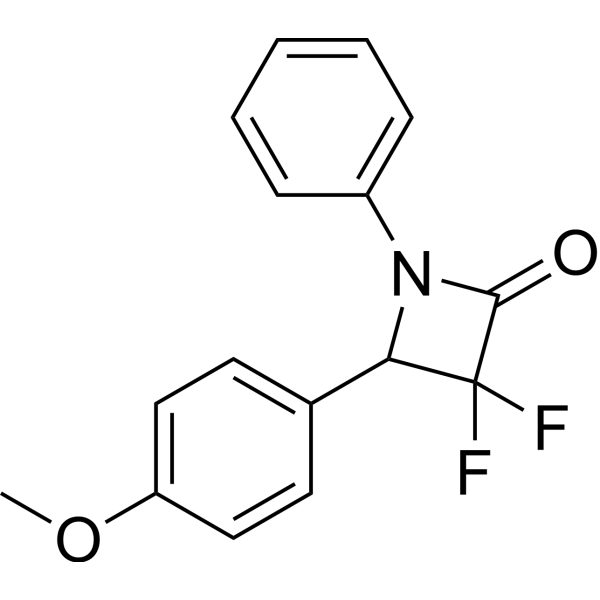
NCRW0005-F05 is a GPR139 antagonist with an IC50 of 147.9 nM against zebrafish GPR139. NCRW0005-F05 blocks agonist-induced GPR139 activity and inhibits intracellular calcium mobilization. NCRW0005-F05 suppresses fear memory consolidation, increases and decreases the peak amplitude of calcium transients, reduces KCl-induced calcium transients, induces thigmotaxis, and decreases locomotor speed after conditioning. NCRW0005-F05 can be used in research related to Parkinson's disease, diabetes, and obesity.
For research use only. We do not sell to patients.
- Purity : 99.94%
- CAS No.: 342779-66-2
- Formula: C16H13F2NO2
- Molecular Weight:289.28
-
Storage:Powder -20°C, 3 years ; In solvent -80°C, 6 months , -20°C, 1 month

To place orders, for customer services and technical support, please contact: MedChemExpress USA
Tel: 609-228-6898 E-mail: [email protected] [email protected]


-
 Biological Activity
-
Chemical Information
-
Solvent & Solubility
- Protocols
- Purity & Documentation
- References
-
 Help & FAQs




Biological Activity
Description
IC50 & Target
IC50: 0.21 μM (GPR139)[1]
In Vitro
NCRW0005-F05 potently inhibits TC-O 9311 (HY-101777) (Compound 1)-induced calcium mobilization in CHO-K1 cells stably transfected with human GPR139, with an IC50 of 0.21 µM[1].
NCRW0005-F05 is an antagonist of zebrafish GPR139, with an IC50 of 147.9 nM in the dual-luciferase reporter gene assay[2].
NCRW0005-F05 (0.17-1.7 mM) increases the peak amplitude of calcium transients in zebrafish habenular neurons at a concentration of 0.17 mM; it reduces agonist-induced calcium transients at a concentration of 1.7 mM[2].
MedChemExpress (MCE) has not independently confirmed the accuracy of these methods. They are for reference only. Further protocols information, click here.
In Vivo
NCRW0005-F05 (0.2-1.72 mM; immersion; single exposure) induces thigmotaxis (anxiety-like behavior) in zebrafish larvae without impairing their general locomotor parameters[2].
MedChemExpress (MCE) has not independently confirmed the accuracy of these methods. They are for reference only.
-
Animal Model:wild-type (male, >6 months old)[2]
-
Dosage:0.1 μg/g BW; 1 μg/g BW; 0.1 μg/g BW (co-treated with 0.1 μg/g BW JNJ-63533054); 1 μg/g BW (co-treated with 0.1 μg/g BW JNJ-63533054)
-
Administration:i.c.; single dose
-
Result:Showed no significant difference in time spent in the AS-paired preferred compartment between pre- and post-conditioning.
Showed no significant difference in number of entries to the AS-paired compartment between pre- and post-conditioning.
Showed a significant reduction in time spent in the AS-paired preferred compartment between pre- and post-conditioning.
Showed a significant reduction in number of entries to the AS-paired compartment between pre- and post-conditioning.
Showed a significant reduction in time spent in the AS-paired preferred compartment between pre- and post-conditioning.
Showed no significant difference in number of entries to the AS-paired compartment.
Showed no significant difference in time spent in the AS-paired preferred compartment between pre- and post-conditioning.
Showed a significant reduction in number of entries to the AS-paired compartment.
Showed significantly reduced swimming speed during post-conditioning compared to controls.
-
Animal Model:larval (7 days post-fertilization)[2]
-
Dosage:0.1 mM; 0.2 mM; 0.4 mM; 0.8 mM; 1.72 mM
-
Administration:immersion; single exposure
-
Result:Showed no significant differences in total swimming distance or total swimming speed compared to vehicle control.
Showed a significant difference in total time spent in the outer zone compared to 0.125% vehicle control.
Showed a significant difference in total time spent in the outer zone compared to 1% vehicle control.


Chemical Information
-
CAS No. 342779-66-2
-
Appearance Solid
-
Molecular Weight 289.28
-
Formula C16H13F2NO2
-
Color White to off-white
-
SMILES
O=C1N(C2=CC=CC=C2)C(C3=CC=C(OC)C=C3)C1(F)F
-
Shipping
Room temperature in continental US; may vary elsewhere.
-
Storage
Powder -20°C 3 years In solvent -80°C 6 months -20°C 1 month


Solvent & Solubility
In Vitro:
DMSO : ≥ 100 mg/mL (345.69 mM; Hygroscopic DMSO has a significant impact on the solubility of product, please use newly opened DMSO)
* "≥" means soluble, but saturation unknown.
Please refer to the solubility information to select the appropriate solvent. Once prepared, please aliquot and store the solution to prevent product inactivation from repeated freeze-thaw cycles.
Storage method and period of stock solution: -80°C, 6 months; -20°C, 1 month. When stored at -80°C, please use it within 6 months. When stored at -20°C, please use it within 1 month.
Please refer to the solubility information to select the appropriate solvent. Once prepared, please aliquot and store the solution to prevent product inactivation from repeated freeze-thaw cycles.
Storage method and period of stock solution: -80°C, 6 months; -20°C, 1 month. When stored at -80°C, please use it within 6 months. When stored at -20°C, please use it within 1 month.
Concentration (start) × Volume (start) = Concentration (final) × Volume (final)

Protocols
-
Cell Cytotoxicity Assay
Cytotoxicity assays are usually based on the assessment of cell membrane damage, which can also be indirectly detected by measuring cell viability. Detection methods include MTT assay, CKK-8 assay, LDH assay and ATP assay, etc.
-
Human pluripotent stem cell midbrain dopaminergic neuron differentiation
Human pluripotent stem cells are directed toward midbrain dopaminergic neurons by first inducing a neural floor-plate-like progenitor state, then patterning cells with ventralizing SHH signaling and midbrain/WNT-FGF cues, and finally maturing progenitors into neurons expressing dopaminergic markers such as TH, NURR1/NR4A2, PITX3, DAT/SLC6A3, VMAT2/SLC18A2, GIRK2/KCNJ6, FOXA2, LMX1A, and EN1. The main readouts are loss of pluripotency, acquisition of FOXA2+/LMX1A+ midbrain floor-plate progenitors, emergence of βIII-tubulin+/MAP2+ neurons, and production of TH+ dopaminergic neurons with molecular, dopamine-release, and electrophysiological features of midbrain dopaminergic identity.
-
Calcium Spark Assay
Calcium sparks are localized, transient increases in intracellular calcium concentration ([Ca2+]i) that occur in cardiac myocytes and represent elementary events underlying excitation-contraction coupling. These events are generated by the coordinated opening of clusters of ryanodine receptors (RyRs) on the sarcoplasmic reticulum membrane, leading to a brief release of Ca2+ into the cytosol. The detection and analysis of calcium sparks provide insights into the mechanisms of calcium handling and signaling in cardiac cells. Imaging techniques using fluorescent calcium indicators such as Fluo-3 are employed to visualize these subcellular calcium transients with high spatial and temporal resolution. The protocol is based on established methodologies described in primary literature for both experimental measurement and automated analysis of calcium sparks.
-
Ca2+ Staining Technique
Ca2+ staining is an experimental technique that utilizes specific fluorescent probes (such as Fluo-4 AM, Fura-2, etc.) to qualitatively or quantitatively detect dynamic changes in intracellular Ca2+ concentrations; this is achieved by monitoring the changes in fluorescent signals generated when these probes bind to free intracellular calcium ions. The underlying principle relies primarily on the presence of chelating groups within the probe's molecular structure that possess high affinity for calcium ions.
-
Research Protocol for Metabolic Diseases
AMP-activated protein kinase, AMPK, is a conserved cellular energy sensor that responds to reduced cellular energy status and coordinates metabolism by increasing ATP-generating catabolic pathways while suppressing ATP-consuming anabolic processes. In metabolic disease research, the AMPK pathway is experimentally relevant because it regulates hepatic lipid synthesis, fatty acid oxidation, glucose production, skeletal-muscle glucose disposal, mTORC1-linked biosynthesis, autophagy, mitochondrial homeostasis, and whole-body energy balance. The central pathway logic is that energy stress, metformin, exercise-like stimulation, or direct AMPK activators increase AMPKα Thr172 phosphorylation and downstream substrate phosphorylation, including ACC and RAPTOR. Phosphorylation of ACC suppresses lipogenesis and supports fatty acid oxidation, whereas phosphorylation of RAPTOR suppresses mTORC1 signaling and links cellular energy status to growth and protein synthesis control. The pathway is linked


Purity & Documentation
-
Data Sheet (293 KB)
-
SDS (252 KB)
- English - EN (252 KB)
- Français - FR (252 KB)
- Deutsch - DE (252 KB)
- Norwegian - NO (252 KB)
- Español - ES (252 KB)
- Swedish - SV (252 KB)
- Italian - IT (252 KB)
- Korean - KR (252 KB)
- Portuguese - PT (252 KB)
-
Handling Instructions (2659 KB)
References
[1]. Wang J, et al. High-throughput screening of antagonists for the orphan G-protein coupled receptor GPR139. Acta pharmacologica Sinica. 2015 Jul;36(7):874-8. [Content Brief]
[2]. Roy N, et al. GPR139 agonist and antagonist differentially regulate retrieval and consolidation of fear memory in the zebrafish. Frontiers in neuroscience. 2024;18:1461148. [Content Brief]


Complete Stock Solution Preparation Table
Please refer to the solubility information to select the appropriate solvent. Once prepared, please aliquot and store the solution to prevent product inactivation from repeated freeze-thaw cycles.
Storage method and period of stock solution: -80°C, 6 months; -20°C, 1 month. When stored at -80°C, please use it within 6 months. When stored at -20°C, please use it within 1 month.
| Optional Solvent | Concentration Solvent Mass | 1 mg | 5 mg | 10 mg | 25 mg |
|---|---|---|---|---|---|
| DMSO | 1 mM | 3.4569 mL | 17.2843 mL | 34.5686 mL | 86.4215 mL |
| 5 mM | 0.6914 mL | 3.4569 mL | 6.9137 mL | 17.2843 mL | |
| 10 mM | 0.3457 mL | 1.7284 mL | 3.4569 mL | 8.6421 mL | |
| 15 mM | 0.2305 mL | 1.1523 mL | 2.3046 mL | 5.7614 mL | |
| 20 mM | 0.1728 mL | 0.8642 mL | 1.7284 mL | 4.3211 mL | |
| 25 mM | 0.1383 mL | 0.6914 mL | 1.3827 mL | 3.4569 mL | |
| 30 mM | 0.1152 mL | 0.5761 mL | 1.1523 mL | 2.8807 mL | |
| 40 mM | 0.0864 mL | 0.4321 mL | 0.8642 mL | 2.1605 mL | |
| 50 mM | 0.0691 mL | 0.3457 mL | 0.6914 mL | 1.7284 mL | |
| 60 mM | 0.0576 mL | 0.2881 mL | 0.5761 mL | 1.4404 mL | |
| 80 mM | 0.0432 mL | 0.2161 mL | 0.4321 mL | 1.0803 mL | |
| 100 mM | 0.0346 mL | 0.1728 mL | 0.3457 mL | 0.8642 mL |


NCRW0005-F05 Related Classifications
HY-128057 Related Classifications
 Powered by Bioz