



Nerigliatin

Based on 1 Customer Validation
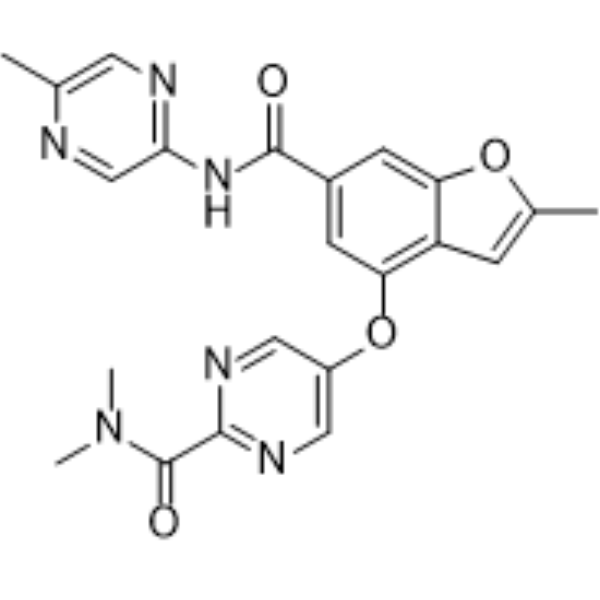
Nerigliatin (PF-04937319) is a orally active glucokinase activator (GKA) with EC50 value of 154.4 μM. Nerigliatin maintains glucose-lowering efficacy. Nerigliatin causes peripheral nerve degeneration. Nerigliatin can be used in type 2 diabetes research.
For research use only. We do not sell to patients.
- Purity : 99.94%
- CAS No.: 1245603-92-2
- Formula: C22H20N6O4
- Molecular Weight:432.43
-
Storage:Powder -20°C, 3 years , 4°C, 2 years ; In solvent -80°C, 6 months , -20°C, 1 month

To place orders, for customer services and technical support, please contact: MedChemExpress USA
Tel: 609-228-6898 E-mail: [email protected] [email protected]


-
 Biological Activity
-
Chemical Information
-
Solvent & Solubility
- Protocols
- Purity & Documentation
- References
-
 Help & FAQs


-
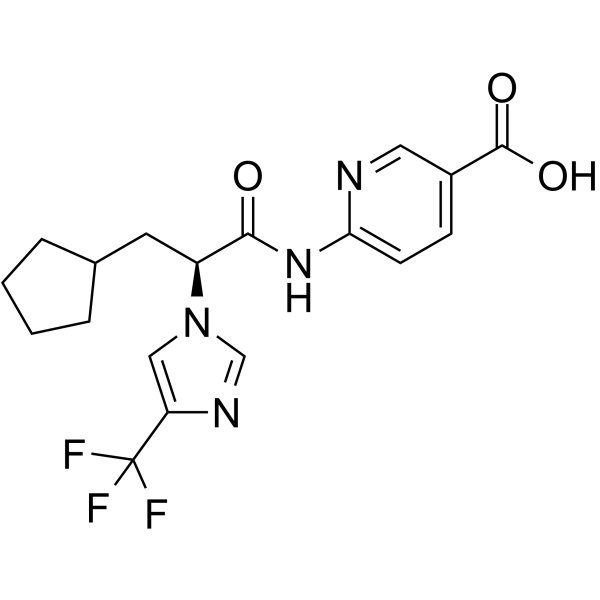
HY-100181
PF-04991532Glucokinase Activator -
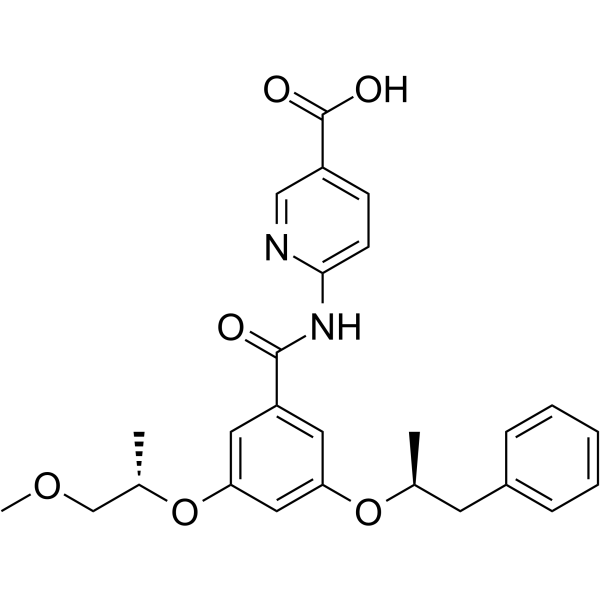
HY-15671
GKA50Glucokinase Activator -
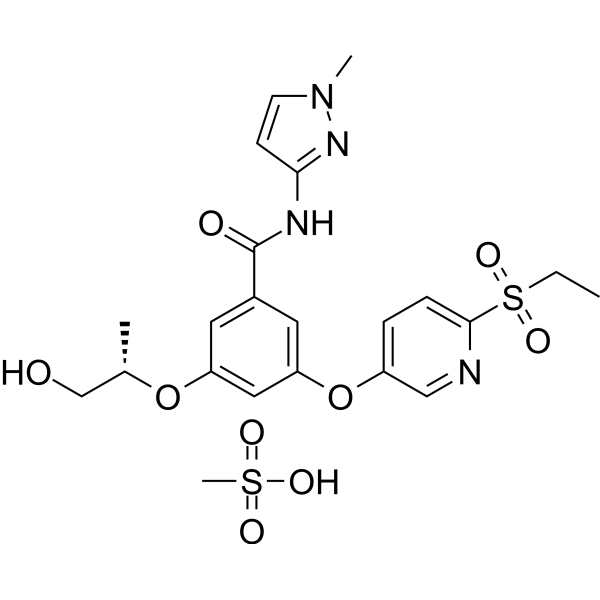
HY-19843
MK-0941Glucokinase Activator -
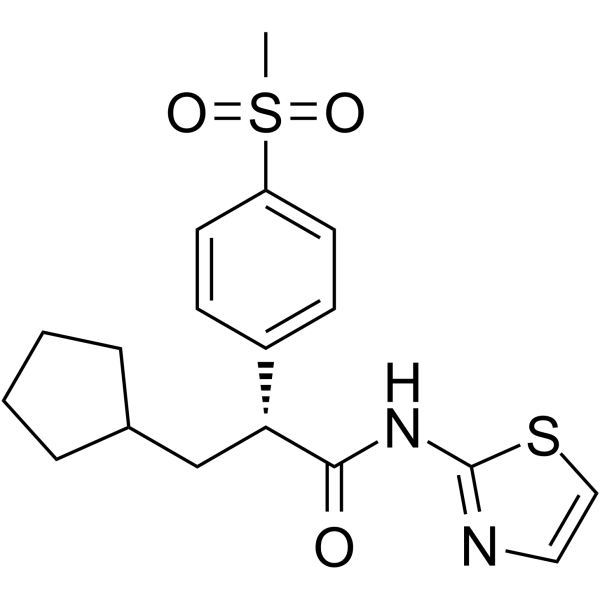
HY-10595
RO-28-1675Glucokinase Activator -
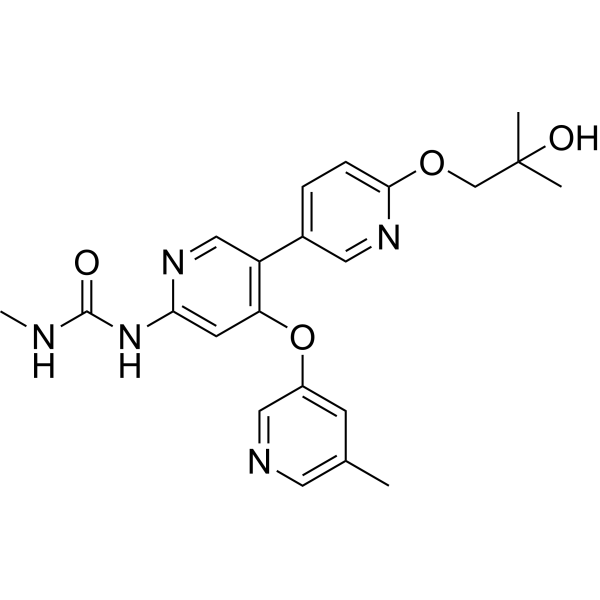
HY-100221
AM-2394Glucokinase Activator -
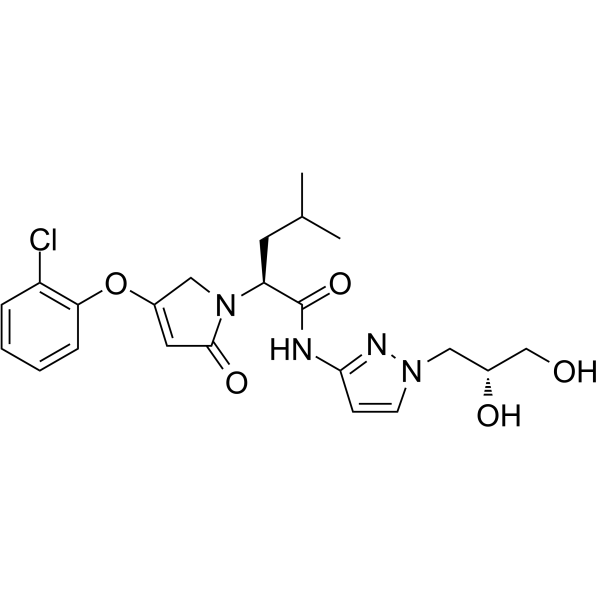
HY-109030
DorzagliatinGlucokinase Activator -
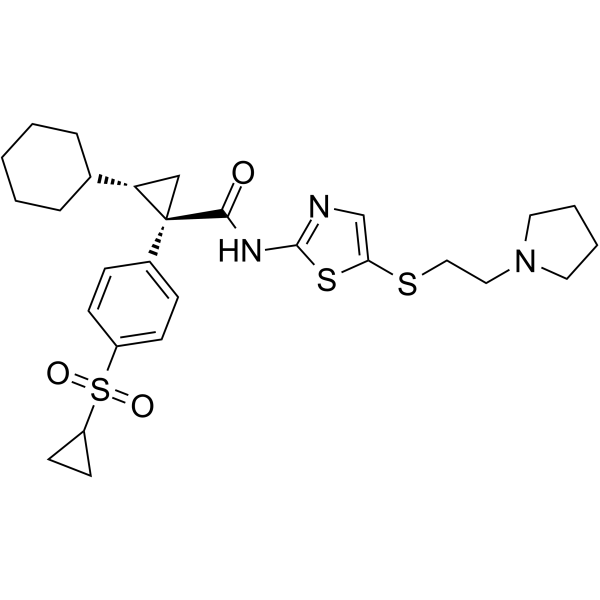
HY-13529
GlobalagliatinGlucokinase Activator -

HY-109030R
Dorzagliatin (Standard)Glucokinase Activator -

HY-100181R
PF-04991532 (Standard)Glucokinase Activator -

HY-108328R
Nerigliatin (Standard)Glucokinase Activator -
HY-12411
AMG-3969GK-GKRP Disruptor -

HY-100221R
AM-2394 (Standard)Glucokinase Activator


Biological Activity
Description
IC50 & Target
EC50: 154.4 μM (GSA) (PF-04937319)[1]
Cellular Effect
|
Cell Line

|
Type | Value | Description | References |
|---|---|---|---|---|
| Hepatocyte | EC50 |
0.6 μM
Compound: 28
|
Induction of glucokinase translocation from nucleus to cytoplasm in rat hepatocytes in presence of 15 mM glucose
Induction of glucokinase translocation from nucleus to cytoplasm in rat hepatocytes in presence of 15 mM glucose
|
10.1039/C1MD00116G |
| Hepatocyte | EC50 |
0.9 μM
Compound: 30
|
Induction of glucokinase translocation from nucleus to cytoplasm in cryopreserved rat hepatocytes after 1 hr by Hoechst staining-based fluorescence microscopic analysis
Induction of glucokinase translocation from nucleus to cytoplasm in cryopreserved rat hepatocytes after 1 hr by Hoechst staining-based fluorescence microscopic analysis
|
[PMID: 22196621] |
| Hepatocyte | EC50 |
0.9 μM
Compound: 28
|
Induction of glucokinase translocation from nucleus to cytoplasm in rat hepatocytes in presence of 8.9 mM glucose
Induction of glucokinase translocation from nucleus to cytoplasm in rat hepatocytes in presence of 8.9 mM glucose
|
10.1039/C1MD00116G |
| Hepatocyte | EC50 |
2.3 μM
Compound: 28
|
Induction of glucokinase translocation from nucleus to cytoplasm in rat hepatocytes in presence of 5.5 mM glucose
Induction of glucokinase translocation from nucleus to cytoplasm in rat hepatocytes in presence of 5.5 mM glucose
|
10.1039/C1MD00116G |
| Hepatocyte | EC50 |
3.8 μM
Compound: 28
|
Induction of glucokinase translocation from nucleus to cytoplasm in rat hepatocytes in presence of 2.5 mM glucose
Induction of glucokinase translocation from nucleus to cytoplasm in rat hepatocytes in presence of 2.5 mM glucose
|
10.1039/C1MD00116G |
| INS1(832/13) | EC50 |
2.15 μM
Compound: 7; PF-04937319
|
Cytoprotection in rat INS1(832/13) cells assessed as reduction in streptozocin induced beta cells apoptosis after 20 hrs by MTT based spectrophotometric method
Cytoprotection in rat INS1(832/13) cells assessed as reduction in streptozocin induced beta cells apoptosis after 20 hrs by MTT based spectrophotometric method
|
[PMID: 28800453] |
In Vitro
Nerigliatin (10 μM; 240 min) is metabolized via oxidative (major) and hydrolytic pathways (minor) in rat, dog, and human hepatocytes[3].
MedChemExpress (MCE) has not independently confirmed the accuracy of these methods. They are for reference only.
In Vivo
Nerigliatin (5-500 mg/kg; p.o.; once daily; 1 month) leads to peripheral nerve degeneration and unscheduled deaths in dogs[4].
MedChemExpress (MCE) has not independently confirmed the accuracy of these methods. They are for reference only.
-
Animal Model:Sprague-Dawley rats (male and female, 10 weeks of age), beagle dogs (male and female, 8-12 months old)[4]
-
Dosage:Rats-males: 50, 250, 1000 mg/kg; females: 10, 50, 1000 mg/kg (suspended in 1.25% hydroxypropyl cellulose and 0.5% docusate sodium); Dogs-males and females: 5, 50, 500 mg/kg (suspended in 1.25% hydroxypropyl cellulose and 0.5% docusate sodium)
-
Administration:Rats-oral gavage, once daily, 1 month; Dogs-oral gavage, once daily, 1 month
-
Result:Caused axonal degeneration in the peripheral (sciatic) nerve of female rats at 50 and 1000 mg/kg in Sprague- Dawley rats.
Led to peripheral nerve degeneration in some animals at 50 and 500 mg/kg, and 2 unscheduled deaths occurred at 500 mg/kg/day in beagle dogs.
Clinical Trial
| NCT Number | Sponsor | Condition | Start Date |
Phase
|
|---|---|---|---|---|
| NCT01329991 | 2011-05 | PHASE1 |


Chemical Information
-
CAS No. 1245603-92-2
-
Appearance Solid
-
Molecular Weight 432.43
-
Formula C22H20N6O4
-
Color White to yellow
-
SMILES
O=C(C1=NC=C(OC2=C3C=C(C)OC3=CC(C(NC4=NC=C(C)N=C4)=O)=C2)C=N1)N(C)C
-
Synonyms
PF-04937319
-
Shipping
Room temperature in continental US; may vary elsewhere.
-
Storage
Powder -20°C 3 years 4°C 2 years In solvent -80°C 6 months -20°C 1 month


Solvent & Solubility
In Vitro:
DMSO : 100 mg/mL (231.25 mM; Need ultrasonic; Hygroscopic DMSO has a significant impact on the solubility of product, please use newly opened DMSO)
Please refer to the solubility information to select the appropriate solvent. Once prepared, please aliquot and store the solution to prevent product inactivation from repeated freeze-thaw cycles.
Storage method and period of stock solution: -80°C, 6 months; -20°C, 1 month. When stored at -80°C, please use it within 6 months. When stored at -20°C, please use it within 1 month.
Please refer to the solubility information to select the appropriate solvent. Once prepared, please aliquot and store the solution to prevent product inactivation from repeated freeze-thaw cycles.
Storage method and period of stock solution: -80°C, 6 months; -20°C, 1 month. When stored at -80°C, please use it within 6 months. When stored at -20°C, please use it within 1 month.
Concentration (start) × Volume (start) = Concentration (final) × Volume (final)
In Vivo:
Select the appropriate dissolution method based on your experimental animal and administration route.
- For the following dissolution methods, please ensure to first prepare a clear stock solution using an In Vitro approach and then sequentially add co-solvents:
- To ensure reliable experimental results, the clarified stock solution can be appropriately stored based on storage conditions. As for the working solution for In Vivo experiments, it is recommended to prepare freshly and use it on the same day.
- The percentages shown for the solvents indicate their volumetric ratio in the final prepared solution. If precipitation or phase separation occurs during preparation, heat and/or sonication can be used to aid dissolution.
Add each solvent one by one: 10% DMSO 90% (20% SBE-β-CD in Saline)
Solubility: ≥ 2.5 mg/mL (5.78 mM); Clear solution
This protocol yields a clear solution of ≥ 2.5 mg/mL (saturation unknown).
Taking 1 mL working solution as an example, add 100 μL DMSO stock solution (25.0 mg/mL) to 900 μL 20% SBE-β-CD in Saline, and mix evenly.
Preparation of 20% SBE-β-CD in Saline (4°C, storage for one week): 2 g SBE-β-CD powder is dissolved in 10 mL Saline, completely dissolve until clear.
In Vivo Dissolution Calculator
Please enter the basic information of animal experiments:
-
-
-
-
Recommended: Prepare an additional quantity of animals to account for potential losses during experiments.
Please enter your animal formula composition:
-
%DMSO +
Recommended: Keep the proportion of DMSO in working solution below 2% if your animal is weak.
-
%+
-
+%Tween-80 + +
-
%Saline +
The co-solvents required include: DMSO, . All of co-solvents are available by MedChemExpress (MCE). , Tween 80. All of co-solvents are available by MedChemExpress (MCE).
Working solution concentration: 0.22 mg/mL
Method for preparing stock solution: mg drug dissolved in μL DMSO. Stock solution concentration: mg/mL.
1. Take μL DMSO stock solution;
2. Add μL .
μL , mix evenly;
3. Then add μL Tween 80, mix evenly;
4. Then add μL
Please ensure that the stock solution in the first step is dissolved to a clear state, and add co-solvents in sequence. You can use ultrasonic heating (ultrasonic cleaner, recommended frequency 20-40 kHz), vortexing, etc. to assist dissolution.


Purity & Documentation
-
Data Sheet (278 KB)
-
SDS (254 KB)
- English - EN (254 KB)
- Français - FR (254 KB)
- Deutsch - DE (254 KB)
- Norwegian - NO (254 KB)
- Español - ES (254 KB)
- Swedish - SV (254 KB)
- Italian - IT (254 KB)
- Korean - KR (254 KB)
- Portuguese - PT (254 KB)
-
Handling Instructions (2659 KB)
References
[1]. Dzyurkevich MS, et al. Pyridoxine dipharmacophore derivatives as potent glucokinase activators for the treatment of type 2 diabetes mellitus. Sci Rep. 2017 Nov 22;7(1):16072. [Content Brief]
[2]. Amin NB, et al. Two dose-ranging studies with PF-04937319, a systemic partial activator of glucokinase, as add-on therapy to metformin in adults with type 2 diabetes. Diabetes Obes Metab. 2015 Aug;17(8):751-9. [Content Brief]
[3]. Sharma R, et al. Metabolites in safety testing assessment in early clinical development: a case study with a glucokinase activator. Drug Metab Dispos. 2014 Nov;42(11):1926-39. [Content Brief]
[4]. Pettersen JC, et al. The relationship of glucokinase activator-induced hypoglycemia with arteriopathy, neuronal necrosis, and peripheral neuropathy in nonclinical studies. Toxicol Pathol. 2014 Jun;42(4):696-708. [Content Brief]


Complete Stock Solution Preparation Table
Please refer to the solubility information to select the appropriate solvent. Once prepared, please aliquot and store the solution to prevent product inactivation from repeated freeze-thaw cycles.
Storage method and period of stock solution: -80°C, 6 months; -20°C, 1 month. When stored at -80°C, please use it within 6 months. When stored at -20°C, please use it within 1 month.
| Optional Solvent | Concentration Solvent Mass | 1 mg | 5 mg | 10 mg | 25 mg |
|---|---|---|---|---|---|
| DMSO | 1 mM | 2.3125 mL | 11.5626 mL | 23.1251 mL | 57.8128 mL |
| 5 mM | 0.4625 mL | 2.3125 mL | 4.6250 mL | 11.5626 mL | |
| 10 mM | 0.2313 mL | 1.1563 mL | 2.3125 mL | 5.7813 mL | |
| 15 mM | 0.1542 mL | 0.7708 mL | 1.5417 mL | 3.8542 mL | |
| 20 mM | 0.1156 mL | 0.5781 mL | 1.1563 mL | 2.8906 mL | |
| 25 mM | 0.0925 mL | 0.4625 mL | 0.9250 mL | 2.3125 mL | |
| 30 mM | 0.0771 mL | 0.3854 mL | 0.7708 mL | 1.9271 mL | |
| 40 mM | 0.0578 mL | 0.2891 mL | 0.5781 mL | 1.4453 mL | |
| 50 mM | 0.0463 mL | 0.2313 mL | 0.4625 mL | 1.1563 mL | |
| 60 mM | 0.0385 mL | 0.1927 mL | 0.3854 mL | 0.9635 mL | |
| 80 mM | 0.0289 mL | 0.1445 mL | 0.2891 mL | 0.7227 mL | |
| 100 mM | 0.0231 mL | 0.1156 mL | 0.2313 mL | 0.5781 mL |


Nerigliatin Related Classifications
HY-108328 Related Classifications
 Powered by Bioz