



FB23-2
Based on 29 publication(s) in Google Scholar
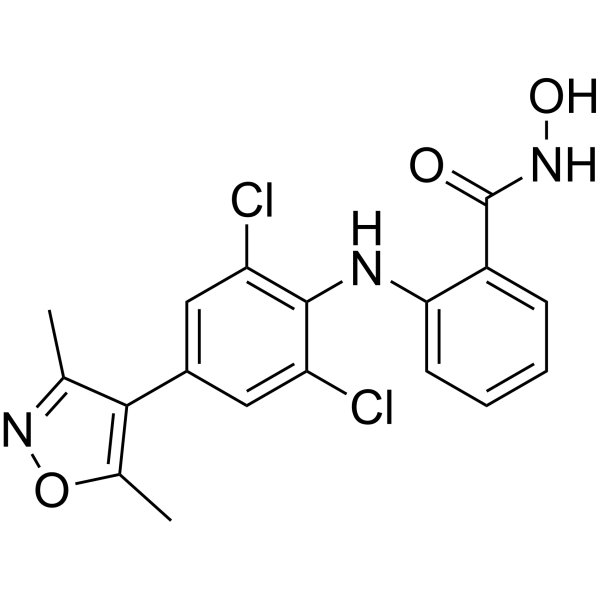
FB23-2 is a potent and selective inhibitor of mRNA N6-methyladenosine (m6A) demethylase FTO, with an IC50 of 2.6 μM. FB23-2 has anti-proliferation activity. FB23-2 can be used for the research of acute myeloid leukemia (AML).
For research use only. We do not sell to patients.
- Purity : 98.55%
- CAS No.: 2243736-45-8
- Formula: C18H15Cl2N3O3
- Molecular Weight:392.24
-
Storage:
4°C, protect from light
* In solvent : -80°C, 6 months; -20°C, 1 month (protect from light)

To place orders, for customer services and technical support, please contact: MedChemExpress USA
Tel: 609-228-6898 E-mail: [email protected] [email protected]


-
 Biological Activity
-
Chemical Information
-
Solvent & Solubility
- Protocols
- Purity & Documentation
- References
-
 Help & FAQs


-
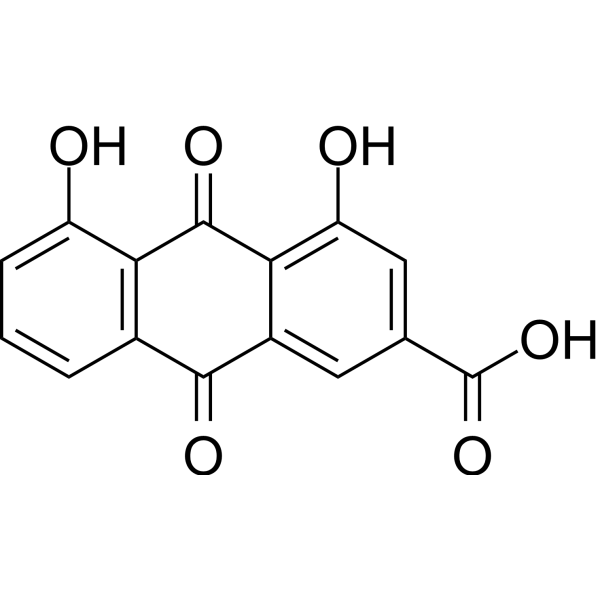
HY-N0105
RheinAntioxidant -
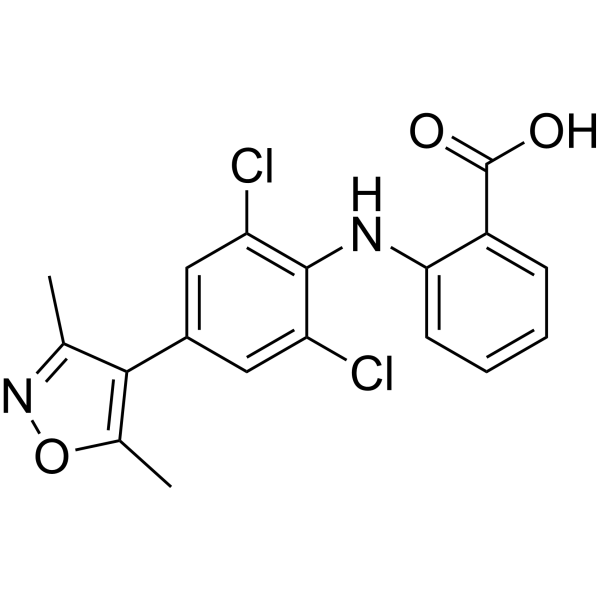
HY-137187
FB23FTO Inhibitor -
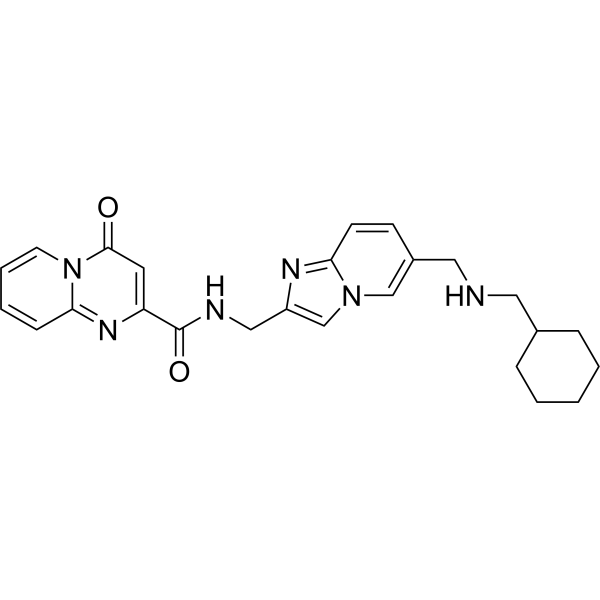
HY-134836
STM2457METTL3 Inhibitor -
HY-12304
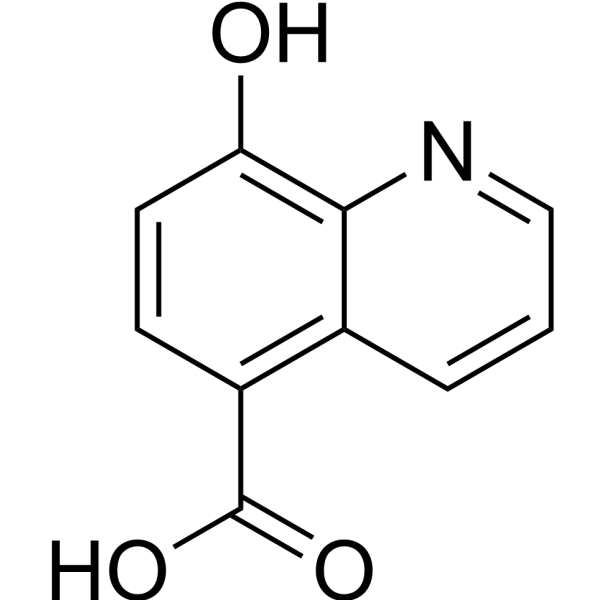
IOX12OG Oxygenases Inhibitor -
HY-155489
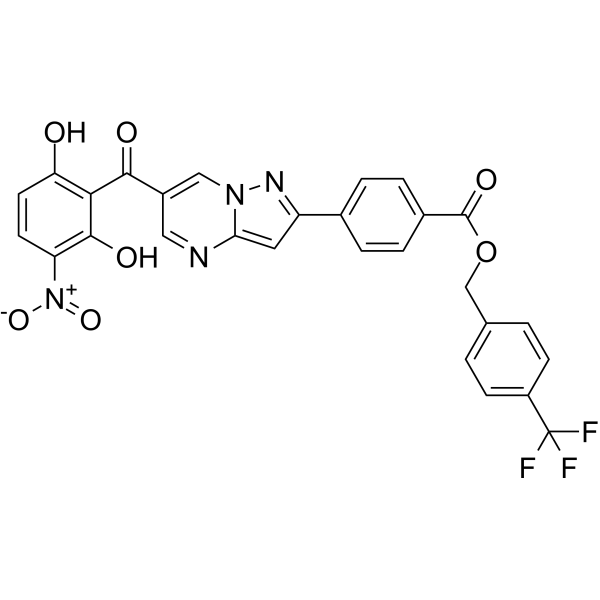
DDO-2728ALKBH5 Inhibitor -

HY-165422
ALKBH5-IN-3ALKBH5 Inhibitor -

HY-Y0320
Dimethyl sulfoxide, meets analytical specification of Ch.P.Aprotic Solvent -
HY-13259
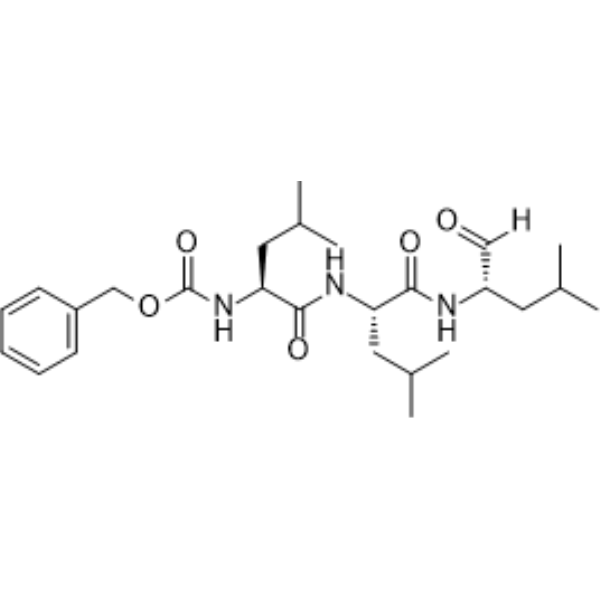
MG-132Proteasome Inhibitor -
HY-100579
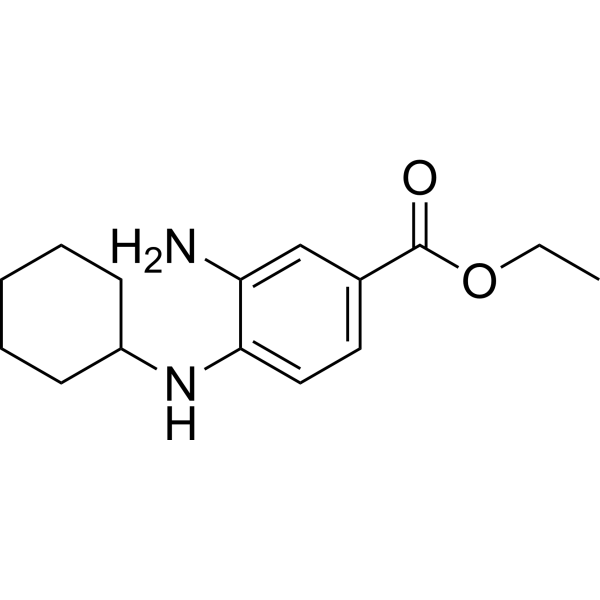
Ferrostatin-1Ferroptosis Inhibitor -
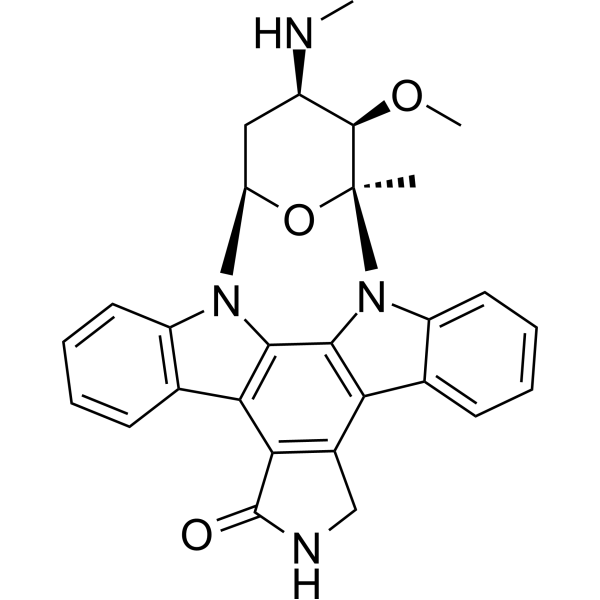
HY-15141
StaurosporinePKC/PKA Inhibitor -
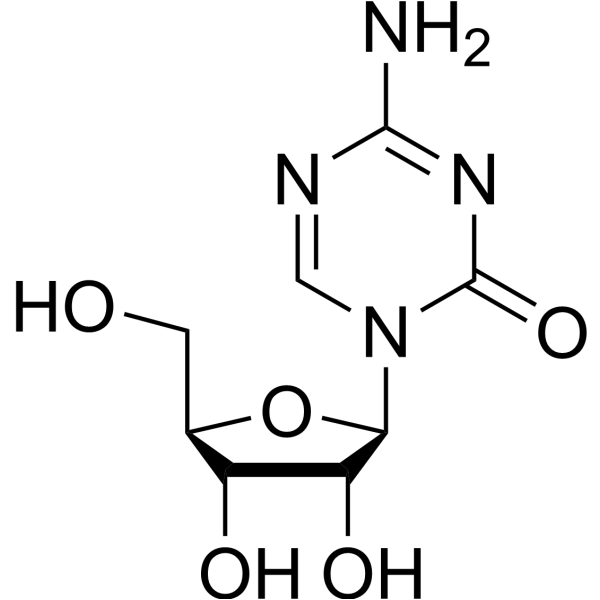
HY-10586
5-AzacytidineDNMT Inhibitor -
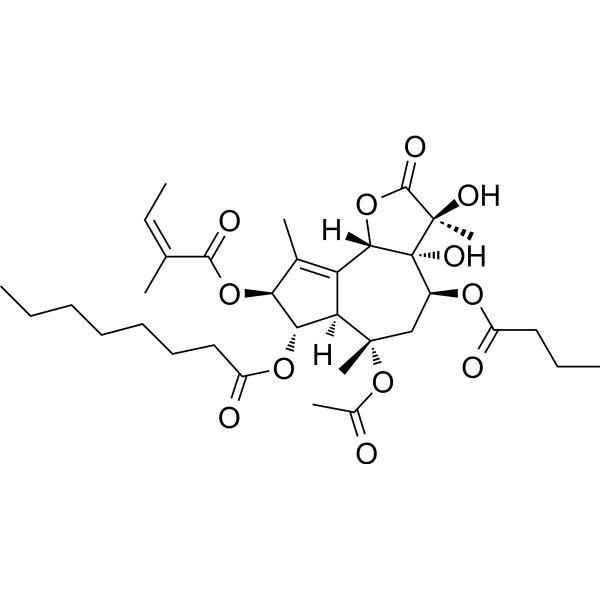
HY-13433
ThapsigarginER Stress Inducer
Publications Citing Use of MedChemExpress (MCE) FB23-2
More- Cell. 2025 Feb 20;188(4):998-1018.e26. [Abstract]
- Mol Cancer. 2024 Sep 20;23(1):205. [Abstract]
- Nat Commun. 2024 Jun 4;15(1):4760. [Abstract]
- J Exp Clin Cancer Res. 2023 Aug 22;42(1):217. [Abstract]
- Adv Sci (Weinh). 2023 Dec;10(34):e2304895. [Abstract]
- Int J Biol Sci. 2022 Oct 3;18(15):5943-5962. [Abstract]
- Phytomedicine. 2025 Mar:138:156408. [Abstract]
- J Hazard Mater. 2026 Jun 16:514:142733. [Abstract]
- J Hazard Mater. 2025 Mar 15:486:137110. [Abstract]
- J Hazard Mater. 2024 Mar 5:465:133329. [Abstract]
- J Hazard Mater. 2023 Jul 5:453:131354. [Abstract]
- J Hazard Mater. 2023 Mar 5:445:130468. [Abstract]
- Free Radic Biol Med. 2025 Oct:238:507-521. [Abstract]
- EMBO Mol Med. 2024 Feb;16(2):294-318. [Abstract]
- Cell Rep. 2026 May 28;45(6):117471. [Abstract]
- Cell Rep. 2024 Jun 14;43(6):114369. [Abstract]
- J Ethnopharmacol. 2026 Feb 28:357:120948. [Abstract]
- BMC Biol. 2024 May 3;22(1):104. [Abstract]
- Sci Rep. 2026 Apr 18;16(1):17992. [Abstract]
- Cell Signal. 2025 Aug:132:111782. [Abstract]
- Eur J Orthod. 2024 Apr 1;46(2):cjae009. [Abstract]
- J Cell Sci. 2025 Dec 15;138(24):jcs264267. [Abstract]
- Mol Brain. 2020 Jan 28;13(1):11. [Abstract]
- Mol Carcinog. 2025 Aug 22. [Abstract]
- bioRxiv. 2026 Mar 13.
- SSRN. 2025 Nov 6.
- bioRxiv. 2025 Oct 23:2025.10.22.681652. [Abstract]
- Research Square Preprint. 2024 Apr 8.
- bioRxiv. 2023 May 19.
 Customer Validation & Images

-
Cell Proliferation/Viability Assay
-
Bio/Physico-chemical Assay
-
Bio/Physico-chemical Assay
-
Histological Imaging/Staining
-
WB


Biological Activity
Description
IC50 & Target
IC50: 2.6 μM (FTO)[1]
Cellular Effect
|
Cell Line

|
Type | Value | Description | References |
|---|---|---|---|---|
| MONO-MAC-6 | IC50 |
0.8 μM
Compound: FB23-2
|
Antiproliferative activity against human MONO-MAC-6 cells
Antiproliferative activity against human MONO-MAC-6 cells
|
[PMID: 32330741] |
| NB-4 | IC50 |
0.8 μM
Compound: FB23-2
|
Antiproliferative activity against human NB-4 cells
Antiproliferative activity against human NB-4 cells
|
[PMID: 32330741] |
| NB-4 | IC50 |
0.8 μM
Compound: FB23-2
|
Antiproliferative activity against human NB4 cells measured after 72 hrs by celltiter96 aqueous non-radioactive cell proliferation assay
Antiproliferative activity against human NB4 cells measured after 72 hrs by celltiter96 aqueous non-radioactive cell proliferation assay
|
[PMID: 37974948] |
In Vitro
FB23-2 dramatically suppresses proliferation and promotes the differentiation/apoptosis of human AML cell line cells and primary blast AML cells[1].
FB23 inhibits the proliferation of NB4 and MONOMAC6 cells, with IC50 values of 0.8 μM and 1.5 μM[1].
FB23-2 (20 μM; 72 hours) displays anti-proliferation effect via upregulating global m6A levels[1].
FB23-2 (0.5-5 μM; 24-72 hours) significantly suppresses the proliferation of BM cells from these two models in a dose-dependent manner[1].
FB23-2 exhibits FTO-dependent anti-proliferation activity and promotes myeloid differentiation and apoptosis[1].
FB23-2 (1-20 μM; 72 hours) significantly increases the mRNA and protein levels of ASB2 and RARA in NB4 and MONOMAC6 cells[1].
FB23-2 induces apoptosis (1-20 μM; 48-72 hours) and cell cycle arrest (5-20 μM; 24 hours) at G1 stage in AML cells[1].
MedChemExpress (MCE) has not independently confirmed the accuracy of these methods. They are for reference only.
-
Cell Line:MA9 cells, FLT3ITD/NPM1 cells (mouse BM cells)
-
Concentration:0.5 μM, 2 μM, 5 μM
-
Incubation Time:24 hours, 48 hours, 72 hours
-
Result:Suppressed the proliferation of BM cells.
-
Cell Line:NB4 cells, MONOMAC6 cells
-
Concentration:1 μM, 5 μM , 20 μM
-
Incubation Time:72 hours
-
Result:Significantly increased ASB2 and RARA mRNA levels.
-
Cell Line:NB4 cells, MONOMAC6 cells
-
Concentration:1 μM, 5 μM , 20 μM
-
Incubation Time:48 hours (NB4 cells),72 hours (MONOMAC6 cells)
-
Result:Induced apoptosis.
-
Cell Line:MONOMAC6 cells
-
Concentration:5 μM , 20 μM
-
Incubation Time:24 hours
-
Result:Induced cell cycle arrest at G1 stage.
In Vivo
FB23-2 exhibits elimination half-life (rat 6.7 h) and Cmax (rat 2421.3 ng/mL) following intraperitoneal injection (rat 3 mg/kg)[1].
MedChemExpress (MCE) has not independently confirmed the accuracy of these methods. They are for reference only.
-
Animal Model:NOD/LtSz-scid IL2RG-SGM3 (NSGS) mice, xeno-transplanted with MONOMAC6 AML cells[1]
-
Dosage:2 mg/kg
-
Administration:Intraperitoneal injection, daily, for 10 days
-
Result:Delayed the onset of full-blown leukemic symptoms and significantly prolonged survival by almost doubling the median survival.
-
Animal Model:Sprague Dawley (SD) rats[1]
-
Dosage:3 mg/kg (Pharmacokinetic Analysis)
-
Administration:Intraperitoneal injection
-
Result:T1/2 (6.7 hours), Cmax (2421.3 ng/mL).


Chemical Information
-
CAS No. 2243736-45-8
-
Appearance Solid
-
Molecular Weight 392.24
-
Formula C18H15Cl2N3O3
-
Color White to light yellow
-
SMILES
O=C(NO)C1=CC=CC=C1NC2=C(Cl)C=C(C3=C(C)ON=C3C)C=C2Cl
-
Shipping
Room temperature in continental US; may vary elsewhere.
-
Storage
4°C, protect from light
* In solvent : -80°C, 6 months; -20°C, 1 month (protect from light)


Publications (29)
-
Journal Impact Factor
-
Most Recent
-
Cell
Fine-tuning of gene expression through the Mettl3-Mettl14-Dnmt1 axis controls ESC differentiation. [Abstract]2025 Feb 20;188(4):998-1018.e26. PMID: 39826545 -
Mol Cancer
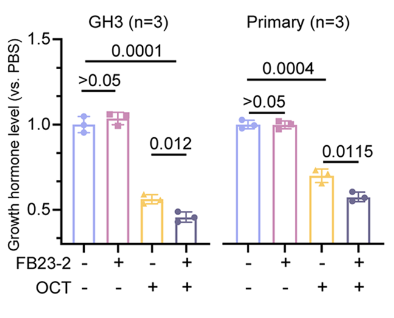
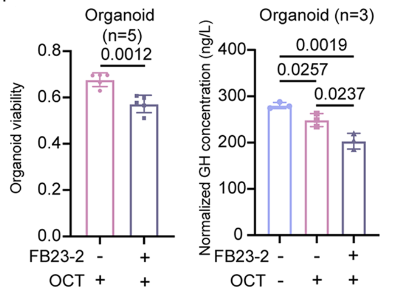
FTO-mediated DSP m6A demethylation promotes an aggressive subtype of growth hormone-secreting pituitary neuroendocrine tumors. [Abstract]2024 Sep 20;23(1):205. PMID: 39304899
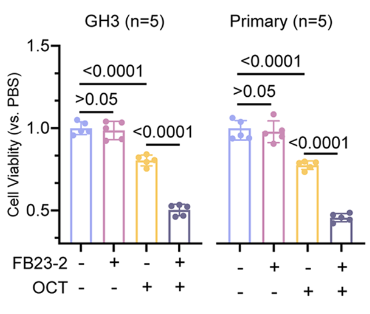
FB23-2 purchased from MedChemExpress. Usage Cited in: Mol Cancer. 2024 Sep 20;23(1):205. [Abstract]
Bar plots showing the octreotide sensitivity change after combing with FB23-2 (4 μM, 48 h) treatment in GH3 cells and primary tumor cells.
FB23-2 purchased from MedChemExpress. Usage Cited in: Mol Cancer. 2024 Sep 20;23(1):205. [Abstract]
Bar plots showing the growth hormone level changes following octreotide and FB23-2 (4 μM, 48 h) treatment in GH3 cells (left) and primary tumor cells (right).
FB23-2 purchased from MedChemExpress. Usage Cited in: Mol Cancer. 2024 Sep 20;23(1):205. [Abstract]
Bar plots showing the octreotide sensitivity (left) and growth hormone level (right) change after combining with FB23-2 (4 μM, 48 h) in organoids.
-
Nat Commun
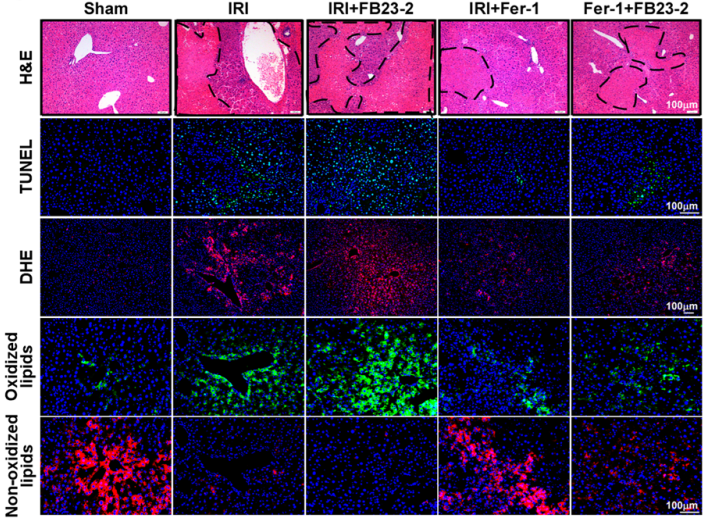
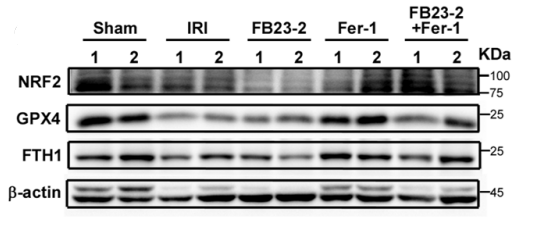
FTO deficiency in older livers exacerbates ferroptosis during ischaemia/reperfusion injury by upregulating ACSL4 and TFRC. [Abstract]2024 Jun 4;15(1):4760. PMID: 38834654
FB23-2 purchased from MedChemExpress. Usage Cited in: Nat Commun. 2024 Jun 4;15(1):4760. [Abstract]
Representative images and relative quantification/Suzuki score of HE staining (magnification, × 100), TUNEL staining (magnification, × 200), DHE staining (magnification, × 100) and C11 BODIPY staining (magnification, × 200) in older liver tissues with FB23-2 (20 mg/kg, intraperitoneally administered 2 h prior to ischaemia).
FB23-2 purchased from MedChemExpress. Usage Cited in: Nat Commun. 2024 Jun 4;15(1):4760. [Abstract]
FB23-2 (20 mg/kg, intraperitoneally administered 2 h prior to ischaemia). Western blotting showed changes in the expression of key factors related to ferroptosis.
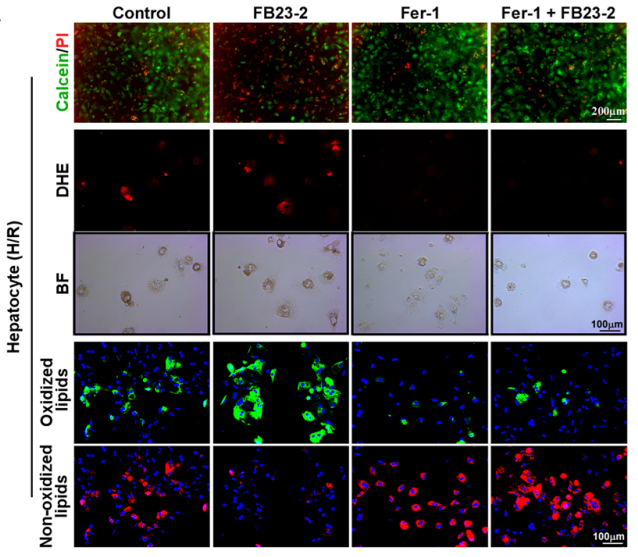
FB23-2 purchased from MedChemExpress. Usage Cited in: Nat Commun. 2024 Jun 4;15(1):4760. [Abstract]
Representative images and relative quantification of Calcein-AM/PI double staining (magnification, × 100), DHE staining (magnification, × 200) and C11 BODIPY staining (magnification, × 200) to evaluate the effect of FB23-2 (20 mg/kg, intraperitoneally administered 2 h prior to ischaemia) on primary hepatocytes during H/R, one-way ANOVA followed by multiple comparisons.
-
J Exp Clin Cancer Res
m6A eraser FTO impairs gemcitabine resistance in pancreatic cancer through influencing NEDD4 mRNA stability by regulating the PTEN/PI3K/AKT pathway. [Abstract]2023 Aug 22;42(1):217. PMID: 37605223 -
Adv Sci (Weinh)
m6A-Modified circTET2 Interacting with HNRNPC Regulates Fatty Acid Oxidation to Promote the Proliferation of Chronic Lymphocytic Leukemia. [Abstract]2023 Dec;10(34):e2304895. PMID: 37821382 -
Int J Biol Sci
FTO-mediated autophagy promotes progression of clear cell renal cell carcinoma via regulating SIK2 mRNA stability. [Abstract]2022 Oct 3;18(15):5943-5962. PMID: 36263177 -
Phytomedicine
Astragaloside IV inhibits retinal pigment epithelial cell senescence and reduces IL-1β mRNA stability by targeting FTO-mediated m6A methylation. [Abstract]2025 Mar:138:156408. PMID: 39848020 -
J Hazard Mater
HFPO-TA inhibits testosterone synthesis by triggering FTO-mediated m6A modification to drive NCOA4-associated ferroptosis. [Abstract]2026 Jun 16:514:142733. PMID: 42314315 -
J Hazard Mater
Extractable organic matter from PM2.5 inhibits cardiomyocyte differentiation via AHR-mediated m6A RNA methylation. [Abstract]2025 Mar 15:486:137110. PMID: 39778483 -
J Hazard Mater
N6-methyladenosine promotes aberrant redox homeostasis required for arsenic carcinogenesis by controlling the adaptation of key antioxidant enzymes. [Abstract]2024 Mar 5:465:133329. PMID: 38142659 -
J Hazard Mater
Cobalt induces neurodegeneration through FTO-triggered autophagy impairment by targeting TSC1 in an m6A-YTHDF2-dependent manner. [Abstract]2023 Jul 5:453:131354. PMID: 37054644 -
J Hazard Mater
N6-methyladenosine plays a dual role in arsenic carcinogenesis by temporal-specific control of core target AKT1. [Abstract]2023 Mar 5:445:130468. PMID: 36444808 -
Free Radic Biol Med
FTO inhibition represses B-cell acute lymphoblastic leukemia progression by inducing nucleolar stress and mitochondrial dysfunction. [Abstract]2025 Oct:238:507-521. PMID: 40623539 -
EMBO Mol Med
Lactylation-driven FTO targets CDK2 to aggravate microvascular anomalies in diabetic retinopathy. [Abstract]2024 Feb;16(2):294-318. PMID: 38297099 -
Cell Rep
2026 May 28;45(6):117471. PMID: 42213774 -
Cell Rep
m6A modification inhibits miRNAs' intracellular function, favoring their extracellular export for intercellular communication. [Abstract]2024 Jun 14;43(6):114369. PMID: 38878288 -
J Ethnopharmacol
Qiteng Xiaozhuo Granules improve chronic glomerulonephritis through promoting glomerular mesangial cell autophagy via FTO-mediated SLC7A5 m6A modification. [Abstract]2026 Feb 28:357:120948. PMID: 41308711 -
BMC Biol
GnRH-driven FTO-mediated RNA m6A modification promotes gonadotropin synthesis and secretion. [Abstract]2024 May 3;22(1):104. PMID: 38702712 -
Sci Rep
m6A demethylase FTO promotes the progression of abdominal aortic aneurysm through PDK4-mediated apoptosis. [Abstract]2026 Apr 18;16(1):17992. PMID: 42000779 -
Cell Signal
The m6A RNA demethylase FTO promotes radioresistance and stemness maintenance of glioma stem cells. [Abstract]2025 Aug:132:111782. PMID: 40185350 -
Eur J Orthod
Fat mass and obesity-associated protein (FTO) affects midpalatal suture bone remodeling during rapid maxillary expansion. [Abstract]2024 Apr 1;46(2):cjae009. PMID: 38376496 -
J Cell Sci
A C-terminal cytoplasmic retention motif and nuclear localization signal regulates nuclear import of TP53INP2. [Abstract]2025 Dec 15;138(24):jcs264267. PMID: 41368677 -
Mol Brain
Epitranscriptomic profiling of N6-methyladenosine-related RNA methylation in rat cerebral cortex following traumatic brain injury. [Abstract]2020 Jan 28;13(1):11. PMID: 31992337 -
Mol Carcinog
miR-150-5p Regulates Merkel Cell Carcinoma Progression by Targeting FTO That Stabilizes CTNNB1 via m6A Modification. [Abstract]2025 Aug 22. PMID: 40844235 -
-
-
bioRxiv
FTO depletion does not alter m6A stoichiometry in AML mRNA: a reassessment using direct RNA nanopore sequencing. [Abstract]2025 Oct 23:2025.10.22.681652. PMID: 41279954 -
-


Solvent & Solubility
In Vitro:
DMSO : 25 mg/mL (63.74 mM; Need ultrasonic; Hygroscopic DMSO has a significant impact on the solubility of product, please use newly opened DMSO)
Please refer to the solubility information to select the appropriate solvent. Once prepared, please aliquot and store the solution to prevent product inactivation from repeated freeze-thaw cycles.
Storage method and period of stock solution: -80°C, 6 months; -20°C, 1 month (protect from light). When stored at -80°C, please use it within 6 months. When stored at -20°C, please use it within 1 month.
Please refer to the solubility information to select the appropriate solvent. Once prepared, please aliquot and store the solution to prevent product inactivation from repeated freeze-thaw cycles.
Storage method and period of stock solution: -80°C, 6 months; -20°C, 1 month (protect from light). When stored at -80°C, please use it within 6 months. When stored at -20°C, please use it within 1 month.
Concentration (start) × Volume (start) = Concentration (final) × Volume (final)
In Vivo:
Select the appropriate dissolution method based on your experimental animal and administration route.
- For the following dissolution methods, please ensure to first prepare a clear stock solution using an In Vitro approach and then sequentially add co-solvents:
- To ensure reliable experimental results, the clarified stock solution can be appropriately stored based on storage conditions. As for the working solution for In Vivo experiments, it is recommended to prepare freshly and use it on the same day.
- The percentages shown for the solvents indicate their volumetric ratio in the final prepared solution. If precipitation or phase separation occurs during preparation, heat and/or sonication can be used to aid dissolution.
Add each solvent one by one: 10% DMSO 40% PEG300 5% Tween-80 45% Saline
Solubility: ≥ 2.08 mg/mL (5.30 mM); Clear solution
This protocol yields a clear solution of ≥ 2.08 mg/mL (saturation unknown).
Taking 1 mL working solution as an example, add 100 μL DMSO stock solution (20.8 mg/mL) to 400 μL PEG300, and mix evenly; then add 50 μL Tween-80 and mix evenly; then add 450 μL Saline to adjust the volume to 1 mL.
Preparation of Saline: Dissolve 0.9 g sodium chloride in ddH₂O and dilute to 100 mL to obtain a clear Saline solution.
For the following dissolution methods, please prepare the working solution directly:
It is recommended to prepare fresh solutions and use them promptly within a short period of time.
The percentages shown for the solvents indicate their volumetric ratio in the final prepared solution. If precipitation or phase separation occurs during preparation, heat and/or sonication can be used to aid dissolution.
Add each solvent one by one: 50% PEG300 50% Saline
Solubility: 10 mg/mL (25.49 mM); Suspended solution; Need ultrasonic
In Vivo Dissolution Calculator
Please enter the basic information of animal experiments:
-
-
-
-
Recommended: Prepare an additional quantity of animals to account for potential losses during experiments.
Please enter your animal formula composition:
-
%DMSO +
Recommended: Keep the proportion of DMSO in working solution below 2% if your animal is weak.
-
%+
-
+%Tween-80 + +
-
%Saline +
The co-solvents required include: DMSO, . All of co-solvents are available by MedChemExpress (MCE). , Tween 80. All of co-solvents are available by MedChemExpress (MCE).
Working solution concentration: 0.22 mg/mL
Method for preparing stock solution: mg drug dissolved in μL DMSO. Stock solution concentration: mg/mL. * In solvent : -80°C, 6 months; -20°C, 1 month (protect from light)
1. Take μL DMSO stock solution;
2. Add μL .
μL , mix evenly;
3. Then add μL Tween 80, mix evenly;
4. Then add μL
Please ensure that the stock solution in the first step is dissolved to a clear state, and add co-solvents in sequence. You can use ultrasonic heating (ultrasonic cleaner, recommended frequency 20-40 kHz), vortexing, etc. to assist dissolution.


Purity & Documentation
-
Data Sheet (283 KB)
-
SDS (394 KB)
- English - EN (394 KB)
- Français - FR (394 KB)
- Deutsch - DE (394 KB)
- Norwegian - NO (394 KB)
- Español - ES (394 KB)
- Swedish - SV (394 KB)
- Italian - IT (394 KB)
- Korean - KR (394 KB)
- Portuguese - PT (394 KB)
-
Handling Instructions (2659 KB)
References


Complete Stock Solution Preparation Table
Please refer to the solubility information to select the appropriate solvent. Once prepared, please aliquot and store the solution to prevent product inactivation from repeated freeze-thaw cycles.
Storage method and period of stock solution: -80°C, 6 months; -20°C, 1 month (protect from light). When stored at -80°C, please use it within 6 months. When stored at -20°C, please use it within 1 month.
| Optional Solvent | Concentration Solvent Mass | 1 mg | 5 mg | 10 mg | 25 mg |
|---|---|---|---|---|---|
| DMSO | 1 mM | 2.5495 mL | 12.7473 mL | 25.4946 mL | 63.7365 mL |
| 5 mM | 0.5099 mL | 2.5495 mL | 5.0989 mL | 12.7473 mL | |
| 10 mM | 0.2549 mL | 1.2747 mL | 2.5495 mL | 6.3736 mL | |
| 15 mM | 0.1700 mL | 0.8498 mL | 1.6996 mL | 4.2491 mL | |
| 20 mM | 0.1275 mL | 0.6374 mL | 1.2747 mL | 3.1868 mL | |
| 25 mM | 0.1020 mL | 0.5099 mL | 1.0198 mL | 2.5495 mL | |
| 30 mM | 0.0850 mL | 0.4249 mL | 0.8498 mL | 2.1245 mL | |
| 40 mM | 0.0637 mL | 0.3187 mL | 0.6374 mL | 1.5934 mL | |
| 50 mM | 0.0510 mL | 0.2549 mL | 0.5099 mL | 1.2747 mL | |
| 60 mM | 0.0425 mL | 0.2125 mL | 0.4249 mL | 1.0623 mL |


FB23-2 Related Classifications
HY-127103 Related Classifications
 Powered by Bioz