



Octacosane (Standard)
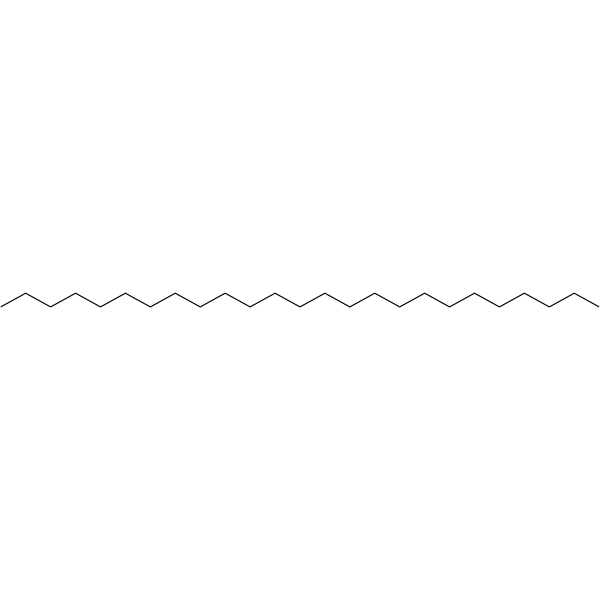
Octacosane (Standard) is the analytical standard of Octacosane. This product is intended for research and analytical applications. Octacosane is an endogenous metabolite with antibacterial activity. Octacosane shows high cytotoxicity against murine melanoma B16F10-Nex2 cells besides inducing protection against a grafted subcutaneous melanoma. Octacosane has the larvicidal activity against mosquito Culex quinquefasciatus with the LC50 concentration of 7.2 mg/l.
For research use only. We do not sell to patients.
- Purity : 95%
- CAS No.: 630-02-4
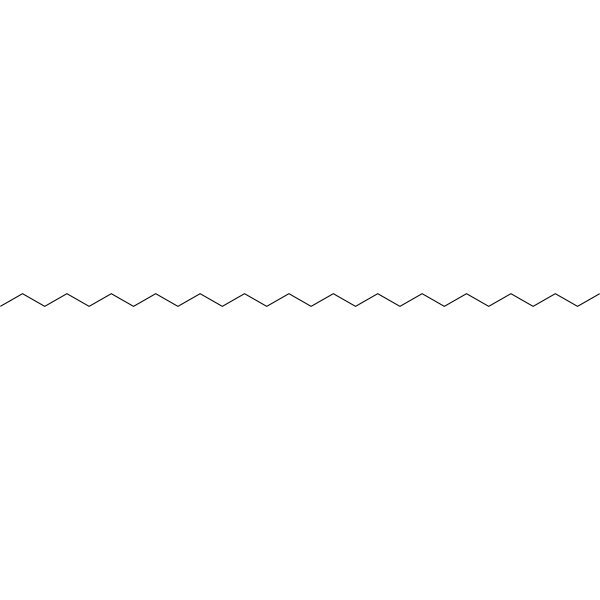
- Formula: C28H58
- Molecular Weight:394.76
-
Storage:
Please store the product under the recommended conditions in the Certificate of Analysis.


To place orders, for customer services and technical support, please contact: MedChemExpress USA
Tel: 609-228-6898 E-mail: [email protected] [email protected]


-
 Product Information
-
Chemical Information
- Purity & Documentation
-
 Help & FAQs


-
HY-N6600
OctadecaneTemperature-Responsive Material -
HY-N5127
NonacosaneBacterial Inhibitor -
HY-W094846
TetradecaneLow-temperature Phase Change Material -
HY-W089845
HeneicosaneSex Pheromone -
HY-N9929
DocosanePlant Resistance Inducer -
HY-W272217
OctacosaneAntibacterial/Antitumor Drug -

HY-W269368
HeptacosaneEster Product -
HY-N7933
TetracosaneNatural Product -
HY-N9971
HentriacontaneAnti-inflammatory agent -

HY-W094847
EicosaneAlkane -
HY-N7494
PentacosaneAnticancer Agent -

HY-W131352
HexacosaneEster Product


Product Information
Information
Application
The compound is the grade of analytical standard, which is the reference standard supplied assay. It is commonly used in qualitative, quantitative and methodological research experiments in HPLC, GC and MS.


Chemical Information
-
CAS No. 630-02-4
-
Molecular Weight 394.76
-
Formula C28H58
-
SMILES
CCCCCCCCCCCCCCCCCCCCCCCCCCCC
-
Synonyms
n-Octacosane (Standard); NSC 5549 (Standard)
-
Structure Classification
-
Initial Source
-
Shipping
Room temperature in continental US; may vary elsewhere.
-
Storage
Please store the product under the recommended conditions in the Certificate of Analysis.


Purity & Documentation
References
[1]. Carlos R Figueiredo, et al. Pyrostegia venusta heptane extract containing saturated aliphatic hydrocarbons induces apoptosis on B16F10-Nex2 melanoma cells and displays antitumor activity in vivo. Pharmacogn Mag. 2014 Apr;10(Suppl 2):S363-76. [Content Brief]
[2]. S Rajkumar, et al. Mosquitocidal activities of octacosane from Moschosma polystachyum Linn (lamiaceae). J Ethnopharmacol. 2004 Jan;90(1):87-9. [Content Brief]
[3]. Sameh S M Soliman, et al. Effective targeting of breast cancer cells (MCF7) via novel biogenic synthesis of gold nanoparticles using cancer-derived metabolites. PLoS One. 2020 Oct 6;15(10):e0240156. [Content Brief]

Calculators
Concentration (start) × Volume (start) = Concentration (final) × Volume (final)


Octacosane (Standard) Related Classifications
HY-W272217R Related Classifications
 Powered by Bioz