



ONT-093

Based on 1 Customer Validation
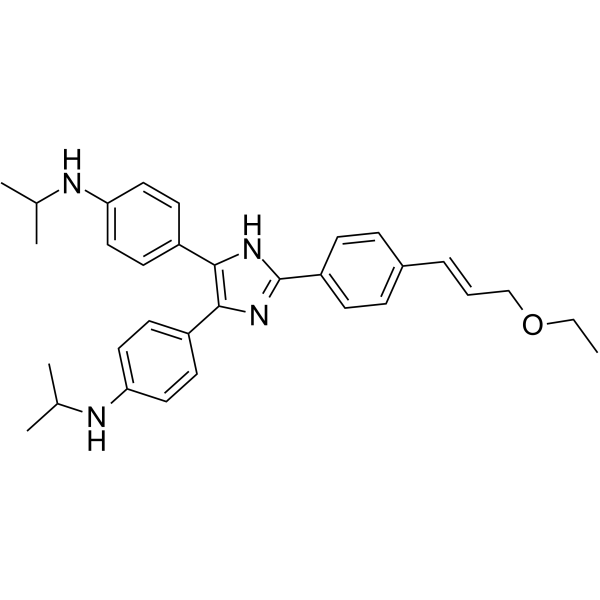
ONT-093 (OC 144-093) is a potent and orally active inhibitor of P-glycoprotein pump. ONT-093 inhibits P-gp-mediated ATPase activity with an IC50 of 0.16 μM. ONT-093 can inhibit drug efflux and increase bioavailability. ONT-093 reverses cancer cells multidrug resistance to chemotherapeutic drugs. ONT-093 can be used for the researches of cancer and infection, such as colon cancer and malarial .
For research use only. We do not sell to patients.
- Purity : 98.79%
- CAS No.: 216227-54-2
- Formula: C32H38N4O
- Molecular Weight:494.67
-
Storage:Powder -20°C, 3 years , 4°C, 2 years ; In solvent -80°C, 6 months , -20°C, 1 month

To place orders, for customer services and technical support, please contact: MedChemExpress USA
Tel: 609-228-6898 E-mail: [email protected] [email protected]


-
 Biological Activity
-
Chemical Information
-
Solvent & Solubility
- Protocols
- Purity & Documentation
- References
-
 Help & FAQs


-
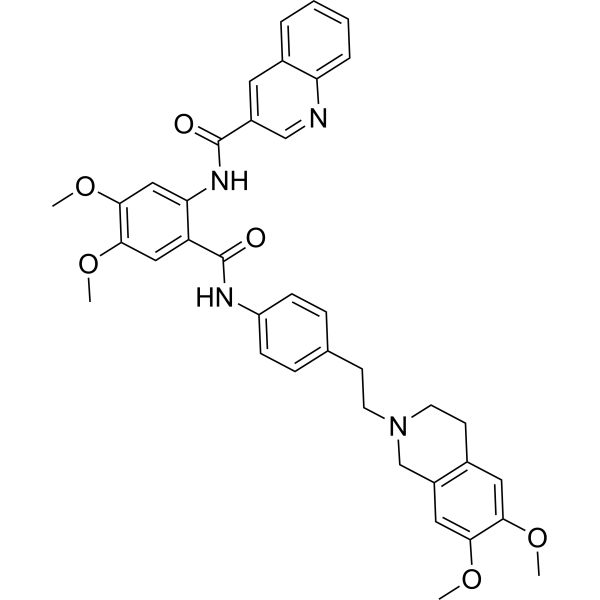
HY-10550
TariquidarP-gp Inhibitor -
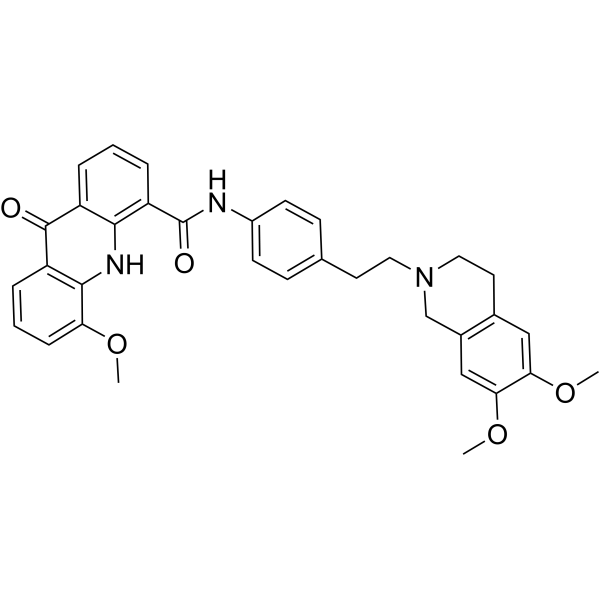
HY-50879
ElacridarP-gp And BCRP Dual-Inhibitor -
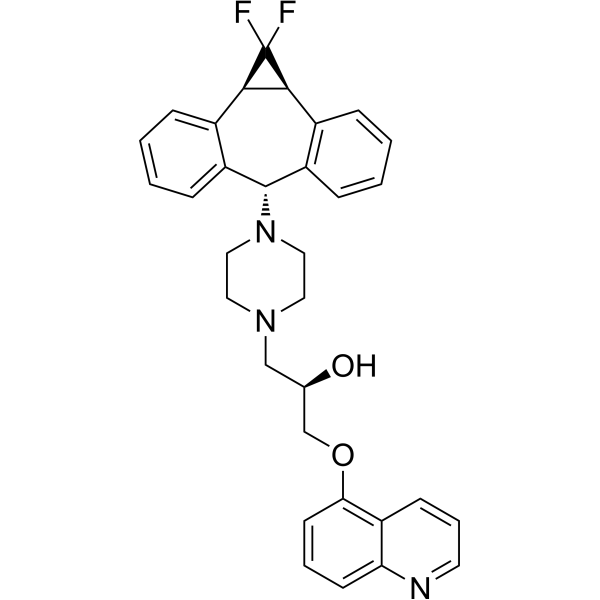
HY-15255
ZosuquidarP-gp Inhibitor -

HY-50879R
Elacridar (Standard)P-gp And BCRP Dual-Inhibitor -
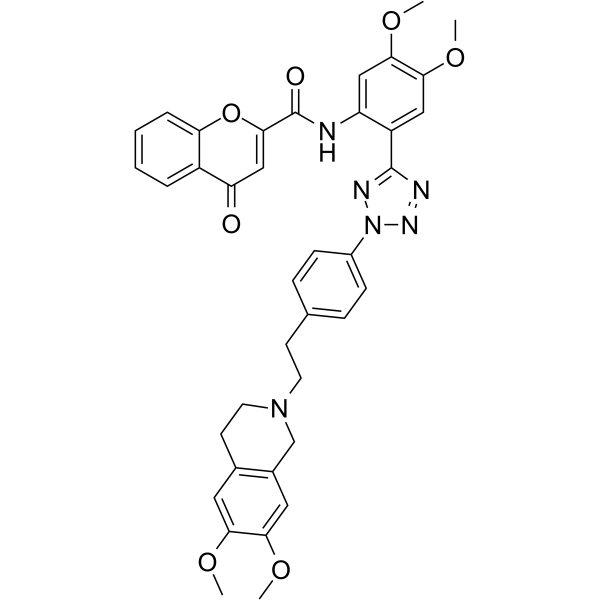
HY-13646
EncequidarP-glycoprotein Inhibitor -
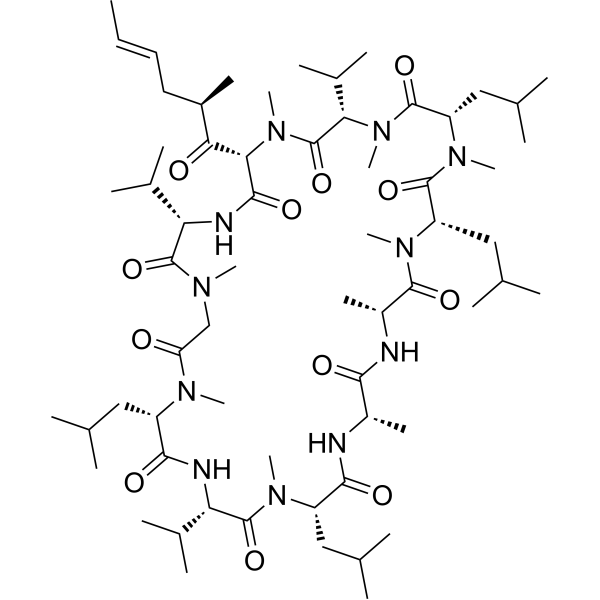
HY-17384
ValspodarP-glycoprotein Inhibitor -
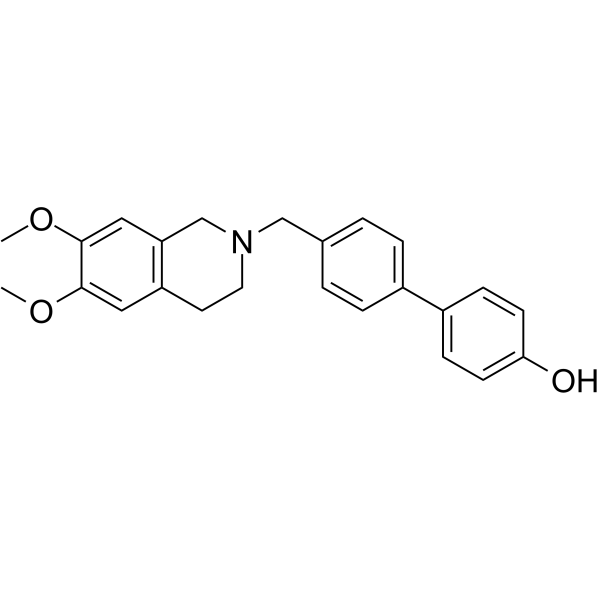
HY-113805
MC70P-glycoprotein Inhibitor -
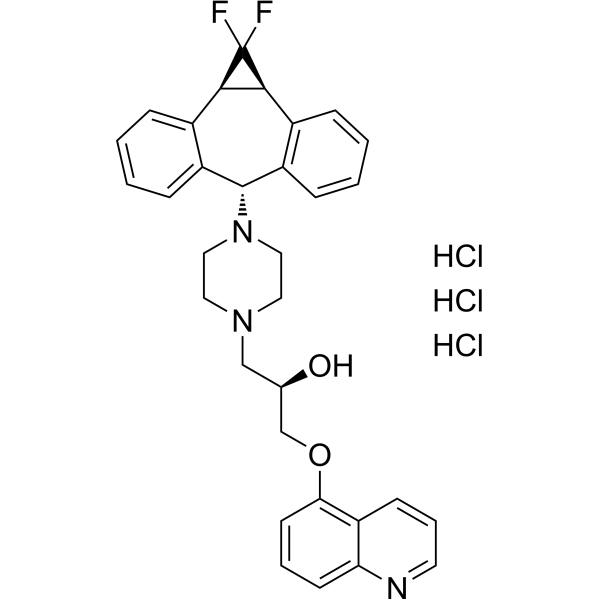
HY-50671
Zosuquidar trihydrochlorideP-gp Inhibitor -
HY-13646A
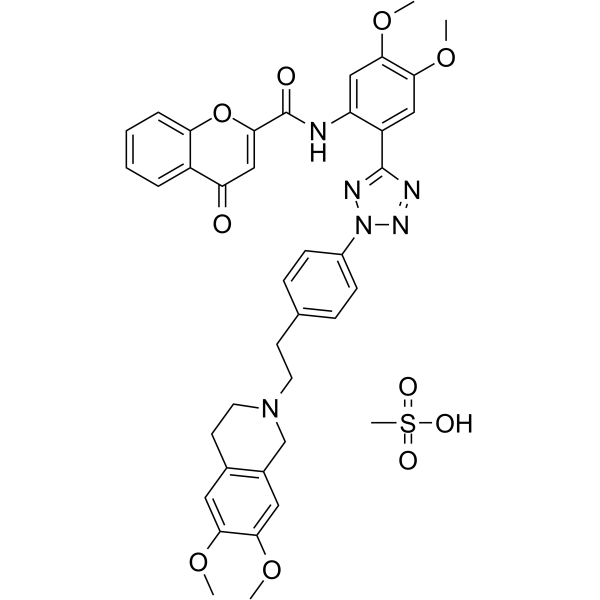
Encequidar mesylateP-gp Inhibitor -
HY-10550A
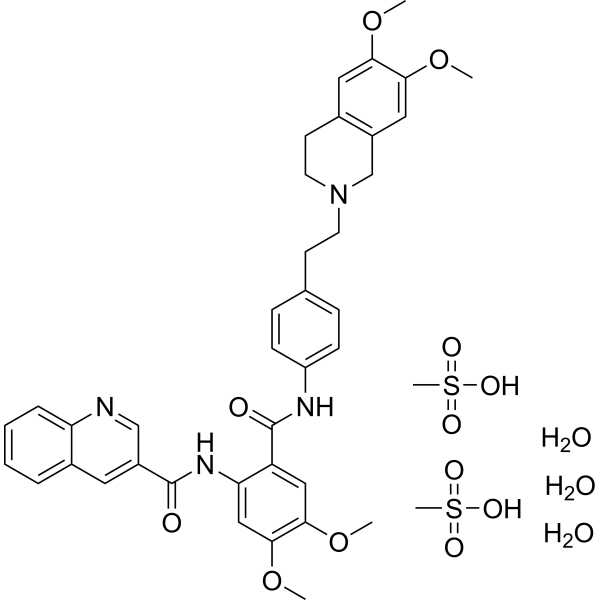
Tariquidar methanesulfonate, hydrateP-gp Inhibitor -
HY-19626
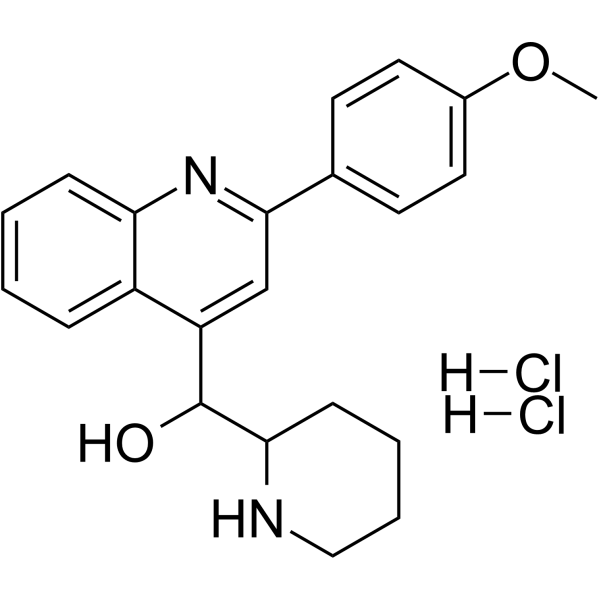
NSC23925P-glycoprotein Inhibitor -
HY-17013
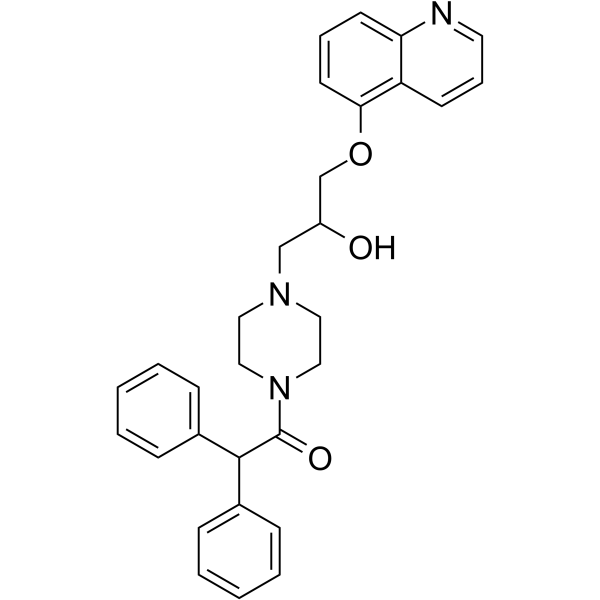
DofequidarP-glycoprotein Inhibitor


Biological Activity
Description
Cellular Effect
|
Cell Line

|
Type | Value | Description | References |
|---|---|---|---|---|
| CCRF-CEM | ED50 |
0.05 μM
Compound: 22
|
Modulation of Pgp (P-glycoprotein) mediated multidrug resistance in CEM / VLB 1000 cell line
Modulation of Pgp (P-glycoprotein) mediated multidrug resistance in CEM / VLB 1000 cell line
|
[PMID: 11128633] |
In Vitro
ONT-093 reverses multidrug resistance (MDR) to Doxorubicin (HY-15142A), Paclitaxel (HY-B0015), and Vinblastine in lymphoma, breast, ovarian, uterine, and colorectal carcinoma cell lines expressing P-glycoprotein with an average EC50 of 0.032 μM[1].
ONT-093 shows no cytotoxic against 15 normal, nontransformed, or tumor cell lines, with an average cytostatic IC50 of >60 μM[1].
ONT-093 (10 μM) reverses the diminished Halofantrine (HY-A0148) accumulation by pfmdr1Dd2- expressingoocytes[3].
MedChemExpress (MCE) has not independently confirmed the accuracy of these methods. They are for reference only. Further protocols information, click here.
In Vivo
ONT-093 (30 mg/kg, i.g., twice a day at days 4-6, 11-13, 18-20 and 25-27) enhances the antitumor activity of Paclitaxel (HY-B0015) in MDR breast and colon carcinoma xenograft mice models[1].
MedChemExpress (MCE) has not independently confirmed the accuracy of these methods. They are for reference only.
-
Animal Model:MDR breast and colon carcinoma xenograft mice models[1]
-
Dosage:30 mg/kg, companied Paclitaxel (15 mg/kg)
-
Administration:Orally gavage, twice a day at days 4-6, 11-13, 18-20 and 25-27
-
Result:Reduced tumor weight.


Chemical Information
-
CAS No. 216227-54-2
-
Appearance Solid
-
Molecular Weight 494.67
-
Formula C32H38N4O
-
Color Light yellow to yellow
-
SMILES
CC(C)NC1=CC=C(C2=C(C3=CC=C(NC(C)C)C=C3)N=C(C4=CC=C(/C=C/COCC)C=C4)N2)C=C1
-
Synonyms
OC 144-093; OC 144093
-
Shipping
Room temperature in continental US; may vary elsewhere.
-
Storage
Powder -20°C 3 years 4°C 2 years In solvent -80°C 6 months -20°C 1 month


Solvent & Solubility
In Vitro:
Methanol : 125 mg/mL (252.69 mM; Need ultrasonic)
DMSO : 100 mg/mL (202.15 mM; Need ultrasonic; Hygroscopic DMSO has a significant impact on the solubility of product, please use newly opened DMSO)
Please refer to the solubility information to select the appropriate solvent. Once prepared, please aliquot and store the solution to prevent product inactivation from repeated freeze-thaw cycles.
Storage method and period of stock solution: -80°C, 6 months; -20°C, 1 month. When stored at -80°C, please use it within 6 months. When stored at -20°C, please use it within 1 month.
Please refer to the solubility information to select the appropriate solvent. Once prepared, please aliquot and store the solution to prevent product inactivation from repeated freeze-thaw cycles.
Storage method and period of stock solution: -80°C, 6 months; -20°C, 1 month. When stored at -80°C, please use it within 6 months. When stored at -20°C, please use it within 1 month.
Concentration (start) × Volume (start) = Concentration (final) × Volume (final)

Protocols
-
Research Protocol for Infectious Diseases
Infectious-disease experiments test how pathogens interact with host barriers, innate immune receptors, inflammatory signaling, pathogen replication, and tissue injury; pattern-recognition receptors such as TLRs, RIG-I-like receptors, NOD-like receptors, and inflammasomes detect microbial molecules and activate NF-κB, interferon, and cytokine responses. The central hypothesis is that infection severity reflects the balance between pathogen burden and host response: protective inflammation restricts pathogen growth, whereas excessive or mislocalized inflammation contributes to tissue damage and disease phenotype. Unresolved questions include which host pathways are protective versus pathogenic, why some infection models fail to translate to human disease, and which combined readouts best predict clinically relevant infection outcomes.
-
Cell Cytotoxicity Assay
Cytotoxicity assays are usually based on the assessment of cell membrane damage, which can also be indirectly detected by measuring cell viability. Detection methods include MTT assay, CKK-8 assay, LDH assay and ATP assay, etc.
-
Protocol for Pharmacokinetic Study
Pharmacokinetic studies quantify how an organism handles a drug over time through absorption, distribution, metabolism, and excretion, and the core experimental readout is the concentration-time profile of parent drug and, when relevant, metabolites in biological matrices such as plasma, whole blood, urine, bile, or tissue. Pharmacokinetic analysis links dose, route, exposure, clearance, half-life, distribution, bioavailability, and systemic exposure to drug efficacy and toxicity hypotheses rather than measuring a signaling pathway directly. The literature links pharmacokinetics to drug-development phenotypes by showing that drug metabolism and pharmacokinetics influence compound progression, exposure-response interpretation, safety margins, dosing strategy, and failure risk during discovery and development. DMPK science contributes to compound optimization by integrating physicochemical properties, in vitro metabolism, transporter behavior, in vivo exposure, and pharmacodynamic contex


Purity & Documentation
-
Data Sheet (273 KB)
-
SDS (254 KB)
- English - EN (254 KB)
- Français - FR (254 KB)
- Deutsch - DE (254 KB)
- Norwegian - NO (254 KB)
- Español - ES (254 KB)
- Swedish - SV (254 KB)
- Italian - IT (254 KB)
- Korean - KR (254 KB)
- Portuguese - PT (254 KB)
-
Handling Instructions (2659 KB)
References
[1]. Newman MJ, et al. Discovery and characterization of OC144-093, a novel inhibitor of P-glycoprotein-mediated multidrug resistance. Cancer Res. 2000 Jun 1;60(11):2964-72. [Content Brief]
[2]. Chi KN, et al. A phase I pharmacokinetic study of the P-glycoprotein inhibitor, ONT-093, in combination with paclitaxel in patients with advanced cancer. Invest New Drugs. 2005 Aug;23(4):311-5. [Content Brief]
[3]. Sanchez CP, et al. Polymorphisms within PfMDR1 alter the substrate specificity for anti-malarial drugs in Plasmodium falciparum. Mol Microbiol. 2008 Nov;70(4):786-98. [Content Brief]


Complete Stock Solution Preparation Table
Please refer to the solubility information to select the appropriate solvent. Once prepared, please aliquot and store the solution to prevent product inactivation from repeated freeze-thaw cycles.
Storage method and period of stock solution: -80°C, 6 months; -20°C, 1 month. When stored at -80°C, please use it within 6 months. When stored at -20°C, please use it within 1 month.
| Optional Solvent | Concentration Solvent Mass | 1 mg | 5 mg | 10 mg | 25 mg |
|---|---|---|---|---|---|
| DMSO / Methanol | 1 mM | 2.0215 mL | 10.1077 mL | 20.2155 mL | 50.5387 mL |
| 5 mM | 0.4043 mL | 2.0215 mL | 4.0431 mL | 10.1077 mL | |
| 10 mM | 0.2022 mL | 1.0108 mL | 2.0215 mL | 5.0539 mL | |
| 15 mM | 0.1348 mL | 0.6738 mL | 1.3477 mL | 3.3692 mL | |
| 20 mM | 0.1011 mL | 0.5054 mL | 1.0108 mL | 2.5269 mL | |
| 25 mM | 0.0809 mL | 0.4043 mL | 0.8086 mL | 2.0215 mL | |
| 30 mM | 0.0674 mL | 0.3369 mL | 0.6738 mL | 1.6846 mL | |
| 40 mM | 0.0505 mL | 0.2527 mL | 0.5054 mL | 1.2635 mL | |
| 50 mM | 0.0404 mL | 0.2022 mL | 0.4043 mL | 1.0108 mL | |
| 60 mM | 0.0337 mL | 0.1685 mL | 0.3369 mL | 0.8423 mL | |
| 80 mM | 0.0253 mL | 0.1263 mL | 0.2527 mL | 0.6317 mL | |
| 100 mM | 0.0202 mL | 0.1011 mL | 0.2022 mL | 0.5054 mL |


ONT-093 Related Classifications
HY-15134 Related Classifications
 Powered by Bioz