



PGE-M

Based on 1 Customer Validation
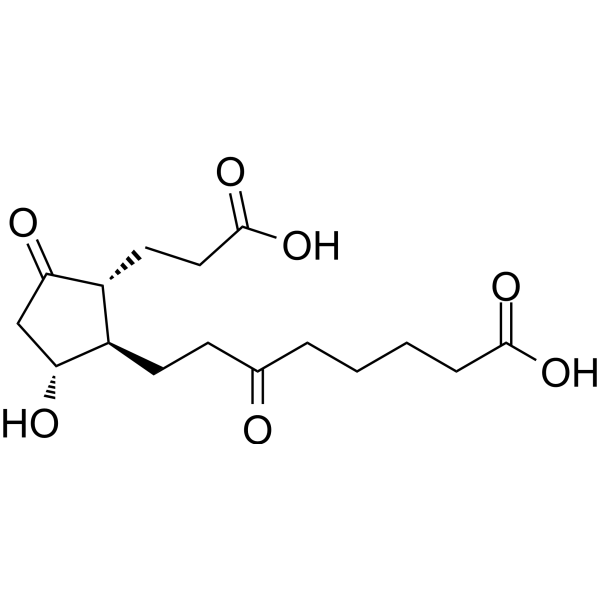
PGE-M (tetranor-PGEM) is a metabolite of Prostaglandin E2 (HY-101952) and also an inflammatory biomarker. Urinary PGE-M is a potential biomarker for detecting advanced colorectal tumors. PGE-M can be used in studies related to colorectal cancer, obesity, aging and breast cancer.
For research use only. We do not sell to patients.
- Purity : 99.9%
- CAS No.: 24769-56-0
- Formula: C16H24O7
- Molecular Weight:328.36
-
Storage:
-80°C

To place orders, for customer services and technical support, please contact: MedChemExpress USA
Tel: 609-228-6898 E-mail: [email protected] [email protected]


-
 Biological Activity
-
Chemical Information
- Protocols
- Purity & Documentation
- References
-
 Help & FAQs


-

HY-113254
13,14-Dihydro-15-keto-PGE25-HT Modulator -
HY-114988S
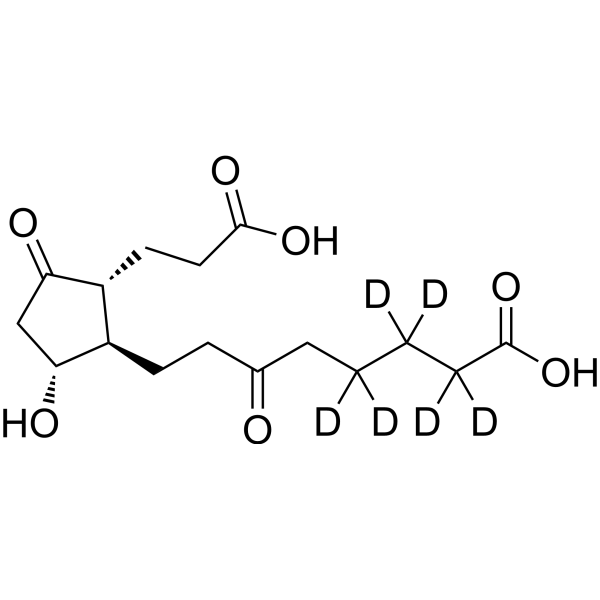
tetranor-PGEM-d6Stable Isotope -
HY-101952S
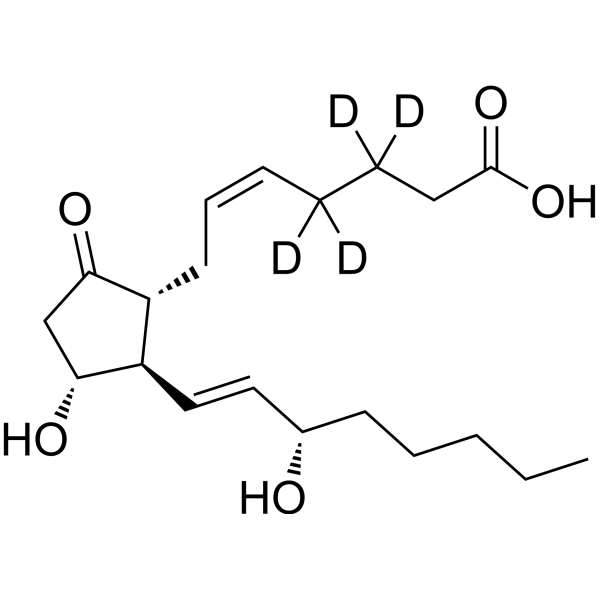
Prostaglandin E2-d4Stable Isotope -
HY-134495
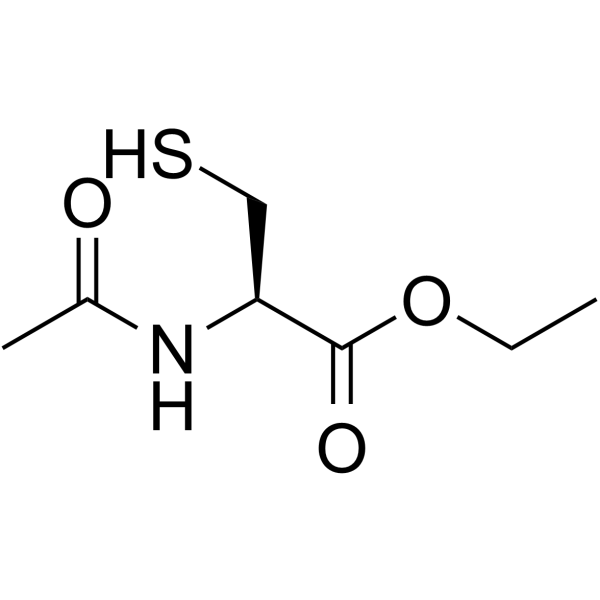
N-Acetyl-L-cysteine ethyl esterAntioxidant -
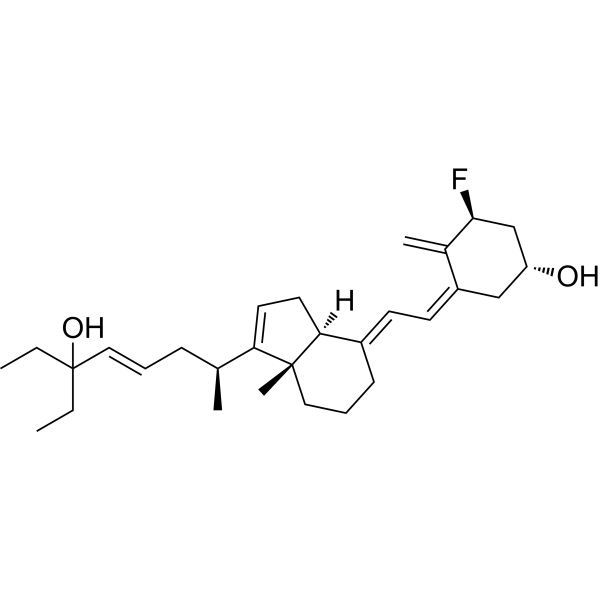
HY-32345
ElocalcitolVDR Agonist -
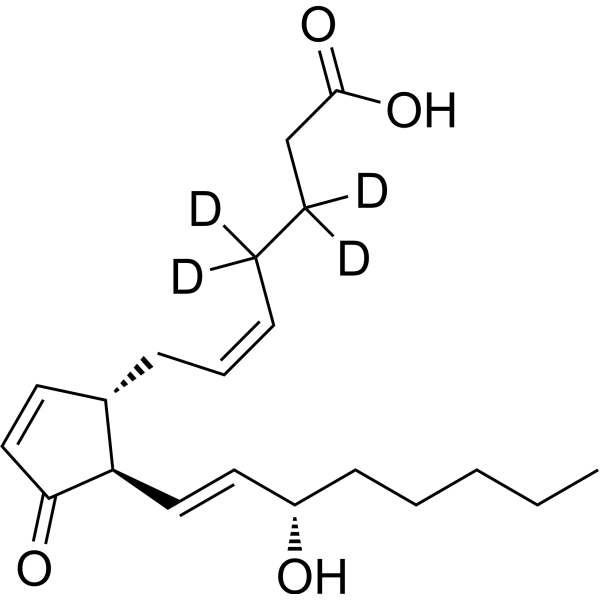
HY-113366S
Prostaglandin J2-d4Stable Isotope -

HY-118830S1
13,14-Dihydro-15-keto prostaglandin D2-d9Stable Isotope -

HY-W011890A
Cridanimod sodiumAntiviral Agent -

HY-116763
COX-2/5-LOX-IN-4COX-2/LOX Inhibitor -

HY-W701877
Latanoprost tris(triethylsilyl) ether -

HY-139232
17(R)-Resolvin D3DHA Metabolite


Biological Activity
Description
In Vitro
PGE-M is a metabolite of Prostaglandin E2 (HY-101952) and also an inflammatory biomarker. Urinary PGE-M is a potential biomarker for detecting advanced colorectal tumors. PGE-M can be used in research related to colorectal cancer, obesity, aging and breast cancer[1][2].
MedChemExpress (MCE) has not independently confirmed the accuracy of these methods. They are for reference only. Further protocols information, click here.


Chemical Information
-
CAS No. 24769-56-0
-
Appearance Liquid
-
Molecular Weight 328.36
-
Formula C16H24O7
-
Color Colorless to light yellow
-
SMILES
O[C@H]1[C@@H]([C@H](C(C1)=O)CCC(O)=O)CCC(CCCCC(O)=O)=O
-
Synonyms
tetranor-PGEM
-
Structure Classification
-
Initial Source
-
Shipping
Shipping with dry ice.
-
Storage
-80°C

Protocols
-
Research Protocol for Metabolic Diseases
AMP-activated protein kinase, AMPK, is a conserved cellular energy sensor that responds to reduced cellular energy status and coordinates metabolism by increasing ATP-generating catabolic pathways while suppressing ATP-consuming anabolic processes. In metabolic disease research, the AMPK pathway is experimentally relevant because it regulates hepatic lipid synthesis, fatty acid oxidation, glucose production, skeletal-muscle glucose disposal, mTORC1-linked biosynthesis, autophagy, mitochondrial homeostasis, and whole-body energy balance. The central pathway logic is that energy stress, metformin, exercise-like stimulation, or direct AMPK activators increase AMPKα Thr172 phosphorylation and downstream substrate phosphorylation, including ACC and RAPTOR. Phosphorylation of ACC suppresses lipogenesis and supports fatty acid oxidation, whereas phosphorylation of RAPTOR suppresses mTORC1 signaling and links cellular energy status to growth and protein synthesis control. The pathway is linked
-
Breast Cancer Modeling
Breast cancer is a heterogeneous cancer, and it has been distinguished into four subtypes: luminal A, luminal B, HER2-positive and basal-like. Molecular mutations, epigenetic alterations, hormone exposure and immune microenvironment are related to the progression of breast cancer.


Purity & Documentation
-
Data Sheet (267 KB)
-
SDS (394 KB)
- English - EN (394 KB)
- Français - FR (394 KB)
- Deutsch - DE (394 KB)
- Norwegian - NO (394 KB)
- Español - ES (394 KB)
- Swedish - SV (394 KB)
- Italian - IT (394 KB)
- Korean - KR (394 KB)
- Portuguese - PT (394 KB)
-
Handling Instructions (2659 KB)
References
[1]. Johnson JC, et al. Urine PGE-M: A metabolite of prostaglandin E2 as a potential biomarker of advanced colorectal neoplasia. Clin Gastroenterol Hepatol. 2006;4(11):1358-1365. [Content Brief]
[2]. Morris PG, et al. Increased levels of urinary PGE-M, a biomarker of inflammation, occur in association with obesity, aging, and lung metastases in patients with breast cancer. Cancer Prev Res (Phila). 2013;6(5):428-436. [Content Brief]

Calculators
Concentration (start) × Volume (start) = Concentration (final) × Volume (final)


PGE-M Related Classifications
HY-114988 Related Classifications
 Powered by Bioz