



PRL-3 Inhibitor I
Based on 1 publication(s) in Google Scholar
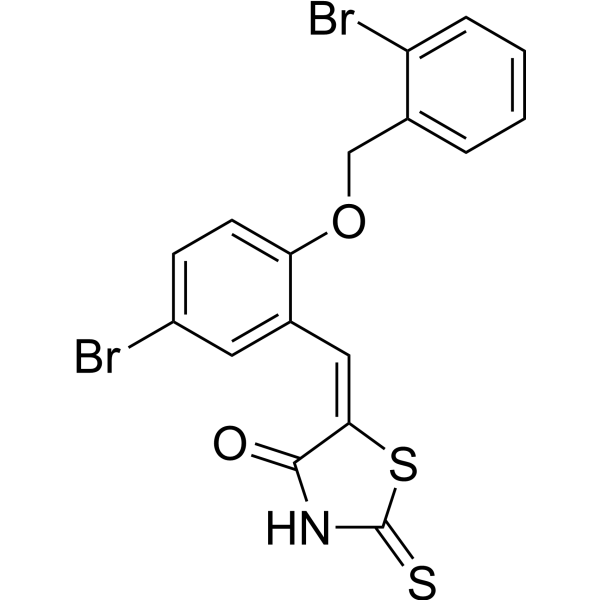
PRL-3 Inhibitor I is a potent PRL-3 inhibitor with an IC50 of 0.9 μM. PRL-3 Inhibitor I shows a reduced invasion in cell-based assay.
For research use only. We do not sell to patients.
- Purity : 98.11%
- CAS No.: 893449-38-2
- Formula: C17H11Br2NO2S2
- Molecular Weight:485.21
-
Storage:
4°C, protect from light
* In solvent : -80°C, 6 months; -20°C, 1 month (protect from light)

To place orders, for customer services and technical support, please contact: MedChemExpress USA
Tel: 609-228-6898 E-mail: [email protected] [email protected]


-
 Biological Activity
-
Chemical Information
-
Solvent & Solubility
- Protocols
- Purity & Documentation
- References
-
 Help & FAQs


-
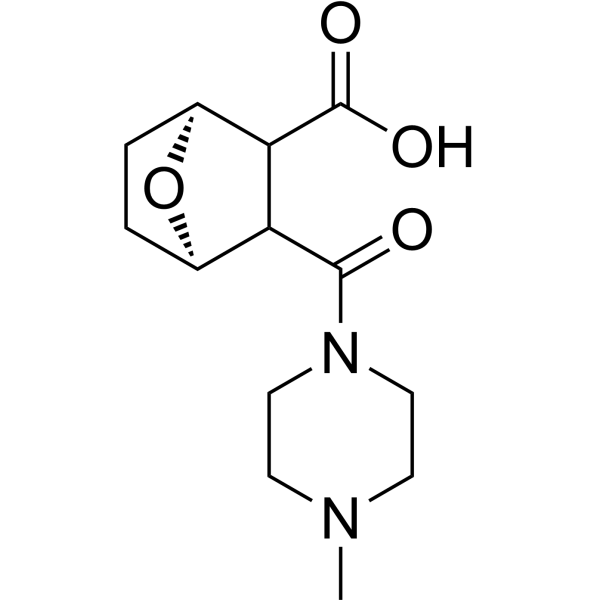
HY-18597
LB-100PP2A Inhibitor -
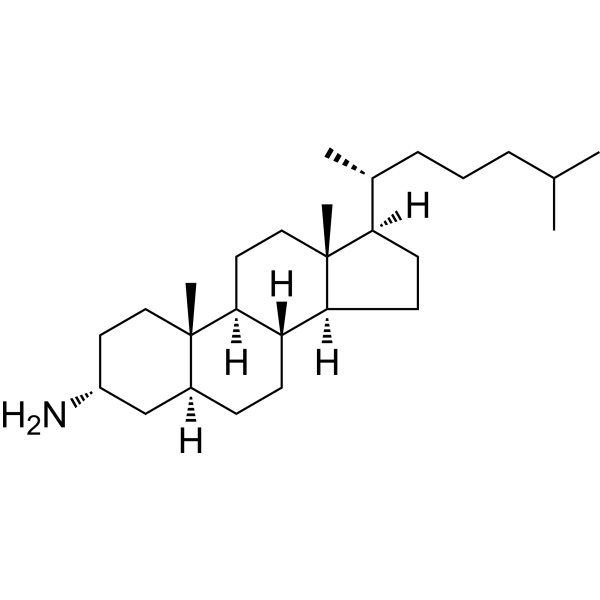
HY-19776
3α-AminocholestanePhosphatase Inhibitor -
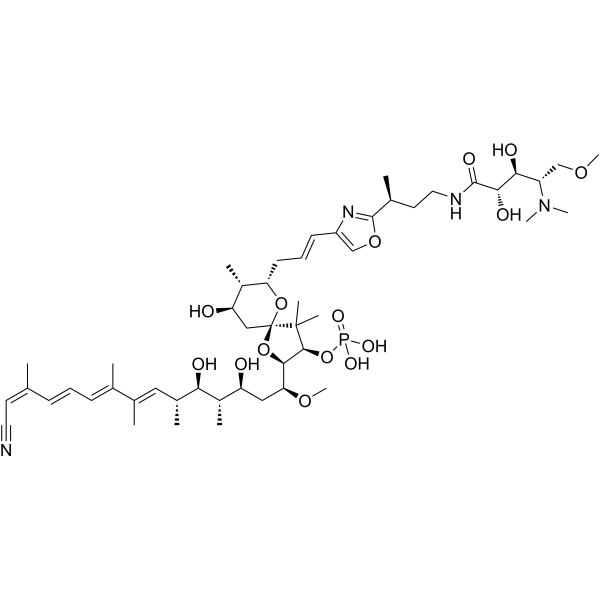
HY-18983
Calyculin APhosphatase Inhibitor -
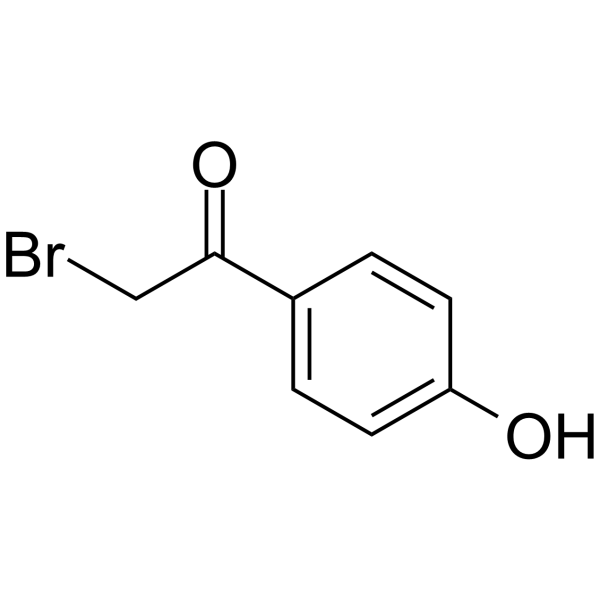
HY-W002314
2-Bromo-4'-hydroxyacetophenonePTP1B Inhibitor -
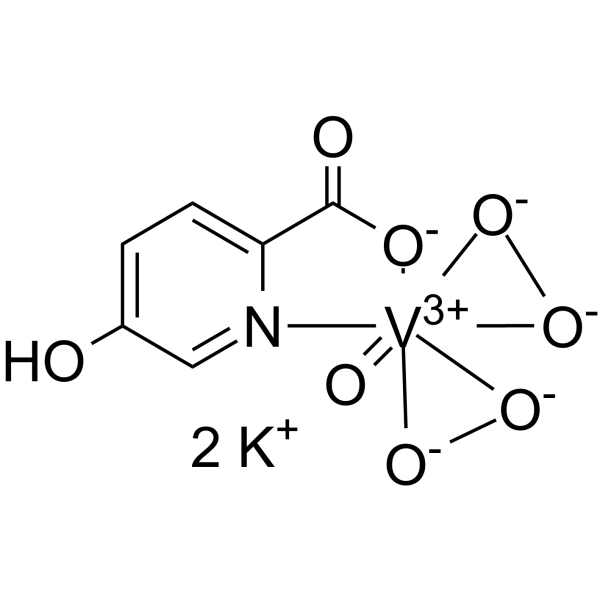
HY-128693
BpV(HOpic)PTEN Inhibitor -
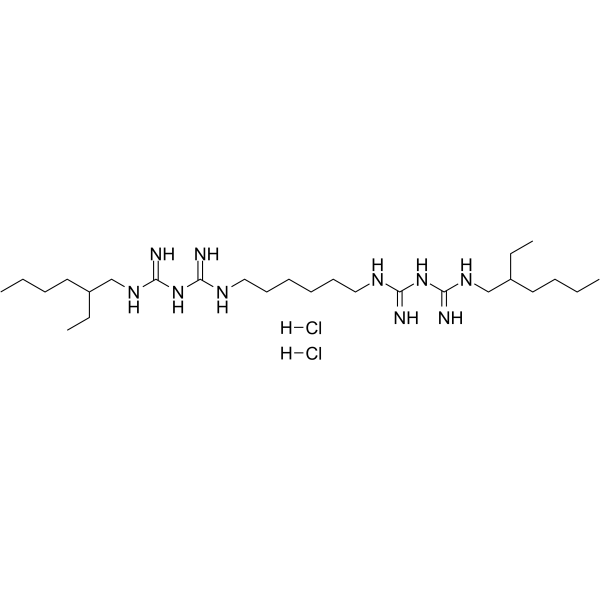
HY-108547
Alexidine dihydrochlorideAntifungal Agent -
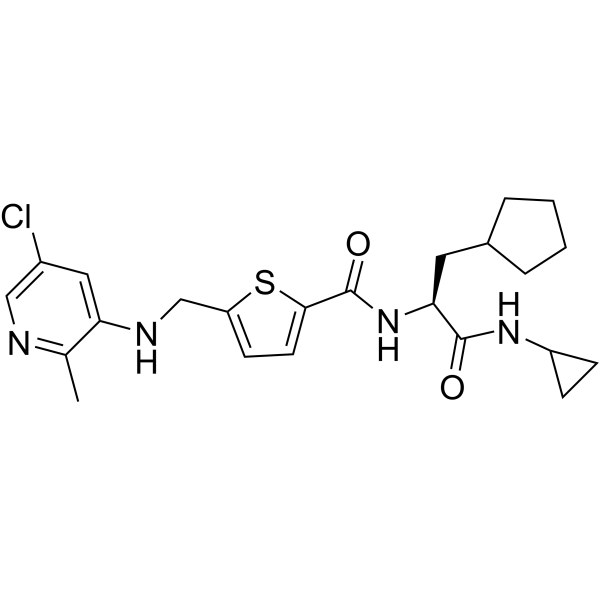
HY-15832
GSK 2830371Wip1 Phosphatase Inhibitor -
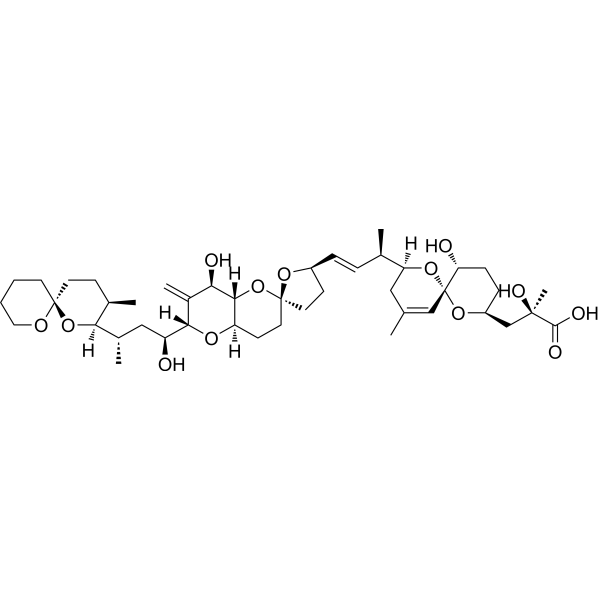
HY-N6785
Okadaic acidPP1/PP2A Inhibitor -
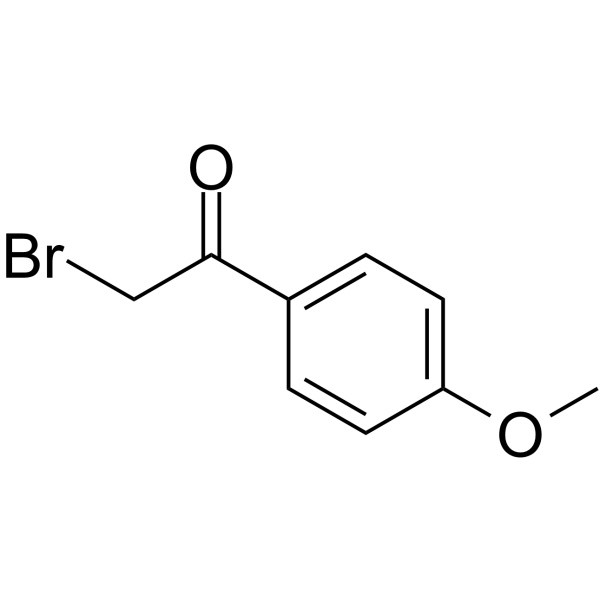
HY-W013478
PTP inhibitor 1PTP Inhibitor -
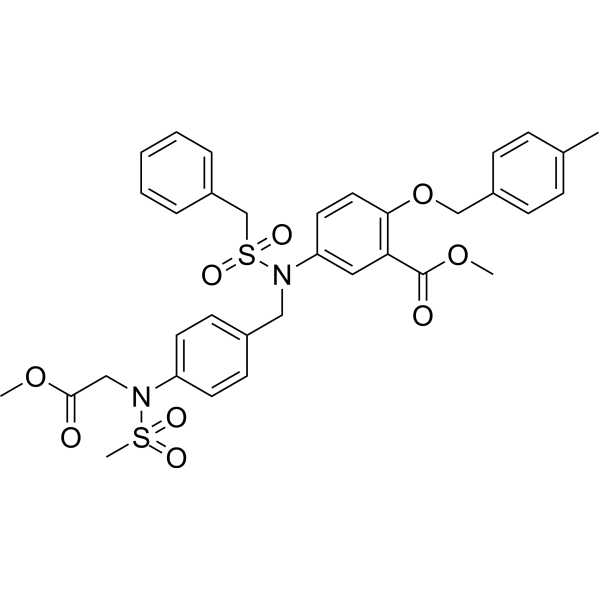
HY-100462
PTP1B-IN-2PTP1B Inhibitor -
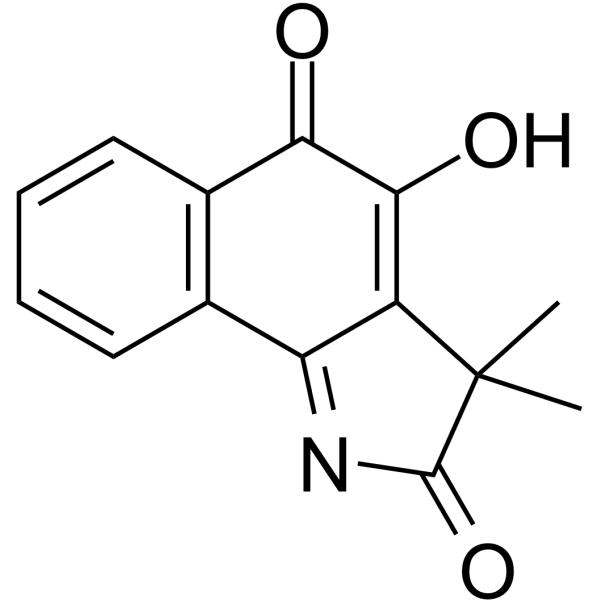
HY-100625
BVT948PTP Inhibitor -
HY-15880
CCT007093PPM1D/Wip1 Inhibitor
Publications Citing Use of MedChemExpress (MCE) PRL-3 Inhibitor I
More

Biological Activity
Description
IC50 & Target
IC50: 0.9 μM (PRL-3)[1]
Cellular Effect
|
Cell Line

|
Type | Value | Description | References |
|---|---|---|---|---|
| DLD-1 | IC50 |
7 μM
Compound: BR-1
|
Antimigratory activity against human DLD1 cells overexpressing PRL3 by crystal violet staining-based light microscopic analysis
Antimigratory activity against human DLD1 cells overexpressing PRL3 by crystal violet staining-based light microscopic analysis
|
[PMID: 23726031] |
In Vitro


Chemical Information
-
CAS No. 893449-38-2
-
Appearance Solid
-
Molecular Weight 485.21
-
Formula C17H11Br2NO2S2
-
Color Light yellow to green yellow
-
SMILES
O=C1NC(S/C1=C/C2=CC(Br)=CC=C2OCC3=CC=CC=C3Br)=S
-
Shipping
Room temperature in continental US; may vary elsewhere.
-
Storage
4°C, protect from light
* In solvent : -80°C, 6 months; -20°C, 1 month (protect from light)


Publications (1)
-
Journal Impact Factor
-
Most Recent
-
Lung Cancer
NOTCH and PTP4A3 alterations emerge as novel predictive biomarkers and potential therapeutic targets in pleural mesothelioma. [Abstract]2024 Dec:198:108024. PMID: 39547104


Solvent & Solubility
In Vitro:
DMSO : 41.67 mg/mL (85.88 mM; ultrasonic and warming and heat to 60°C; Hygroscopic DMSO has a significant impact on the solubility of product, please use newly opened DMSO)
H2O : < 0.1 mg/mL (insoluble)
Please refer to the solubility information to select the appropriate solvent. Once prepared, please aliquot and store the solution to prevent product inactivation from repeated freeze-thaw cycles.
Storage method and period of stock solution: -80°C, 6 months; -20°C, 1 month (protect from light). When stored at -80°C, please use it within 6 months. When stored at -20°C, please use it within 1 month.
Please refer to the solubility information to select the appropriate solvent. Once prepared, please aliquot and store the solution to prevent product inactivation from repeated freeze-thaw cycles.
Storage method and period of stock solution: -80°C, 6 months; -20°C, 1 month (protect from light). When stored at -80°C, please use it within 6 months. When stored at -20°C, please use it within 1 month.
Concentration (start) × Volume (start) = Concentration (final) × Volume (final)

Protocols
-
Cell Cytotoxicity Assay
Cytotoxicity assays are usually based on the assessment of cell membrane damage, which can also be indirectly detected by measuring cell viability. Detection methods include MTT assay, CKK-8 assay, LDH assay and ATP assay, etc.
-
Cell invasion
Cell invasion is the ability of cells to migrate from one area to another via the extracellular matrix. Cell invasion is the response of normal and cancer cells to chemical and mechanical stimuli. Before migrating to a new region, the extracellular matrix is degraded by proteases within the cell. Cell invasion often occurs during wound repair, vascularization and inflammation, abnormal tissue invasion, and tumor cell metastasis.
-
Directly Induced Neuron Culture
Directly induced neuron culture converts somatic cells, most commonly fibroblasts, into induced neurons without passing through a pluripotent or neural progenitor stage; classic evidence shows that mouse fibroblasts can be converted by Ascl1, Brn2/Pou3f2, and Myt1l, human fibroblasts can be converted by defined neuronal transcription factors, and human fibroblasts can also be converted by miR-9/9-124 with neurogenic or subtype-specifying transcription factors. The readout is acquisition of neuronal identity and function, assessed by neuronal morphology, neuronal markers such as Tuj1/βIII-tubulin, MAP2, synapsin, and subtype markers when relevant, together with functional assays such as action-potential firing, synaptic activity, and electrophysiology.


Purity & Documentation
-
Data Sheet (274 KB)
-
SDS (538 KB)
- English - EN (538 KB)
- Français - FR (538 KB)
- Deutsch - DE (538 KB)
- Norwegian - NO (538 KB)
- Español - ES (538 KB)
- Swedish - SV (538 KB)
- Italian - IT (538 KB)
- Korean - KR (538 KB)
- Portuguese - PT (538 KB)
-
Handling Instructions (2659 KB)
References


Complete Stock Solution Preparation Table
Please refer to the solubility information to select the appropriate solvent. Once prepared, please aliquot and store the solution to prevent product inactivation from repeated freeze-thaw cycles.
Storage method and period of stock solution: -80°C, 6 months; -20°C, 1 month (protect from light). When stored at -80°C, please use it within 6 months. When stored at -20°C, please use it within 1 month.
| Optional Solvent | Concentration Solvent Mass | 1 mg | 5 mg | 10 mg | 25 mg |
|---|---|---|---|---|---|
| DMSO | 1 mM | 2.0610 mL | 10.3048 mL | 20.6096 mL | 51.5241 mL |
| 5 mM | 0.4122 mL | 2.0610 mL | 4.1219 mL | 10.3048 mL | |
| 10 mM | 0.2061 mL | 1.0305 mL | 2.0610 mL | 5.1524 mL | |
| 15 mM | 0.1374 mL | 0.6870 mL | 1.3740 mL | 3.4349 mL | |
| 20 mM | 0.1030 mL | 0.5152 mL | 1.0305 mL | 2.5762 mL | |
| 25 mM | 0.0824 mL | 0.4122 mL | 0.8244 mL | 2.0610 mL | |
| 30 mM | 0.0687 mL | 0.3435 mL | 0.6870 mL | 1.7175 mL | |
| 40 mM | 0.0515 mL | 0.2576 mL | 0.5152 mL | 1.2881 mL | |
| 50 mM | 0.0412 mL | 0.2061 mL | 0.4122 mL | 1.0305 mL | |
| 60 mM | 0.0343 mL | 0.1717 mL | 0.3435 mL | 0.8587 mL | |
| 80 mM | 0.0258 mL | 0.1288 mL | 0.2576 mL | 0.6441 mL |


PRL-3 Inhibitor I Related Classifications
HY-112476 Related Classifications
 Powered by Bioz