



(±)11(12)-EET

Based on 1 Customer Validation
(±)11(12)-EET is a NLRP3 inflammasome inhibitor. (±)11(12)-EET can be used for the research of anti-inflammatory, angiogenic and cardioprotective.
For research use only. We do not sell to patients.
- Purity : 98.33%
- CAS No.: 87173-81-7
- Formula: C20H32O3
- Molecular Weight:320.47
-
Storage:
Solution, -20°C, 2 years

To place orders, for customer services and technical support, please contact: MedChemExpress USA
Tel: 609-228-6898 E-mail: [email protected] [email protected]


-
 Biological Activity
-
Chemical Information
- Protocols
- Purity & Documentation
- References
-
 Help & FAQs


-

HY-132184
5,6-Epoxyeicosatrienoic acidMetabolite -
HY-150084
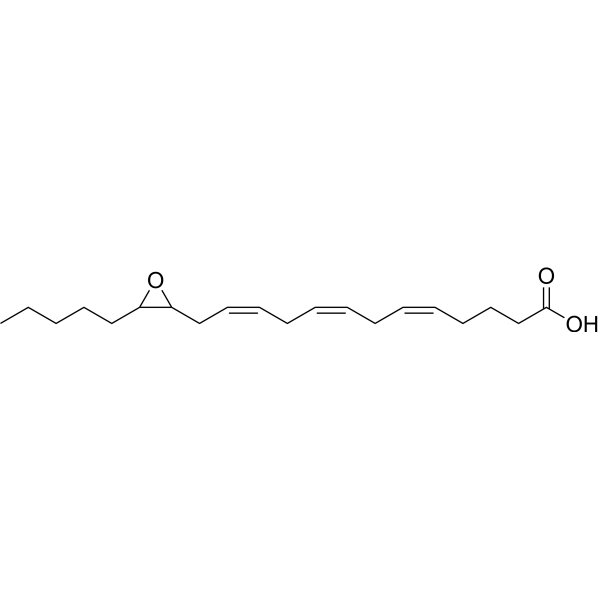
(±)14,15-Epoxyeicosatrienoic acidProliferation Inducer -
HY-134495
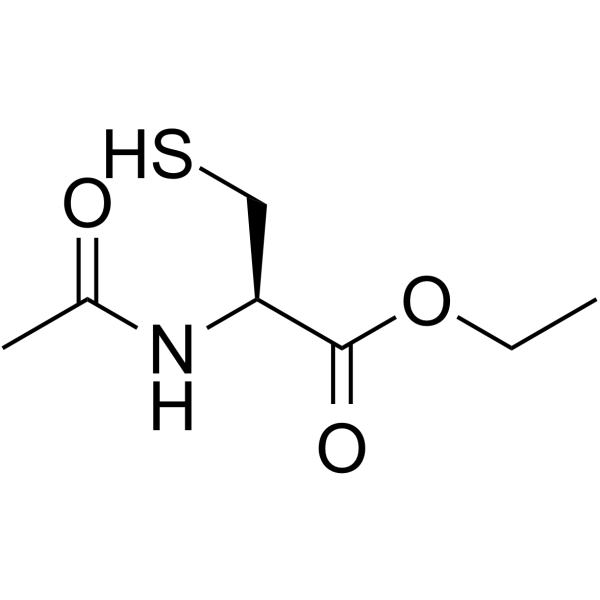
N-Acetyl-L-cysteine ethyl esterAntioxidant -
HY-W399297
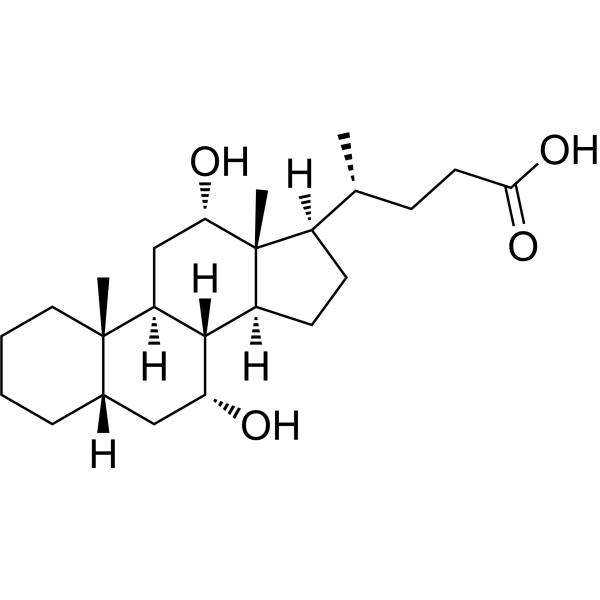
Isodeoxycholic acidEndogenous Metabolite -

HY-138969
(±)10(11)-EDP ethanolamide -
HY-135430
SRS16-86Ferroptosis Inhibitor -

HY-138971
(±)17(18)-EpETE-ethanolamide -

HY-W399297R
Isodeoxycholic acid (Standard)Standard


Biological Activity
Description
IC50 & Target
[1]|
NLRP3 inflammasome |
In Vitro
(±)11(12)-EET (5 μM; 10 mimutes; macrophages) depresses NLRP3 protein expression, dramatically decreases the expression of pro-IL-1β in cells and the supernatant and reduces the intracellular ROS[1].
MedChemExpress (MCE) has not independently confirmed the accuracy of these methods. They are for reference only. Further protocols information, click here.
In Vivo
MedChemExpress (MCE) has not independently confirmed the accuracy of these methods. They are for reference only.


Chemical Information
-
CAS No. 87173-81-7
-
Appearance Liquid
-
Molecular Weight 320.47
-
Formula C20H32O3
-
Color Colorless to light yellow
-
SMILES
CCCCC/C=C\C[C@H]1O[C@H]1C/C=C\C/C=C\CCCC(O)=O
-
Synonyms
11,12-EET
-
Shipping
Room temperature in continental US; may vary elsewhere.
-
Storage
Solution, -20°C, 2 years

Protocols
-
Research Protocol for Inflammation-related Diseases
The NLRP3 inflammasome is a cytosolic innate immune signaling platform that integrates priming signals and danger-signal activation to promote caspase-1 activation, maturation of IL-1β and IL-18, and gasdermin D-mediated pyroptotic cell death. The core experimental logic is to determine whether inflammatory disease phenotypes are driven by increased NLRP3 expression, ASC-containing inflammasome assembly, caspase-1 cleavage, GSDMD cleavage, and extracellular release of IL-1β/IL-18 rather than by nonspecific cell injury alone. The pathway is strongly linked to inflammation-related disease phenotypes because monosodium urate crystals activate NALP3/NLRP3 inflammasome signaling in gout-like crystal inflammation, cholesterol crystals activate NLRP3 inflammasomes in atherogenesis models, and DSS-induced intestinal inflammation has been reported to involve NLRP3 inflammasome activity. However, experimental colitis studies also show context-dependent protective effects of NLRP3 inflammasome co
-
Pyroptosis Solutions
Pyroptosis is a lytic inflammatory cell-death pathway executed by gasdermin pores, most classically through inflammasome-mediated activation of caspase-1, cleavage of gasdermin D, membrane pore formation, LDH release, and secretion of IL-1β and IL-18. The canonical pathway is commonly modeled by priming cells with an inflammatory signal such as LPS to induce pro-IL-1β and inflammasome components, followed by an activation signal such as ATP or nigericin to activate NLRP3, ASC speck formation, caspase-1 cleavage, GSDMD cleavage, cytokine release, and pyroptotic membrane rupture. The non-canonical pathway is triggered when cytosolic LPS activates mouse caspase-11 or human caspase-4/5, leading to GSDMD cleavage and pyroptosis, and this can secondarily activate NLRP3-dependent IL-1β release. Pyroptosis is linked to inflammatory injury, infection, cancer, liver disease, ocular disease, placental inflammation, and other disease phenotypes, but unresolved questions include which gasdermin fam


Purity & Documentation
-
Data Sheet (271 KB)
-
SDS (546 KB)
- English - EN (546 KB)
- Français - FR (546 KB)
- Deutsch - DE (546 KB)
- Norwegian - NO (546 KB)
- Español - ES (546 KB)
- Swedish - SV (546 KB)
- Italian - IT (546 KB)
- Korean - KR (546 KB)
- Portuguese - PT (546 KB)
-
Handling Instructions (2659 KB)
References
[1]. Luo XQ, et al. Epoxyeicosatrienoic acids inhibit the activation of NLRP3 inflammasome in murine macrophages. J Cell Physiol. 2020;235(12):9910-9921. [Content Brief]
[2]. Chacos N, et al. Novel epoxides formed during the liver cytochrome P-450 oxidation of arachidonic acid. Biochem Biophys Res Commun. 1982;104(3):916-922. [Content Brief]
[3]. Oliw EH, et al. Oxygenation of arachidonic acid by hepatic monooxygenases. Isolation and metabolism of four epoxide intermediates. J Biol Chem. 1982;257(7):3771-3781. [Content Brief]
[4]. Capdevila JH, et al. Cytochrome P450 and arachidonic acid bioactivation. Molecular and functional properties of the arachidonate monooxygenase. J Lipid Res. 2000;41(2):163-181. [Content Brief]
[5]. Wang Z, et al. Arachidonic acid inhibits basolateral K channels in the cortical collecting duct via cytochrome P-450 epoxygenase-dependent metabolic pathways. Am J Physiol Renal Physiol. 2008;294(6):F1441-F1447. [Content Brief]
[6]. Spector AA. Arachidonic acid cytochrome P450 epoxygenase pathway. J Lipid Res. 2009;50 Suppl(Suppl):S52-S56. [Content Brief]

Calculators
Concentration (start) × Volume (start) = Concentration (final) × Volume (final)


(±)11(12)-EET Related Classifications
HY-130494 Related Classifications
 Powered by Bioz