



BDNF Protein, Human/Mouse/Rat (CHO)
Based on 1 Customer Validation
BDNF Protein, Human (CHO) is a neurotrophin binding to the high-affinity tropomyosin-related receptor kinase B (TrkB) receptor to regulate neurodevelopmental processes, including neuronal survival, neuronal differentiation, and synaptic plasticity.
- Species: Mouse; Human; Rat
- Source: CHO
-
Storage:Stored at -20°C for 2 years from date of receipt. After reconstitution, it is stable at 4°C for 1 week or -20°C for longer (with carrier protein). It is recommended to freeze aliquots at -20°C or -80°C for extended storage.

To place orders, for customer services and technical support, please contact: MedChemExpress USA
Tel: 609-228-6898 E-mail: [email protected] [email protected]


-
 Biological Activity
-
Technical Parameters
-
Product Properties
- Documentation
- References
- Help & FAQs


-
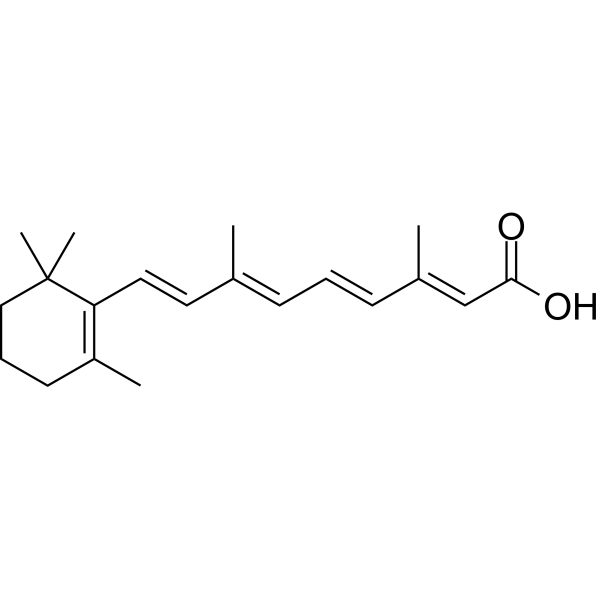
HY-14649
Retinoic acidRAR Agonist -
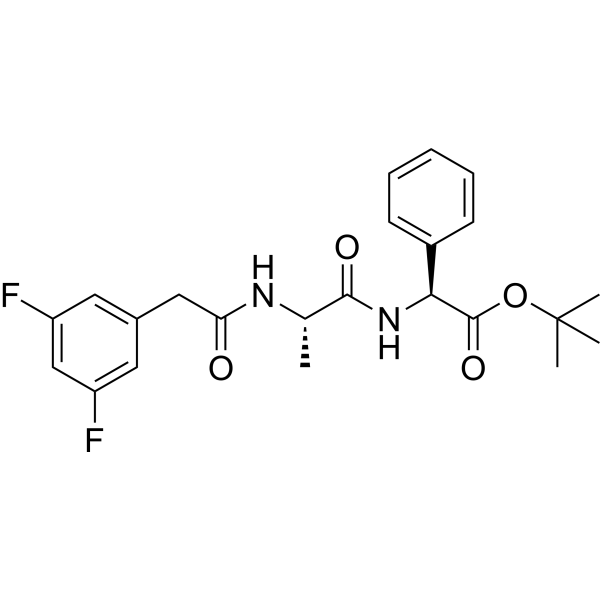
HY-13027
DAPTγ-secretase Inhibitor -
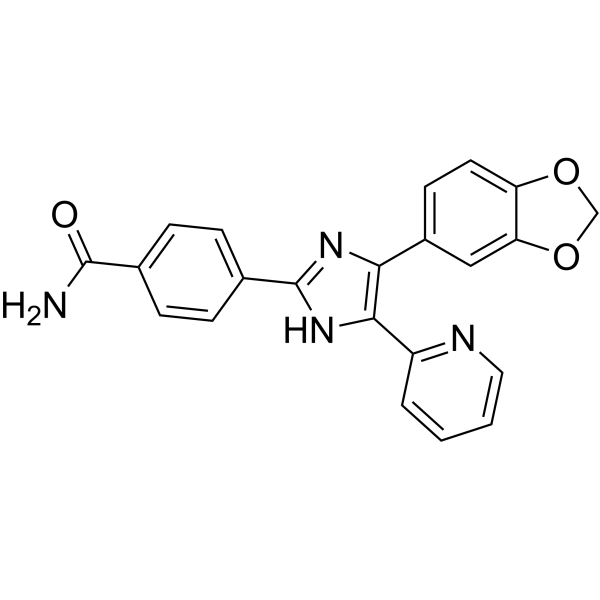
HY-10431
SB-431542TGF-β Receptor Kinase Inhibitor -
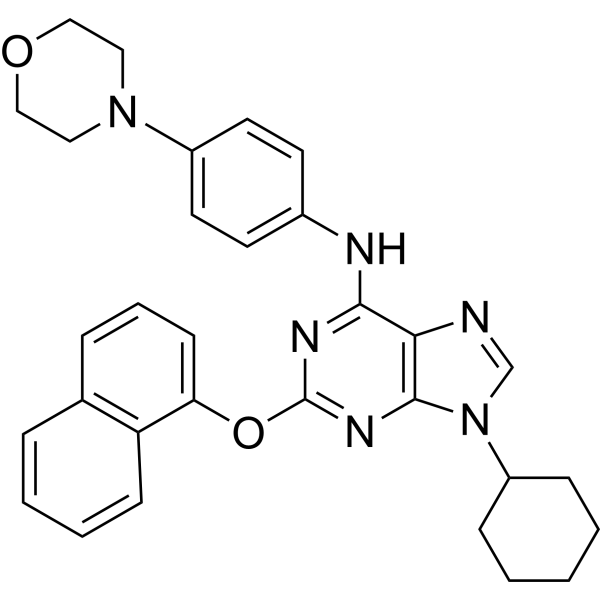
HY-15108
PurmorphamineSmoothened Receptor Agonist -

HY-P7182
GDNF Protein, Human -
HY-P73074
GDNF Protein, Human (HEK293) -
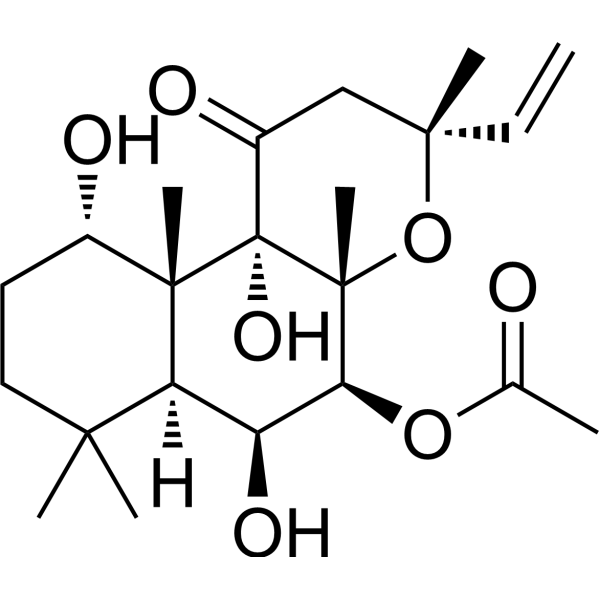
HY-15371
ForskolinAdenylate Cyclase Activator -
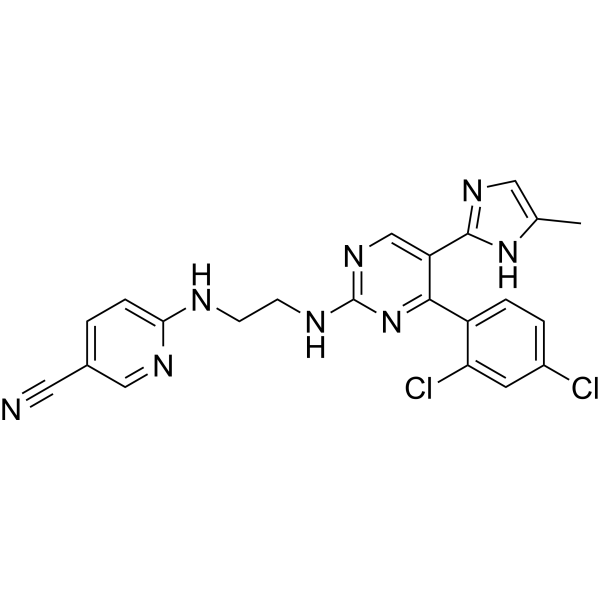
HY-10182
LaduviglusibGSK-3 Inhibitor -
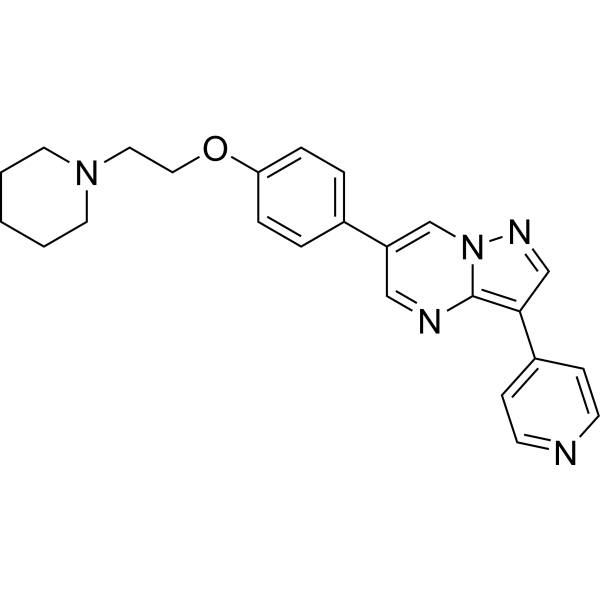
HY-13418A
DorsomorphinAMPK Inhibitor -
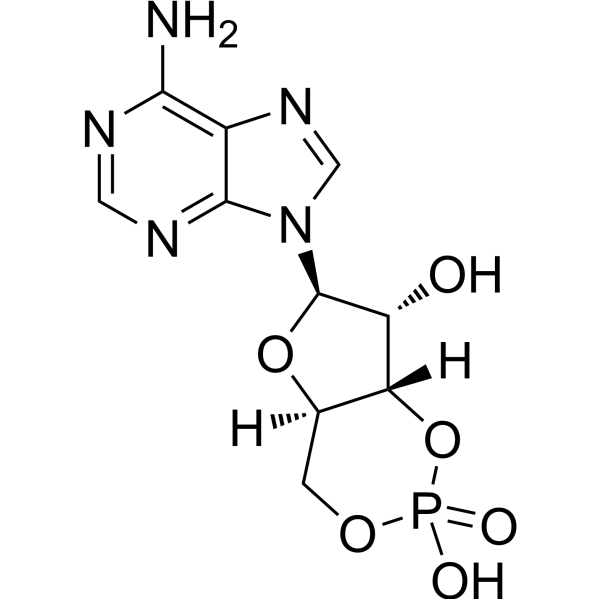
HY-B1511
Cyclic AMPSecond Messenger -
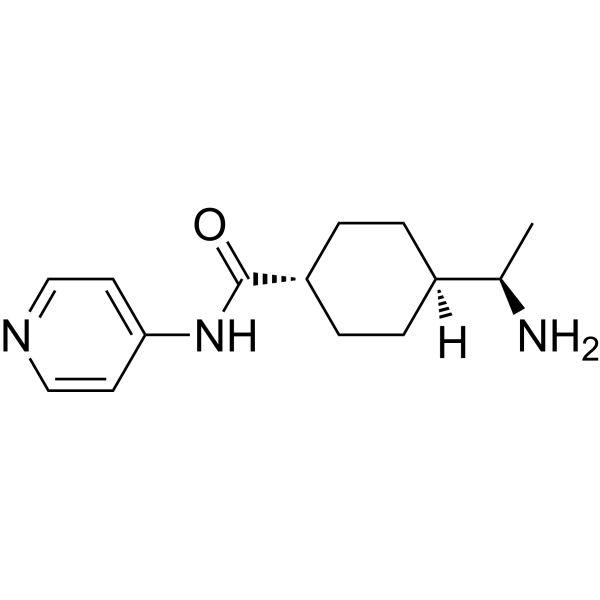
HY-10071
Y-27632ROCK Inhibitor -
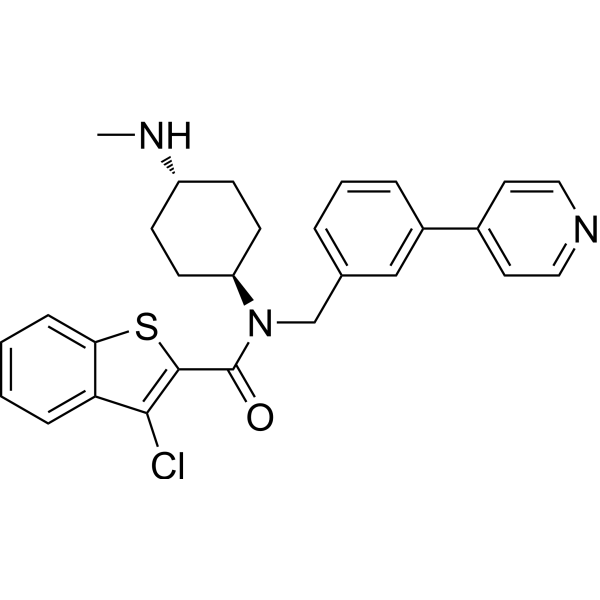
HY-12848
SAGSmoothened Agonist


Biological Activity
Description
BDNF Protein, Human (CHO) is a neurotrophin binding to the high-affinity tropomyosin-related receptor kinase B (TrkB) receptor to regulate neurodevelopmental processes, including neuronal survival, neuronal differentiation, and synaptic plasticity.
Background
Recombinant Human BDNF/Brain-derived neurotrophic factor is a neurotrophin binding to the high-affinity tropomyosin-related receptor kinase B (TrkB) receptor to regulate neurodevelopmental processes, including neuronal survival, neuronal differentiation, and synaptic plasticity[1]. Brain-derived neurotrophic factor (BDNF) is one of the most abundant neurotrophins in the mammalian central nervous system that promotes neuronal survival and differentiation. BDNF plays crucial roles in the cardiovascular system[2].
Verified Bioactivity
1.The ED50 is <4 μg/mL as measured by C6 cells.
2.Immobilized Human BDNF at 5 μg/ml (100 μl/well) can bind NGF R, Human-Biotin with a linear range of 0.06-4 μg/mL.


Technical Parameters
-
Species Mouse; Human; Rat
-
Source CHO
-
Tag Tag Free
-
Accession
P23560-1 (H129-R247)/P21237-1 (H131-R249)/P23363 (H131-R249)
-
Molecular Construction
-
N-term
-
BDNF (H129-R247)
Accession # P23560 -
C-term
-
-
Protein Length
Full Length of Neurotrophic factor BDNF Chain
-
Synonyms
BDNF; Abrineurin; Brain Derived Neurotrophic Factor; Brain-Derived Neurotrophic Factor Preproprotein Isoform 2; ProBDNF; Brain-Derived Neurotrophic Factor Isoform 1; Neurotrophic Factor BDNF Precursor Form; ANON2; Brain-Derived Neurotrophic Factor; BULN2;
-
AA Sequence
HSDPARRGELSVCDSISEWVTAADKKTAVDMSGGTVTVLEKVPVSKGQLKQYFYETKCNPMGYTKEGCRGIDKRHWNSQCRTTQSYVRALTMDSKKRIGWRFIRIDTSCVCTLTIKRGR
-
Molecular Weight
Approximately 12-14 kDa, based on SDS-PAGE under reducing conditions.
-
Glycosylation
Yes
-
Purity
≥ 95%, as determined by reducing SDS-PAGE.


Product Properties
Lyophilized powder.
Lyophilized from a 0.22 μm filtered solution of PBS.
<0.2 EU/μg, determined by LAL method.
It is not recommended to reconstitute to a concentration less than 100 μg/mL in ddH2O. For long term storage it is recommended to add a carrier protein (0.1% BSA, 5% HSA, 10% FBS or 5% Trehalose).
Stored at -20°C for 2 years from date of receipt. After reconstitution, it is stable at 4°C for 1 week or -20°C for longer (with carrier protein). It is recommended to freeze aliquots at -20°C or -80°C for extended storage.
Room temperature in continental US; may vary elsewhere.


Documentation
-
Data Sheet (262 KB)
-
SDS (252 KB)
- English - EN (252 KB)
- Français - FR (252 KB)
- Deutsch - DE (252 KB)
- Norwegian - NO (252 KB)
- Español - ES (252 KB)
- Swedish - SV (252 KB)
- Italian - IT (252 KB)
- Korean - KR (252 KB)
- Portuguese - PT (252 KB)
-
Handling Instructions (2659 KB)


References
[1]. Li M, et al. Recombinant human brain-derived neurotrophic factor prevents neuronal apoptosis in a novel in vitro model of subarachnoid hemorrhage. Neuropsychiatr Dis Treat. 2017 Apr 3;13:1013-1021. [Content Brief]
[2]. Hang P, et al. Brain-derived neurotrophic factor attenuates doxorubicin-induced cardiac dysfunction through activating Akt signalling in rats. J Cell Mol Med. 2017 Apr;21(4):685-696. [Content Brief]

Calculators
Concentration (start) × Volume (start) = Concentration (final) × Volume (final)


 Powered by Bioz

