



Osteopontin/OPN Protein, Human (HEK293, His)
Based on 10 publication(s) in Google Scholar
Osteopontin/OPN is a secretory glycophosphoprotein belonging to the SIBLING family. It contains RGD sequences and phosphorylation sites and can bind to integrins αvβ3, α4β1 and CD44 receptors. Osteopontin/OPN regulates cell adhesion and migration through receptor-mediated regulation, activates MAPK/ERK and PI3K-AKT to promote tumor invasion, and upregulates TIMP-1/2 to inhibit MMPs and protect cartilage. Osteopontin/OPN can be used in the study of osteoarthritis, liver cancer, etc.
- Species: Human
- Source: HEK293
-
Storage:Stored at -20°C for 2 years from date of receipt. After reconstitution, it is stable at 4°C for 1 week or -20°C for longer (with carrier protein). It is recommended to freeze aliquots at -20°C or -80°C for extended storage.


To place orders, for customer services and technical support, please contact: MedChemExpress USA
Tel: 609-228-6898 E-mail: [email protected] [email protected]


-
 Biological Activity
-
Technical Parameters
-
Product Properties
- Documentation
- References
- Help & FAQs


-

HY-P78358
Osteopontin/OPN Protein, Mouse (HEK293, His) -
HY-P70445
IL-4 Protein, Human -
HY-13259
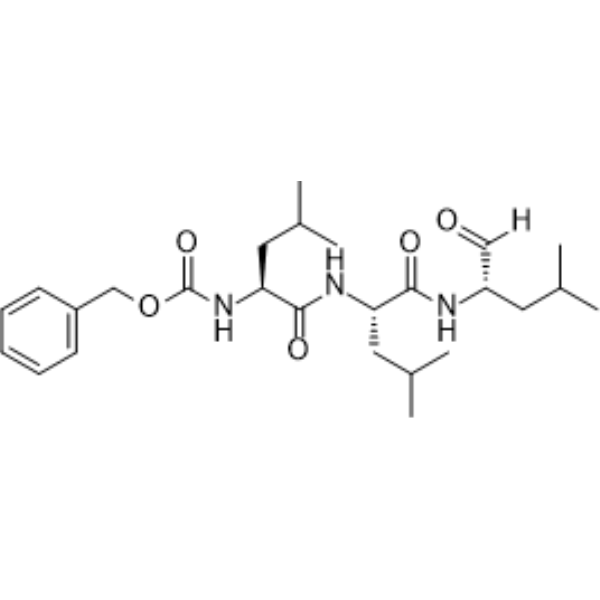
MG-132Proteasome Inhibitor -
HY-15531
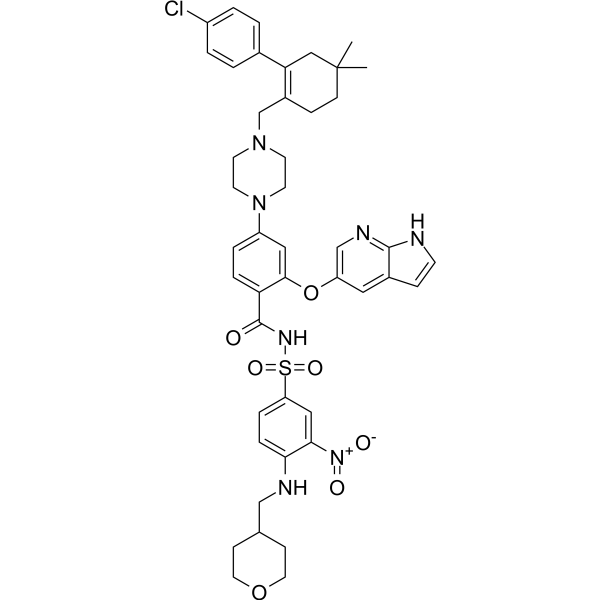
VenetoclaxBCL-2 Inhibitor -
HY-B0215
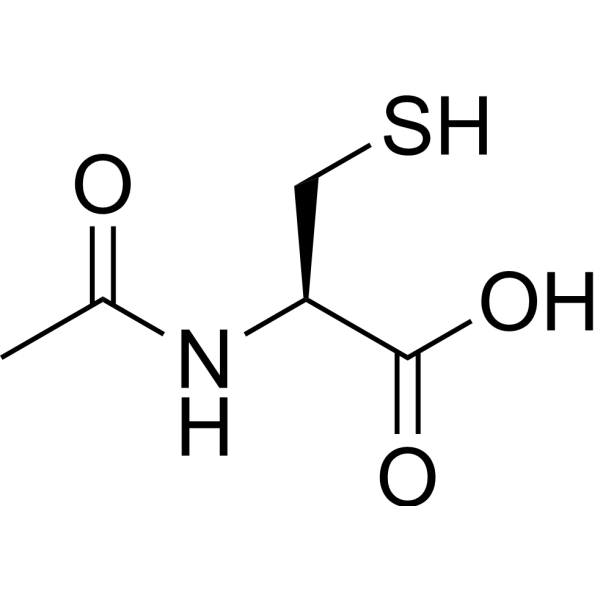
AcetylcysteineMucolytic Agent -
HY-18982
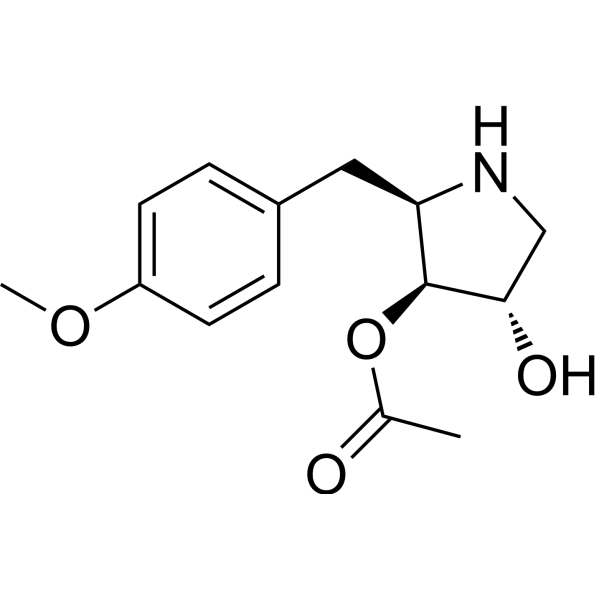
AnisomycinProtein Synthesis Inhibitor -
HY-10586
5-AzacytidineDNMT Inhibitor -
HY-P73063
Fibronectin Protein, Human (HEK293, His) -
HY-100579
Ferrostatin-1Ferroptosis Inhibitor -
HY-14649
Retinoic acidRAR Agonist -
HY-P7109
EGF Protein, Human -
HY-B0015
PaclitaxelAntitumor Agent


Biological Activity
Description
Osteopontin/OPN is a secretory glycophosphoprotein belonging to the SIBLING family. It contains RGD sequences and phosphorylation sites and can bind to integrins αvβ3, α4β1 and CD44 receptors. Osteopontin/OPN regulates cell adhesion and migration through receptor-mediated regulation, activates MAPK/ERK and PI3K-AKT to promote tumor invasion, and upregulates TIMP-1/2 to inhibit MMPs and protect cartilage. Osteopontin/OPN can be used in the study of osteoarthritis, liver cancer, etc[1][2][3].
Background
Osteopontin/OPN is a 44-75 kDa secreted glycophosphoprotein belonging to the small integrin binding ligand N-glycoprotein (SIBLING) family. It contains the RGD (Arg-Gly-Asp) sequence and multiple phosphorylation sites, and can bind to integrin αvβ3, α4β1, and CD44 receptors[1][2][3].
Osteopontin/OPN regulates cell adhesion, migration, proliferation, and matrix remodeling through receptor-mediated regulation, and participates in inflammation, bone metabolism, and tumor progression. Osteopontin/OPN can upregulate TIMP-1 and TIMP-2, inhibit the activity of matrix metalloproteinases (MMPs), and protect chondrocytes. Osteopontin/OPN also induces the release of inflammatory factors through the NF-κB pathway, participating in the pathological process of osteoarthritis (OA)[1]. At the same time, Osteopontin/OPN activates the MAPK/ERK and PI3K-AKT pathways, promoting tumor cell invasion (such as osteosarcoma OS-732 cell migration)[2]; Osteopontin/OPN is induced by TNF-α and IL-1β upstream, and activates the integrin-cytoskeleton signaling cascade downstream[3].
Osteopontin/OPN can be used in the study of osteoarthritis (OA). Intra-articular OPN inhibits MMPs by upregulating TIMP-1/2, delaying cartilage degradation[1]. Osteopontin/OPN can also be used in the study of tumor diagnosis and prognosis. Preoperative plasma OPN level is an independent predictor of hepatocellular carcinoma (HCC) recurrence and poor prognosis (critical value 200 ng/mL)[3]; while antisense OPN RNA can inhibit the tumorigenicity of osteosarcoma cells, prolong tumor latency and reduce tumor weight in nude mice[2].
Verified Bioactivity
Measured by the ability of the immobilized protein to support the adhesion of HEK293 human embryonic kidney cells. When 1 x 10⁵ cells/well are added to Recombinant Human Osteopontin coated plates, cell adhesion is enhanced in a dose dependent manner after 1 hour incubation at 37 °C. The ED50 for this effect is <0.3 μg/mL.
MCE Validation Data
-
Purity - SDS-PAGE
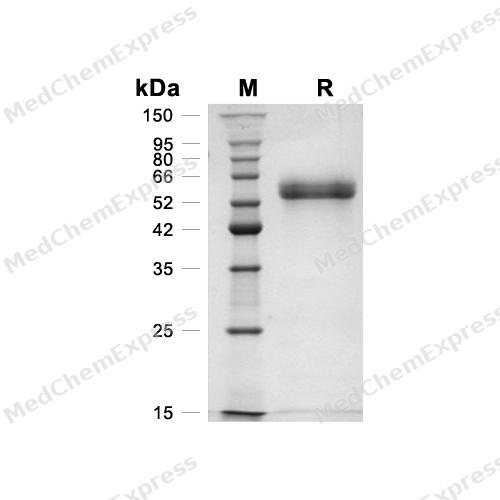
Purity - SDS-PAGE
-
Bioactivity - Cell-Based Assay
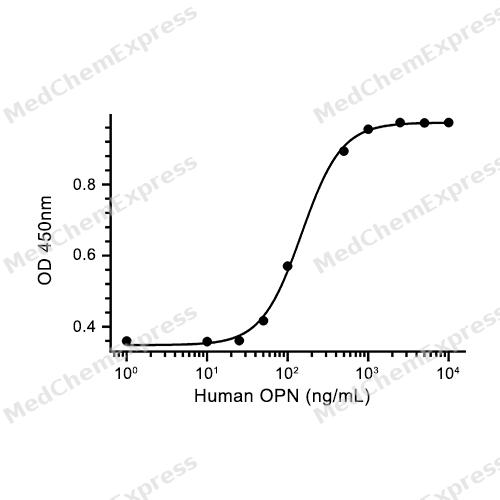
Bioactivity - Cell-Based Assay


Publications (10)
-
Journal Impact Factor
-
Most Recent
-
Cancer Res
SPP1 Drives Colorectal Cancer Liver Metastasis and Immunotherapy Resistance by Stimulating CXCL12 Production in Cancer-Associated Fibroblasts. [Abstract]2026 Jan 2;86(1):58-79. PMID: 41051794 -
J Extracell Vesicles
Exomeres From Adventitial Fibroblasts of Spontaneously Hypertensive Rats Promote Vascular Remodelling via Transferring Osteopontin. [Abstract]2025 Aug;14(8):e70146. PMID: 40767027 -
Dev Cell
STAT3-controlled CHI3L1/SPP1 positive feedback loop demonstrates the spatial heterogeneity and immune characteristics of glioblastoma. [Abstract]2025 Jun 23;60(12):1751-1767.e9. PMID: 39933531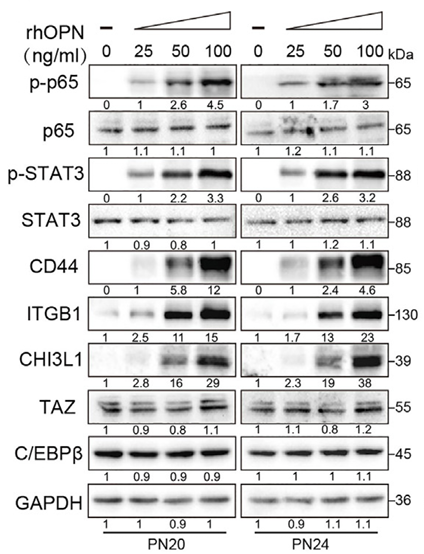
Osteopontin/OPN Protein, Human (HEK293, His) purchased from MedChemExpress. Usage Cited in: Dev Cell. 2025 Jun 23;60(12):1751-1767.e9. [Abstract]
Osteopontin (rhOPN; 0-100 ng/mL; 6h). WB analysis of indicated proteins in PN20 and PN24 cells treated with rhOPN at indicated concentration for 6 h.
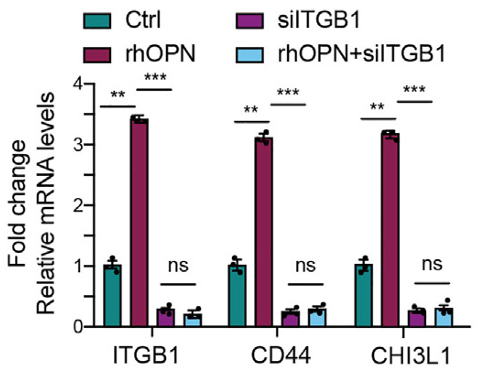
Osteopontin/OPN Protein, Human (HEK293, His) purchased from MedChemExpress. Usage Cited in: Dev Cell. 2025 Jun 23;60(12):1751-1767.e9. [Abstract]
RT-qPCR analysis of ITGB1, CD44, and CHI3L1 gene expression in PN20 cells pretreated with siITGB1 for 6 h prior to 50 ng/mL rhOPN.
-
J Genet Genomics
2024 Dec;51(12):1447-1458. PMID: 39396744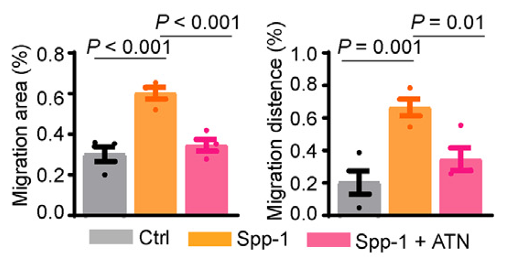
Osteopontin/OPN Protein, Human (HEK293, His) purchased from MedChemExpress. Usage Cited in: J Genet Genomics. 2024 Dec;51(12):1447-1458. [Abstract]
Osteopontin (Spp-1; 4 μg/mL; 12 h). Quantification about the migration area and migration distance in Ctrl, Spp-1, Spp-1 + ATN-161 treatment group.
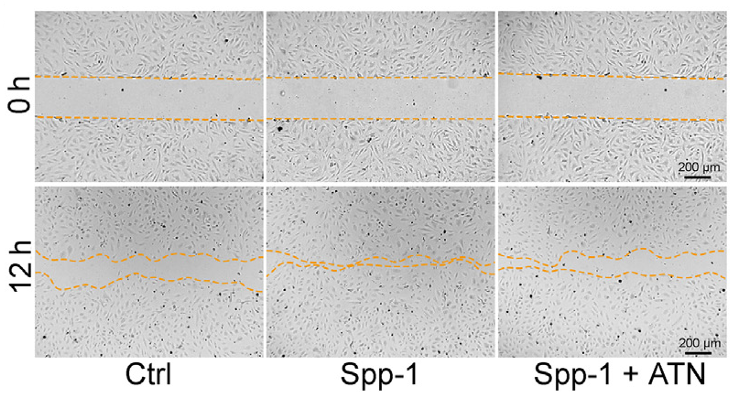
Osteopontin/OPN Protein, Human (HEK293, His) purchased from MedChemExpress. Usage Cited in: J Genet Genomics. 2024 Dec;51(12):1447-1458. [Abstract]
Osteopontin (Spp-1; 4 μg/mL; 12 h). Representative images showing the wound healing in HUVEC when Spp-1 or Spp-1 together with ATN-161 was supplement to the culture medium.
-
Int Immunopharmacol
SPP1 as a key modulator of M2 macrophage polarization promotes endometriosis progression via activation of the FAK/PI3K/AKT pathway: A bioinformatics and experimental study. [Abstract]2025 Sep 17:166:115563. PMID: 40967048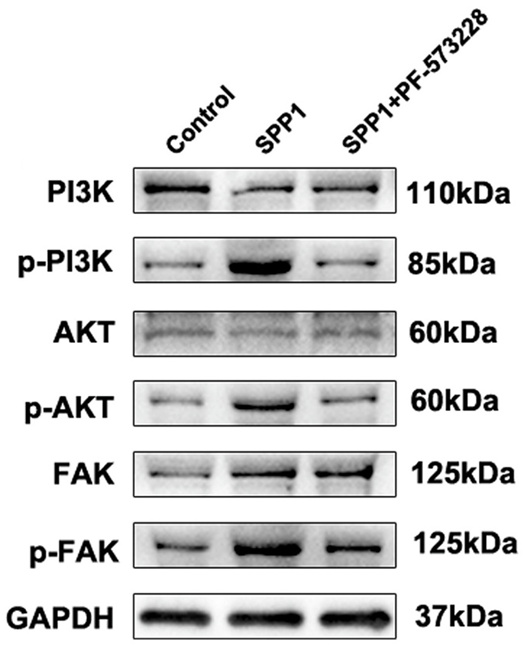
Osteopontin/OPN Protein, Human (HEK293, His) purchased from MedChemExpress. Usage Cited in: Int Immunopharmacol. 2025 Sep 17:166:115563. [Abstract]
Osteopontin (SPP1; 200 ng/mL; 24 h). Western blot confirming increased SPP1 protein levels after IL-4 induction in the overexpression group.
-
Int Immunopharmacol
TAMs-derived SPP1, regulated by HIF-1α/STAT3 signaling pathway, influences colorectal cancer malignant progression by activation of EMT via integrin αvβ3. [Abstract]2025 Jun 26:159:114947. PMID: 40424660 -
J Hepatocell Carcinoma
Development and Validation of a HAUS-Related Prognostic Signature in Liver Hepatocellular Carcinoma: A Multi-Omics Integration from Pan-Cancer Analysis to Single-Cell Resolution. [Abstract]2026 May 22:13:598179. PMID: 42206070 -
PLoS Genet
Tumor-associated macrophage subtypes on cancer immunity along with prognostic analysis and SPP1-mediated interactions between tumor cells and macrophages. [Abstract]2024 Apr 22;20(4):e1011235. PMID: 38648200 -
Cell Cycle
Osteopontin-driven partial epithelial-mesenchymal transition governs the development of middle ear cholesteatoma. [Abstract]2024 Mar;23(5):537-554. PMID: 38662954 -
Int J Biochem Cell Biol
Single-cell transcriptomic analysis unveils dysregulated macrophage-podocyte crosstalk in membranous nephropathy. [Abstract]2026 Aug-Sep:197-198:106958. PMID: 42025748


Technical Parameters
-
Species Human
-
Source HEK293
-
Tag C-6*His
-
Accession
P10451-1 (I17-N314)
-
Molecular Construction
-
N-term
-
OPN (I17-N314)
Accession # P10451-1 -
6*His
-
C-term
-
-
Protein Length
Full Length of Isoform-1
-
Synonyms
SPP1; Uropontin; Prev. BNSP; Osteopontin/Immunoglobulin Alpha 1 Heavy Chain Constant Region Fusion Protein; Prev. OPN; CDNA FLJ54682, Highly Similar To Osteopontin; Osteopontin; Secreted Phosphoprotein 1 Variant 6; Lnc-PKD2-2-3; Bone Sialoprotein I; ETA-1; SPP1/CALPHA1 Fusion; BSPI; Bone Sialoprotein 1; Early T-Lymphocyte Activation 1; SPP-1; Urinary Stone Protein; Opn; Nephropontin; Secreted Phosphoprotein 1; Secreted Phosphoprotein 1 (Osteopontin, Bone Sialoprotein I, Early T-Lymphocyte Activation 1)
-
AA Sequence
IPVKQADSGSSEEKQLYNKYPDAVATWLNPDPSQKQNLLAPQNAVSSEETNDFKQETLPSKSNESHDHMDDMDDEDDDDHVDSQDSIDSNDSDDVDDTDDSHQSDESHHSDESDELVTDFPTDLPATEVFTPVVPTVDTYDGRGDSVVYGLRSKSKKFRRPDIQYPDATDEDITSHMESEELNGAYKAIPVAQDLNAPSDWDSRGKDSYETSQLDDQSAETHSHKQSRLYKRKANDESNEHSDVIDSQELSKVSREFHSHEFHSHEDMLVVDPKSKEEDKHLKFRISHELDSASSEVN
-
Predicted Molecular Mass
34.8 kDa
-
Molecular Weight
Approximately 60-70 kDa, based on SDS-PAGE under reducing conditions.
-
Glycosylation
Yes
-
Purity
≥ 95%, as determined by reducing SDS-PAGE.


Product Properties
Lyophilized powder
1.Lyophilized from a 0.22 μm filtered solution of PBS, pH 7.4.
2.Lyophilized from a 0.22 μm filtered solution of PBS, pH 7.4, 8% trehalose.
Please refer to the lot-specific COA for specific buffer information.
<1 EU/μg, determined by LAL method.
It is not recommended to reconstitute to a concentration less than 100 μg/mL in ddH2O. For long term storage it is recommended to add a carrier protein (0.1% BSA, 5% HSA, 10% FBS or 5% Trehalose).
Stored at -20°C for 2 years from date of receipt. After reconstitution, it is stable at 4°C for 1 week or -20°C for longer (with carrier protein). It is recommended to freeze aliquots at -20°C or -80°C for extended storage.
Room temperature in continental US; may vary elsewhere.


Documentation
-
Data Sheet (265 KB)
-
SDS (252 KB)
- English - EN (252 KB)
- Français - FR (252 KB)
- Deutsch - DE (252 KB)
- Norwegian - NO (252 KB)
- Español - ES (252 KB)
- Swedish - SV (252 KB)
- Italian - IT (252 KB)
- Korean - KR (252 KB)
- Portuguese - PT (252 KB)
-
Handling Instructions (2659 KB)


References
[1]. Zhang FJ, et al. Effect of osteopontin on TIMP-1 and TIMP-2 mRNA in chondrocytes of human knee osteoarthritis in vitro. Exp Ther Med. 2014 Aug;8(2):391-394. [Content Brief]
[2]. Liu SJ, et al. The inhibition of in vivo tumorigenesis of osteosarcoma (OS)-732 cells by antisense human osteopontin RNA. Cell Mol Biol Lett. 2008;13(1):11-9. [Content Brief]
[3]. Zhang H, et al. The prognostic significance of preoperative plasma levels of osteopontin in patients with hepatocellular carcinoma. J Cancer Res Clin Oncol. 2006 Nov;132(11):709-17. [Content Brief]

Calculators
Concentration (start) × Volume (start) = Concentration (final) × Volume (final)


 Powered by Bioz

