



RANKL/TNFSF11 Protein, Mouse
Based on 18 publication(s) in Google Scholar
RANKL (TNFSF11), a type II transmembrane protein, is a receptor activator of NF-κB (RANK) ligand. RANKL is an activator of RANK. When binding to RANK, it induces the differentiation of monocyte/macrophage-lineage cells into osteoclasts and leads to osteoclast precursor maturation. RANKL is critical for osteoclasts maturation, bone modeling, and bone remodeling, as well as the development of lymph nodes (LNs). RANKL/TNFSF11 Protein, Mouse is a recombinant mouse RANKL (Q137-D316) without tag, which is produced in E.coli.
- Species: Mouse
- Source: E. coli
-
Storage:Stored at -20°C for 2 years from date of receipt. After reconstitution, it is stable at 4°C for 1 week or -20°C for longer (with carrier protein). It is recommended to freeze aliquots at -20°C or -80°C for extended storage.


To place orders, for customer services and technical support, please contact: MedChemExpress USA
Tel: 609-228-6898 E-mail: [email protected] [email protected]


-
 Biological Activity
-
Technical Parameters
-
Product Properties
- Documentation
- References
- Help & FAQs


-

HY-P7085
M-CSF Protein, Mouse -
HY-B0166
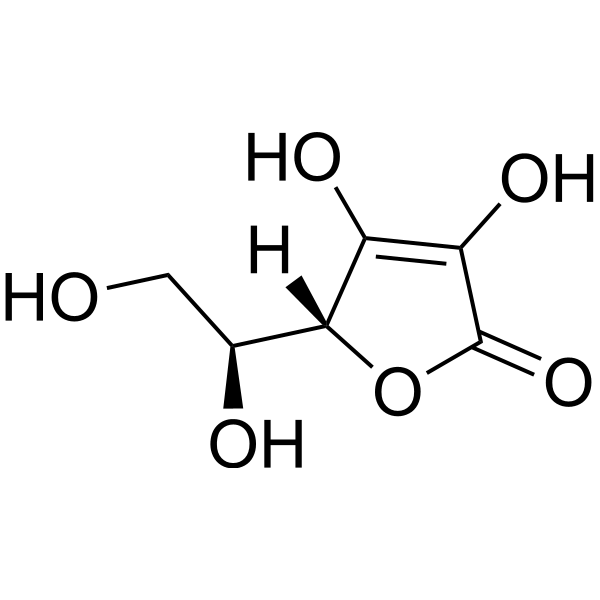
L-Ascorbic acid -
HY-D0886
β-Glycerophosphate disodium salt pentahydrate -
HY-P70263A
M-CSF Protein, Mouse (HEK293, C-His) -
HY-P70553
M-CSF Protein, Mouse (HEK293) -
HY-18739
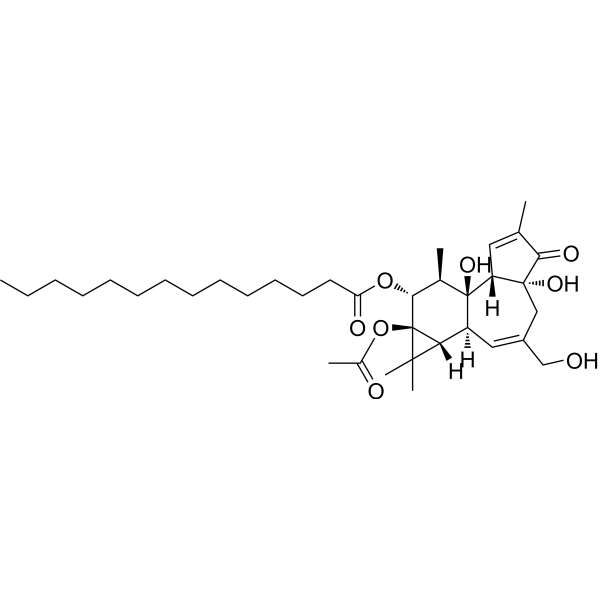
Phorbol 12-myristate 13-acetate -
HY-14648
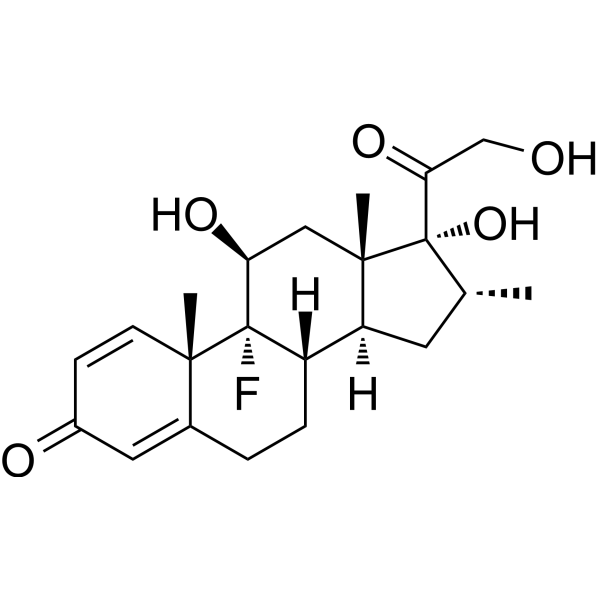
Dexamethasone -
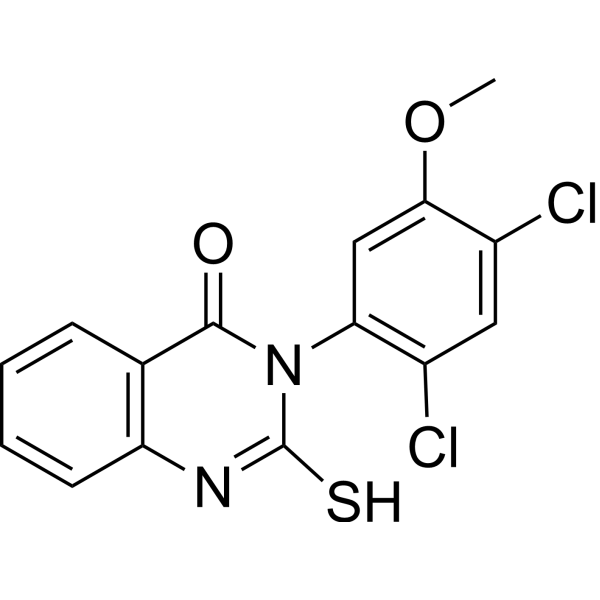
HY-15886
Mdivi-1 -
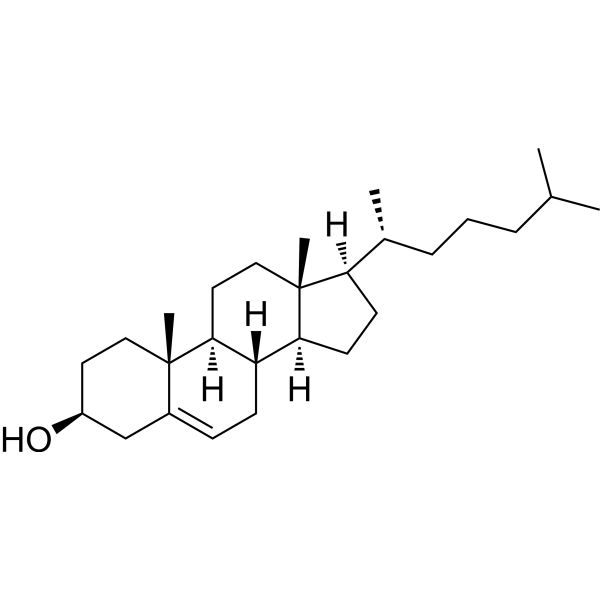
HY-N0322
Cholesterol (from animal) -
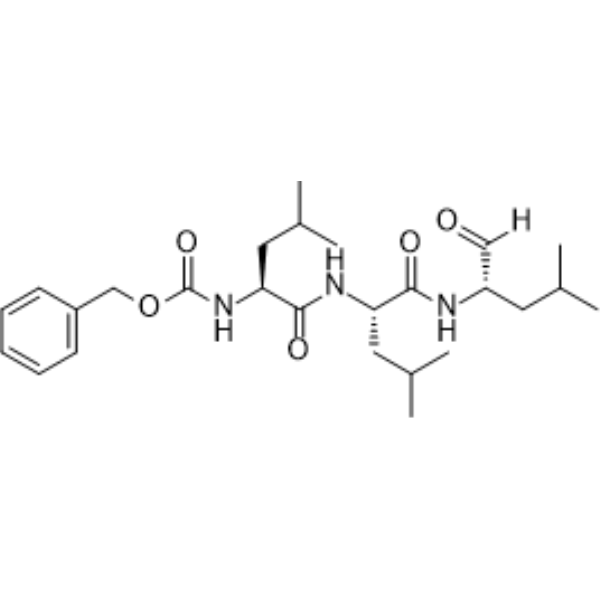
HY-13259
MG-132 -
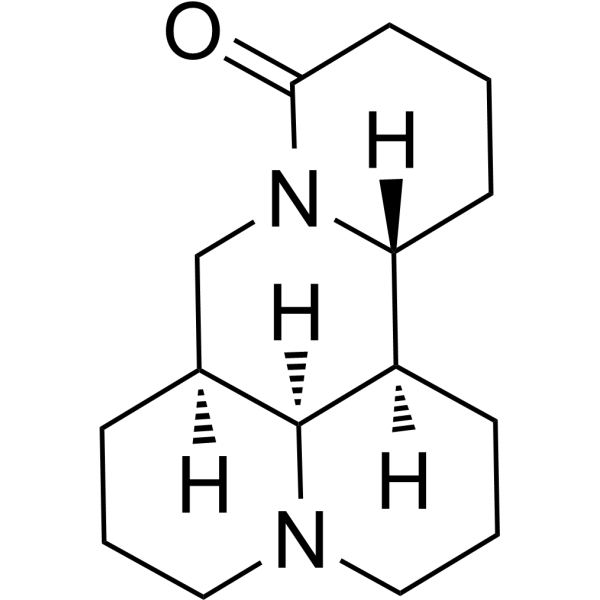
HY-N0164
Matrine -
HY-P7090
TNF-alpha/TNFSF2 Protein, Mouse (156a.a)


Biological Activity
Description
RANKL (TNFSF11), a type II transmembrane protein, is a receptor activator of NF-κB (RANK) ligand. RANKL is an activator of RANK. When binding to RANK, it induces the differentiation of monocyte/macrophage-lineage cells into osteoclasts and leads to osteoclast precursor maturation. RANKL is critical for osteoclasts maturation, bone modeling, and bone remodeling, as well as the development of lymph nodes (LNs). RANKL/TNFSF11 Protein, Mouse is a recombinant mouse RANKL (Q137-D316) without tag, which is produced in E.coli[1][2].
Background
RANKL (TNFSF11) belongs to TNF family. RANKL is a type II transmembrane protein and is a receptor activator of NF-κB (RANK) ligand. RANKL is an activator of RANK. RANKL binds to RANK and induces the differentiation of monocyte/macrophage-lineage cells into osteoclasts and leads to osteoclast precursor maturation. In bone tissue, RANKL is expressed by osteoblasts, osteocytes and immune cells, especially in osteoblasts and osteocytes[1]. RANKL is also expressed by T cells and increases proliferation and survival of dendritic cells[2]. In mice, RANKL/RANK signaling attenuates inflammation in ischemic brains through a Toll-like receptor signaling pathway[4].
RANKL consists of cytoplasmic domain (1-47), helical domain (48-68), and extracellular domain (69-317). The soluble chain (140-317) is released when cleaved by enzymes such as matrix metalloproteinases (MMP3 or 7) and ADAM[1][3].
RANKL is critical for osteoclasts maturation, bone modeling, and bone remodeling, as well as the development of lymph nodes (LNs)[1].
In Vitro
RANKL (mouse, 3 ng/mL, 4 days) induces osteoclast differentiation from RAW264.7 cells, and can be inhibited by Resveratrol[5].
RANKL (mouse,10 ng/mL, 0-3 h) induces NF-κB activation in murine hepatocyte cell line (AML-12) [6].
In Vivo
RANKL (mouse, i.c.v., 5 ng in 2 μL) reduces IL-1β, MCP-1, IL-6 and TNFα expression in WT mice[4].
RANKL (mouse, i.p., 1-10 μg) protects against hepatic ischemia/reperfusion liver injury in mice[6].
Verified Bioactivity
1.Measured by its ability to induce osteoclast differentiation of RAW 264.7 mouse leukemia cellsof monocyte macrophage. The ED50 for this effect is 0.05-2.0 ng/mL.
2.Measured by its binding ability in a functional ELISA. Immobilized mouse TNFSF11 at 10 μg/mL (100 μL/well) can bind biotinylated Human TNFRSF11B. The ED50 for this effect is 0.0848 μg/mL.
MCE Validation Data
-
Purity - SDS-PAGE
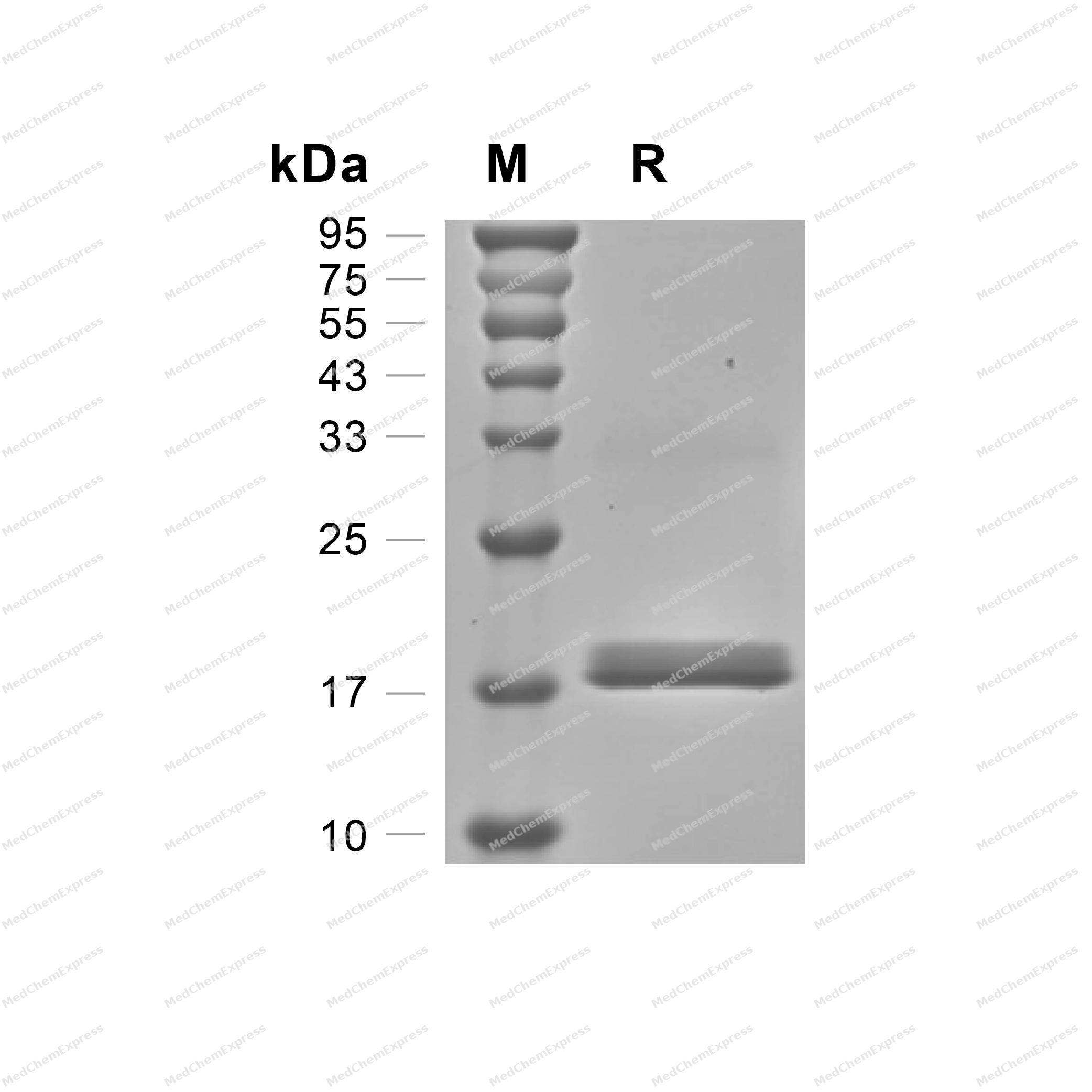
Purity - SDS-PAGE
-
Bioactivity - Cell-Based Assay
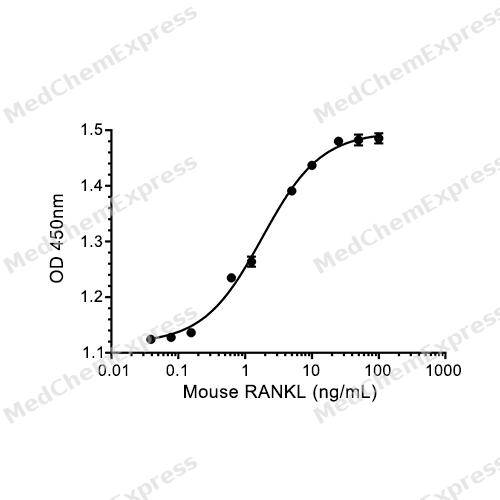
Bioactivity - Cell-Based Assay
-
Bioactivity - ELISA
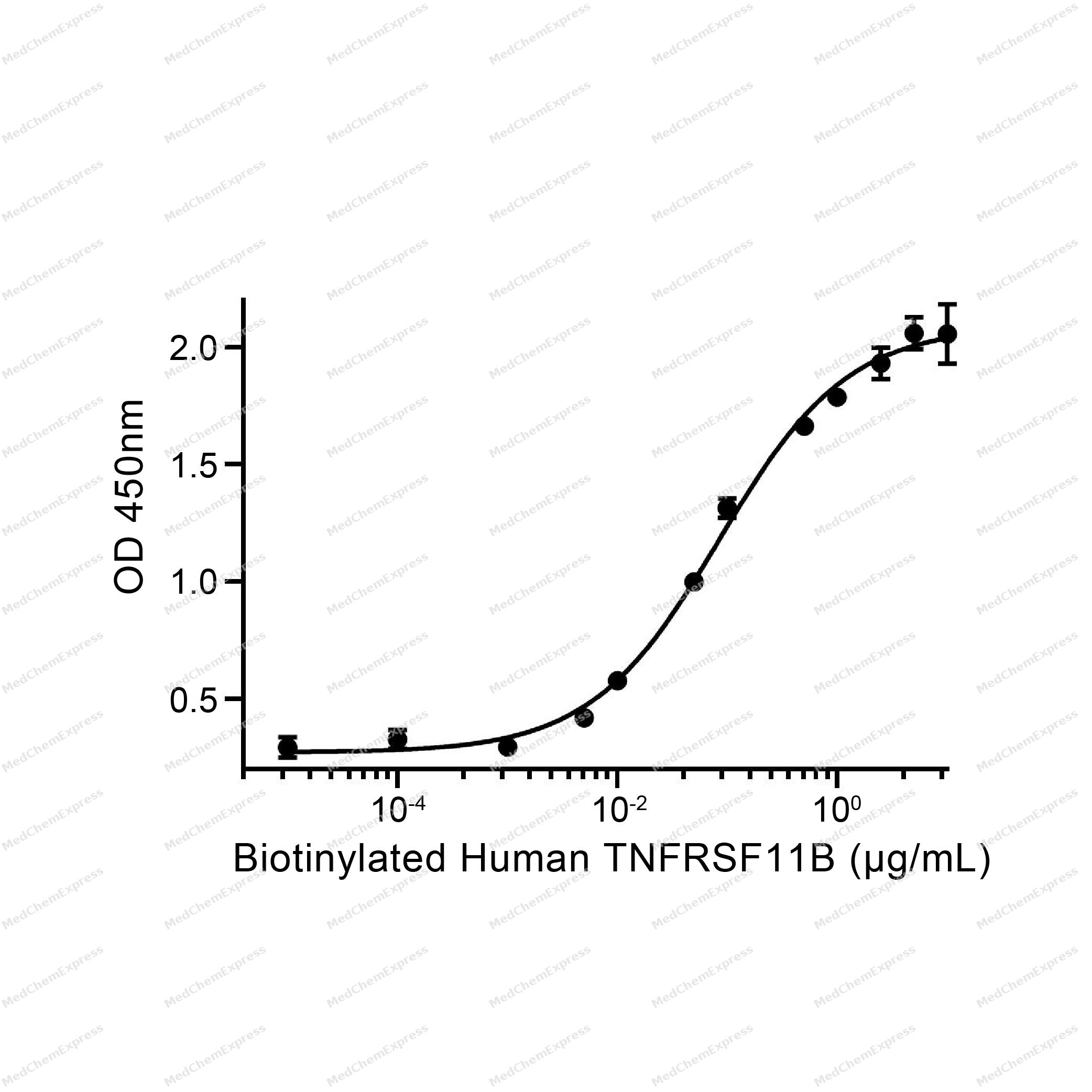
Bioactivity - ELISA


Publications (18)
-
Journal Impact Factor
-
Most Recent
-
Adv Mater
Hydrolysis of 2D Nanosheets Reverses Rheumatoid Arthritis Through Anti-Inflammation and Osteogenesis. [Abstract]2025 Feb;37(7):e2415543. PMID: 39726077 -
Bioact Mater
Designed bone-targeting ROS-responsive nanoplatform for precision glycolysis inhibition in postmenopausal osteoporosis. [Abstract]2025 Nov 29:58:1-18. PMID: 41403870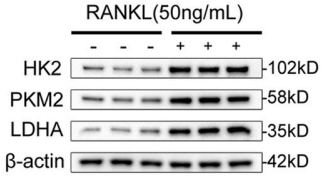
RANKL/TNFSF11 Protein, Mouse purchased from MedChemExpress. Usage Cited in: Bioact Mater. 2025 Nov 29:58:1-18. [Abstract]
Protein expression of PKM2, HK2, LDHA, and β-actin detected by Western blotting after 5-day RANKL (50 ng/mL, HY-P7425) treatment.
-
-
J Adv Res
Portulaca oleracea L. polysaccharide alleviates colitis-associated bone loss through Muribaculaceae-enriched gut microbiota and elevated colonic melatonin. [Abstract]2026 Apr 13:S2090-1232(26)00337-1. PMID: 41980626 -
-
Int J Biol Macromol
Prediction and validation based on scRNA-seq: ETS2 targets CEBPB to mediate osteoclast differentiation in osteoarthritis progression. [Abstract]2025 Aug;319(Pt 4):145639. PMID: 40602581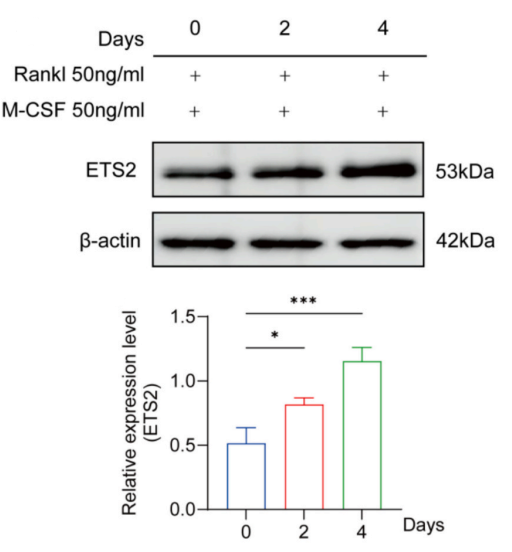
RANKL/TNFSF11 Protein, Mouse purchased from MedChemExpress. Usage Cited in: Int J Biol Macromol. 2025 Aug;319(Pt 4):145639. [Abstract]
Western blot analysis showing differential expression of ETS2 during OC-induced differentiation. Western blot analysis showed that after 2 and 4 days of RANKL (50 ng/mL, HY-P7425) and M-CSF (50 ng/mL) induction in BMM cells, the expression of ETS2 increased over time.
-
Chin Med
Multi-omics and network pharmacology reveal Huayu-Tongbi decoction reduced arthritis-related bone erosion. [Abstract]2025 Jul 2;20(1):100. PMID: 40598199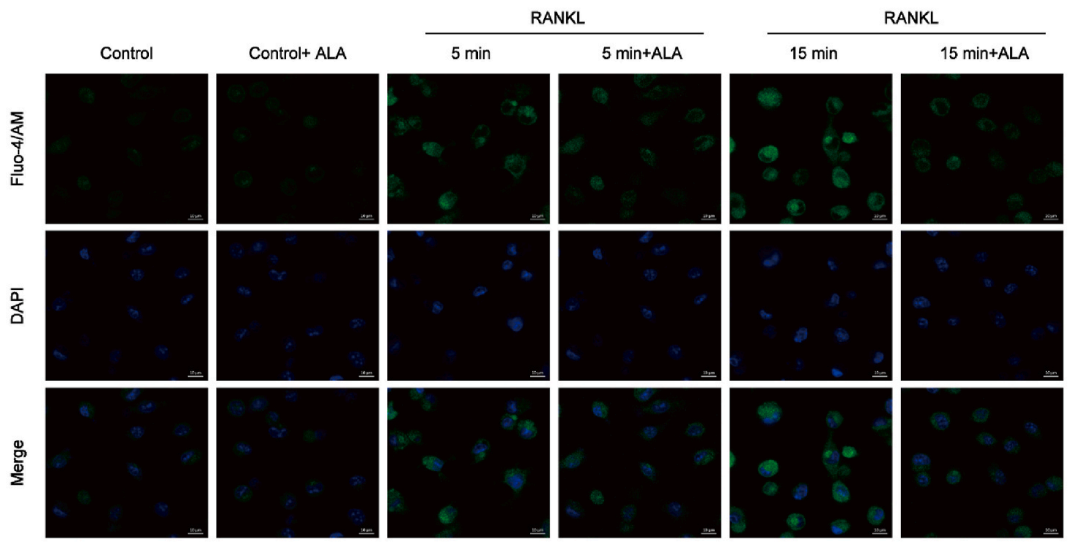
RANKL/TNFSF11 Protein, Mouse purchased from MedChemExpress. Usage Cited in: Chin Med. 2025 Jul 2;20(1):100. [Abstract]
BMDMs were pretreated with or without 20 μmol/L ALA for 2 h and treated with 100 ng/mL RANKL (HY-P7425) for 0/5/15 min Ca2+ were stained with calcium indicator Fluo-4/AM and the captured fluorescence images were as shown. Scale bar =10 μm. The results showed that the stimulation with RANKL elicited a pronounced elevation in fluorescence intensity within BMDMs.
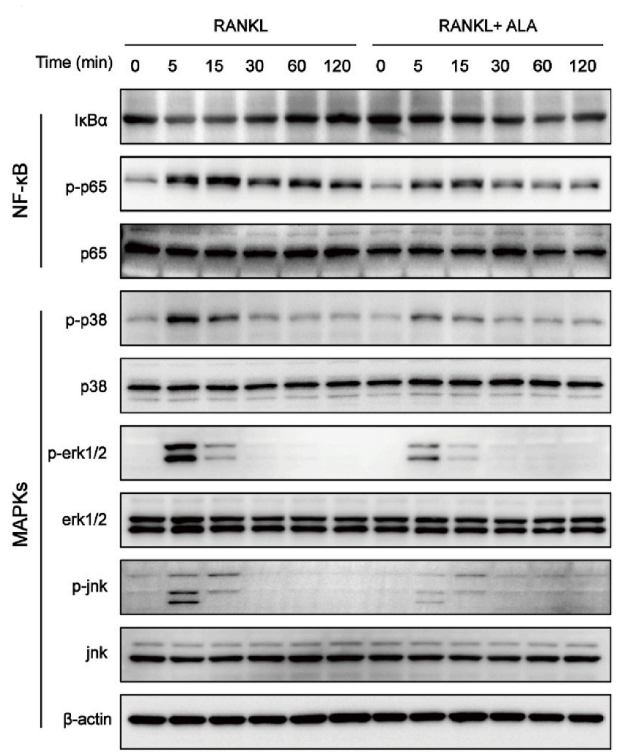
RANKL/TNFSF11 Protein, Mouse purchased from MedChemExpress. Usage Cited in: Chin Med. 2025 Jul 2;20(1):100. [Abstract]
The protein level of IκBα, p65, p-p38, p-erk1/2 and p-jnk in BMDMs pretreated with or without 20 μmol/L ALA for 2 h and treated with 100 ng/mL RANKL (HY-P7425) for 0/5/15/30/60/120 min.
-
Anal Chem
Antibody-Free and Highly Sensitive Detection of Site-Specific m6A Modification via Terminal-Mediated m6A PCR. [Abstract]2026 May 27. PMID: 42199073 -
-
Int Immunopharmacol
Paeonol mitigates age-related osteoporosis via mitophagy-mediated NLRP3 inflammasome inhibition. [Abstract]2026 Aug 1:182:116787. PMID: 42096961 -
Int Immunopharmacol
Calreticulin-driven immunogenic cell death promotes osteoclast differentiation and osteoarthritis progression via the LRP1/Rac1 signaling. [Abstract]2025 Oct 10:163:115277. PMID: 40714468 -
Int J Mol Sci
The High Level of RANKL Improves IκB/p65/Cyclin D1 Expression and Decreases p-Stat5 Expression in Firm Udder of Dairy Goats. [Abstract]2023 May 16;24(10):8841. PMID: 37240191 -
Inflammation
ACE2 Alleviates Microglia Neuroinflammation by RANK-RANKL-OPG Axis in Parkinson's Disease. [Abstract]2025 Jul 5. PMID: 40615762 -
Front Cell Dev Biol
Tcirg1 deficiency delays osteoarthritis progression by impairing lysosome acidification and peripheral accumulation in osteoclasts. [Abstract]2025 Sep 9:13:1621648. PMID: 40995561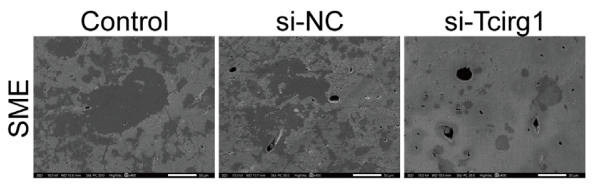
RANKL/TNFSF11 Protein, Mouse purchased from MedChemExpress. Usage Cited in: Front Cell Dev Biol. 2025 Sep 9:13:1621648. [Abstract]
BMMs were untreated (Control) or treated with si-NC/si-Tcirg1, seeded onto homemade bovine bone slices placed in Corning 96-well plates, cultured with M-CSF (30 ng/mL) and RANKL (100 ng/mL, HY-P7425) for 7 days, fixed, and processed for SEM; scale bar: 50 μm.
-
Chem Biol Interact
2023 Oct 1:384:110696. PMID: 37689331 -
BMC Oral Health
M2 macrophages-derived exosomes regulate osteoclast differentiation by the CSF2/TNF-α axis. [Abstract]2024 Jan 18;24(1):107. PMID: 38238696 -
Arch Oral Biol
GDC-0449 suppresses odontogenic keratocyst aggressiveness in fibroblasts by upregulating SPARC via Hedgehog pathway inhibition. [Abstract]2025 Aug 13:179:106374. PMID: 40840062 -
In Vitro Cell Dev Biol Anim
Cedrol alleviates postmenopausal osteoporosis in rats through inhibiting the activation of the NF-κB signaling pathway. [Abstract]2024 Sep;60(8):903-915. PMID: 38814422


Technical Parameters
-
Species Mouse
-
Source E. coli
-
Tag Tag Free
-
Accession
O35235-1 (Q137-D316)
-
Molecular Construction
-
N-term
-
RANKL/TNFSF11 (Q137-D316)
Accession # O35235-1 -
C-term
-
-
Protein Length
Full Length of Tumor necrosis factor ligand superfamily member 11, soluble form Chain
-
Synonyms
TNFSF11; Tumor Necrosis Factor (Ligand) Superfamily, Member 11; TNF Superfamily Member 11; Receptor Activator Of Nuclear Factor Kappa-B Ligand; TRANCE; TNLG6B; RANKL; Receptor Activator Of Nuclear Factor Kappa B Ligand; OPGL; Tumor Necrosis Factor Ligand Superfamily Member; ODF; Tumor Necrosis Factor Superfamily Member 11; Tumor Necrosis Factor Ligand Superfamily Member 11; Tumor Necrosis Factor Ligand 6B; TNF-Related Activation-Induced Cytokine; CD254 Antigen; Osteoclast Differentiation Factor; HRANKL2; Osteoprotegerin Ligand; OPTB2; CD254; SOdf
-
AA Sequence
QRFSGAPAMMEGSWLDVAQRGKPEAQPFAHLTINAASIPSGSHKVTLSSWYHDRGWAKISNMTLSNGKLRVNQDGFYYLYANICFRHHETSGSVPTDYLQLMVYVVKTSIKIPSSHNLMKGGSTKNWSGNSEFHFYSINVGGFFKLRAGEEISIQVSNPSLLDPDQDATYFGAFKVQDID
-
Predicted Molecular Mass
20.1 kDa
-
Molecular Weight
Approximately 20-29 kDa, based on SDS-PAGE under reducing conditions.
-
Purity
≥ 95%, as determined by reducing SDS-PAGE.


Product Properties
Lyophilized powder
1.Lyophilized from a 0.22 μm filtered solution of 20 mM Tris, 150 mM NaCl, 1 mM EDTA, pH 8.0.
2.Lyophilized from a 0.22 μm filtered solution of PBS, pH 7.0.
Note: For SPR assay, please replace the buffer. Primary amine components (e.g., Tris, imidazole) can affect protein-coupled chips.
<1.0 EU/μg, determined by LAL method.
It is not recommended to reconstitute to a concentration less than 100 μg/mL in ddH2O. For long term storage it is recommended to add a carrier protein (0.1% BSA, 5% HSA, 10% FBS or 5% Trehalose).
Stored at -20°C for 2 years from date of receipt. After reconstitution, it is stable at 4°C for 1 week or -20°C for longer (with carrier protein). It is recommended to freeze aliquots at -20°C or -80°C for extended storage.
Room temperature in continental US; may vary elsewhere.


Documentation
-
Data Sheet (264 KB)
-
SDS (252 KB)
- English - EN (252 KB)
- Français - FR (252 KB)
- Deutsch - DE (252 KB)
- Norwegian - NO (252 KB)
- Español - ES (252 KB)
- Swedish - SV (252 KB)
- Italian - IT (252 KB)
- Korean - KR (252 KB)
- Portuguese - PT (252 KB)
-
Handling Instructions (2659 KB)


References
[1]. Ono T, et al. RANKL biology: bone metabolism, the immune system, and beyond. Inflamm Regen. 2020 Feb 7;40:2. [Content Brief]
[2]. Hofbauer LC, et al. Role of receptor activator of nuclear factor-kappaB ligand and osteoprotegerin in bone cell biology. J Mol Med (Berl). 2001 Jun;79(5-6):243-53. [Content Brief]
[3]. Li B, et al. Roles of the RANKL-RANK Axis in Immunity-Implications for Pathogenesis and Treatment of Bone Metastasis. Front Immunol. 2022 Mar 21;13:824117. [Content Brief]
[4]. Tobeiha M, et al. RANKL/RANK/OPG Pathway: A Mechanism Involved in Exercise-Induced Bone Remodeling. Biomed Res Int. 2020 Feb 19;2020:6910312. [Content Brief]
[5]. Shimamura M, et al. OPG/RANKL/RANK axis is a critical inflammatory signaling system in ischemic brain in mice. Proc Natl Acad Sci U S A. 2014 Jun 3;111(22):8191-6. [Content Brief]
[6]. He X, et al. Resveratrol prevents RANKL-induced osteoclast differentiation of murine osteoclast progenitor RAW 264.7 cells through inhibition of ROS production. Biochem Biophys Res Commun. 2010 Oct 22;401(3):356-62. [Content Brief]

Calculators
Concentration (start) × Volume (start) = Concentration (final) × Volume (final)


 Powered by Bioz

