



Rp-cAMPS
Based on 7 publication(s) in Google Scholar
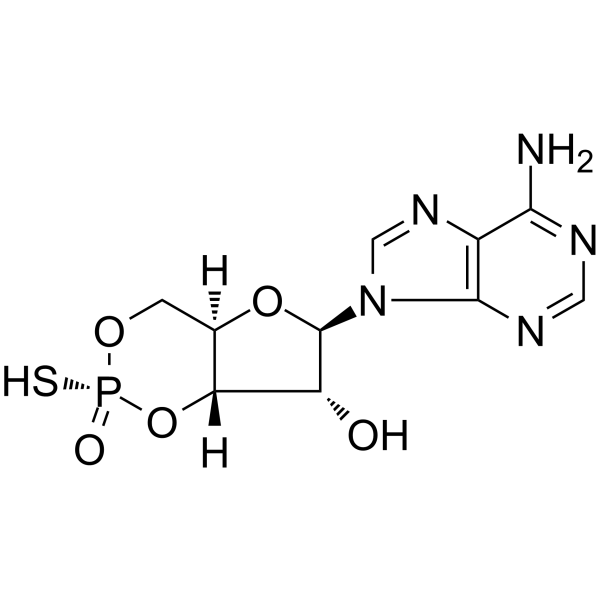
Rp-cAMPS, a cAMP analog, is a potent, competitive cAMP-induced activation of cAMP-dependent PKA I and II (Kis of 12.5 µM and 4.5 µM, respectively) antagonist. Rp-cAMPS is resistant to hydrolysis by phosphodiesterases.
For research use only. We do not sell to patients.
- CAS No.: 73208-40-9
- Formula: C10H12N5O5PS
- Molecular Weight:345.27
-
Storage:
Please store the product under the recommended conditions in the Certificate of Analysis.

To place orders, for customer services and technical support, please contact: MedChemExpress USA
Tel: 609-228-6898 E-mail: [email protected] [email protected]


-
 Biological Activity
-
Chemical Information
- Purity & Documentation
- References
-
 Help & FAQs


-
HY-12306
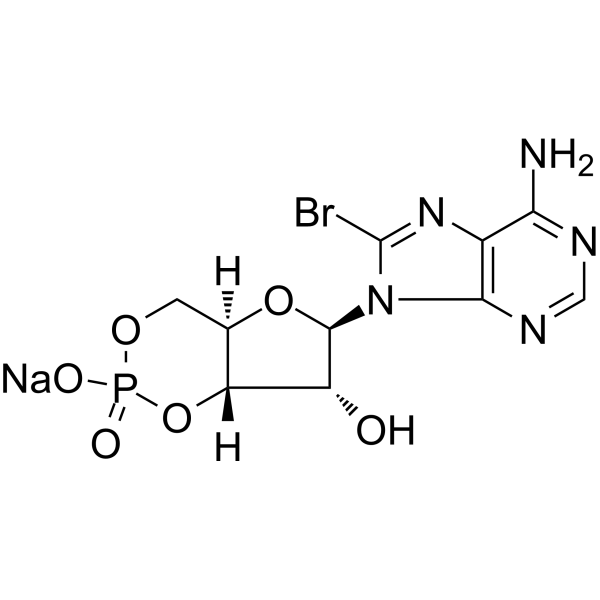
8-Bromo-cAMP sodium saltPKA Activator -
HY-103322
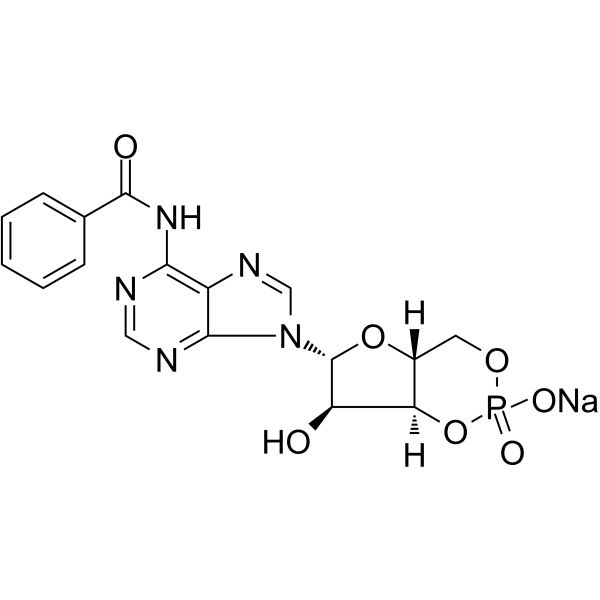
6-Bnz-cAMP sodium saltPKA Activator -
HY-12306A
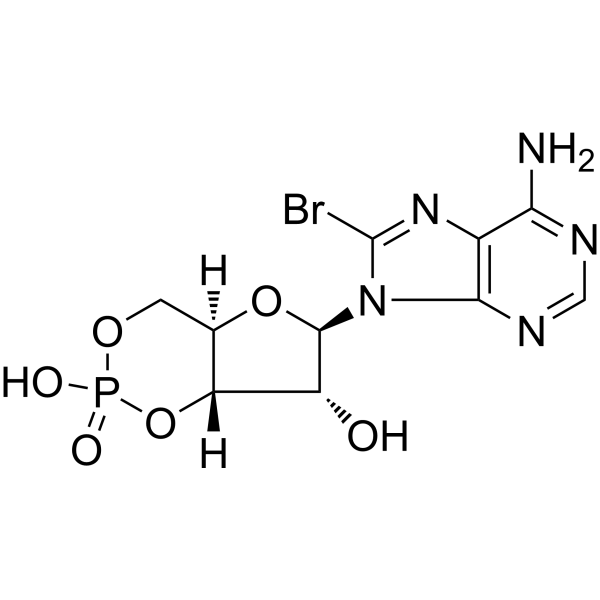
8-Bromo-cAMPPKA Activator -
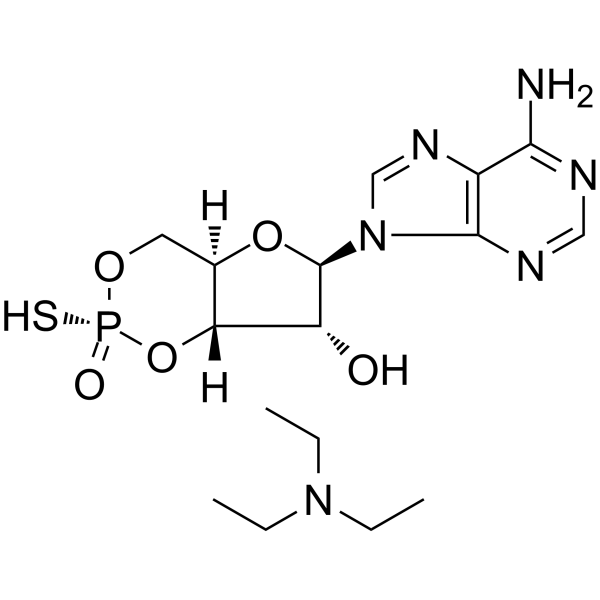
HY-100530
Rp-cAMPS triethylammonium saltPKA I/II Antagonist -
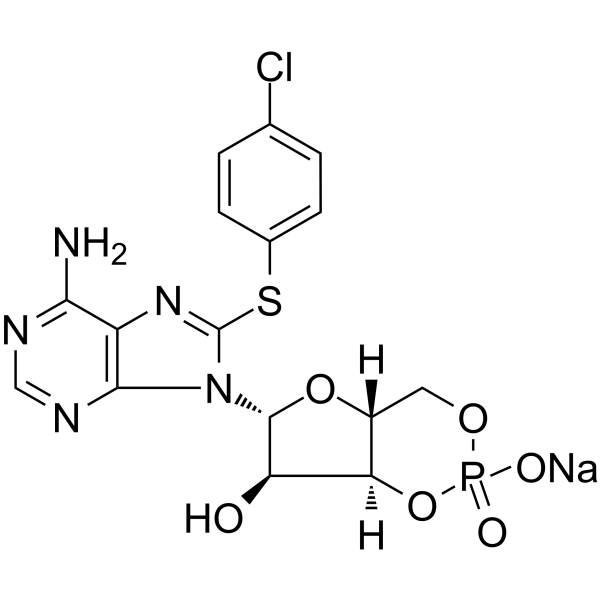
HY-111673
8-CPT-Cyclic AMP sodiumPKA Activator -
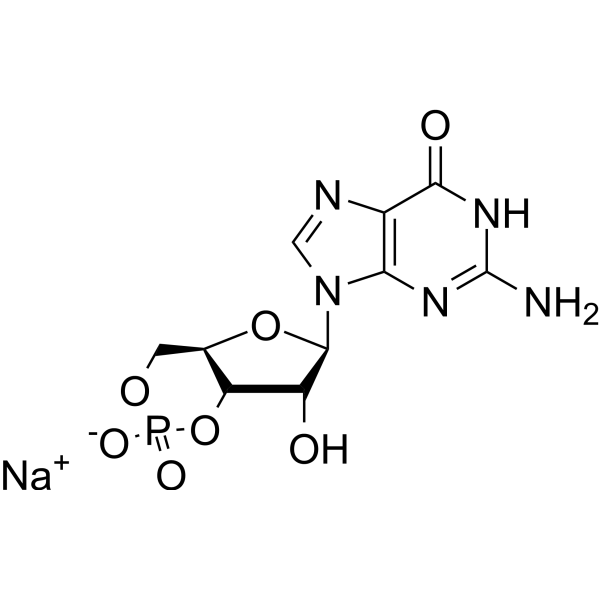
HY-113469A
Cyclic GMP sodiumSecond Messenger -
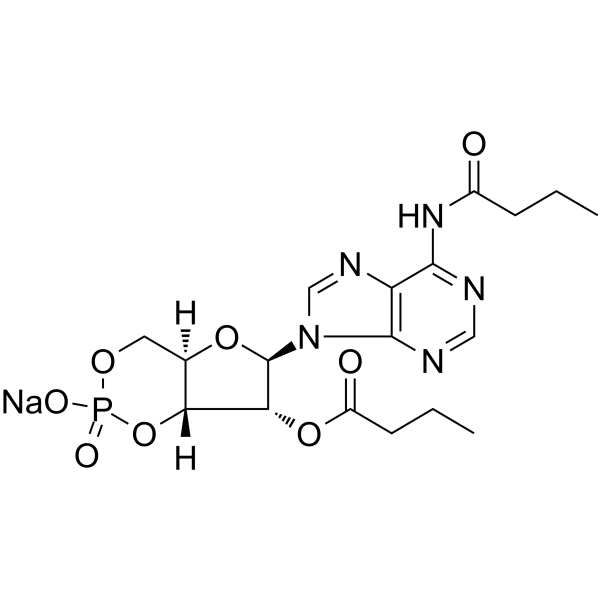
HY-B0764
Bucladesine sodiumcAMP Analog -
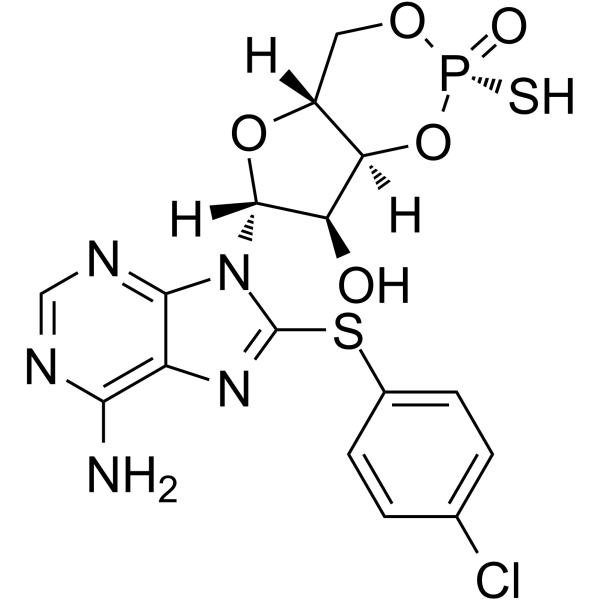
HY-120994B
Sp-8-CPT-cAMPSPKA Activator -
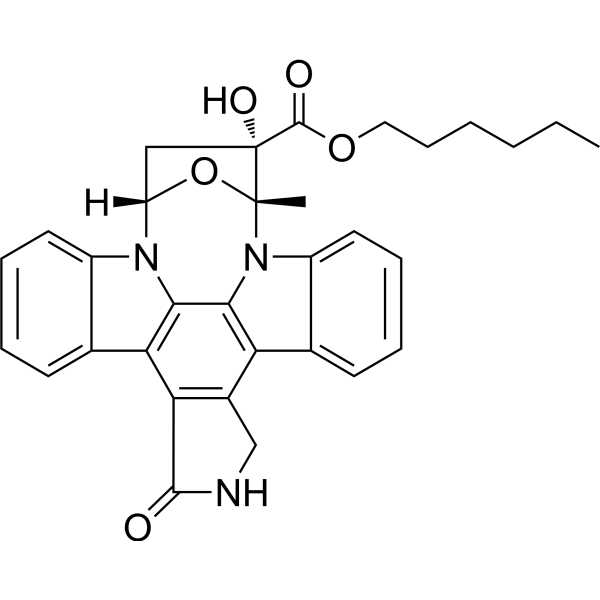
HY-N6789
KT5720PKA Inhibitor -
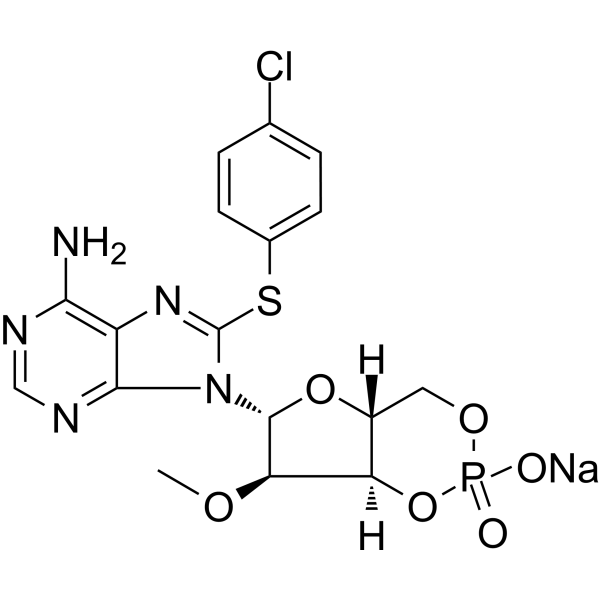
HY-107543
8-pCPT-2′-O-Me-cAMP sodiumEpac Activator -
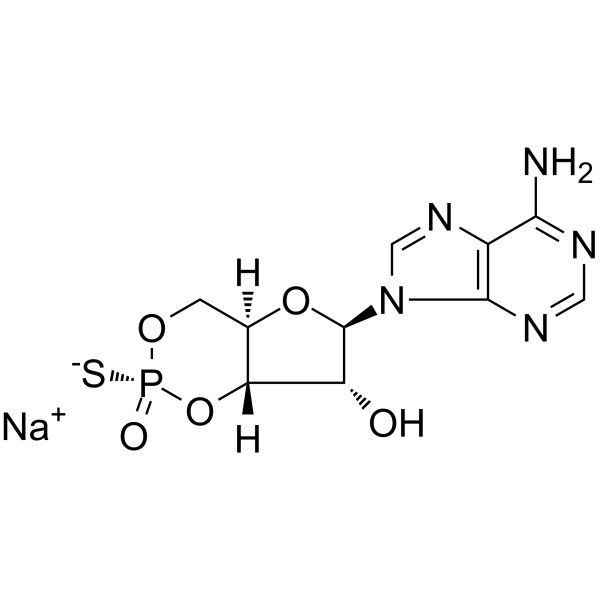
HY-100530D
Rp-cAMPS sodium saltPKA I/II Antagonist -
HY-101379A
8-Bromo-cGMP sodiumPKG Activator
Publications Citing Use of MedChemExpress (MCE) Rp-cAMPS
More- Nat Commun. 2025 Jul 1;16(1):5425. [Abstract]
- Redox Biol. 2026 Jun 13:95:104259. [Abstract]
- Theranostics. 2021 Mar 24;11(12):5650-5674. [Abstract]
- Cell Commun Signal. 2024 Jun 3;22(1):307. [Abstract]
- Vanderbilt University. 2026.
- bioRxiv. 2026 Feb 18:2026.02.17.706274. [Abstract]
- Research Square Preprint. 2024 Apr 9.


Biological Activity
Description
IC50 & Target
Ki: 6.05 µM (PKA I) and 9.75 µM (PKA II)[1]
In Vitro
A membrane-permeable competitive cAMP antagonist (Rp-cAMPS) that blocks PKA activation by binding to the regulatory subunits without dissociating the kinase holoenzyme also inhibits synaptic plasticity but has no effect on normal synaptic transmission[2].
MedChemExpress (MCE) has not independently confirmed the accuracy of these methods. They are for reference only. .
In Vivo
MedChemExpress (MCE) has not independently confirmed the accuracy of these methods. They are for reference only.


Chemical Information
-
CAS No. 73208-40-9
-
Molecular Weight 345.27
-
Formula C10H12N5O5PS
-
SMILES
O[C@H]1[C@@H](O[C@@]2([H])[C@@]1([H])O[P@@](OC2)(S)=O)N3C4=C(C(N)=NC=N4)N=C3
-
Shipping
Room temperature in continental US; may vary elsewhere.
-
Storage
Please store the product under the recommended conditions in the Certificate of Analysis.


Publications (7)
-
Journal Impact Factor
-
Most Recent
-
Nat Commun
Protein kinase A is a dependent factor and therapeutic target in mouse models of fibrous dysplasia. [Abstract]2025 Jul 1;16(1):5425. PMID: 40593719 -
Redox Biol
CL-316243 facilitates stable atherosclerotic plaque phenotypes in association with suppression of perivascular adipose tissue ferroptosis via upregulating C/EBPβ. [Abstract]2026 Jun 13:95:104259. PMID: 42289168 -
Theranostics
Endogenous glutamate determines ferroptosis sensitivity via ADCY10-dependent YAP suppression in lung adenocarcinoma. [Abstract]2021 Mar 24;11(12):5650-5674. PMID: 33897873 -
Cell Commun Signal
Interleukin-22 receptor 1-mediated stimulation of T-type Ca2+ channels enhances sensory neuronal excitability through the tyrosine-protein kinase Lyn-dependent PKA pathway. [Abstract]2024 Jun 3;22(1):307. PMID: 38831315 -
-
bioRxiv
Regulation of spontaneous neurotransmission and homeostatic synaptic plasticity by synaptotagmin-1 disease variants at the SNARE primary interface. [Abstract]2026 Feb 18:2026.02.17.706274. PMID: 41756855 -


Purity & Documentation
References
[1]. R J de Wit, et al. Inhibitory action of certain cyclophosphate derivatives of cAMP on cAMP-dependent protein kinases. Eur J Biochem. 1984 Jul 16;142(2):255-60. [Content Brief]
[2]. Rothermel JD, et al. A mechanistic and kinetic analysis of the interactions of the diastereoisomers of adenosine 3',5'-(cyclic)phosphorothioate with purified cyclic AMP-dependent protein kinase. Biochem J. 1988 May 1;251(3):757-62. [Content Brief]
[3]. Fu Y, et al. PKA and ERK, but not PKC, in the amygdala contribute to pain-related synaptic plasticity and behavior. Mol Pain. 2008 Jul 16;4:26. [Content Brief]
[4]. Kuriyama S, et al. Isoproterenol inhibits rod outer segment phagocytosis by both cAMP-dependent and independent pathways. Invest Ophthalmol Vis Sci. 1995 Mar;36(3):730-6. [Content Brief]
[5]. Dostmann WR, et al. Probing the cyclic nucleotide binding sites of cAMP-dependent protein kinases I and II with analogs of adenosine 3',5'-cyclic phosphorothioates. J Biol Chem. 1990 Jun 25;265(18):10484-91. [Content Brief]
[6]. Van Haastert PJ, et al. Competitive cAMP antagonists for cAMP-receptor proteins. J Biol Chem. 1984 Aug 25;259(16):10020-4. [Content Brief]

Calculators
Concentration (start) × Volume (start) = Concentration (final) × Volume (final)


Rp-cAMPS Related Classifications
HY-100530A Related Classifications
 Powered by Bioz