



Sarafloxacin hydrochloride 100 μg/mL in methanol
Based on 2 publication(s) in Google Scholar
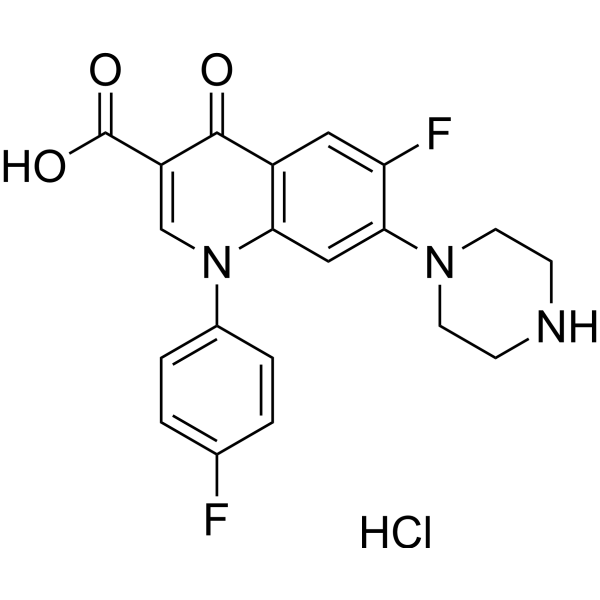
Sarafloxacin hydrochloride 100 μg/mL in methanol is an antibiotic with activity to inhibit bacterial growth. Sarafloxacin hydrochloride 100 μg/mL in methanol is widely used in veterinary medicine to inhibit bacterial infections. The mechanism of action of Sarafloxacin hydrochloride 100 μg/mL in methanol is mainly achieved by inhibiting the activity of bacterial DNA gyrase. Sarafloxacin hydrochloride 100 μg/mL in methanol is also used in animal feed to improve feed conversion and promote growth.
For research use only. We do not sell to patients.
- CAS No.: 91296-87-6
- Formula: C20H18ClF2N3O3
- Molecular Weight:421.83
-
Storage:
Please store the product under the recommended conditions in the Certificate of Analysis.


To place orders, for customer services and technical support, please contact: MedChemExpress USA
Tel: 609-228-6898 E-mail: [email protected] [email protected]


-
 Biological Activity
-
Chemical Information
- Protocols
- Purity & Documentation
-
 Help & FAQs


-
HY-B0343A
Sarafloxacin hydrochlorideAntibacterial Agent -

HY-B0343AR
Sarafloxacin hydrochloride (Standard)Bacterial Inhibitor -
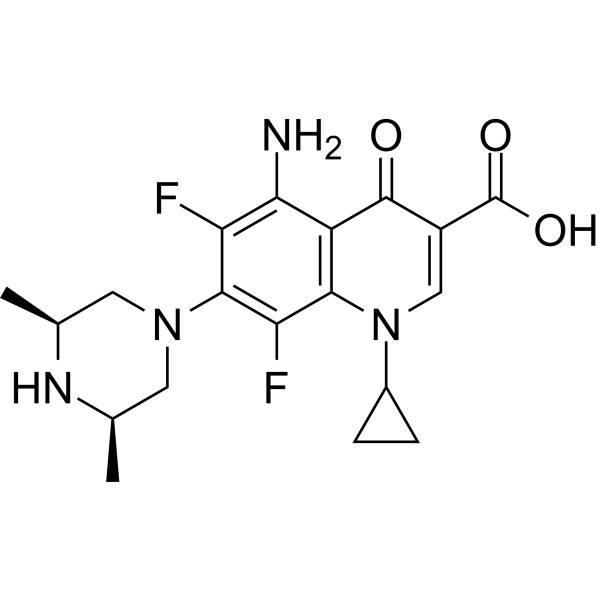
HY-B0308
SparfloxacinBacterial Inhibitor -
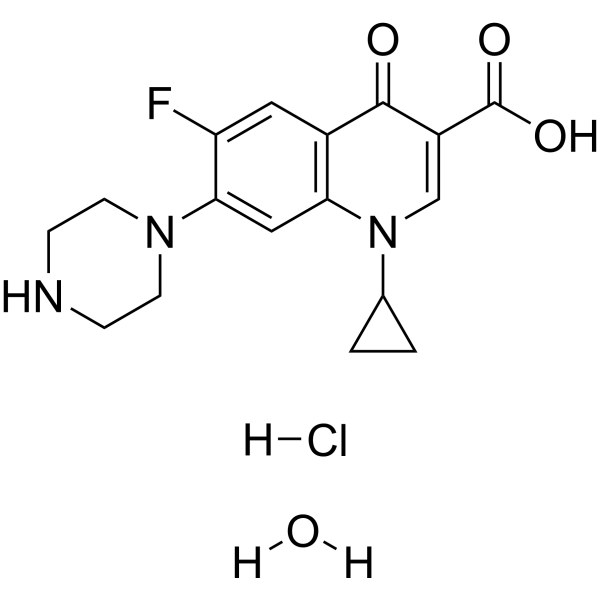
HY-B0356B
Ciprofloxacin hydrochloride monohydrateTopoisomerase IV Inhibitor -
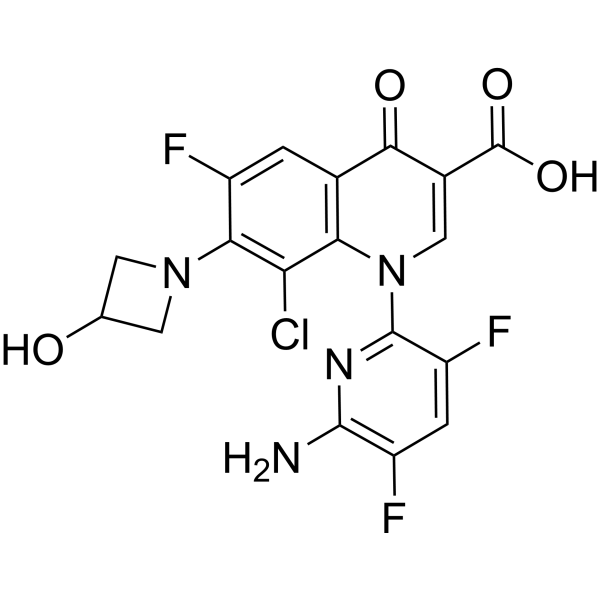
HY-14814
DelafloxacinFluoroquinolone Antibiotic -
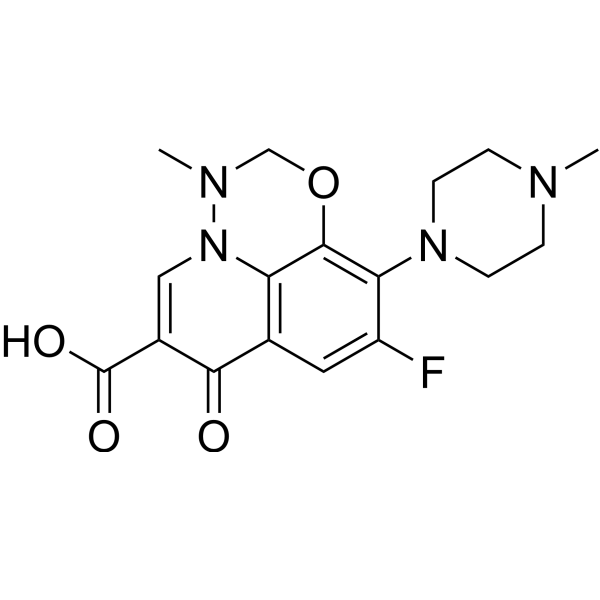
HY-B0126R
Marbofloxacin (Standard)Antimicrobial Agent -
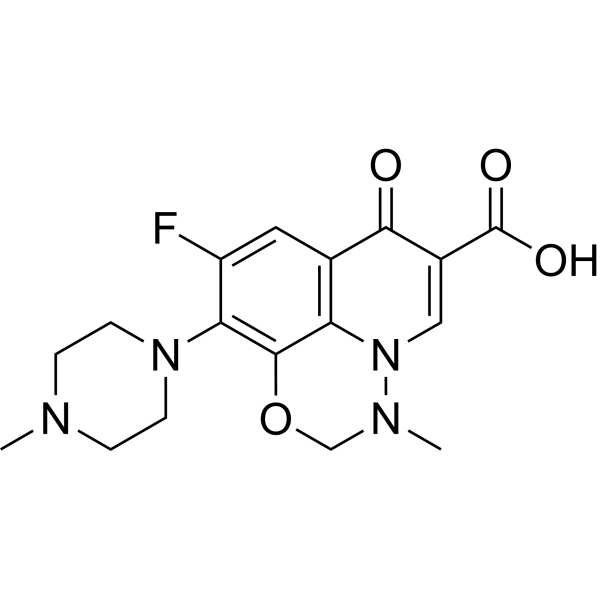
HY-B0126
MarbofloxacinAntimicrobial Agent -
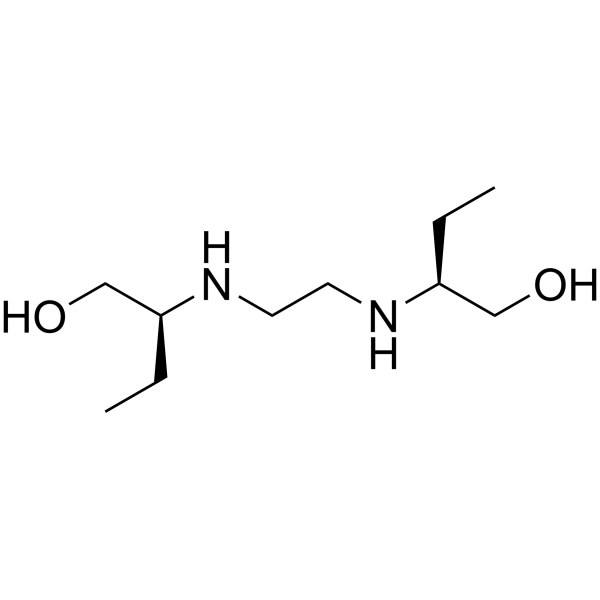
HY-B0535
EthambutolBacterial Inhibitor -

HY-B0356BR
Ciprofloxacin hydrochloride monohydrate (Standard)Topoisomerase IV Inhibitor -
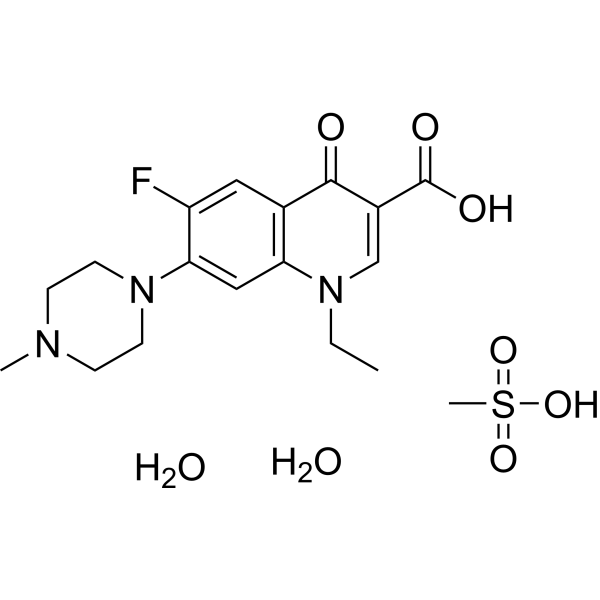
HY-B0147B
Pefloxacin mesylate dihydrateAntibiotic -

HY-B0535R
Ethambutol (Standard)Bacterial Inhibitor -

HY-B0147BR
Pefloxacin mesylate dihydrate (Standard)Analytical Standard
Publications Citing Use of MedChemExpress (MCE) Sarafloxacin hydrochloride 100 μg/mL in methanol
More

Biological Activity
Description


Chemical Information
-
CAS No. 91296-87-6
-
Molecular Weight 421.83
-
Formula C20H18ClF2N3O3
-
SMILES
O=C(C1=CN(C2=CC(N3CCNCC3)=C(C=C2C1=O)F)C4=CC=C(C=C4)F)O.Cl
-
Shipping
Room temperature in continental US; may vary elsewhere.
-
Storage
Please store the product under the recommended conditions in the Certificate of Analysis.


Publications (2)
-
Journal Impact Factor
-
Most Recent
-
J Biol Chem
Mitochondrial pyruvate carrier inhibitors improve metabolic parameters in diet-induced obese mice. [Abstract]2022 Feb;298(2):101554. PMID: 34973337 -
Microb Pathog
Antibiotic discovery against Piscirickettsia salmonis using a combined in silico and in vitro approach. [Abstract]2023 Jul:180:106122. PMID: 37094756

Protocols
-
Aerobic Bacterial Batch Culture on Broth/Agar
Aerobic bacterial batch culture grows a closed inoculated population in broth or on agar without continuous medium replacement; growth readouts include turbidity/OD for total suspended biomass and colony-forming units for viable cells able to form colonies on agar. OD-based growth curves reflect light scattering by cells, but OD is instrument-, pathlength-, species-, cell-size-, and density-dependent, so OD should be calibrated or interpreted alongside viable counts when quantitative cell density is required.


Purity & Documentation

Calculators
Concentration (start) × Volume (start) = Concentration (final) × Volume (final)


Sarafloxacin hydrochloride 100 μg/mL in methanol Related Classifications
HY-B0343C Related Classifications
 Powered by Bioz