
43 Results for "

DOPC/Chol LUVs

" in MedChemExpress (MCE) Product Catalog:
Products (43)

43 Results for "DOPC/Chol LUVs" in MCE Product Catalog:

12
12 Publications Verification
Cat. No.: HY-113424A
CAS No.: 4235-95-4
Purity:  98.11%
Synonyms: DOPC
Category:  

Lipids

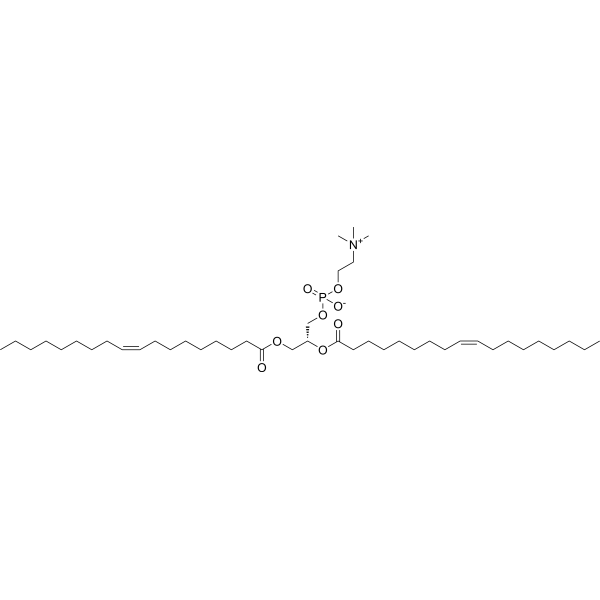
1,2-Dioleoyl-sn-glycero-3-phosphocholine (DOPC) is a phospholipid and is commonly used alone, or with other components, in the generation of micelles, liposomes, and other types of artificial membranes.
loading...
    loading...
1
1 Cited Publications
Cat. No.: HY-144768
Purity:  96.50%
Target:  

Liposome

Research Areas:  

Others

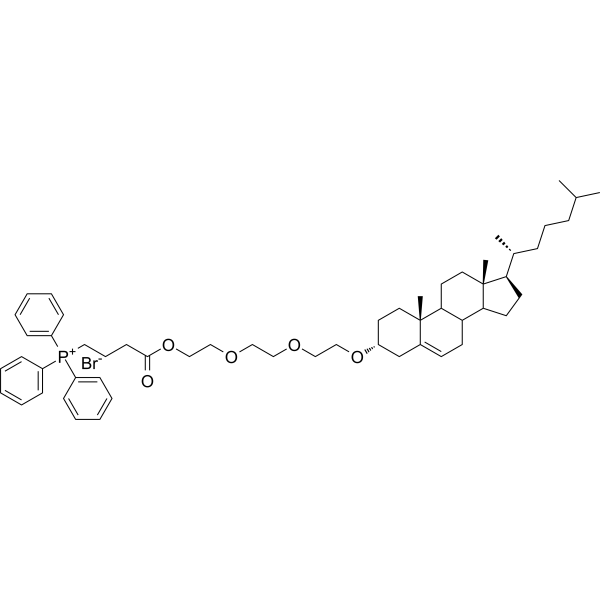
(R)-Chol-TPP a mitochondria targeting liposome ligand could be used in pH-redox responsive .
loading...
    loading...
1
1 Cited Publications
Cat. No.: HY-P75786
Purity:  ≥ 95%, as determined by reducing SDS-PAGE.
Synonyms: GBA1; Acid Beta-Glucosidase; Prev. GLUC; Glucocerebrosidase; Prev. GBA; Glucosylceramidase; D-Glucosyl-N-Acylsphingosine Glucohydrolase; Imiglucerase; Lysosomal Cholesterol Glycosyltransferase; Alglucerase; Lysosomal Acid Glucosylceramidase; Beta-GC; Chol
Species:  
Human
Source:  
HEK293
loading...
    loading...
Cat. No.: HY-141613
CAS No.: 90693-88-2
Purity:  ≥98.0%
Synonyms: DOPS-NA
Target:  

Liposome

Research Areas:  

Others

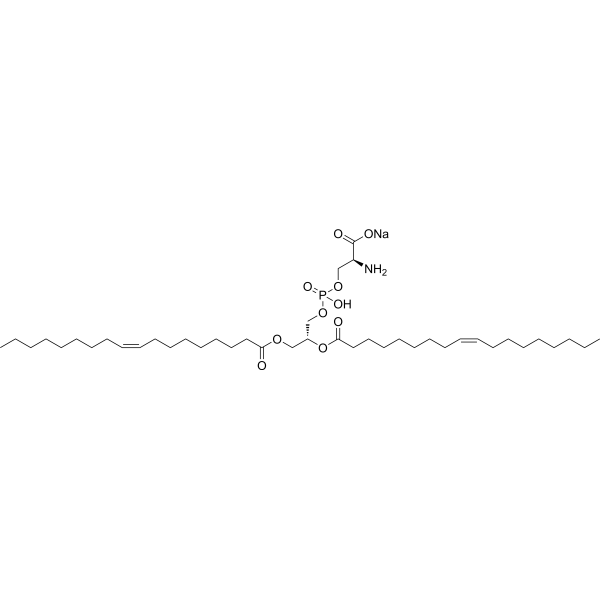
1,2-Dioleoyl-sn-glycero-3-phospho-L-serine sodium (DOPS-NA) is a ubstitute for Phosphoserine/phosphatidylserine. 1,2-Dioleoyl-sn-glycero-3-phospho-L-serine sodium can be used together with DOPC and DOPE in lipid mixtures for the synthesis of liposomes. 1,2-Dioleoyl-sn-glycero-3-phospho-L-serine sodium can self-assemble into single-layer or double-layer membrane structures, similar to cell membranes, and possesses high membrane fluidity and flexibility. 1,2-Dioleoyl-sn-glycero-3-phospho-L-serine is widely applied in membrane biology, cell membrane research, lipid preparation, and drug delivery systems .
loading...
    loading...
Cat. No.: HY-137131
CAS No.: 166023-21-8
Purity:  99.91%
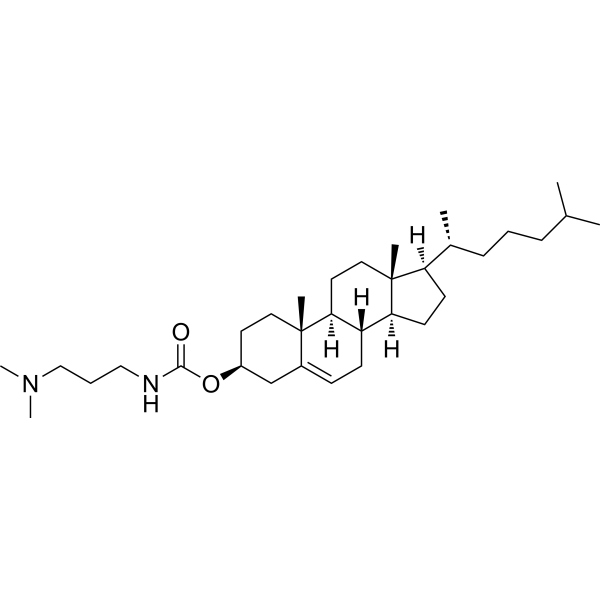
Synonyms: DC-Cholesterol hydrochloride
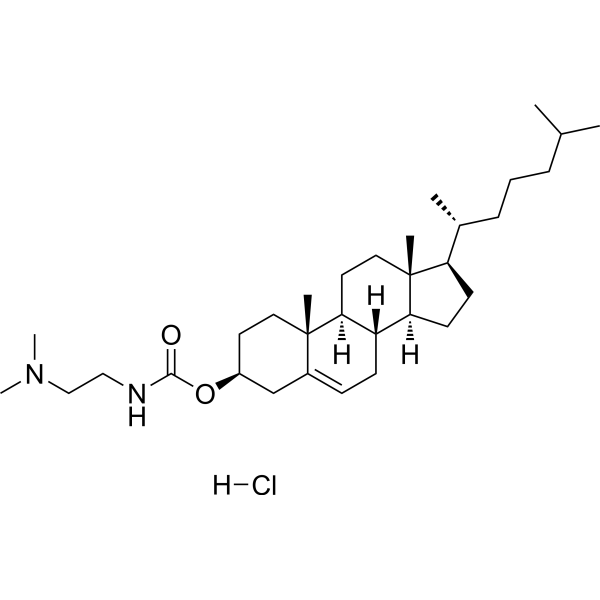
DC-Chol hydrochloride is a cationic lipid. DC-Chol hydrochloride could inhibit Aβ40 fibril formation under appropriate experimental conditions. DC-Chol hydrochloride strongly inhibits amyloidogenesis of oxidized hCT in a dose-dependent manner. DC-Chol hydrochloride induces the production of Th1 (IL-2 and IFN-γ) and Th2 (IL-5) cytokines. DC-Chol hydrochloride can enhance the body's immune response to antigens. DC-Chol hydrochloride is used as a gene delivery vector. DC-Chol hydrochloride can be used in research in areas such as hepatitis B vaccines to improve vaccine immunity .
loading...
    loading...
Cat. No.: HY-144007
CAS No.: 27321-96-6
Target:  

Liposome

Research Areas:  

Others

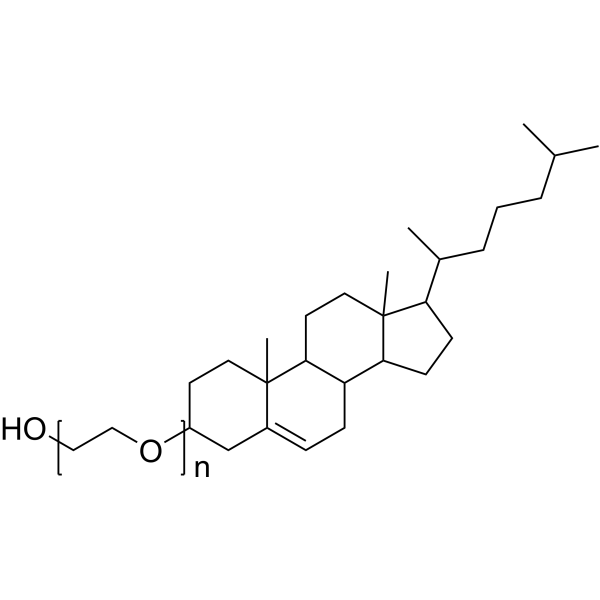
Chol-PEG is an amphiphilic cholesterol-polyethylene glycol conjugate and also a liposomelike surface modifier. After Chol-PEG is incorporated into liposomelike vesicles, it forms a hydrophilic barrier on their surface, increases the thickness of the bound water layer around the liposomelike vesicles, and enhances the release rate of encapsulated compounds. Chol-PEG can be used as a modifier to prepare nonionic surfactant vesicles (liposomelike vesicles) for drug delivery applications .
loading...
    loading...
Cat. No.: HY-113424AS
Purity:  ≥98.0%
Synonyms: DOPC-d9
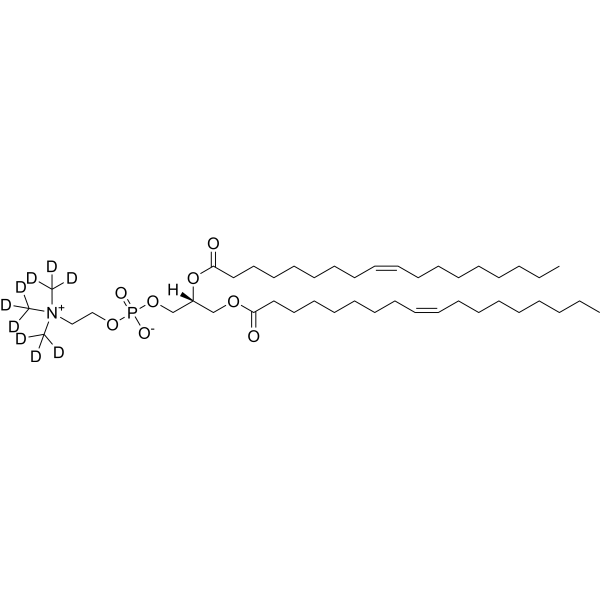
1,2-Dioleoyl-sn-glycero-3-phosphocholine-d9 is deuterium labeled 1,2-Dioleoyl-sn-glycero-3-phosphocholine. 1,2-Dioleoyl-sn-glycero-3-phosphocholine (DOPC) is a phospholipid and is commonly used alone, or with other components, in the generation of micelle
loading...
    loading...
Cat. No.: HY-131682
CAS No.: 201731-19-3
Purity:  ≥99.0%
Synonyms: 3-Hexanoyl-NBD-Cholesterol
Target:  

Fluorescent Dye

Research Areas:  

Others

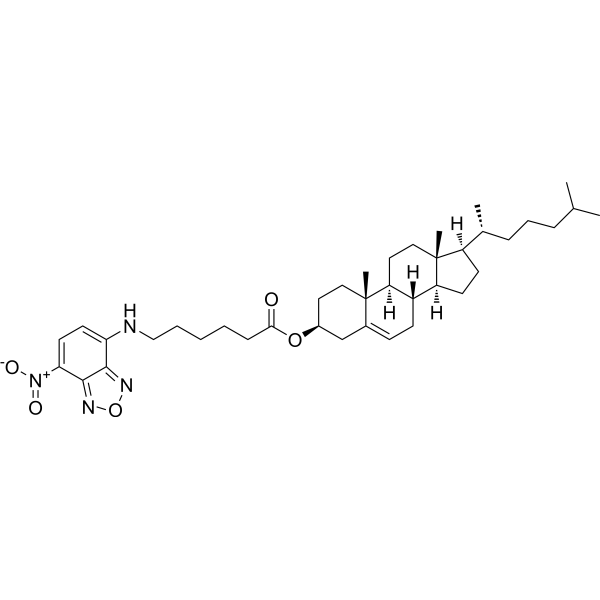
3-C6-NBD-cholesterol is a fluorescent analog of Chol that can be used to measure the kinetics of membrane and intracellular trafficking .
loading...
    loading...
Cat. No.: HY-132604A
CAS No.: 2175009-09-1
Purity:  93.86%
Synonyms: ARO-AAT sodium
Research Areas:  

Metabolic Disease

Fazirsiran sodium is a second-generation RNAi agent. Fazirsiran sodium consistes of a cholesterol-conjugated RNAi trigger (chol-RNAi) to selectively degrade Alpha1-antitrypsin (AAT) mRNA by RNAi and a melittin-derived peptide conjugated to N-acetylgalactosamine (NAG) formulated as the excipient EX1 to promote endosomal escape of the chol-RNAi in hepatocytes . Fazirsiran sodium can be used in the study of Alpha-1 Antitrypsin Deficiency (AATD) liver disease. AATD is caused by mutations in the alpha-1 antitrypsin (SERPINA1) gene.
loading...
    loading...
Cat. No.: HY-N16290
Target:  

Liposome

Research Areas:  

Others

Chol-PEG2000-maleimide is a PEG derivative composed of Cholesterol, PEG units and Maleimide (HY-W007324). Maleimide forms a stable thioether bond with sulfhydryl (-SH) groups .
loading...
    loading...
Cat. No.: HY-132604
CAS No.: 2175009-08-0
Synonyms: ARO-AAT
Research Areas:  

Metabolic Disease

Fazirsiran (ARO-AAT) is a second-generation RNAi agent. Fazirsiran consistes of a cholesterol-conjugated RNAi trigger (chol-RNAi) to selectively reduce Alpha1-antitrypsin (AAT) synthesis and a melittin-derived peptide conjugated to N-acetylgalactosamine (NAG) formulated as the excipient EX1 to promote endosomal escape of the chol-RNAi in hepatocytes . Fazirsiran can be used in the study of Alpha-1 Antitrypsin Deficiency (AATD) liver disease. Alpha-1 antitrypsin deficiency (AATD) is caused by mutations in the alpha-1 antitrypsin (SERPINA1) gene.
loading...
    loading...
Cat. No.: HY-159859
CAS No.: 191990-35-9
Target:  

Liposome

Research Areas:  

Others

IZ-Chol (IZ-Cholesterol) is an ionizable cationic lipid containing cholesterol. IZ-Chol-LNPs is highly potential to effectively complex with DNA, and endosome escape mechanisms mediated by proton sponge effect .
loading...
    loading...
Cat. No.: HY-152901
CAS No.: 2106868-12-4
Target:  

Fluorescent Dye

Research Areas:  

Others

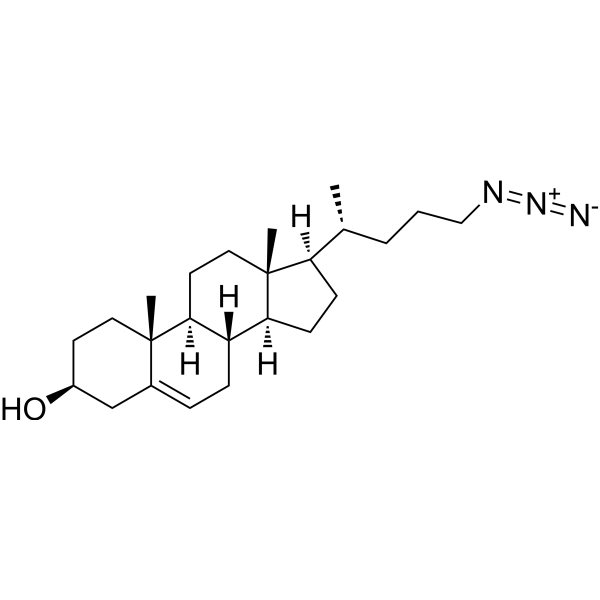
Chol-N3 is a bioorthogonal-based chol probe. Chol-N3 can combine with super-resolution fluorescence microscopy (SRM), providing direct visualization of nanoscale lipid heterogeneity in the cell surface of resting living cells . Chol-N3 is a click chemistry reagent, it contains an Azide group and can undergo copper-catalyzed azide-alkyne cycloaddition reaction (CuAAc) with molecules containing Alkyne groups. It can also undergo strain-promoted alkyne-azide cycloaddition (SPAAC) reactions with molecules containing DBCO or BCN groups.
loading...
    loading...
Cat. No.: HY-N15913
CAS No.: 84366-67-6
Target:  

Drug Isomer

ent-DOPC is a glycerol chirality isomer of 1,2-Dioleoyl-sn-glycero-3-phosphocholine (DOPC) (HY-113424A) .
loading...
    loading...
Cat. No.: HY-149664
CAS No.: 137056-72-5
Synonyms: DC-Chol
Target:  

Liposome

Research Areas:  

Cancer

3β-[N-(N′,N′-Dimethylaminoethyl)carbamoyl]cholesterol, a lipid, has been investigated in cancer gene therapy and vaccine delivery system .
loading...
    loading...
Cat. No.: HY-125529
CAS No.: 184582-91-0
Synonyms: Chol-T
Target:  

Liposome

Research Areas:  

Others

DMPAC-Chol (Chol-T) is used for liposome formation. DMPAC-Chol (Chol-T) liposomes exhibits great transfection effciencies .
loading...
    loading...
Cat. No.: HY-112752
CAS No.: 219850-70-1
Target:  

Liposome

Research Areas:  

Others

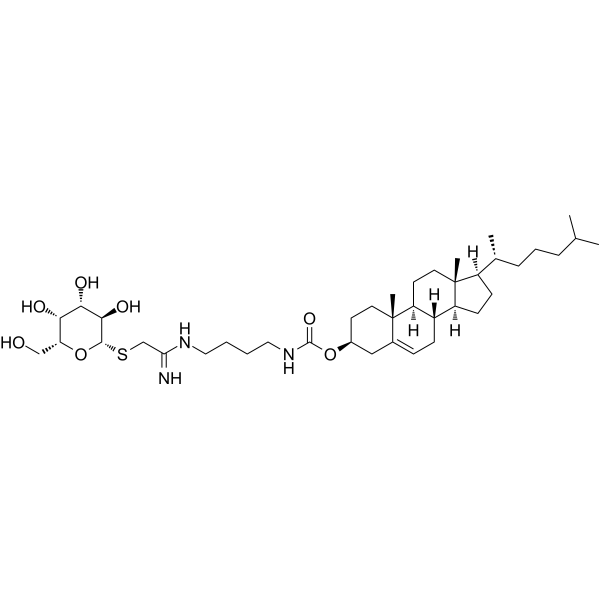
Gal-C4-Chol is a glycosylated cholesterol derivative. Gal-C4-Chol can be used as a ligand for asialoglycoprotein receptors (ASGPR) to prepare Galactosylated (Gal) liposomes. Gal-C4-Chol can be used to prepare simple lipid-based nanoparticles .
loading...
    loading...
Cat. No.: HY-145523
CAS No.: 191173-82-7
Target:  

Liposome

Research Areas:  

Others

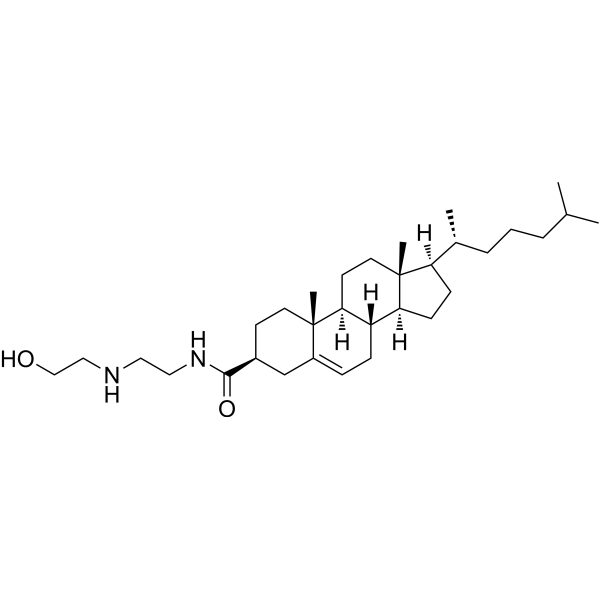
OH-Chol is a cationic cholesterol derivative. OH-Chol can be used for siRNA delivery and gene silencing .
loading...
    loading...
Cat. No.: HY-136869
CAS No.: 1027801-74-6
Target:  

Liposome

Research Areas:  

Others

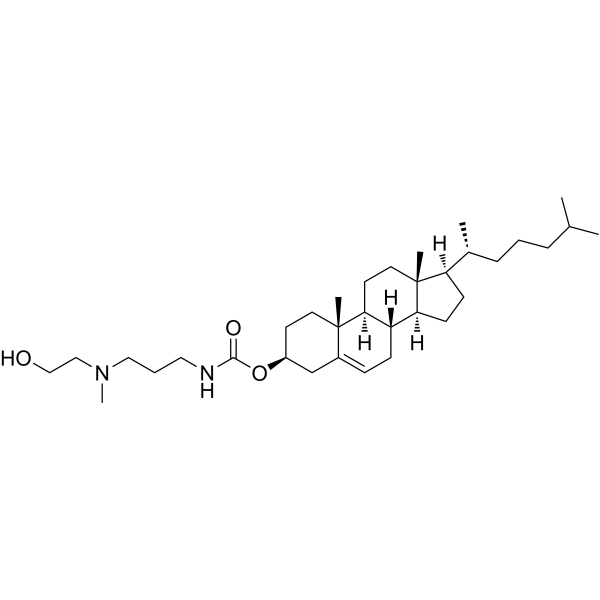
MHAPC-Chol, a cationic cholesterol, results in a high gene silencing effect via high cellular association. MHAPC-Chol delivers siRNA to the liver .
loading...
    loading...
Cat. No.: HY-D2851
FITC-PEG2000-CHOL is a fluorescent dye composed of FITC (HY-66019), PEG and cholesterol. FITC-PEG2000-CHOL is widely used in cell membrane-related studies, liposome and nanoparticle modification, and biomolecule labeling (Ex/Em=488/525 nm) .
loading...
    loading...