216 Results for "

action potentials

" in MedChemExpress (MCE) Product Catalog:
Products (216)

216 Results for "action potentials" in MCE Product Catalog:

Cat. No.: HY-121119R
CAS No.: 212329-37-8
MRS 1523 (Standard) is the analytical standard of MRS 1523. This product is intended for research and analytical applications. MRS 1523 is a potent and selective adenosine A3 receptor antagonist with Ki values of 18.9 nM and 113 nM for human and rat A3 receptors, respectively. In rat this corresponds to selectivities of 140- and 18-fold vs A1 and A2A receptors, respectively. MRS 1523 can exert antihyperalgesic effect through N-type Ca channel block and action potential inhibition in isolated rat dorsal root ganglion (DRG) neurons .
loading...
    loading...
Cat. No.: HY-123593R
CAS No.: 138470-70-9
Synonyms: OPC-31260 hydrochloride (Standard)
Mozavaptan (hydrochloride) (Standard) is the analytical standard of Mozavaptan (hydrochloride). This product is intended for research and analytical applications. Mozavaptan hydrochloride (OPC-31260 hydrochloride) is a benzazepine derivative and a potent, selective, competitive and orally active vasopressin V2 receptor antagonist with an IC50 of 14 nM. Mozavaptan hydrochloride shows ~85-fold selectivity for V2 receptor over V1 receptor (IC50 of 1.2 μM), and can antagonize the antidiuretic action of arginine vasopressin (AVP) in vivo. Mozavaptan hydrochloride has the potential for hyponatremia, syndrome of inappropriate antidiuretic hormone (SIADH), and congestive heart failure treatment .
loading...
    loading...
Cat. No.: HY-158222
Synonyms: AlgMA (MW 50000)
Alginate Methacryloyl (MW 50000) is a methacryloyl alginate with potential for use as a tissue engineering scaffold and 3D printing ink. Alginate Methacryloyl (MW 50000) is biocompatible, non-immunogenic, has low toxicity and is capable of physical cross-linking with divalent cations such as calcium . Alginate Methacryloyl (MW 50000) needs to self-assemble into fibrous hydrogel under the action of photoinitiator LAP (HY-44076), and target bioactive adhesion sites, play an inherent supporting role for tissue cells and biodegradable activity.
Application: cell culture, biological 3D printing, tissue engineering, etc.
loading...
    loading...
Cat. No.: HY-158222A
Synonyms: AlgMA (MW 300000)
Research Areas:  

Others

Alginate Methacryloyl (MW 300000) is a methacryloyl alginate with potential for use as a tissue engineering scaffold and 3D printing ink. Alginate Methacryloyl (MW 300000) is biocompatible, non-immunogenic, has low toxicity and is capable of physical cross-linking with divalent cations such as calcium . Alginate Methacryloyl (MW 300000) needs to self-assemble into fibrous hydrogel under the action of photoinitiator LAP (HY-44076), and target bioactive adhesion sites, play an inherent supporting role for tissue cells and biodegradable activity.
Application: cell culture, biological 3D printing, tissue engineering, etc.
loading...
    loading...
Cat. No.: HY-18346R
CAS No.: 137975-06-5
Synonyms: OPC-31260 (Standard)
Mozavaptan (Standard) is the analytical standard of Mozavaptan. This product is intended for research and analytical applications. Mozavaptan (OPC-31260) is a benzazepine derivative and a potent, selective, competitive and orally active vasopressin V2 receptor antagonist with an IC50 of 14 nM. Mozavaptan shows ~85-fold selectivity for V2 receptor over V1 receptor (IC50 of 1.2 μM), and can antagonize the antidiuretic action of arginine vasopressin (AVP) in vivo. Mozavaptan has the potential for hyponatremia, syndrome of inappropriate antidiuretic hormone (SIADH), and congestive heart failure treatment .
loading...
    loading...
Cat. No.: HY-B1021R
CAS No.: 1617-90-9
Vincamine (Standard) is the analytical standard of Vincamine. This product is intended for research and analytical applications. Vincamine is a monoterpenoid indole alkaloid extracted from the Madagascar periwinkle. Vincamine is a peripheral vasodilator and exerts a selective vasoregulator action on the brain microcapilar circulation . Vincamine is a GPR40 agonist and acts as a β-cell protector by ameliorating β-cell dysfunction and promoting glucose-stimulated insulin secretion (GSIS). Vincamine improves glucose homeostasis in vivo, and has the potential for the type 2 diabetes mellitus (T2DM) research .
loading...
    loading...
Cat. No.: HY-B1319R
CAS No.: 637-58-1
Synonyms: Pramoxine hydrochloride (Standard)
Research Areas:  

Neurological Disease

Pramocaine (Pramoxine) hydrochloride (Standard) is the analytical standard of Pramocaine hydrochloride (HY-B1319). This product is intended for research and analytical applications. Pramocaine hydrochloride is a topical surface anesthetic and antipruritic agent. Pramocaine hydrochloride reversibly inhibits voltage-gated sodium channel, reduces transmembrane permeability of sodium ions, stabilizes cell membranes, prevents depolarization, blocks action potential conduction, and inhibits peripheral slow C-fiber pathways associated with pain, pruritus and thermoception. Pramocaine hydrochloride can be used in research related to chronic pruritus, renal pruritus, atopic dermatitis, xerotic pruritus, uremic pruritus, and cutaneous hyperalgesia/pain .
loading...
    loading...
Cat. No.: HY-106769B
CAS No.: 105182-47-6
Synonyms: (3aR,9aR)-GR50360
Target:  

Adrenergic Receptor

Research Areas:  

Neurological Disease

(3aR,9aR)-Fluparoxan ((3aR,9aR)-GR50360) is a highly selective and potent α2B adrenaline receptor antagonist with the activity of preventing, improving or inhibiting neurodevelopmental disorders and neurodegenerative diseases. As an α2B receptor antagonist, (3aR,9aR)-Fluparoxan can promote the recovery of neurological function. The mechanism of action of (3aR,9aR)-Fluparoxan makes it have important application potential in neuroscience research .
loading...
    loading...
Cat. No.: HY-118275
CAS No.: 133920-70-4
Target:  

Cholinesterase (ChE)

Research Areas:  

Neurological Disease

FK960 is a potential anti-dementia agent that reverses the reduction in cerebral blood flow (rCBF) caused by sensory stimulation by enhancing cholinergic neurotransmission. In macaque experiments, physostigmine (AChE inhibitor; HY-N6608) was able to completely eliminate the rCBF in the sensory cortex increased by vibrotactile stimulation. FK960 (1-1000 μg/kg) can restore the eliminated rCBF response, and the action time can last for 1 hour. However, FK960 cannot restore the rCBF response eliminated by HA-966 (NMDA modulator; HY-100822), indicating that its function is not dependent on non-glutamatergic neurotransmission.
loading...
    loading...
Cat. No.: HY-120960
CAS No.: 187224-29-9
Synonyms: ARA-S
N-Arachidonoyl-L-serine (ARA-S) is an endocannabinoid. N-Arachidonoyl-L-serine induces phosphorylation of Akt and MAPK in endothelial cells. N-Arachidonoyl-L-serine also induces endothelium-dependent vasodilation in isolated rat mesenteric and abdominal aortas. N-Arachidonoyl-L-serine exhibits neuroprotective effects after traumatic brain injury by reducing apoptosis. N-Arachidonoyl-L-serine promotes the opening of KV7.1/KCNE1 channels in mammalian cells and shortens the action potential duration in cardiomyocytes. N-Arachidonoyl-L-serine may be used in research on cardiovascular and cerebrovascular diseases and neurological disorders .
loading...
    loading...
Cat. No.: HY-17504AS1
CAS No.: 2070009-40-2
Synonyms: ZD 4522-d6
Rosuvastatin-d6 (ZD 4522-d6) is deuterium labeled Rosuvastatin. Rosuvastatin (ZD 4522) is a competitive HMG-CoA reductase inhibitor with an IC50 of 11 nM. Rosuvastatin potently blocks hERG current with an IC50 of 195 nM, delayed cardiac repolarization, and thereby prolonged action potential durations (APDs) and corrected QT interval (QTc) intervals. Rosuvastatin reduces the expression of the mature hERG and the interaction of heat shock protein 70 (Hsp70) with the hERG protein. Rosuvastatin effectively lowers low-density lipoprotein (LDL) cholesterol, triglycerides, and C-reactive protein levels .
loading...
    loading...
Cat. No.: HY-18346S
CAS No.: 2750534-83-7
Synonyms: OPC-31260-d6
Mozavaptan-d6 (OPC-31260-d6) is the deuterium labeled Mozavaptan. Mozavaptan (OPC-31260) is a benzazepine derivative and a potent, selective, competitive and orally active vasopressin V2 receptor antagonist with an IC50 of 14 nM. Mozavaptan shows ~85-fold selectivity for V2 receptor over V1 receptor (IC50 of 1.2 μM), and can antagonize the antidiuretic action of arginine vasopressin (AVP) in vivo. Mozavaptan has the potential for hyponatremia, syndrome of inappropriate antidiuretic hormone (SIADH), and congestive heart failure treatment .
loading...
    loading...
Cat. No.: HY-B1319S1
Synonyms: Pramoxine-d9 hydrochloride
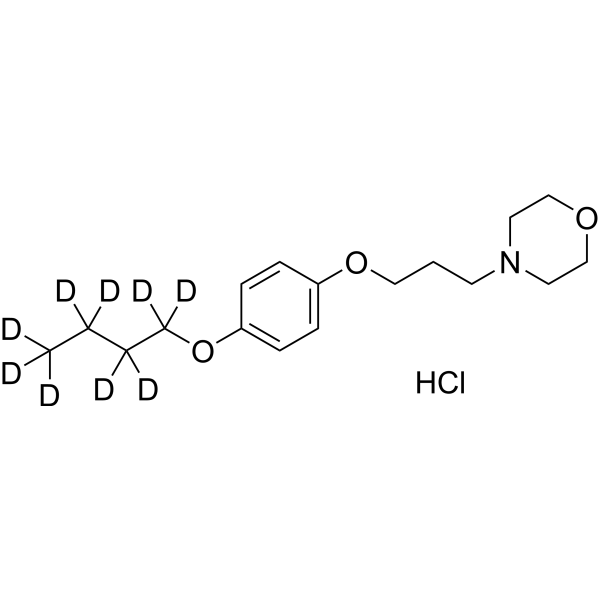
Pramocaine-d9 (Pramoxine-d9) hydrochloride is the d9-labeled Pramocaine hydrochloride (HY-B1319). Pramocaine hydrochloride is a topical surface anesthetic and antipruritic agent. Pramocaine hydrochloride reversibly inhibits voltage-gated sodium channel, reduces transmembrane permeability of sodium ions, stabilizes cell membranes, prevents depolarization, blocks action potential conduction, and inhibits peripheral slow C-fiber pathways associated with pain, pruritus and thermoception. Pramocaine hydrochloride can be used in research related to chronic pruritus, renal pruritus, atopic dermatitis, xerotic pruritus, uremic pruritus, and cutaneous hyperalgesia/pain .
loading...
    loading...
Cat. No.: HY-W705705
CAS No.: 203002-58-8
NIP-142 is a benzopyran derivative with multiple ion channel-blocking effects. NIP-142 selectively blocks the potassium ion channels enriched in atrial muscle, prolonging the effective refractory period (ERP) and action potential duration (APD) of the atrium, while having minimal effect on ventricular repolarization. NIP-142 also inhibits L-type/T-type calcium channels and sodium channels, further contributing to its anti-arrhythmic effect. NIP-142 shows significant efficacy in various atrial fibrillation models. NIP-142 can be used for research on arrhythmias .
loading...
    loading...
Cat. No.: HY-148611
CAS No.: 1135037-53-4
Target:  

iGluR

Research Areas:  

Neurological Disease

NSC339614 potassium is a selective GluN1/GluN2C and GluN1/GluN2D receptor enhancer with the activity of enhancing neuronal responses to specific NMDA receptors. NSC339614 potassium can selectively enhance the signaling of GluN1/GluN2C and GluN1/GluN2D receptors without affecting other NMDA receptors. The mechanism of action of NSC339614 potassium does not compete with agonists of L-glutamate or glycine, nor does it depend on membrane potential. The activity of NSC339614 potassium depends on the specific structure of the agonist ligand binding domain, showing its potential as a novel pharmacological agent for studying the function of NMDA receptor subtypes and providing new lead compounds for a variety of neurological diseases .
loading...
    loading...
Cat. No.: HY-P3269
CAS No.: 178805-91-9
Target:  

Calcium Channel

Research Areas:  

Cardiovascular Disease

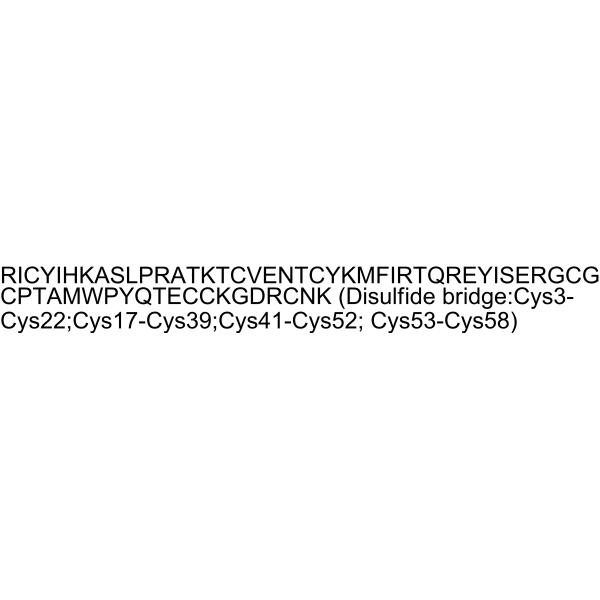
Calciseptine is a natural polypeptide toxin found in the venom of the black mamba snake (Dendroaspis p. polylepis). Calciseptine is a highly effective and selective blocker of the L-type channel of the Cav1.2 subtype, with an IC50 value of 92 nM. Calciseptine has no effect on Cav3.1, Cav2.2, Cav2.1, Cav1.1, voltage-sensitive sodium channels and potassium channels. Calciseptine exhibits negative inotropic and negative relaxant effects on mice, and does not affect heart rate or the action potential of sinoatrial node pacemaker cells. Calciseptine can be used for research on cardiovascular diseases[1].
loading...
    loading...
Cat. No.: HY-L213
265 compounds

The anti-cancer drug library meticulously collects all drugs approved by FDA and other major national drug regulatory authorities for cancer treatment. These drugs cover a variety of cancer types, including but not limited to lung cancer, breast cancer, colorectal cancer, leukemia, and other common cancers. The library includes a wide range of drugs, from classic chemotherapeutic agents to cutting-edge targeted therapies and immunotherapies. It contains various types of drug compounds with different mechanisms of action. There are cytotoxic drugs that directly kill cancer cells, as well as drugs that work by modulating the tumor microenvironment, inhibiting tumor angiogenesis, and activating the immune system. This diversity provides researchers with a broad range of perspectives and options for intervention strategies.

This library can be used for basic research on cancer treatment, exploring new targets and new mechanisms of drug action; Conducting drug reuse research to look for potential therapeutic effects of existing drugs on other cancer types or diseases; Or conducting research into combination drugs to optimize cancer treatment.

MCE has collected 265 small-molecule compounds with cancer indications, which are good tools for drug repurposing.

Cat. No.: HY-13224A
CAS No.: 758722-12-2
Target:  

Endogenous Metabolite

Research Areas:  

Cancer

AZD4877 hydrochloride is a synthetic dynein inhibitor with potential anti-tumor activity. AZD4877 selectively inhibits the microtubule dynein KSP (also known as kinesin-5 or Eg5), which may lead to inhibition of mitotic spindle assembly. The action of AZD4877 may activate the spindle assembly checkpoint, leading to cell cycle arrest at the mitotic stage. AZD4877 may induce cell death in actively dividing tumor cells. AZD4877 may be less likely to cause peripheral neuropathy associated with microtubule-targeted compounds as it is not involved in post-mitotic processes. AZD4877 is essential for the formation of bipolar spindles and the proper segregation of sister chromosomes .
loading...
    loading...
Cat. No.: HY-136818
CAS No.: 95833-19-5
Target:  

Histamine Receptor

Research Areas:  

Endocrinology

DA 4643 (hydrochloride) is an H2 receptor antagonist with the chemical name 2-guanidino-4 (3-methylaminomethyleneiminophenyl) thiazole dihydrochloride. It has a weak interaction with cytochrome P-450 and has a less inhibitory effect on P-450 than cimetidine and tiotidine. DA 4643 (hydrochloride) is able to inhibit both enzymatic and non-enzymatic lipid peroxidation reactions. This inhibition may not be achieved by inhibiting agent metabolizing enzymes, but rather due to the antioxidant properties of the compound itself. Compared with other H2 receptor antagonists such as cimetidine, ranitidine and tiotidine, DA 4643 (hydrochloride) shows a unique effect in lipid peroxidation inhibition. These properties make DA 4643 (hydrochloride) a potential H2 receptor antagonist with multiple mechanisms of action.
loading...
    loading...
Cat. No.: HY-183206
CAS No.: 149455-36-7
UR 8225 is an orally active ATP-sensitive K + channel activator with vasodilator, smooth muscle relaxant, antihypertensive, and bronchodilator activities. UR 8225 induces membrane hyperpolarization by increasing outward K + conductance and reduces Ca 2+ influx through voltage-gated L-type Ca 2+ channels. UR 8225 reduces total peripheral vascular resistance, shortens cardiac action potential duration, inhibits agonist-induced Ca 2+ influx, and stimulates renin release. UR 8225 induces reflex tachycardia but lacks β-adrenergic receptor blocking activity. UR 8225 is widely applicable to research in fields related to hypertension, myocardial ischemia, ventricular fibrillation, and other conditions .
loading...
    loading...

