


217 Results for "

Encapsulation

" in MedChemExpress (MCE) Product Catalog:
Products (217)

217 Results for "Encapsulation" in MCE Product Catalog:

Cat. No.: HY-154644
CAS No.: 8030-76-0
Soya Lecithin is a phospholipid mixture that can be used as a drug delivery vehicle and is a pharmaceutical excipient. Soya Lecithin can form a lipid bilayer structure through self-assembly, and its binding properties are amphiphilic (hydrophilic head and hydrophobic tail), encapsulating hydrophobic drugs. Soya Lecithin forms stable nanoliposomes or microemulsions, improves the solubility and cellular uptake efficiency of poorly soluble drugs (such as Curcumin (HY-N0005)), and exerts activities such as enhancing drug delivery and regulating cell proliferation .
loading...
    loading...
Cat. No.: HY-154818
Synonyms: Bovine Serum Albumin, Acetylated
BSA Protein, Acetylated (Bovine Serum Albumin, Acetylated) is a polypeptide of known structure with strong antigenicity. BSA Protein, Acetylated produced a significant immune response, validating the accuracy and reliability of the experimental method. BSA Protein, Acetylated can be used as a positive control substance in ELISA or WB experiments, and can be used in experiments with acetylated lysine monoclonal or polyclonal antibodies. BSA Protein, Acetylated also improves encapsulation efficiency at low concentrations of PLGA, a polymer for biopharmaceutical delivery with biocompatibility, degradability, and controlled release properties .
loading...
    loading...
Cat. No.: HY-188102
Target:  

mRNA

Research Areas:  

Others

mCherry mRNA (N1-Me-Pseudo UTP)-LNP is a lipid nanoparticle (LNP) encapsulating mCherry mRNA (N1-Me-Pseudo UTP). mCherry mRNA (N1-Me-Pseudo UTP) is a reporter mRNA encoding a red fluorescent protein, suitable for gene expression, cell viability, in vivo imaging, and other detection methods. mCherry is a red fluorescent protein derived from mushroom coral and is widely used in biotechnology as a red fluorescent dye tracer.
loading...
    loading...
Cat. No.: HY-W016979R
CAS No.: 705-86-2
δ-Decalactone (Standard) is the analytical standard of δ-Decalactone (HY-W016979 ). This product is intended for research and analytical applications. δ-Decalactone is a hydrophobic natural cyclic lactone aroma compound with a creamy-coconut-peach aroma. It serves as a flavoring agent and a renewable monomer for ring-opening polymerization to prepare homopolymers and amphiphilic block copolymers, and it can self-assemble into degradable micelles for the encapsulation of hydrophobic molecules. δ-Decalactone is used in food flavoring and polymer materials research .
loading...
    loading...
Cat. No.: HY-W250313
CAS No.: 26100-51-6
Synonyms: PLA
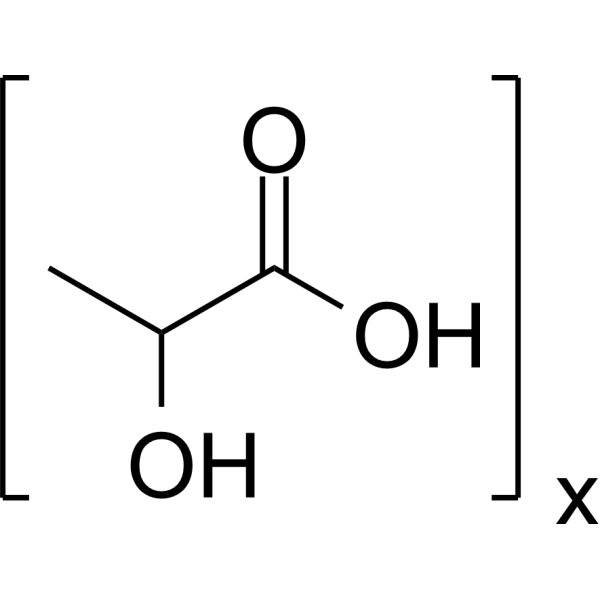
Polylactic acid (PLA) is a biodegradable and biocompatible polymer widely used as a carrier for drug delivery systems and a structural material for tissue engineering and medical implants. Polylactic acid acts as a controlled release matrix through the hydrolysis mechanism of ester bonds, gradually releasing the encapsulated drug and metabolizing to non-toxic lactic acid. Polylactic acid has adjustable degradation rate, mechanical properties and the ability to composite with other polymers, and can be used in local or systemic drug delivery, orthopedic fixation devices and 3D printed bone regeneration scaffolds .
loading...
    loading...
Cat. No.: HY-101530B
CAS No.: 171286-89-8
Synonyms: PEG 40 stearate
Research Areas:  

Others

Polyoxyl 40 stearate (PEG 40 stearate) is a nonionic surfactant formed by the esterification of stearic acid with polyethylene glycol (PEG) containing approximately 40 ethoxy units, it is widely used in pharmaceutical preparations, nanodrug carriers, emulsification systems and biomedical materials. Polyoxyl 40 stearate can serve as a matrix component of solid lipid nanoparticles to achieve controlled release of encapsulated antifungal drugs; it can also act as a base material for solid lipid nanoparticles for vaginal administration, and polymerizable groups can be introduced via modification with acryloyl chloride .
loading...
    loading...
Cat. No.: HY-117401
CAS No.: 107827-77-0
Purity:  99.32%
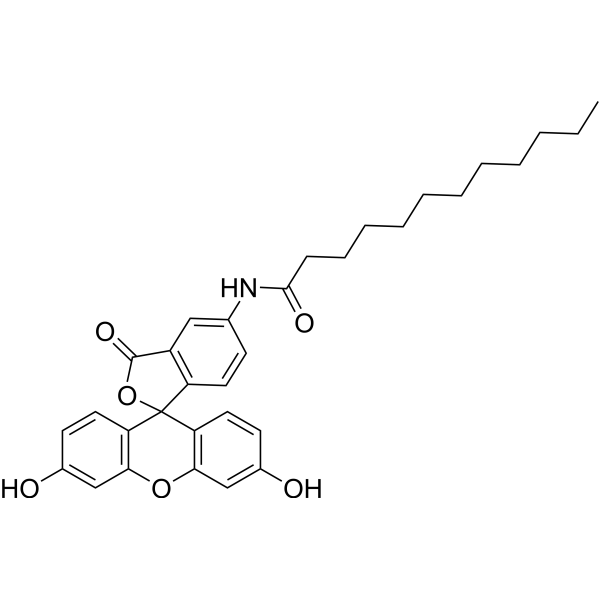
5-Dodecanoylaminofluorescein is an amphipathic (amphoteric) fluorescent probe (Ex/Em = 485 nm/515-535 nm), which consists of a hydrophilic fluorescein core and a hydrophobic dodecanoyl group (C12 fatty acid chain) linked by an amide bond. 5-Dodecanoylaminofluorescein is mainly used as an interface-localized radical trapping/indicator probe. Dodecanoylaminofluorescein can be used for the determination of the antioxidant properties of emulsions, or can serve as a lipophilic drug model for the study of passive skin penetration when encapsulated in tyrosine-derived nanospheres .
loading...
    loading...
Cat. No.: HY-140696C
CAS No.: 9004-74-4
Synonyms: mPEG20000-Hydroxy; Polyethylene glycol monomethyl ether 20000
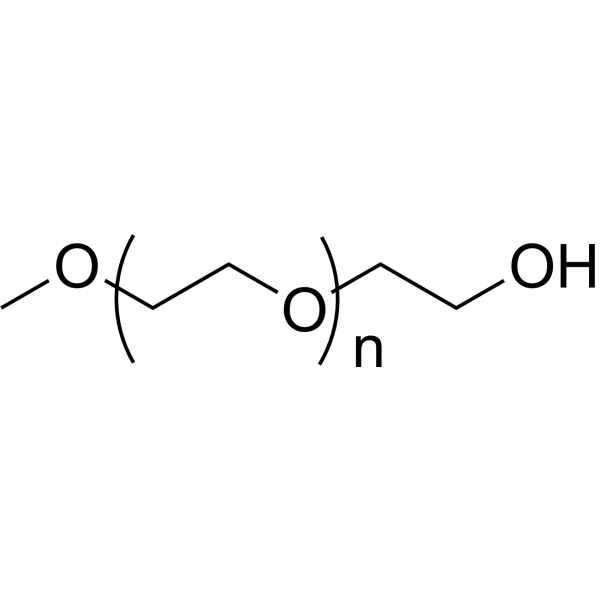
m-PEG20000-OH (mPEG20000-Hydroxy; Polyethylene glycol monomethyl ether 20000) can be used as a macroinitiator to participate in the synthesis of amphiphilic block copolymers. Nanoscale micelles can be prepared by using amphiphilic block copolymers to deliver active drugs. Paclitaxel (HY-B0015), a hydrophobic anticancer agent encapsulated in micelles, has stronger activity in killing cancer cells than free Paclitaxel. And it preferentially accumulates in tumor tissue with only limited distribution in healthy organs .
loading...
    loading...
Cat. No.: HY-160713
CAS No.: 27297-42-3
Synonyms: NSSL-BMS
Betamethasone succinate (NSSL-BMS) is a nano-formulation that can cross the blood-brain barrier. Betamethasone succinate is prepared by encapsulating the Betamethasone (HY-13570) semi-succinate in PEG-liposomes. Betamethasone succinate utilizes the enhanced permeation and retention effects of liposomes to target and deliver the potent glucocorticoid to the inflammatory sites. Betamethasone succinate inhibits the secretion of pro-inflammatory cytokines (such as TNF-α and IL-6) while maintaining the level of anti-inflammatory cytokine TGF-β. Betamethasone succinate can be used in the research of arthritis and cerebral malaria .
loading...
    loading...
Cat. No.: HY-184606
PEI stabilized gold nanoclusters (PEI-Au NCs) are nanomaterials combining gold nanoclusters and polyethyleneimine. They consist of a few to dozens of gold atoms forming the core of the gold nanoclusters, while polyethyleneimine (PEI), a positively charged hyperbranched polyamine, is selected as the end-capping agent, encapsulating the surface of the gold nanoclusters. PEI-Au NCs have gained widespread application due to their high luminescence properties and stability over a wide pH range. Furthermore, their good biocompatibility and ease of surface modification or functionalization make them attractive for many biomedical applications.
loading...
    loading...
Cat. No.: HY-P11614
Target:  

Liposome

Research Areas:  

Cancer

LCA-H10 is a lithocholic acid-histidine decapeptide conjugate, a biocompatible lipid nanoparticle (LNP) additive that reduces ionizable lipid proportions, functions as an endosomal escape inducer, and enhances siRNA encapsulation. LCA-H10 increases hepatic accumulation of LNPs in mice after intravenous injection when incorporated into LiLNP-LH and reduces proinflammatory cytokines (IL-6, TNF, IL-1β) in mouse serum. LCA-H10 can be used for the research of prostate cancer .
loading...
    loading...
Cat. No.: HY-119443R
CAS No.: 79778-41-9
Neridronate (Standard) is the analytical standard of Neridronate (HY-119443). This product is intended for research and analytical applications. Neridronate is a bisphosphonate. Bisphosphonates initiate the Apoptotic process. Neridronate sodium reduces the levels of bone resorption, bone turnover markers, the degree of back pain, and the risk of fractures. Neridronate inhibits capillary tube formation. Neridronate itself has weak anticancer activity, but liposomal encapsulation enhances this activity. Neridronate can be used in research related to demineralizing metabolic bone diseases, thalassemia-associated osteoporosis, chronic inflammatory diseases, cancer, and osteogenesis imperfecta .
loading...
    loading...
Cat. No.: HY-174485
Target:  

mRNA

Research Areas:  

Inflammation/Immunology

OVA mRNA (N1-Me-Pseudo UTP) is an mRNA encoding chicken ovalbumin. The substitution with N1-Me-Pseudo UTP (m1Ψ) improves protein expression and reduces innate immune response. OVA mRNA binds to the STING-activating polymer PD18 and is encapsulated in optimized lipid nanoparticles to construct an mRNA vaccine platform (PD18 LNP). This platform not only enhances the lymphatic delivery efficiency and protein expression of mRNA, but also potently adjuvates immune responses via activating the STING pathway .
loading...
    loading...
Cat. No.: HY-W002879
CAS No.: 269409-70-3
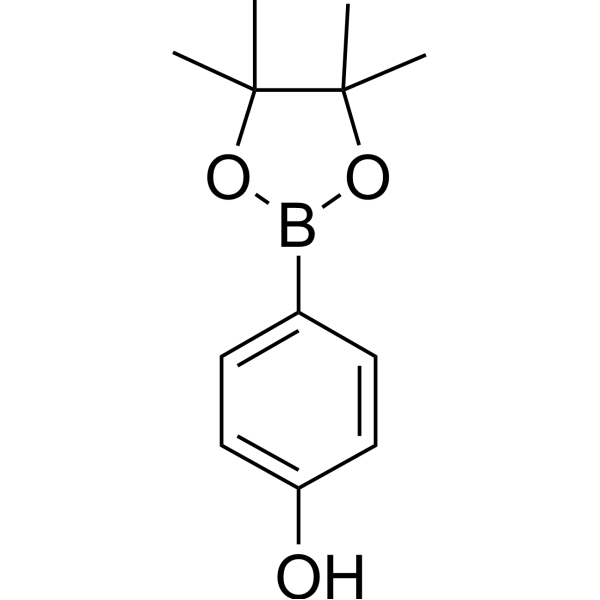
4-Hydroxyphenylboronic acid pinacol ester is a ROS-responsive component. 4-Hydroxyphenylboronic acid pinacol ester can structurally modify hyaluronic acid to prepare ROS-responsive intelligent nanocarriers and compound delivery systems. 4-Hydroxyphenylboronic acid pinacol ester endows hyaluronic acid-based nanocarriers with ROS responsiveness, enabling them to rapidly release the encapsulated Curcumin (HY-N0005) in the presence of reactive oxygen species. 4-Hydroxyphenylboronic acid pinacol ester is applicable to research related to periodontitis. 4-Hydroxyphenylboronic acid pinacol ester can also be used for the synthesis of boronic acid-modified resins .
loading...
    loading...
Cat. No.: HY-W248590
CAS No.: 199444-11-6
IR-775 chloride is a cyanine dye with near-infrared absorption (Ex/Em = 775/795 nm). IR-775 chloride acts as a photosensitizer or photothermal agent, and induces apoptosis via generating ROS or exerting photothermal effects upon irradiation; its combination with 2-methoxyestradiol (HY-12033) inhibits SOD2 to enhance photodynamic therapy (PDT) efficacy, and its liposomal encapsulation enables phytotherapy-photothermal therapy (PTT) synergy. IR-775 chloride is applicable for investigating PDT/PTT and near-infrared fluorescence imaging in ovarian cancer and breast cancer .
loading...
    loading...
Cat. No.: HY-185390
Synonyms: Liposomal verteporfin
Liposomal verteporfin is a liposome-encapsulated form of Verteporfin (HY-B0146). Verteporfin is a photosensitizer used in photodynamic therapy, which generates reactive oxygen species (ROS) upon irradiation at 690 nm to mediate photodynamic effects. Liposomal verteporfin can promote the release of Oxaliplatin (HY-17371) from endolysosomes via photochemical internalization (PCI), prolong the drug circulation time and enable sustained release, accumulate the drug in neovascular vessels, and enhance its cytotoxicity in tumor models. Liposomal verteporfin can be used in studies related to neovascular eye diseases and pancreatic cancer [1][2] [3].
loading...
    loading...
Cat. No.: HY-W888515
Research Areas:  

Neurological Disease

mPEG-PCL is an amphiphilic biodegradable block copolymer composed of hydrophilic methoxy poly (ethylene glycol) (mPEG) and hydrophobic poly (ε-caprolactone) (PCL). mPEG-PCL possesses excellent biocompatibility and can form delivery carriers such as micelles and nanoparticles. Through its amphiphilic block structure, mPEG-PCL forms nanocarriers and encapsulates hydrophobic molecules, thereby enhancing the loading capacity of hydrophobic molecules, reducing burst release, and achieving sustained release. mPEG-PCL can be used in research on nanodelivery, tissue engineering, and ocular delivery systems related to age-related macular degeneration (AMD) .
loading...
    loading...
Cat. No.: HY-Y1353
CAS No.: 24424-99-5
Research Areas:  

Others Metabolic Disease

Di-tert-butyl dicarbonate (tBOC) is a covalent modification agent for hydroxyl groups (-OH) on the chitosan molecular chain. Di-tert-butyl dicarbonate selectively modifies chitosan and stabilizes the material structure through hydrophobic encapsulation. Di-tert-butyl dicarbonate reacts with the -OH groups of chitosan to form a hydrophobic layer, and in conjunction with triethylamine (TEA), removes trifluoroacetic acid (TFA) salts produced during the electrospinning process, preserving the nanofiber structure and high porosity of the membrane, and improving the material's cytocompatibility and mineralization-promoting ability. Di-tert-butyl dicarbonate can be used in research in the field of guided bone regeneration (GBR) .
loading...
    loading...
Cat. No.: HY-W094846
CAS No.: 629-59-4
Synonyms: n-Tetradecane
Tetradecane (n-Tetradecane) is a low-temperature phase change material with a phase change temperature of 5°C and a latent heat of phase change of 220 J/g. Tetradecane undergoes solid-liquid phase transition around 5°C, and achieves temperature regulation by absorbing or releasing latent heat .
loading...
    loading...
Cat. No.: HY-185760
Target:  

Liposome

Research Areas:  

Others

F-L319 is an ionizable lipid and spleen-targeting mRNA delivery vector. F-L319 can be formulated into lipid nanoparticles (LNPs) to drive spleen-restricted reporter protein expression in mice. F-L319 modulates mRNA encapsulation efficiency, cellular uptake efficiency, and delivery efficiency, with effects varying depending on the composition of LNP formulations. When prepared as pure LNPs, F-L319 shows poor mRNA delivery efficiency in cells; in contrast, hybrid LNPs containing F-L319 and L319 significantly enhance mRNA delivery efficiency in cells .
loading...
    loading...

