


191 Results for "

protein aggregation

" in MedChemExpress (MCE) Product Catalog:
Products (191)

191 Results for "protein aggregation" in MCE Product Catalog:

Cat. No.: HY-175675
CAS No.: 3104888-50-5
P2Y1 antagonist 4 is a selective P2Y1 receptor antagonist with excellent blood-brain barrier (BBB) penetration. P2Y1 antagonist 4 inhibits P2Y1 receptor-mediated cytosolic Ca 2+ increase (IC50 = 1.95 μM) and platelet aggregation (IC50 = 3.24 μM) induced by ADP in rabbit washed platelets. P2Y1 antagonist 4 significantly upregulates the level of nuclear Nrf2 protein in H2O2-treated HT22 cells. P2Y1 antagonist 4 reduces myocardial infarct size in a mouse acute myocardial infarction (MI) model. P2Y1 antagonist 4 can be used for the study of ischemic stroke and myocardial infarction .
loading...
    loading...
Cat. No.: HY-D3075
CAS No.: 2490504-23-7
Target:  

Fluorescent Dye

Research Areas:  

Others

TPE-2E N-oxide is a fluorescent probe used for hypoxia detection and tumor hypoxia imaging. Due to its active intramolecular motion, TPE-2E N-oxide shows no fluorescence in aqueous solution. In hypoxic environments, its N-oxide group undergoes two-electron reduction by CYP450 reductase and other heme protein reductases expressed under hypoxia, forming hydrophobic aggregates that trigger aggregation-induced emission through the restriction of intramolecular motion. TPE-2E N-oxide exhibits selective lipid droplet localization in cells. The absorption wavelength of TPE-2E N-oxide in dichloromethane is 313 nm; in a 99% hexane/dichloromethane mixed system, its excitation wavelength is 330 nm and emission wavelength is 460 nm. For in vitro cell imaging, excitation is performed at 405 nm, with an emission wavelength range of 430-560 nm .
loading...
    loading...
Cat. No.: HY-P1889
CAS No.: 721885-31-0
Target:  

Bcl-2 Family Amyloid-β

Research Areas:  

Neurological Disease

Bim BH3, Peptide IV is an Aβ42-binding peptide and the pro-apoptotic BH3 domain of the BIM protein. Bim BH3, Peptide IV binds Aβ42 with a Kd of 7.1 μM. Bim BH3, Peptide IV modulates Aβ42 structure, fibrillization pathways, aggregate morphology, and membrane interactions, inhibiting fibril formation while enhancing protofibril assembly. Bim BH3, Peptide IV promotes Aβ42 β-sheet formation and accelerates aggregation. Bim BH3, Peptide IV enhances Aβ42 membrane internalization and bilayer stiffening. Bim BH3, Peptide IV induces neuronal cell death by enhancing BH3-induced membrane interactions of Aβ42 prefibrillar species. Bim BH3, Peptide IV can be used for research on Alzheimer's disease .
loading...
    loading...
Cat. No.: HY-P99911
CAS No.: 1635395-27-5
Synonyms: MEDI-6383
Efizonerimod alfa (MEDI-6383) is a recombinant human OX40L IgG4P Fc fusion protein that assembles into a hexameric structure and exerts potent agonist activity upon binding to OX40. The activity of Efizonerimod alfa is enhanced by Fcγ receptor-mediated aggregation. Efizonerimod alfa binds to OX40 on the surface of activated T cells, induces NF-κB promoter activity in OX40-expressing T cells, and triggers the production of Th1-type cytokines, T cell proliferation, and resistance to regulatory T cell (Treg)-mediated suppression. Efizonerimod alfa enhances the cytolytic activity of tumor-reactive T cells and slows tumor growth in immunodeficient mice. Efizonerimod alfa induces the proliferation of CD4, CD8, and B cells in the peripheral blood of healthy non-human primates. Efizonerimod alfa can be used in the research of advanced solid malignancies and melanoma .
loading...
    loading...
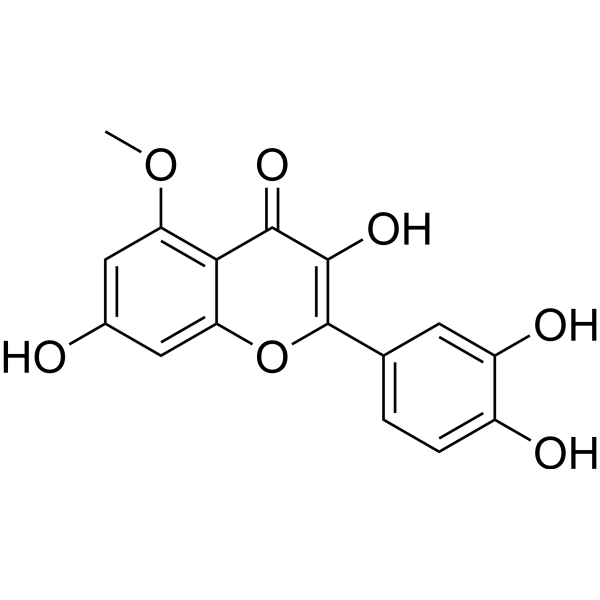
Cat. No.: HY-N7653
CAS No.: 529-51-1
Azaleatin is an orally active inhibitor of hQC, NS2B-NS3 protease and E. coli β-glucuronidase, with IC50 values of 1.1 μM, 38.00 μg/mL and 0.57 μM, respectively. Azaleatin inhibits the activities of NF-κB, MyD88, JAK1, TLR4, STAT3, IL-1β, IL-6, COX-2, TNF-α and β-glucuronidase, blocks pro-inflammatory signaling pathways, reduces the levels of ROS, MDA and uric acid, elevates the levels of GPx, GSR, GST, SOD, CAT, HO-1 and GSH, scavenges free radicals and exerts reducing capacity. Azaleatin inhibits the expression of pro-apoptotic proteins Bax, Caspase-9 and Caspase-3, and upregulates the expression of anti-apoptotic protein Bcl-2. Azaleatin reduces the levels of cardiac injury markers, restores cardiac histological structure, inhibits Aβ aggregation, dengue protease activity, hepatic stellate cell proliferation and cancer cell growth, and also exhibits antibacterial activity. Azaleatin can be used in studies related to subchronic cardiotoxicity, Alzheimer's disease, dengue fever, hyperuricemia, liver fibrosis, gastric cancer and bacterial infections .
loading...
    loading...
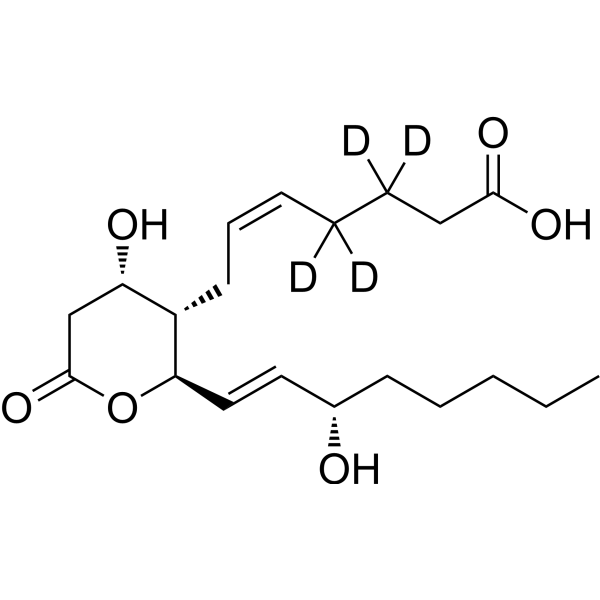
Cat. No.: HY-113420S
CAS No.: 1240398-15-5
11-Dehydro-thromboxane B2-d4 is the d4-labeled 11-Dehydro-thromboxane B2 (HY-113420). 11-Dehydro-thromboxane B2 is a stable terminal metabolite of thromboxane A2 and an agonist of the CRTH2 receptor. 11-Dehydro-TXB2 activates human eosinophils, basophils, and CRTH2-transfected BaF/3 cells through a pertussis toxin-insensitive G protein-PLC pathway, inducing intracellular calcium mobilization, morphological changes, and chemotaxis, but does not affect platelet aggregation. 11-Dehydro-thromboxane B2 is involved in thrombosis and promotes eosinophil recruitment to the lungs in allergic inflammation, and its urinary levels are used to assess the inhibitory effect of Aspirin (HY-14654) on thromboxane production. 11-Dehydro-TXB2 serves as a biomarker for research related to asthma, atopic rhinitis, nephropathy, and coronary artery disease .
loading...
    loading...
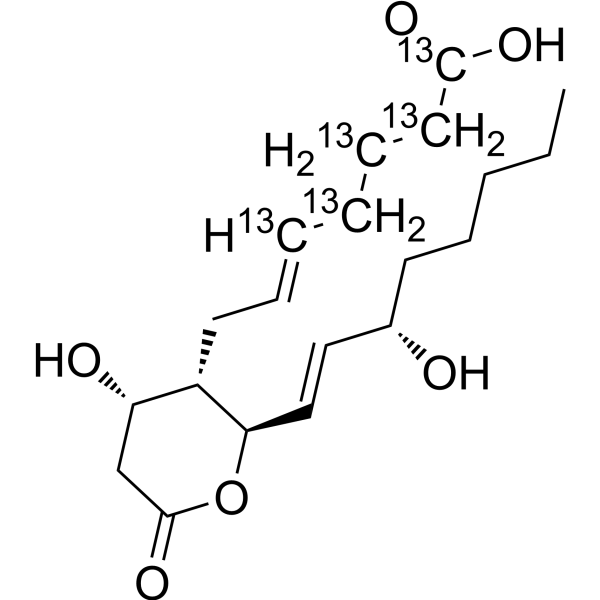
Cat. No.: HY-113420S2
11-Dehydro-thromboxane B2- 13C5 is the 13C-labeled 11-Dehydro-thromboxane B2 (HY-113420). 11-Dehydro-thromboxane B2 is a stable terminal metabolite of thromboxane A2 and an agonist of the CRTH2 receptor. 11-Dehydro-TXB2 activates human eosinophils, basophils, and CRTH2-transfected BaF/3 cells through a pertussis toxin-insensitive G protein-PLC pathway, inducing intracellular calcium mobilization, morphological changes, and chemotaxis, but does not affect platelet aggregation. 11-Dehydro-thromboxane B2 is involved in thrombosis and promotes eosinophil recruitment to the lungs in allergic inflammation, and its urinary levels are used to assess the inhibitory effect of Aspirin (HY-14654) on thromboxane production. 11-Dehydro-TXB2 serves as a biomarker for research related to asthma, atopic rhinitis, nephropathy, and coronary artery disease .
loading...
    loading...
Cat. No.: HY-P1889A
Target:  

Bcl-2 Family Amyloid-β

Research Areas:  

Neurological Disease

Bim BH3, Peptide IV TFA is an Aβ42-binding peptide and the pro-apoptotic BH3 domain of the BIM protein. Bim BH3, Peptide IV TFA binds Aβ42 with a Kd of 7.1 μM. Bim BH3, Peptide IV TFA modulates Aβ42 structure, fibrillization pathways, aggregate morphology, and membrane interactions, inhibiting fibril formation while enhancing protofibril assembly. Bim BH3, Peptide IV TFA promotes Aβ42 β-sheet formation and accelerates aggregation. Bim BH3, Peptide IV TFA enhances Aβ42 membrane internalization and bilayer stiffening. Bim BH3, Peptide IV TFA induces neuronal cell death by enhancing BH3-induced membrane interactions of Aβ42 prefibrillar species. Bim BH3, Peptide IV TFA can be used for research on Alzheimer's disease .
loading...
    loading...
Cat. No.: HY-125782
CAS No.: 210978-26-0
Purity:  98.0%
Synonyms: 15(R)-15-Methyl PGD2
Research Areas:  

Metabolic Disease

15(R)-15-Methyl prostaglandin D2 (15(R)-15-methyl PGD2) is a metabolically stable synthetic analog of PGD2. The physiological actions of PGD2 include regulation of sleep, lowering of body temperature, inhibition of platelet aggregation and relaxation of vascular smooth muscle. PGD2 mediates its effects by 2 distinct G-protein-coupled receptors, DP1and CRTH2/DP2. 15(R)-15-Methyl prostaglandin D2 is a potent, selective agonist for the CRTH2/DP2 receptor. The EC50 values for eosinophil CD11b expression, actin polymerization, and chemotaxis are 1.4, 3.8, and 1.7 nM, respectively, each of which is approximately 3-5 fold lower than those for PGD2. In contrast the EC50 for the DP1-mediated increase in platelet cAMP by 15(R)-15-methyl PGD2 is >10 μM.
loading...
    loading...
Cat. No.: HY-171705
CAS No.: 1478585-60-2
KMS99220 is an orally active, blood-brain barrier-permeable activator of the Nrf2 inhibitory protein Keap-1. KMS99220 enhances the activity of AMPK, activates the Nrf2 signaling pathway, and reduces the phosphorylation of IκB, nuclear translocation of NFκB, as well as the phosphorylation levels of JNK, IKK and p38 MAPK via HO-1. KMS99220 binds to Keap1 to trigger the nuclear translocation of Nrf2, induces the expression of HO-1, NQO1, GCLC, GCLM and proteasome subunits; enhances proteasomal enzymatic activity; inhibits iNOS expression, nitric oxide production and IL-1β generation; attenuates microglial activation; reduces α-synuclein aggregation; and prevents dopaminergic neuron degeneration and motor dysfunction. KMS99220 prevents the degeneration of dopaminergic neurons in the substantia nigra, induces the expression of Nrf2 downstream target genes, and effectively ameliorates associated motor dysfunction in a mouse model of Parkinson's disease. KMS99220 is applicable to research related to Parkinson's disease .
loading...
    loading...
Cat. No.: HY-162812
H3R antagonist 4 (compound 11L) was a dual inhibitor of cholinesterase and histamine receptor (H3R), with corresponding IC50 of 7.04 μM (eeAChE), 9.73 μM (hAChE)(reversible) and 1.09 nM (H3R) , respectively. H3R antagonist 4 inhibited the aggregation of Aβ1-42 induced by itself and Cu 2+ (95.48% and 88.63%) , and degraded the Aβ1-42 fibrils induced by itself and Cu 2+ (80.16% and 89.30%) . H3R antagonist 4 chelate biometals such as Cu 2+, Zn 2+, Al 3+, and Fe 2+. H3R antagonist 4 significantly reduced tau protein hyperphosphorylation induced by Aβ1-42 and inhibited RSL-3-induced apoptosis and ferroptosis in PC12 cells. H3R antagonist 4 had the best blood-brain barrier permeability and intestinal absorption in hCMEC/D3 and hPepT1-MDCK cells.H3R antagonist 4 ameliorates learning and memory impairment in a mouse model of Alzheimer's disease induced by scopolamine (HY-N0296) .
loading...
    loading...

