2340 Results for "

B-precursor leukemia

" in MedChemExpress (MCE) Product Catalog:
Products (2340)

2340 Results for "B-precursor leukemia" in MCE Product Catalog:

  • Categories Recommended:
    More
Cat. No.: HY-W745430
Synonyms: Cyproheptadine HCl-d3
Cyproheptadine hydrochloride-d3 (Cyproheptadine HCl-d3) is the d3-labeled Cyproheptadine (hydrochloride) (HY-B0366A). Cyproheptadine hydrochloride (Cyproheptadine HCl) acts as a p38 MAP kinase activator, CHK2 activator, histamine H1 receptor inhibitor and serotonin receptor inhibitor. Cyproheptadine hydrochloride mediates cell cycle arrest via G1 phase arrest, G1/S transition arrest, G0/G1 phase arrest, reduced expression of cyclins D1/D2/D3, upregulated expression of HBP1, p16, p21, p27, and decreased phosphorylation of retinoblastoma protein. Cyproheptadine hydrochloride induces Apoptosis by increasing PARP and cleaved PARP, as well as activating the mitochondrial caspase pathway. Cyproheptadine hydrochloride inhibits tumor growth with extremely low toxicity to normal cells. Cyproheptadine hydrochloride can be used in research related to hepatocellular carcinoma, multiple myeloma and acute myeloid leukemia .
loading...
    loading...
Cat. No.: HY-L213
265 compounds

The anti-cancer drug library meticulously collects all drugs approved by FDA and other major national drug regulatory authorities for cancer treatment. These drugs cover a variety of cancer types, including but not limited to lung cancer, breast cancer, colorectal cancer, leukemia, and other common cancers. The library includes a wide range of drugs, from classic chemotherapeutic agents to cutting-edge targeted therapies and immunotherapies. It contains various types of drug compounds with different mechanisms of action. There are cytotoxic drugs that directly kill cancer cells, as well as drugs that work by modulating the tumor microenvironment, inhibiting tumor angiogenesis, and activating the immune system. This diversity provides researchers with a broad range of perspectives and options for intervention strategies.

This library can be used for basic research on cancer treatment, exploring new targets and new mechanisms of drug action; Conducting drug reuse research to look for potential therapeutic effects of existing drugs on other cancer types or diseases; Or conducting research into combination drugs to optimize cancer treatment.

MCE has collected 265 small-molecule compounds with cancer indications, which are good tools for drug repurposing.

Cat. No.: HY-112364
CAS No.: 1177741-83-1
SKI-II hydrochloride is an orally active dual-target inhibitor of SphK1/2 and DES1, with Ki values of 16 µM and 0.3 µM against SphK1 and DES1, respectively. SKI-II hydrochloride activates the PERK-Nrf2 antioxidant pathway by stabilizing Nrf2, and synergizes with Temozolomide (HY-17364) to induce oxidative/endoplasmic reticulum stress and cancer cell death under hypoxic conditions. SKI-II hydrochloride inhibits SphK activity, promotes ceramide accumulation and apoptosis, and synergizes with Cisplatin (HY-17394) to reverse drug resistance via the ras/MAPK pathway in vivo. SKI-II hydrochloride reduces measles virus replication by inhibiting mTORC1 activity. SKI-II hydrochloride binds to VCP to induce M1 polarization, enhances host tolerance to Staphylococcus aureus infection, and exerts radioprotective effects through Nrf2 activation and accelerated DNA repair. SKI-II hydrochloride can be used in research related to glioblastoma, acute myeloid leukemia, gastric cancer, measles virus infection, Staphylococcus aureus infection, and acute radiation syndrome .
loading...
    loading...
Cat. No.: HY-122670
CAS No.: 1627962-21-3
Research Areas:  

Cancer

VS-II-173 is a pan-Pim kinase inhibitor with IC50 values ​​of 0.07 μM and 0.02 μM for Pim1 and Pim3, respectively, and a residual activity of 46% for Pim2 at 1 μM. VS-II-173 also inhibits kinases such as HIPK2, PRK2, RSK1, DYRK1a and AMPKα1, selectively inhibiting acute myeloid leukemia (AML) cells with significantly lower toxicity to non-malignant cells (EC50 > 30 μM). VS-II-173 weakens the phosphorylation of substrates such as Stat5 (Y694), MDM2 (S166), Bad (S112), and 4E-BP1 (T37/46) by inhibiting Pim kinase-mediated signaling pathways, blocking pro-survival signals in AML cells and inducing apoptosis. VS-II-173 synergistically enhances anti-AML activity when combined with Daunorubicin (HY-13062A). VS-II-173 can be used in AML research, especially for AML with FLT3-ITD mutations and NPM1 mutations .
loading...
    loading...
Cat. No.: HY-139090
CAS No.: 136587-07-0
Synonyms: 28-O-Acetyl-3-Oxobetulin; 3-oxo-28-O-Acetylbetulin
Research Areas:  

Cancer

3-Oxobetulin acetate (28-O-Acetyl-3-Oxobetulin; 3-oxo-28-O-Acetylbetulin) is a derivative of betulin (HY-N0083), a cholesterol biosynthesis inhibitor. 3-Oxobetulin acetate inhibits the growth of P388 murine lymphocytic leukemia cells (EC50=0.12 μg/mL) and human MCF-7 breast cancer, SF-268 CNS cancer, H460 lung cancer, and KM20L2 colon cancer cells (GI50s=8, 10.6, 5.2, and 12.7 μg/mL), but not BxPC-3 pancreatic cancer cells or DU145 prostate cancer cells (GI50s=>10 μg/mL for both). 3-Oxobetulin acetate inhibits the replication of X4-tropic recombinant HIV (NL4.3-Ren) in MT-2 lymphoblastoid cells (IC50=13.4 μM). 3-Oxobetulin acetate is also effective against Listeria donovani amastigotes.
loading...
    loading...
Cat. No.: HY-N7695
CAS No.: 23133-56-4
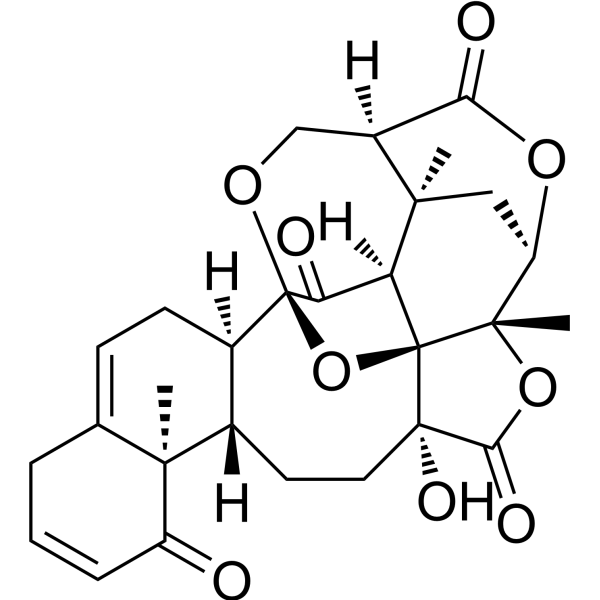
Physalin B is an orally active anti-inflammatory and anticancer agent. Physalin B can be isolated from Physalis alkekengi L. var. Franchetii. Physalin B inhibits the activation of the NF-κB, NLRP3 inflammasome, STAT3, PI3K/Akt and Hedgehog signaling pathways, regulates the phosphorylation levels of GSK-3β, p38 MAPK, ERK1/2 and JNK, and promotes the nuclear translocation of NRF2. Physalin B reduces the levels of pro-inflammatory cytokines and factors, induces mitochondrial reactive oxygen species (mito-ROS) production, Apoptosis, G2/M cell cycle arrest and incomplete Autophagy, alters cytoskeleton structure and alleviates oxidative stress. Physalin B reduces cancer cell viability, ameliorates liver and lung tissue damage and alleviates liver fibrosis. Physalin B can be used in research related to ulcerative colitis, breast cancer, acute lung injury, colon cancer, non-alcoholic steatohepatitis, liver fibrosis, lung cancer, pancreatic cancer, lymphoma, ovarian cancer, sarcoma and leukemia .
loading...
    loading...
Cat. No.: HY-121708
CAS No.: 930089-25-1
Target:  

c-Kit

Research Areas:  

Cancer

KI-328 is a novel inhibitor targeting KIT kinase that has selective activity against some KIT mutant kinases commonly found in acute myeloid leukemia (AML). KI-328 showed specificity for KIT kinase in in vitro kinase assays and inhibited the growth of wild-type (Wt) and mutant KIT-expressing cells, but had lower activity against D816V-KIT. Comparative analysis of the inhibitory effects of several potent KIT inhibitors on the growth of multiple mutant KIT-expressing cells showed that the multi-kinase inhibitors had comparable activity against D816V-KIT as against other mutant KITs; however, heat shock protein 90 (HSP90) inhibitors showed significant activity against D816V-KIT, inhibiting the growth of D816V-KIT-expressing cells at concentrations that did not affect the growth of other mutant KIT-expressing cells. These results suggest that potent KIT inhibitors have different activities against different types of KIT mutant kinases. Therefore, in clinical development, KIT inhibitors need to validate their activity against multiple types of KIT mutant kinases.
loading...
    loading...
Cat. No.: HY-L135
3,540 compounds

With the progress of modern cancer therapy, the life of cancer patients has been extended. However, after initial treatment and recovery, the development of secondary tumors often leads to cancer recurrence. Cancer stem cells are a small number of cells that tumor growth and reproduction depend on.

Cancer stem cells have strong self-renewal ability, which is the direct cause of tumor occurrence. In addition, cancer stem cells also have the ability to differentiate into different cell types, playing a crucial role in tumor metastasis and development. Chemotherapy and radiotherapy induced DNA damage and apoptosis are common cancer treatments. However, cancer stem cells can effectively protect cancer cells from apoptosis by activating DNA repair ability. Cancer stem cells are regarded as the key "seed" of tumor occurrence, development, metastasis and recurrence. Since its first discovery in leukemia in 1994, cancer stem cells have been considered a promising therapeutic target for cancer treatment.

MCE supplies a unique collection of 3,540 compounds targeting key proteins in cancer stem cells. MCE Cancer Stem Cells Compound Library is a useful tool for cancer stem cells related research and anti-cancer drug development.

Cat. No.: HY-P80095
Synonyms: ATL1 alpha antibody; ATL1 antibody; ATL1 beta antibody; ATL1 gamma antibody; ATL1-delta antibody; B-cell CLL/lymphoma 11B antibody; B-cell lymphoma/leukemia 11B antibody; BC11B_HUMAN antibody; BCL-11B antibody; Bcl11b antibody; BCL11B/TRDC fusion antibody; COUP TF interacting protein 2 antibody; Ctip 2 antibody; CTIP-2 antibody; CTIP2 antibody; hRIT1 alpha antibody; hRit1 antibody; Radiation induced tumor suppressor gene 1 antibody; Rit 1 antibody; zinc finger protein hRit1 alpha antibody; ZNF856B antibody

Host:  

Rabbit

Application:  

WB, ICC/IF, IHC-P, FC

Reactivity:  

Human, Mouse

loading...
    loading...
Cat. No.: HY-P85626
Synonyms: 18A2; 42A; calcium Placental protein; Calvasculin; CAPL; Fibroblast specific protein 1; Fibroblast specific protein; FSP1; leukemia multidrug resistance associated protein; Malignant transformation suppression 1; Metastasin; MTS1; OTTHUMP00000015467; OTTHUMP00000015468; P9KA; PEL98; Placental calcium-binding protein; Protein Mts1; Protein S100 A4; Protein S100-A4; S100 calcium binding protein A4; calcium protein, calvasculin, metastasin, murine placental homolog; S100 calcium binding protein A4; S100 calcium-binding protein A4; S100a4; S10A4_HUMAN.

Host:  

Mouse

Application:  

WB

Reactivity:  

Human

loading...
    loading...
Cat. No.: HY-P85626A
Synonyms: 18A2; 42A; calcium Placental protein; Calvasculin; CAPL; Fibroblast specific protein 1; Fibroblast specific protein; FSP1; leukemia multidrug resistance associated protein; Malignant transformation suppression 1; Metastasin; MTS1; OTTHUMP00000015467; OTTHUMP00000015468; P9KA; PEL98; Placental calcium-binding protein; Protein Mts1; Protein S100 A4; Protein S100-A4; S100 calcium binding protein A4; calcium protein, calvasculin, metastasin, murine placental homolog; S100 calcium binding protein A4; S100 calcium-binding protein A4; S100a4; S10A4_HUMAN.

Host:  

Mouse

Application:  

WB

Reactivity:  

Human

loading...
    loading...
Cat. No.: HY-117947
CAS No.: 1809336-19-3
Research Areas:  

Cancer

(R)-OR-S1 is an isomer of OR-S1. The dual ZH1/2 inhibitors OR-S1 and OR-S2 exhibit strong inhibitory activity against both EZH1 and EZH2. OR-S1 and OR-S2 are highly selective methyltransferase inhibitors against EZH1 and EZH2, and they have very similar molecular features. Therefore, we investigated the effect of OR-S1 on acute myeloid leukemia (AML). We found that OR-S1 was able to induce cell differentiation and apoptosis in AML cells. These findings encouraged us to investigate whether functional LT-HSCs could survive PRC2-targeted therapy with OR-S1 or OR-S1 combined with cytarabine. The results showed that OR-S1 did not cause significant myelosuppression, and BM cells treated with the combination therapy were able to undergo normal hematopoiesis even 4 months after treatment. Therefore, temporary inhibition of EZH1 and EZH2 is clinically tolerable, making this combination therapy suitable for AML patients. AML is generally believed to originate from myeloid progenitor cells that inherit a large number of biological properties.
loading...
    loading...
Cat. No.: HY-12292G
CAS No.: 1129669-05-1
IM-12 GMP is IM-12 (HY-12292) produced by using GMP guidelines. GMP small molecules works appropriately as an auxiliary reagent for cell therapy manufacture. IM-12 is an orally active anti-inflammatory agent that targets and inhibits the NF-κB and STAT3 signaling pathways. IM-12 activates the Wnt signaling pathway and promotes the nuclear translocation of β-catenin by inhibiting GSK3β, while also blocking the tyrosine kinase activity of p210BCR/ABL. IM-12 reduces the levels of IL-6, IL-17, NO, prostaglandin E2, iNOS and COX-2, and induces ER stress, Ca 2+ release, autophagy and apoptosis. IM-12 is heat-sensitive and does not induce autophagy in IM-resistant p210BCR/ABL T315I mutant cells. IM-12 is also a component of the 5iLA medium used for naive pluripotent stem cell research. IM-12 has been applied in studies related to carrageenan (HY-125474)-induced hind paw edema, TNBS-induced colitis, and acute and chronic myeloid leukemia .
loading...
    loading...
Cat. No.: HY-170576
Target:  

FLT3 STAT Apoptosis

Research Areas:  

Cancer

FLT3-IN-28 (Compound 12y) is an orally active FLT3 inhibitor with antitumor activity. FLT3-IN-28 selectively inhibits cancer cells harboring the FLT3 internal tandem duplication (ITD) mutation, with IC50 values of 85, 290, 130, 65, and 220 nM for BaF3-FLT3-ITD, BaF3-TEL-VEGFR2, MV4-11, MOLM-13, and MOLM-14 cell lines respectively (MV4-11 and MOLM-13/14 are acute myeloid leukemia (AML) cell lines carrying the FLT3-ITD mutation). Additionally, FLT3-IN-28 can downregulate the phosphorylation levels of FLT3 and STAT5 in MOLM-13 cells and induce cell cycle arrest and Apoptosis. FLT3-IN-28 has an oral bioavailability of 19.2% in SD rats and can prolong survival in a dose-dependent manner in NSG mice xenografted with MOLM-13 cells. FLT3-IN-28 holds promise for research in cancer fields related to FLT3-ITD .
loading...
    loading...
Cat. No.: HY-112288R
CAS No.: 432001-19-9
Synonyms: TTI-101 (Standard)
C188-9 (Standard) is the analytical standard of C188-9 (HY-112288). This product is intended for research and analytical applications. C188-9 (TTI-101) is a STAT3 inhibitor with a Kd value of 4.7 nM. C188-9 targets the SH2 domain of STAT3, blocks the processes of STAT3 ligand binding, receptor recruitment, homodimerization and phosphorylation, and regulates STAT3-mediated genes associated with tumorigenesis and radioresistance. C188-9 regulates STAT1-mediated genes related to radioresistance and reduces the activation level of STAT1. C188-9 downregulates the expression of DNMT1, enhances DAC-induced demethylation and re-expression of RASSF1A, and simultaneously potentiates the anti-tumor effect of DAC on pancreatic cancer cells. C188-9 inhibits both anchorage-dependent and anchorage-independent growth of cancer cells, induces Apoptosis, blocks the growth of tumor xenografts, and suppresses muscle atrophy. C188-9 maintains muscle mass, increases body weight and improves grip strength in tumor-bearing mice. C188-9 can be used in research related to head and neck squamous cell carcinoma, pancreatic cancer, sepsis-related skeletal muscle wasting, non-small cell lung cancer, acute myeloid leukemia and cancer cachexia .
loading...
    loading...
Cat. No.: HY-172889
CAS No.: 3085191-45-0
Target:  

PI3K HDAC Apoptosis mTOR Akt

Research Areas:  

Cancer

PI3K/HDAC-IN-4 (Compound 31f) is a PI3K/HDAC dual inhibitor (IC50: 0.2μM). PI3K/HDAC-IN-4 shows high selectivity for HDAC1-3 (IC50 values of 75.5 nM, 70.9 nM, and 1.9 nM, respectively). PI3K/HDAC-IN-4 is a potent PIK3 inhibitor with IC50 values of 2.5 nM, 80.5 nM, 10.0 nM, and 57.2 nM for PI3Kα, β, δ, and γ, respectively. PI3K/HDAC-IN-4 significantly induces tumor cell apoptosis by simultaneously inhibiting the PI3K/AKT/mTOR signaling pathway and HDAC1-3. PI3K/HDAC-IN-4 exhibits potent antiproliferative activity in a variety of tumor cell lines (e.g., MV4-11, Jeko-1, HL60, and MCF-7, with IC50 values of 0.2, 0.9, 0.8, and 1.5 μM, respectively). PI3K/HDAC-IN-4 can be used in the study of lymphoma and leukemia .
loading...
    loading...
Cat. No.: HY-P991744

Target:  

CXCR

Research Areas:  

Cancer

Anti-Mouse CXCR4 Antibody is a monoclonal antibody that specifically recognizes murine CXCR4 (C-X-C chemokine receptor 4), also known as fusin or CD184. CXCR4 is a seven-transmembrane G protein–coupled receptor whose principal endogenous ligand is CXCL12 (stromal cell–derived factor-1α, SDF-1α) and is widely expressed in hematopoietic cells, endothelial cells, neurons, as well as embryonic and adult stem cells. The CXCR4–CXCL12 signaling axis activates multiple downstream pathways, including ERK1/2, Ras, p38 MAPK, PLC/MAPK, and SAPK/JNK, thereby regulating cell survival, proliferation, migration, and stemness maintenance. Aberrant overexpression of CXCR4 is closely associated with poor prognosis and metastasis in various cancers, with CXCR4-positive tumor cells preferentially home to CXCL12-rich tissues such as the liver, bone marrow, lung, and lymph nodes. Accordingly, CXCR4 and its CXCL12-related antagonists emerge as attractive targets for experimental anticancer therapy. Anti-Mouse CXCR4 Antibody is generated using a cell-based immunization and screening strategy and exhibits high affinity for both endogenous and exogenous murine CXCR4. Anti-Mouse CXCR4 Antibody can be used for thestudy of chronic lymphocytic leukemia and multiple myeloma .
loading...
    loading...
Cat. No.: HY-P70857
Purity:  ≥ 95%, as determined by reducing SDS-PAGE.
Synonyms: ERBB3; Receptor Protein-Tyrosine Kinase; Prev. LCCS2; P45-SErbB3; HER3; P85-SErbB3; V-Erb-B2 Avian Erythroblastic leukemia Viral Oncogene Homolog 3; ErbB-3 R31; Tyrosine Kinase-Type Cell Surface Receptor HER3; MDA-BF-1; Human Epidermal Growth Factor Receptor 3; C-ErbB3; Receptor Tyrosine-Protein Kinase ErbB-3; ErbB3-S; Proto-Oncogene-Like Protein C-ErbB-3; ErbB-3; C-ErbB-3; FERLK; CDNA FLJ43038 Fis, Clone BRTHA3002955, Highly Similar To Receptor Tyrosine-Protein Kinase ErbB-3; VSCN1; Lethal Congenital Contracture Syndrome 2; Erb-B2 Receptor Tyrosine Kinase 3; P180-ErbB3
Species:  
Mouse
Source:  
HEK293
loading...
    loading...
Cat. No.: HY-P74894
Purity:  ≥ 90%, as determined by reducing SDS-PAGE.
Synonyms: ERBB3; Receptor Protein-Tyrosine Kinase; Prev. LCCS2; P45-SErbB3; HER3; P85-SErbB3; V-Erb-B2 Avian Erythroblastic leukemia Viral Oncogene Homolog 3; ErbB-3 R31; Tyrosine Kinase-Type Cell Surface Receptor HER3; MDA-BF-1; Human Epidermal Growth Factor Receptor 3; C-ErbB3; Receptor Tyrosine-Protein Kinase ErbB-3; ErbB3-S; Proto-Oncogene-Like Protein C-ErbB-3; ErbB-3; C-ErbB-3; FERLK; CDNA FLJ43038 Fis, Clone BRTHA3002955, Highly Similar To Receptor Tyrosine-Protein Kinase ErbB-3; VSCN1; Lethal Congenital Contracture Syndrome 2; Erb-B2 Receptor Tyrosine Kinase 3; P180-ErbB3
Species:  
Human
Source:  
HEK293
loading...
    loading...
Cat. No.: HY-P80317
Synonyms: 18A2 antibody; 42A antibody; calcium Placental protein antibody; Calvasculin antibody; CAPL antibody; Fibroblast specific protein 1 (FSP1) antibody; Fibroblast specific protein 1 antibody; Fibroblast specific protein antibody; FSP1 antibody; leukemia multidrug resistance associated protein antibody; Malignant transformation suppression 1 (MTS1) antibody; Malignant transformation suppression 1 antibody; Metastasin antibody; MTS1 antibody; OTTHUMP00000015467 antibody; OTTHUMP00000015468 antibody; P9KA antibody; PEL98 antibody; Placental calcium-binding protein antibody; Protein Mts1 antibody; Protein S100 A4 antibody; Protein S100-A4 antibody; S100 calcium binding protein A4 (calcium protein, calvasculin, metastasin, murine placental homolog) antibody; S100 calcium binding protein A4 antibody; S100 calcium-binding protein A4 antibody; S100a4 antibody; S10A4_HUMAN antibody;

Host:  

Rabbit

Application:  

WB, ICC/IF, IHC-P, IP, FC

Reactivity:  

Human, Mouse

loading...
    loading...

