254 Results for "

Cell fusion

" in MedChemExpress (MCE) Product Catalog:
Products (254)

254 Results for "Cell fusion" in MCE Product Catalog:

Cat. No.: HY-184158
HATC is a HIF-1α AUTAC degrader. HATC links HIF-1α to LC3 to form a ternary complex that undergoes degradation via the autophagy-lysosome fusion pathway. HATC induces dose-dependent HIF-1α degradation in multiple cell types. HATC reduces visceral fat accumulation, hepatic lipid deposition, senescent cell aggregation, and bone loss; alleviates age-related intervertebral disc degeneration, liver dysfunction, kyphosis, and alveolar dilation; decreases circulating lactic acid levels; improves physical performance; and reverses age-related changes in granulocyte proportions. HATC extends median and maximum lifespan, reduces transcriptomic age, and causes no obvious persistent toxicity. HATC can be used in the research of age-related diseases (pink: LC3 ligand (HY-50759); blue: HIF-1α ligand (HY-P10426); Linker: (HY-W008264)) .
loading...
    loading...
Cat. No.: HY-12388AS
CAS No.: 1189971-04-7
Purity:  99.81%
Synonyms: Desmethylclomipramine-d3 hydrochloride;Norclomipramine-d3 hydrochloride
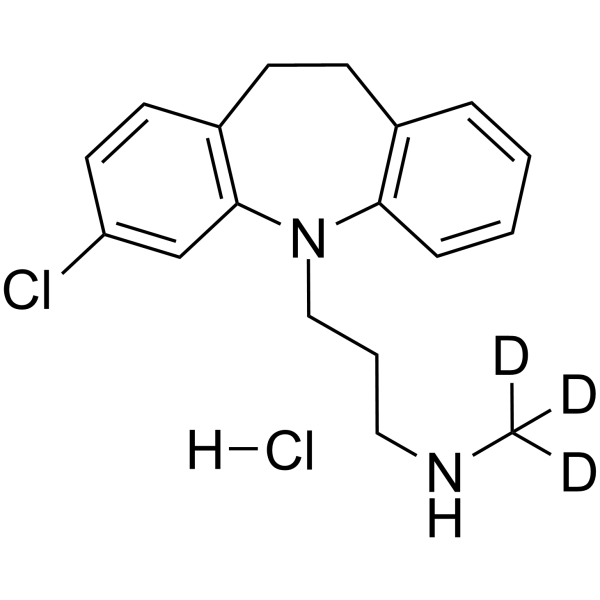
N-Desmethyl clomipramine-d3 hydrochloride (Desmethylclomipramine-d3 hydrochloride; Norclomipramine-d3 hydrochloride) is the deuterated-labeled N-Desmethyl clomipramine hydrochloride (HY-12388A). N-Desmethyl clomipramine hydrochloride is the orally active major active metabolite of the tricyclic antidepressant Clomipramine (HY-B0457A), possessing multiple activities including anti-inflammatory, antioxidant, antibacterial, and antiparasitic effects. N-Desmethyl clomipramine hydrochloride blocks autophagosome-lysosome fusion, leading to the accumulation of LC3-II, p62, ATG7, WIPI2, and ATG5-12, reactivates the p53/p21 pathway, induces apoptosis through C-PARP and C-CAS3, and inhibits the proliferation, migration, and invasion of renal cancer cells. N-Desmethyl clomipramine hydrochloride inhibits LdTOPIA, inducing R-loop accumulation in the nucleus of Leishmania, ultimately causing parasite death. N-Desmethyl clomipramine hydrochloride can be used for research on depression, metastatic renal cell carcinoma, and leishmaniasis .
loading...
    loading...
Cat. No.: HY-12388S
Synonyms: Desmethylclomipramine-d7; Norclomipramine-d7
N-Desmethyl clomipramine-d7 (Desmethylclomipramine-d7; Norclomipramine-d7) is the deuterated-labeled N-Desmethyl clomipramine (HY-12388). N-Desmethyl clomipramine is the orally active major active metabolite of the tricyclic antidepressant Clomipramine (HY-B0457A), possessing multiple activities including anti-inflammatory, antioxidant, antibacterial, and antiparasitic effects. N-Desmethyl clomipramine blocks autophagosome-lysosome fusion, leading to the accumulation of LC3-II, p62, ATG7, WIPI2, and ATG5-12, reactivates the p53/p21 pathway, induces apoptosis through C-PARP and C-CAS3, and inhibits the proliferation, migration, and invasion of renal cancer cells. N-Desmethyl clomipramine inhibits LdTOPIA, inducing R-loop accumulation in the nucleus of Leishmania, ultimately causing parasite death. N-Desmethyl clomipramine can be used for research on depression, metastatic renal cell carcinoma, and leishmaniasis .
loading...
    loading...
Cat. No.: HY-12388S1
Synonyms: Desmethylclomipramine-d6; Norclomipramine-d6
N-Desmethyl clomipramine-d6 (Desmethylclomipramine-d6; Norclomipramine-d6) is the deuterated-labeled N-Desmethyl clomipramine (HY-12388). N-Desmethyl clomipramine (Desmethylclomipramine; Norclomipramine) is the orally active major active metabolite of the tricyclic antidepressant Clomipramine (HY-B0457A), possessing multiple activities including anti-inflammatory, antioxidant, antibacterial, and antiparasitic effects. N-Desmethyl clomipramine blocks autophagosome-lysosome fusion, leading to the accumulation of LC3-II, p62, ATG7, WIPI2, and ATG5-12, reactivates the p53/p21 pathway, induces apoptosis through C-PARP and C-CAS3, and inhibits the proliferation, migration, and invasion of renal cancer cells. N-Desmethyl clomipramine inhibits LdTOPIA, inducing R-loop accumulation in the nucleus of Leishmania, ultimately causing parasite death. N-Desmethyl clomipramine can be used for research on depression, metastatic renal cell carcinoma, and leishmaniasis .
loading...
    loading...
Cat. No.: HY-15136R
CAS No.: 193275-84-2
Synonyms: Sch66336 (Standard)
Lonafarnib (Standard) (Sch66336 (Standard)) is the analytical standard of Lonafarnib (HY-15136). This product is intended for research and analytical applications. Lonafarnib (Sch66336) is an orally active, blood-brain barrier penetrant farnesyltransferase (FPTase) inhibitor. Lonafarnib increases the phosphorylation levels of Akt, CaMKII and CREB, upregulates BDNF expression in the hippocampus, elevates the content of α7nAChR on cell membranes, and blocks the isoprenylation of H-Ras. Lonafarnib repairs synapses and reverses spatial memory deficits in Aβ1-42 model mice. Lonafarnib inhibits RSV fusion and replication, and alleviates virus-induced lung injury. Lonafarnib activates the lysosomal and autophagic pathways, and reduces the phosphorylation and aggregation of tau. Lonafarnib acts synergistically with Sorafenib (HY-10201) to promote apoptosis, and inhibits the proliferation and invasion of melanoma cells. Lonafarnib inhibits the farnesylation of progerin, repairs nuclear membrane defects, and activates the cGAS-STING-STAT1 signaling pathway. Lonafarnib can be used in research related to diseases including Alzheimer's disease, viral infections, melanoma, and progeria .
loading...
    loading...
Cat. No.: HY-N0559R
CAS No.: 52659-56-0
Kirenol (Standard) is the analytical standard of Kirenol (HY-N0559). This product is intended for research and analytical applications. Kirenol is a diterpenoid compound, an orally active apoptosis inducer and signaling pathway regulator, with a Kd value of 5.47 μM against the target CK2. Kirenol promotes the cleavage of Bid into tBid, regulates the protein levels/phosphorylation of Bax, Bcl-2, p53 and p21, and induces caspase-independent apoptosis, S-phase cell cycle arrest, ROS accumulation and cytotoxicity in cancer cells. Kirenol activates the CK2/AKT and AMPK-mTOR-ULK1 pathways, inhibits the signaling of NF-κB, TGF-β/Smads and NLRP3 inflammasome, and regulates the GSK3β, BMP and Wnt/β-catenin pathways. Kirenol induces autophagy, mitophagy and osteoblast differentiation, promotes mitochondrial fusion, and exerts antioxidant, anti-inflammatory, antifibrotic, renoprotective, cardioprotective, neuroprotective and analgesic effects. Kirenol is applicable to research related to chronic myeloid leukemia, ischemic stroke, diabetic nephropathy, heart failure, acute lung injury and osteoporosis.
loading...
    loading...
Cat. No.: HY-10402R
CAS No.: 585543-15-3
Synonyms: GSK-AHAB (Standard); GW856553X (Standard); SB856553 (Standard)
Losmapimod (GSK-AHAB; GW856553X) (Standard) is the analytical standard of Losmapimod (HY-10402). This product is intended for research and analytical applications. Losmapimod (GSK-AHAB; GW856553X) is an orally active p38α/β MAPK inhibitor, with pKi values of 8.1 and 7.6 for p38α and p38β, respectively. Losmapimod reduces DUX4 expression, thus exerting efficacy in facioscapulohumeral muscular dystrophy. By inhibiting MAPK/NF-κB, Losmapimod reduces apoptosis of epileptiform hippocampal neurons, and exhibits anti-allodynia and anti-hyperalgesic activities. Losmapimod blocks the entry and fusion of Lassa fever virus (LASV). Losmapimod overcomes tyrosine kinase inhibitor resistance in non-small cell lung cancer (NSCLC). Losmapimod inhibits myocardial senescence and inflammation, and possesses cardioprotective activity against cardiotoxicity .
loading...
    loading...
Cat. No.: HY-117855
CAS No.: 1427304-84-4
Target:  

HIV

Research Areas:  

Infection

NBD-11021 is a HIV-1 entry antagonist and CD4 antagonist. NBD-11021 binds to the Phe43 cavity of HIV-1 gp120 and competitively blocks the gp120-CD4 interaction . NBD-11021 exhibits broad-spectrum inhibitory activity against 56 HIV-1 Env pseudoviruses of different subtypes, with an IC50 of 0.6-5.3 μM. NBD-11021 inhibits CCR5- and CXCR4-tropic HIV-1, primary HIV-1, drug-resistant HIV-1, HIV-1 Env-mediated cell fusion and intercellular viral transmission. NBD-11021 can be used in studies related to HIV-1 gp120, viral entry and HIV infection .
loading...
    loading...
Cat. No.: HY-123985
CAS No.: 2230047-87-5
Purity:  99.28%
Research Areas:  

Neurological Disease

MFN2 agonist-1 is an allosteric agonist of mitofusin 2 (MFN2) with an EC50 of 3 nM. MFN2 agonist-1 mimics the MFN2 HR1 peptide to compete for HR2, disrupt the HR1-HR2 autoinhibitory interaction, stabilize the open conformation of MFN2, and promote GTP hydrolysis and mitochondrial fusion. MFN2 agonist-1 acts in a manner dependent on endogenous MFN1 or MFN2, and does not impair cell viability. MFN2 agonist-1 reverses mitochondrial fragmentation, depolarization, aggregation and axonal transport defects, restores bidirectional movement and improves enhanced autophagy. MFN2 agonist-1 is used in studies related to Charcot-Marie-Tooth disease type 2A, Alzheimer's disease, Parkinson's disease and Huntington's disease .
loading...
    loading...
Cat. No.: HY-D2984
CAS No.: 1308789-62-9
Synonyms: SNAP-PEG-NH2
Target:  

Fluorescent Dye

Research Areas:  

Others

BG-PEG-NH2 (SNAP-PEG-NH2) is an amino-terminal fluorescent probe building block and a precursor for site-specific labeling of SNAP-tag fusion proteins. BG-PEG-NH2 undergoes one-step coupling with activated carboxyl esters to form customized SNAP-tag substrates, which covalently bind to SNAP tags via a thioether bond formed at the Cys145 site. After coupling with a caged carboxyfluorescein, BG-PEG-NH2 forms a probe with Ex/Em = 500/524 nm following ultraviolet uncaging. Coupling of BG-PEG-NH2 with SeTau-647-NHS enables visualization of GPCR signal transduction. BG-PEG-NH2 is suitable for coupling reactions in aqueous phases or buffers, conjugation of labels, and labeling of intracellular or cell-surface proteins .
loading...
    loading...
Cat. No.: HY-D3427
CAS No.: 3100316-45-5
T-sCPY-s500R-H is a NADPH-based FRET ratiometric biosensor probe. T-sCPY-s500R-H forms a 1:1 FRET pair upon binding to the eDHFR-HaloTag fusion protein through conjugation of the donor s500R (green fluorescence) and the acceptor sCPY (red fluorescence) with the HaloTag ligand and the eDHFR ligand (TMP), respectively; NADPH binding to eDHFR induces a conformational change that converts sCPY from a colorless spirolactam form to a red fluorescent form, enabling quantification of NADPH levels through the ratio of red/green fluorescence intensity (Ex = 488 or 490 nm; green channel Em = 500-580 nm; red channel Em = 600-700 nm). T-sCPY-s500R-H is applicable to research in fields such as cell metabolism studies, oxidative stress and NADPH homeostasis analysis, tumor metabolism, and NADPH-modulating drug screening .
loading...
    loading...
Cat. No.: HY-P80095
Synonyms: ATL1 alpha antibody; ATL1 antibody; ATL1 beta antibody; ATL1 gamma antibody; ATL1-delta antibody; B-Cell CLL/lymphoma 11B antibody; B-Cell lymphoma/leukemia 11B antibody; BC11B_HUMAN antibody; BCL-11B antibody; Bcl11b antibody; BCL11B/TRDC fusion antibody; COUP TF interacting protein 2 antibody; Ctip 2 antibody; CTIP-2 antibody; CTIP2 antibody; hRIT1 alpha antibody; hRit1 antibody; Radiation induced tumor suppressor gene 1 antibody; Rit 1 antibody; zinc finger protein hRit1 alpha antibody; ZNF856B antibody

Host:  

Rabbit

Application:  

WB, ICC/IF, IHC-P, FC

Reactivity:  

Human, Mouse

loading...
    loading...
Cat. No.: HY-178736S
Synonyms: DLPE-d46; 1,2-Dilauroyl-sn-glycero-3-PE-d46
1,2-Dilauroyl-sn-glycero-3-phosphoethanolamine-d46 (DLPE-d46; 1,2-Dilauroyl-sn-glycero-3-PE-d46) is the deuterium labeled 1,2-Dilauroyl-sn-glycero-3-phosphoethanolamine. 1,2-Dilauroyl-sn-glycero-3-phosphoethanolamine (DLPE; 1,2-Dilauroyl-sn-glycero-3-PE) is an anionic phospholipid. 1,2-Dilauroyl-sn-glycero-3-phosphoethanolamine promotes the endocytosis of liposome-DNA complexes into target cells, and subsequently mediates membrane fusion between liposome carriers and endosomes to deliver DNA into the nucleus. 1,2-Dilauroyl-sn-glycero-3-phosphoethanolamine is a component of anionic artificial viral envelope liposomes, which deliver plasmid DNA to hepatoma cells without serum inhibition. 1,2-Dilauroyl-sn-glycero-3-phosphoethanolamine enables the construction of biocompatible non-viral gene delivery vector systems. 1,2-Dilauroyl-sn-glycero-3-phosphoethanolamine is applicable for liposome synthesis .
loading...
    loading...
Cat. No.: HY-P702233
Purity:  ≥ 90%, as determined by reducing SDS-PAGE.
Synonyms: CCR5; Chemokine (C-C Motif) Receptor 5 (Gene/Pseudogene); Prev. CMKBR5; C-C Motif Chemokine Receptor 5 A159A; CC-CKR-5; Chemokine Recptor CCR5 Delta32; C-C Chemokine Receptor Type 5; Mutant Chemokine Receptor CCR5; IDDM22; Mutant Chemokine Receptor 5; CKR-5; CC Chemokine Receptor 5; CD195; Chemokine Receptor 5; CKR5; CD195 Antigen; Mutant C-C Motif Chemokine Receptor; C-C CKR-5; Chemokine (C-C Motif) Receptor 5; Chemr13; HIV-1 fusion Coreceptor; CHEMR13; Chemokine Receptor CCR5; CCCKR5; CCR-5; C-C Motif Chemokine Receptor 5; C-C Motif Chemokine Receptor 5 (Gene/Pseudogene)
Species:  
Human
Source:  
E. coli Cell-free
loading...
    loading...

